Artwork
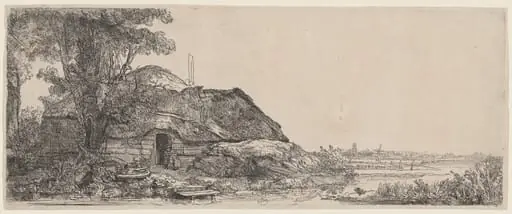
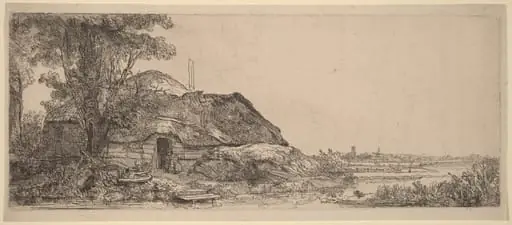
Landscape with a Cottage and Hay Barn: Oblong
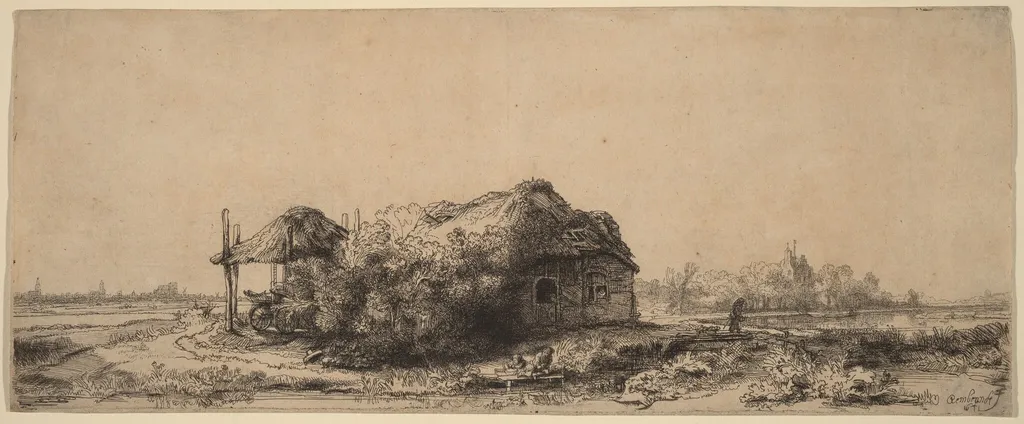
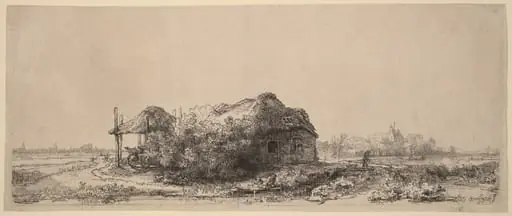
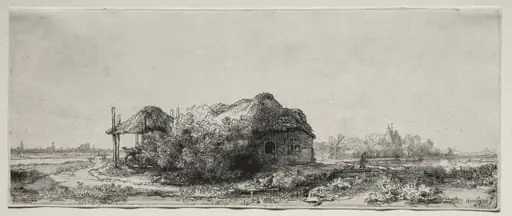
Landscape with a Cottage and Hay Barn: Oblong is an ink print by the Baroque artist Rembrandt. It dates from 1641 and is held in the collection of the National Gallery of Art.
About this work
Overview
Created in 1641, this oblong etching by Rembrandt van Rijn depicts a quiet rural scene with a cottage and hay barn nestled among trees. The composition extends horizontally, guiding the eye across a tranquil landscape that includes water, distant trees, and a church steeple. A solitary figure stands near the barn, adding a subtle human presence without disrupting the stillness of the scene.
Subject & Meaning
The scene presents an unidealized view of rural life, focusing on modest architecture and natural elements rather than grandeur. The inclusion of a lone figure suggests quiet labor or contemplation, reinforcing the theme of solitude within the countryside. There is no narrative drama; instead, the work invites quiet observation of everyday rural existence.
Technique & Style
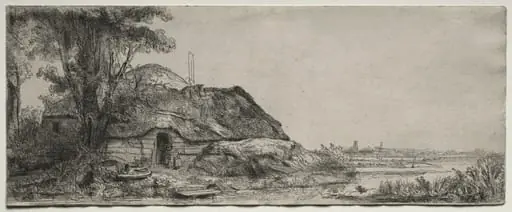
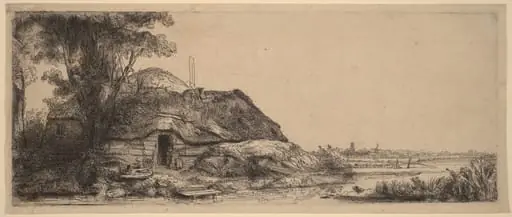
Rembrandt employed fine, varied lines and nuanced tonal gradations to model forms and suggest depth. The foliage is rendered with dense, directional strokes that convey texture and volume, while the water and sky are suggested through sparse, delicate etching. His mastery of light and shadow creates atmospheric perspective, drawing the viewer into the spatial recession of the landscape.
History & Provenance
The print was made during Rembrandt’s time in Amsterdam, when he was deeply engaged with landscape etchings. It likely circulated among collectors and fellow artists, reflecting his interest in the natural world beyond biblical or portrait subjects. Its oblong format distinguishes it from more common vertical or square prints of the period.
Context
In the early 1640s, Rembrandt increasingly turned to landscapes as personal expressions, separate from commissions. These works responded to Dutch interest in topographical realism and the emotional potential of nature. Unlike idealized Italianate scenes, his landscapes embraced local, unembellished scenery, aligning with broader cultural values of the Dutch Golden Age.
Legacy
This etching exemplifies Rembrandt’s influence on the development of landscape printmaking. His expressive use of line and tone inspired later artists to treat etching as a medium for mood and atmosphere, not just reproduction. The work remains a reference point for understanding how everyday scenes could be elevated through technical subtlety and emotional restraint.
Artist & collection
Artist
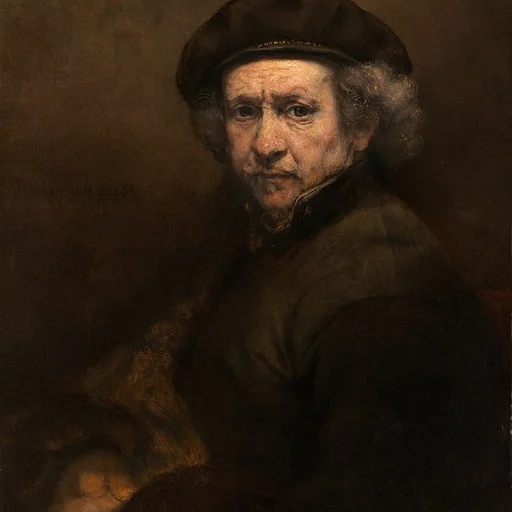
Rembrandt Harmenszoon van Rijn (15 July 1606 – 4 October 1669), known mononymously as Rembrandt, was a Dutch Golden Age painter, printmaker, and draughtsman.