Artwork
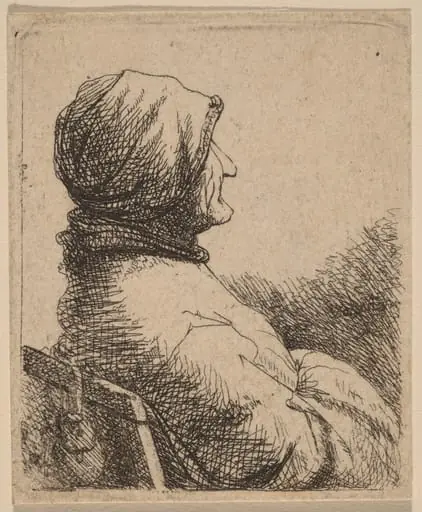
The Artist's Mother, Head and Bust
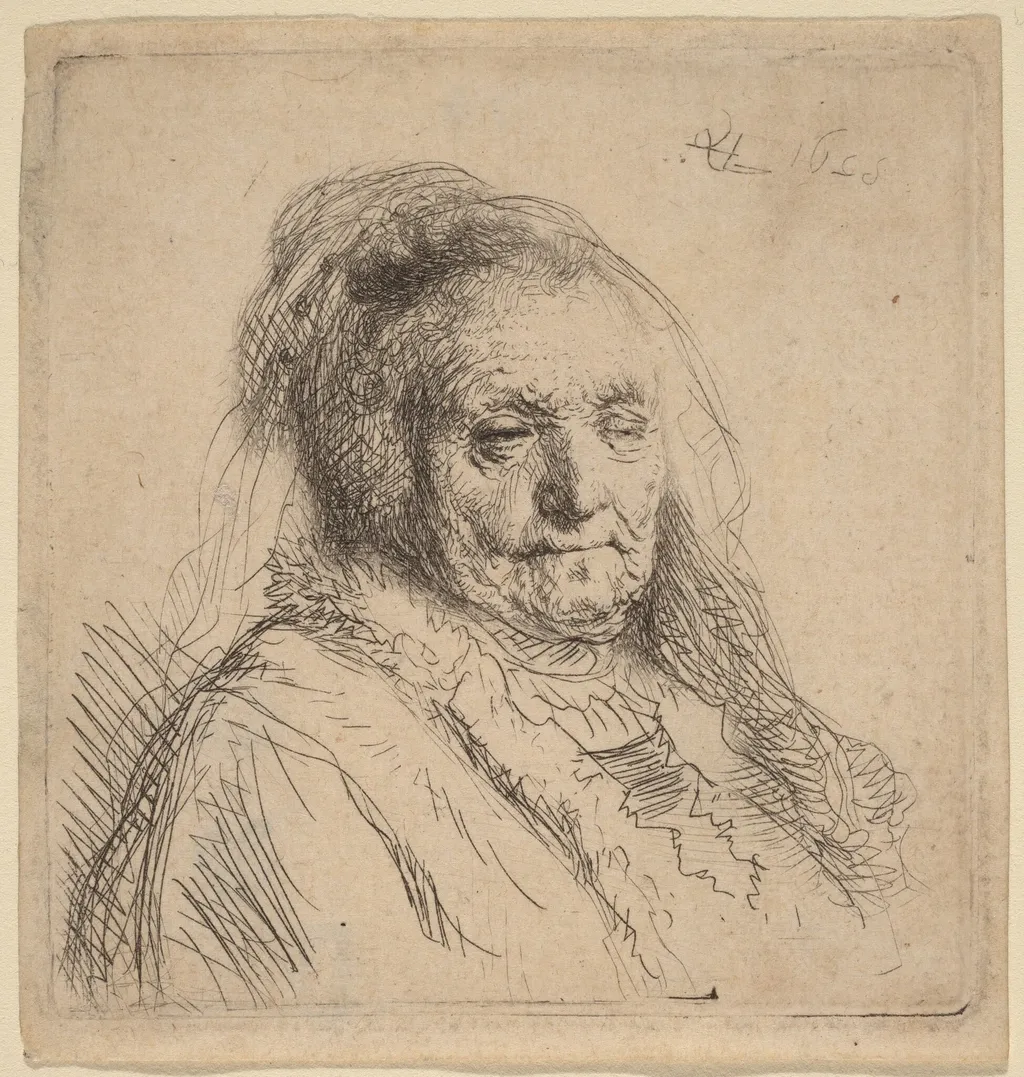
The Artist's Mother, Head and Bust is an ink print by the Baroque artist Rembrandt. It dates from 1628 and is held in the collection of the National Gallery of Art.
About this work
Overview
Rembrandt van Rijn produced the etching titled The Artist’s Mother, Head and Bust in 1628. Executed on light‑toned paper, the work presents a half‑length portrait of a woman, focusing on her face and shoulders. The image is rendered in a brisk, sketch‑like manner, emphasizing the immediacy of the drawing rather than a finished, polished composition.
Subject & Meaning
The composition depicts the artist’s mother, captured in a calm yet solemn expression. Her hair appears untamed, and the folds of her clothing are delineated with concise strokes, conveying both the physical presence and the personal intimacy of the sitter within the family context.
Technique & Style
Created through the etching process, Rembrandt employed acid‑etched lines that allow ink to accumulate in varying densities, producing a range of tonal values. The resulting marks are uneven, with darker areas where ink pools, giving the work a raw, spontaneous quality that resembles a rapid sketch rather than a refined print.
Context
The piece belongs to Rembrandt’s early period, when he was experimenting with printmaking techniques that would later define his oeuvre. Produced shortly after his arrival in Amsterdam, the work reflects the artist’s interest in intimate portraiture and his developing mastery of etching as a means to convey texture and atmosphere.
Artist & collection
Artist
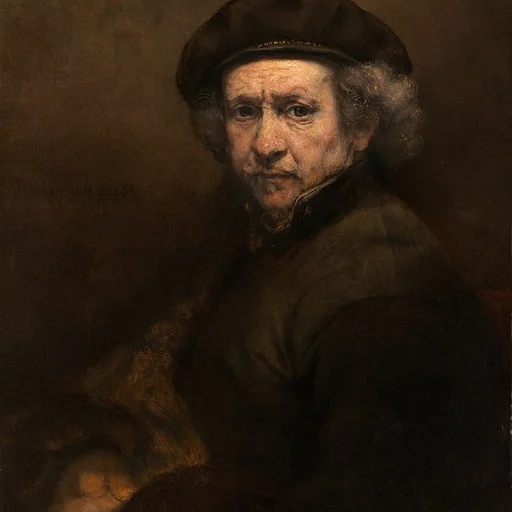
Rembrandt Harmenszoon van Rijn (15 July 1606 – 4 October 1669), known mononymously as Rembrandt, was a Dutch Golden Age painter, printmaker, and draughtsman.

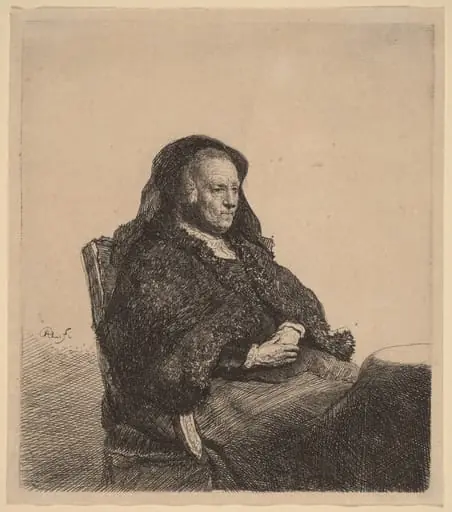 The Artist's Mother Seated at a Table, Looking Right
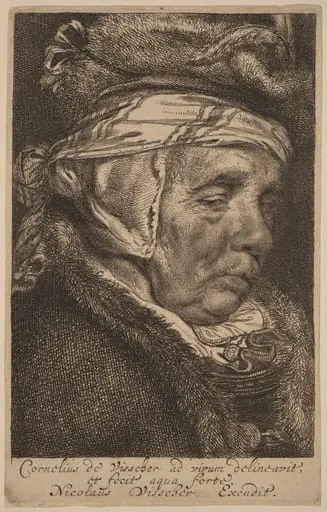 Head of an Old Woman (Visscher's Mother)
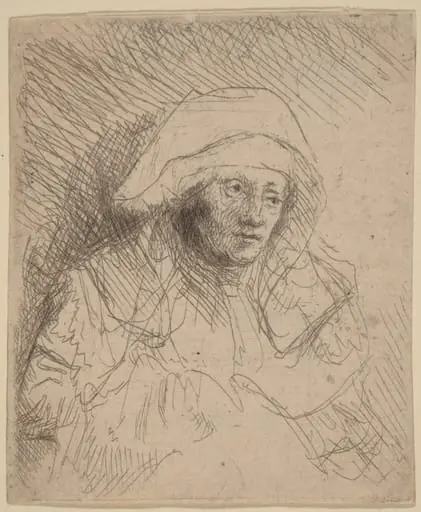 Sick Woman with a Large White Headdress (Saskia)
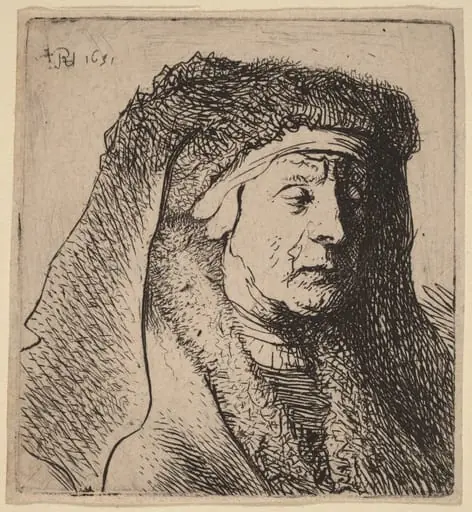 Bust of an Old Woman in a Furred Cloak and Heavy Headdress
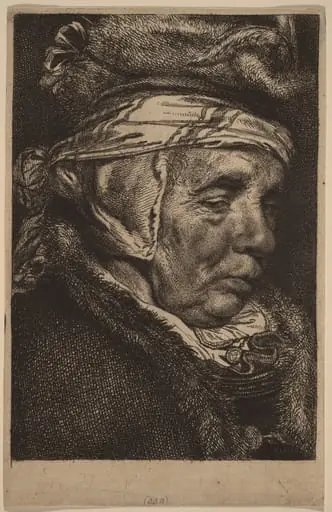 Head of an Old Woman (Visscher's Mother)
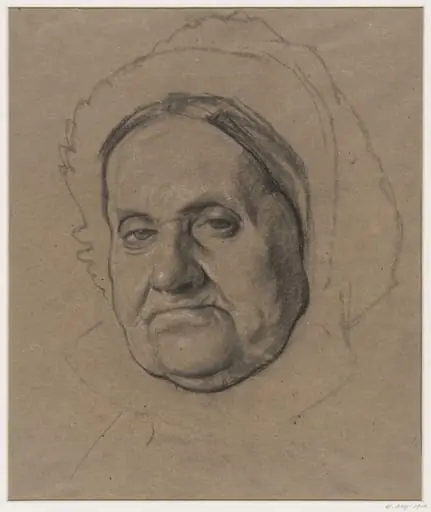 An old market woman.
 Bust of an Old Woman Turned in Profile to the Right