Artwork
An Old Corner
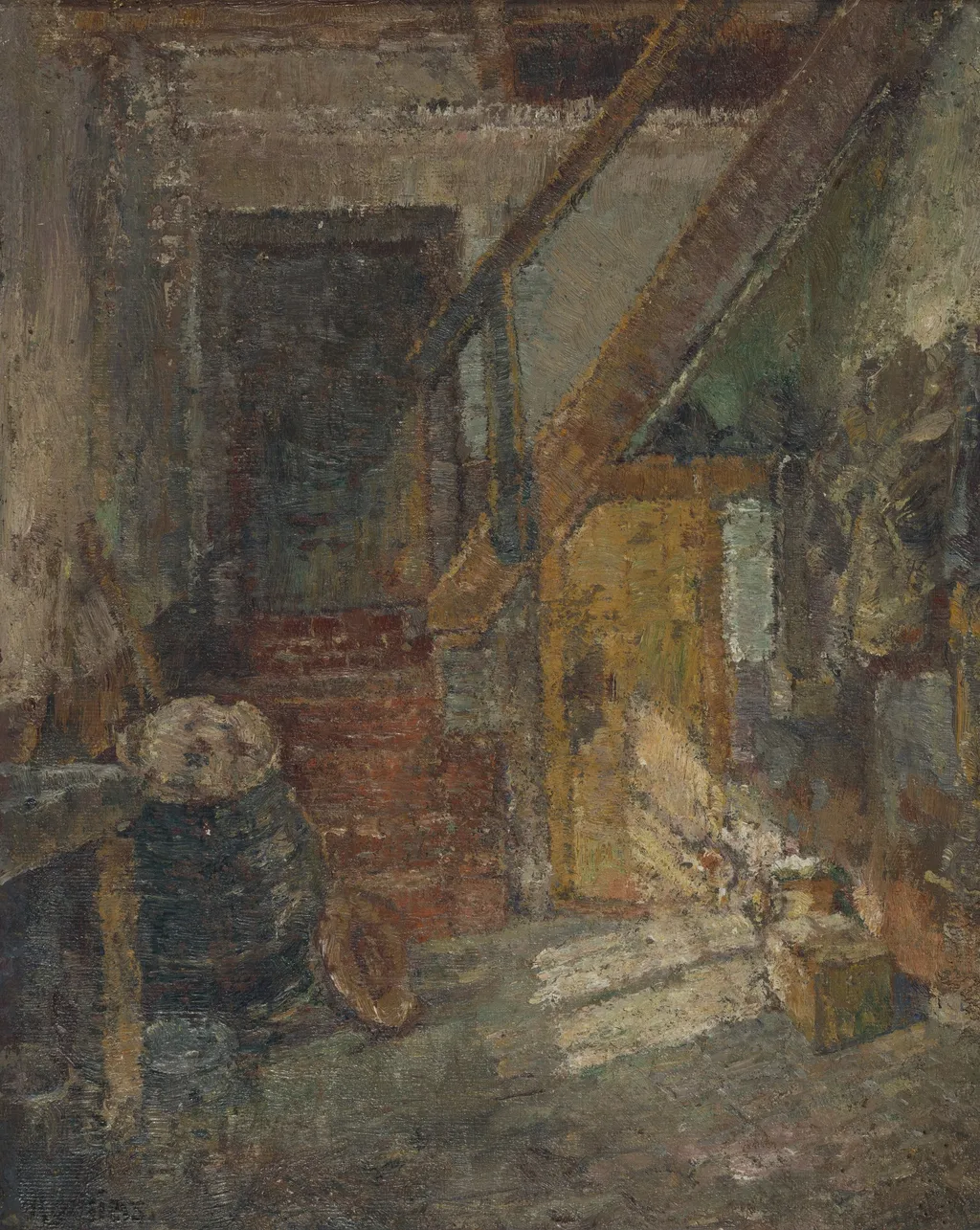
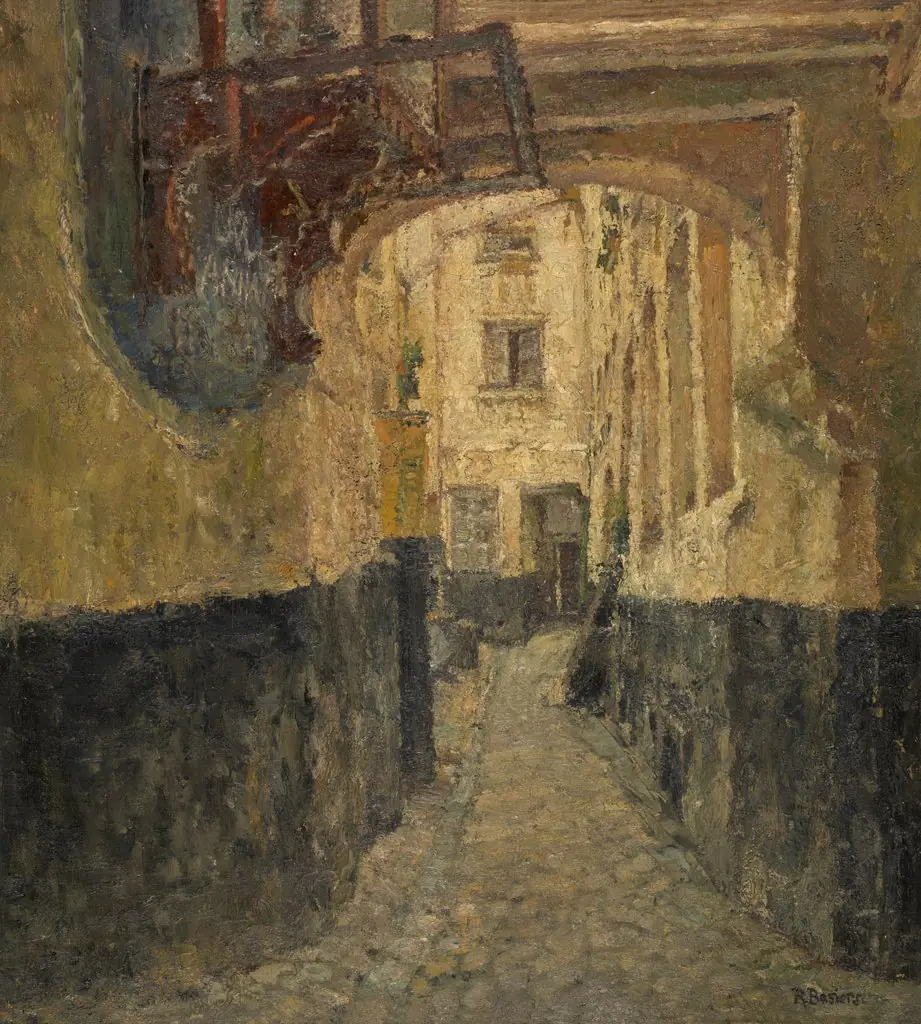
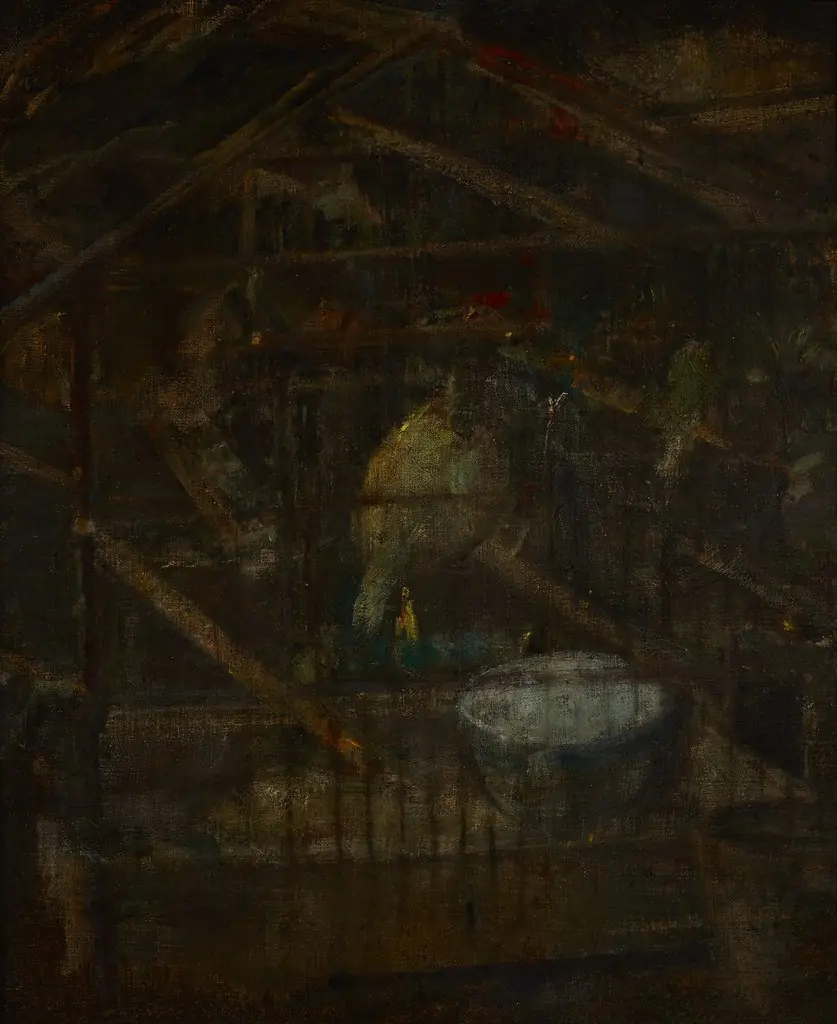
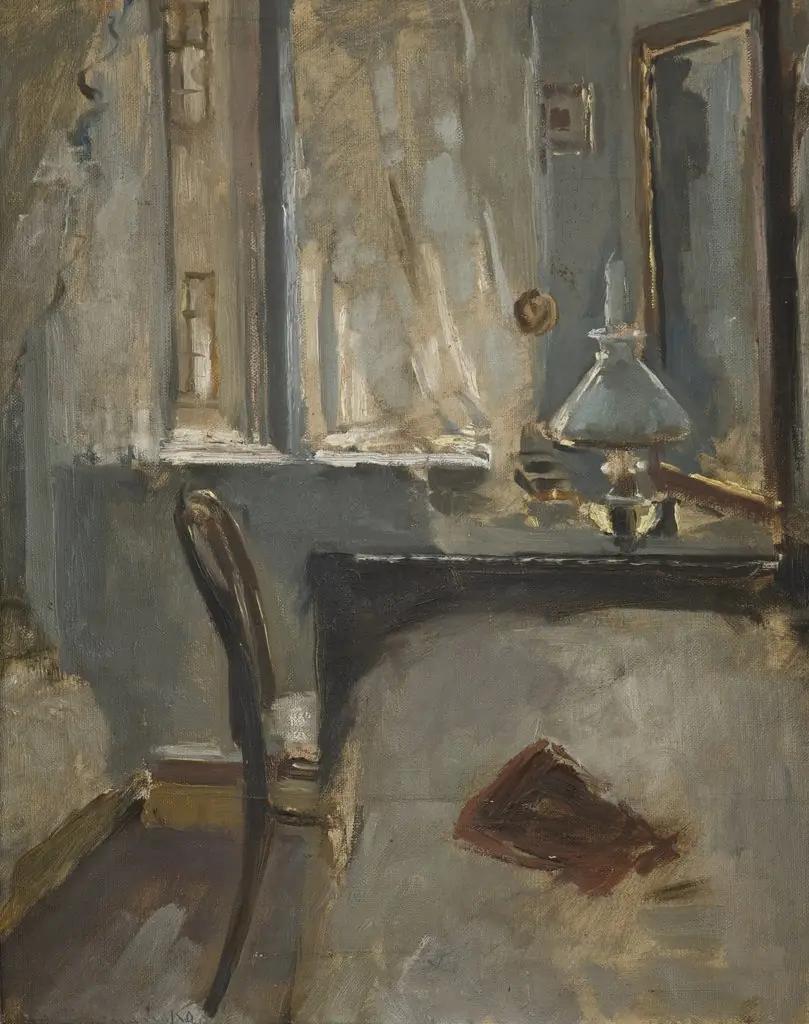
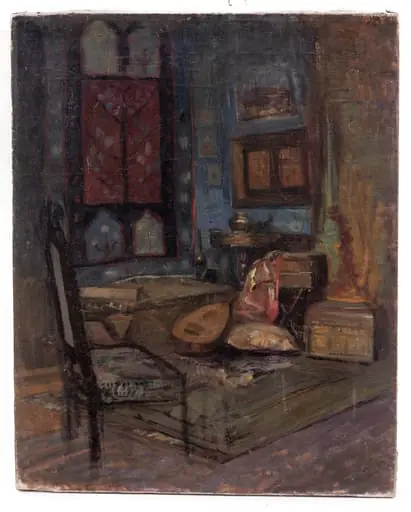
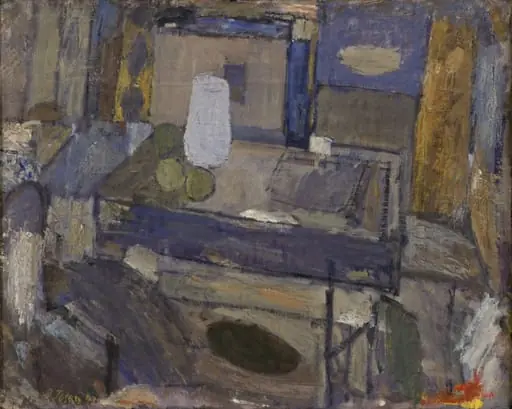
An Old Corner is an oil painting by René Bosiers. It dates from 1911 and is held in the collection of the Royal Museum of Fine Arts Antwerp.
About this work
Overview
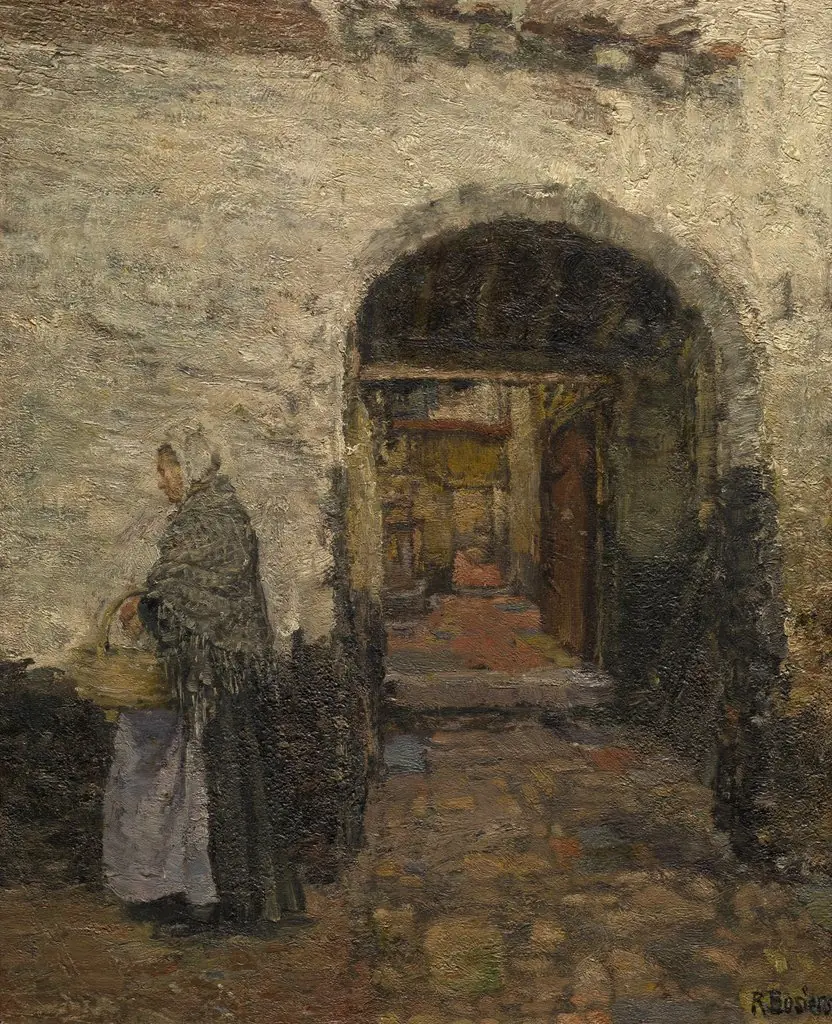
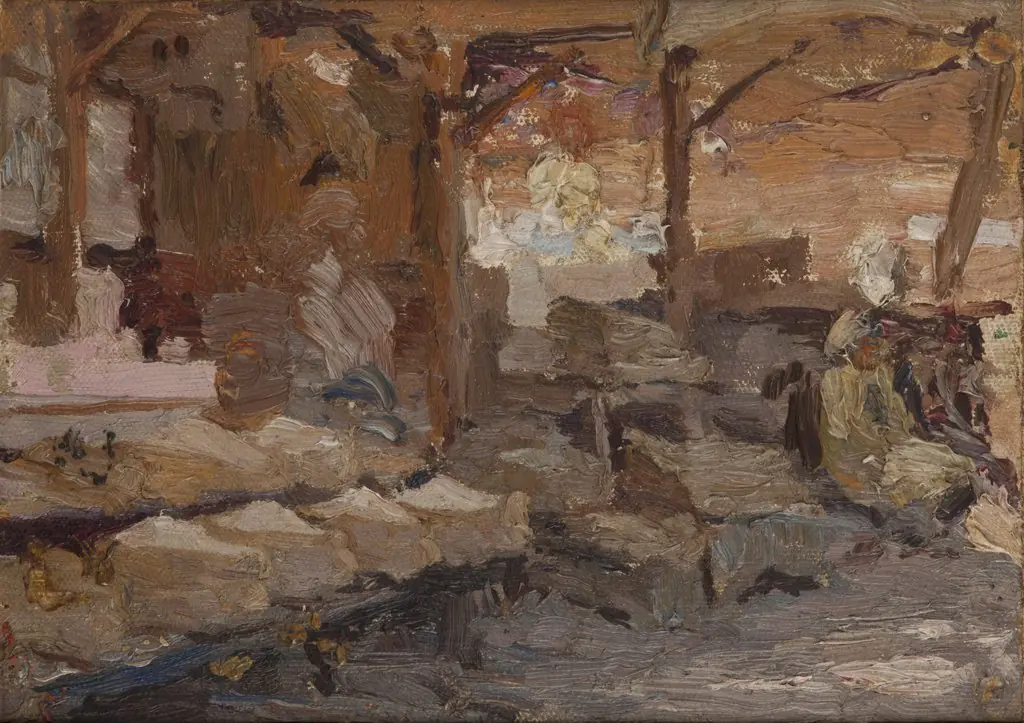
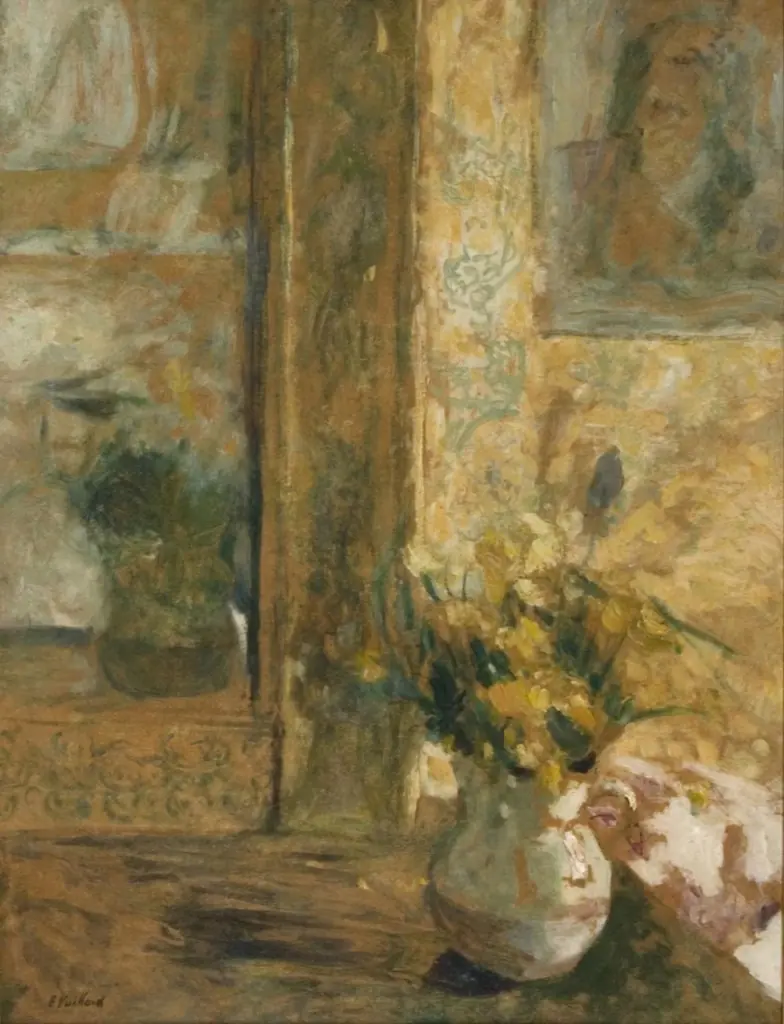
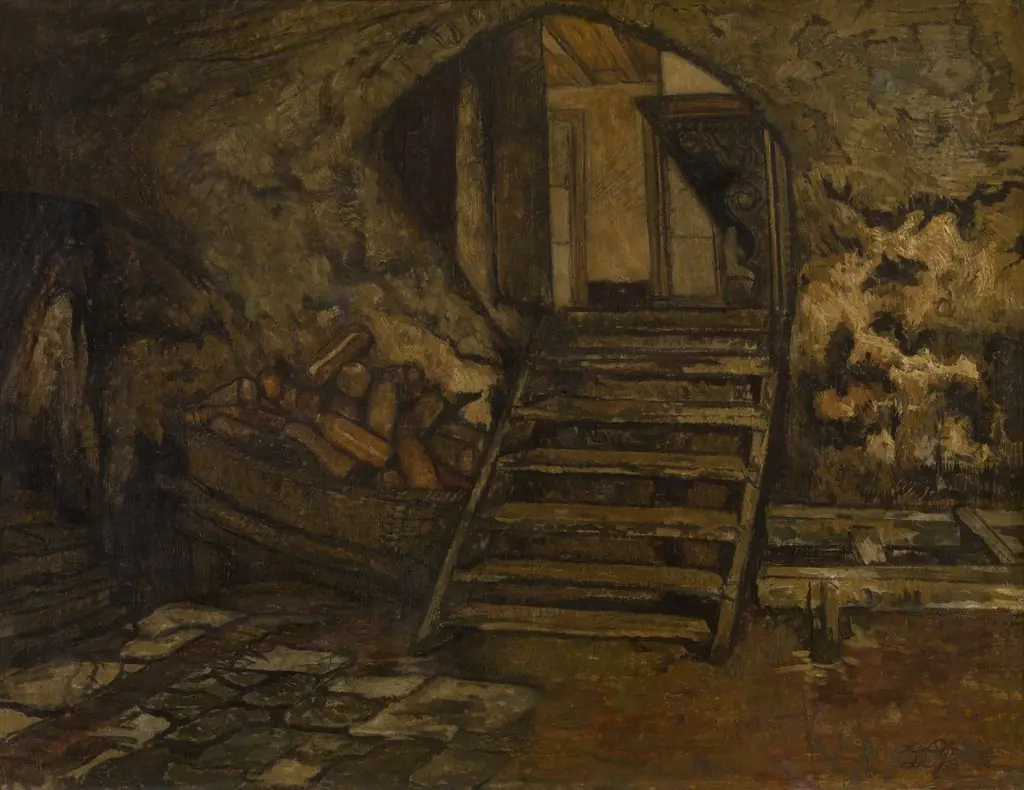
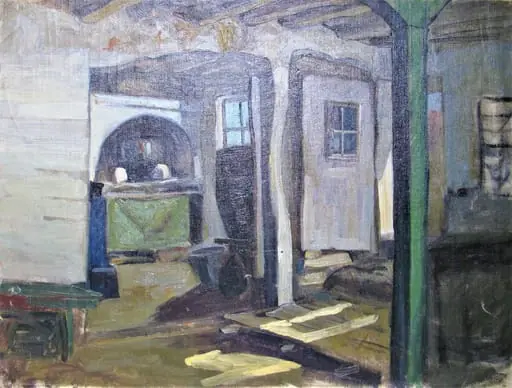
An Old Corner, painted around 1911 by René Bosiers, is an oil-on-canvas depiction of a quiet urban alleyway. The work captures a secluded architectural detail—part of a weathered building facade—with minimal human presence. Its subdued palette and restrained composition emphasize solitude and the passage of time, reflecting a quiet interest in the overlooked spaces of the city.
Subject & Meaning
The painting focuses on a neglected corner of a building, centered on a weathered door and a narrow window above it. Cracks, peeling paint, and uneven surfaces suggest long-term exposure to the elements. There is no indication of activity or occupation; the scene evokes abandonment and quiet decay, inviting reflection on urban memory and the slow erosion of everyday structures.
Technique & Style
Bosiers employed thick, visible brushwork to convey the texture of aged masonry and wood. The oil paint is applied with deliberate tactility, enhancing the sense of physical wear. Light is rendered subtly, with soft contrasts between shadow and dimly lit surfaces, avoiding dramatic chiaroscuro in favor of a muted, atmospheric tone that reinforces the painting’s contemplative mood.
History & Provenance
The painting has been part of the Royal Museum of Fine Arts Antwerp’s collection since its creation. While little is documented about its early ownership, its inclusion in the museum’s holdings suggests it was recognized early as a representative example of early 20th-century Belgian realism. It has remained in public custody without notable transfers or exhibitions.
Context
Created during a period when Belgian artists increasingly turned to everyday urban scenes, An Old Corner aligns with a broader interest in the quiet dignity of ordinary architecture. Unlike industrial or bustling street scenes, Bosiers chose to isolate a forgotten fragment of the city, reflecting a shift toward introspective, almost poetic observations of the built environment.
Legacy
Though not widely reproduced or studied, the painting remains a quiet example of early modern Belgian realism. Its endurance in the museum’s collection underscores its value as a record of how artists of the time engaged with decay and silence in urban life, offering a counterpoint to more dynamic or celebratory depictions of the modern city.
Artist & collection