Artwork
Cellar
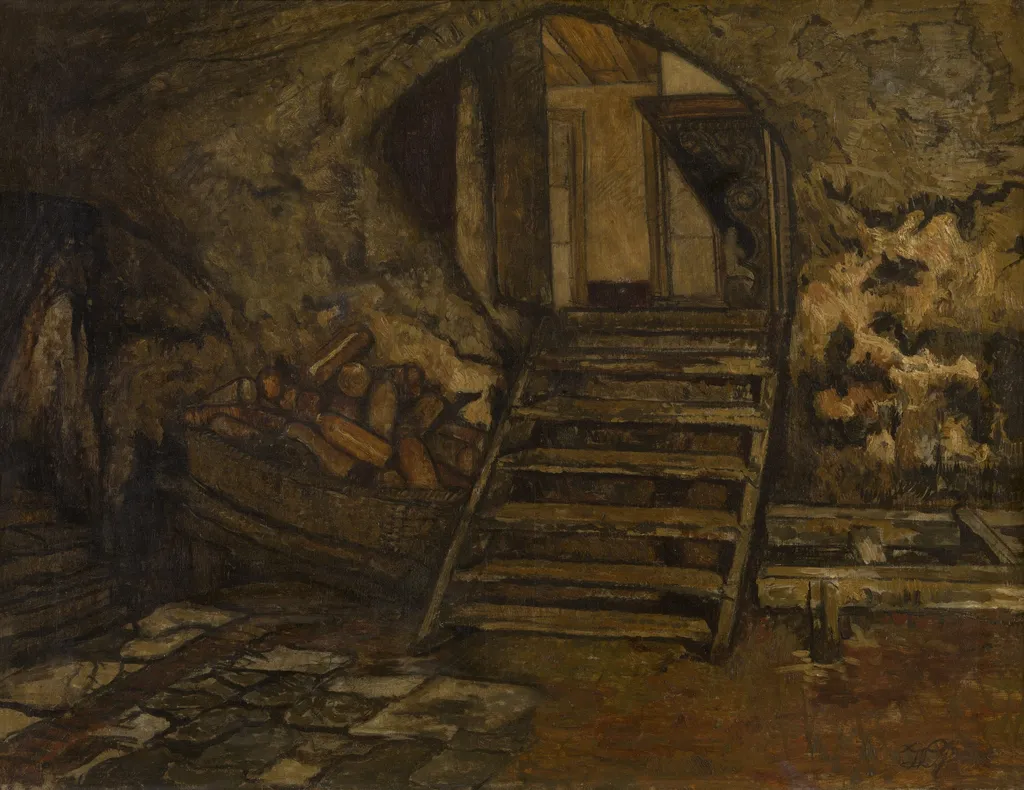
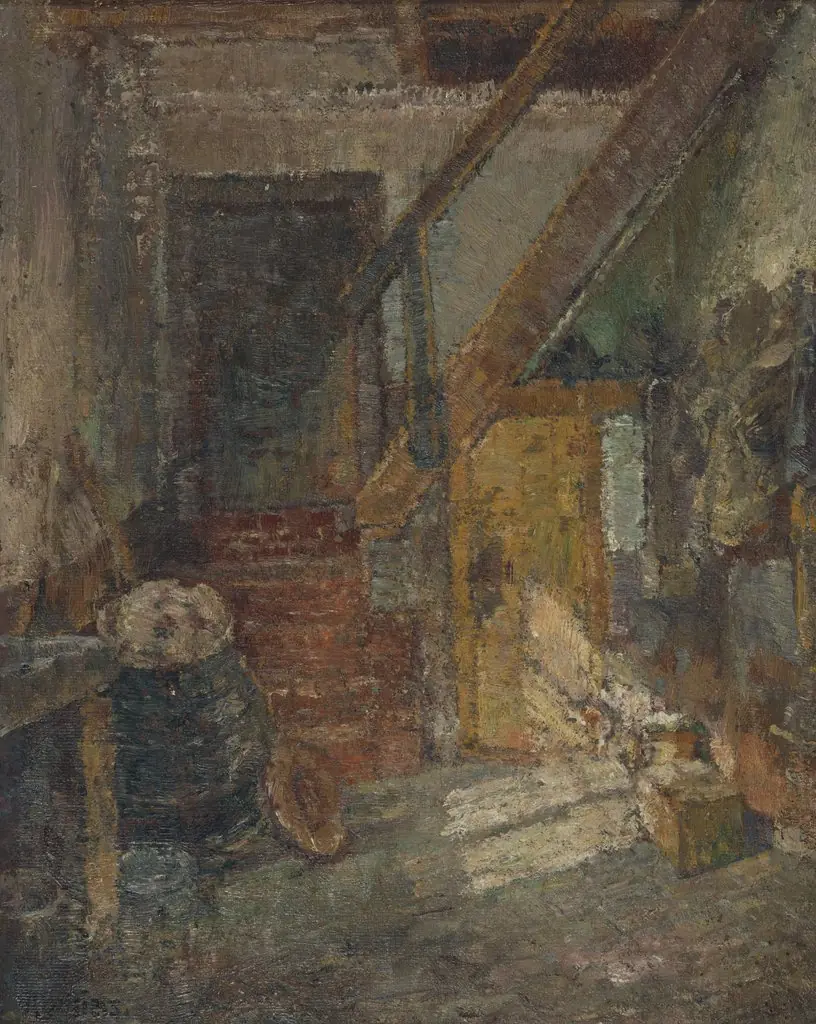
Cellar is an oil painting by the Realist artist Willem Linnig Junior. It dates from 1873 and is held in the collection of the Royal Museum of Fine Arts Antwerp.
About this work
Overview
The painting captures an unadorned interior space with minimal human presence, focusing instead on the material presence of its environment.
Painted in 1873, *Cellar* is an oil-on-canvas work by Willem Linnig the Younger, reflecting the quiet realism characteristic of his oeuvre. The painting captures an unadorned interior space with minimal human presence, focusing instead on the material presence of its environment. Linnig, active in both painting and printmaking, was known for his precise observation of everyday settings, and this piece exemplifies his commitment to unembellished visual truth.
Subject & Meaning
The scene depicts a dimly lit stone cellar, dominated by a wooden staircase leading to a distant doorway and a stack of logs resting to the side. No figures are present, yet the space suggests recent human activity—perhaps the last use of the stairs or the stacking of fuel. The absence of people amplifies a sense of stillness, inviting reflection on labor, utility, and the passage of time within domestic architecture.
Technique & Style
Linnig employs a restrained palette of earth tones and muted grays to convey the cellar’s somber atmosphere. His brushwork is meticulous, rendering the roughness of stone, the grain of aged wood, and the irregular surfaces of stacked logs with quiet precision. Light filters faintly from above, casting subtle gradations that define form without drama, aligning with Realist principles that prioritize observed detail over emotional exaggeration.
History & Provenance
The painting has remained in the collection of the Royal Museum of Fine Arts Antwerp since its creation. While specific acquisition records are not widely documented, its presence in the museum reflects its recognition within Belgian artistic circles of the late 19th century. Linnig’s reputation as a teacher at the Weimar Fine Arts School and his work as an engraver contributed to his broader influence, though *Cellar* remains a singular example of his interior scenes in public collections.
Context
In the 1870s, Belgian artists increasingly turned to intimate, non-idealized interiors as subjects, moving away from historical or mythological themes. Linnig’s *Cellar* fits within this trend, sharing affinities with Dutch and Flemish traditions of domestic realism. The work reflects a broader European interest in the dignity of ordinary spaces, where architecture and materiality become the primary subjects of artistic attention.
Legacy
Though not widely reproduced, *Cellar* endures as a quiet testament to Linnig’s skill in capturing atmosphere through texture and light. It stands as a representative example of 19th-century genre painting that valued observation over narrative. Its preservation in Antwerp ensures continued access for study, offering insight into how artists of the period found significance in the unremarkable corners of everyday life.
Own this work as a print
Artist & collection
Artist
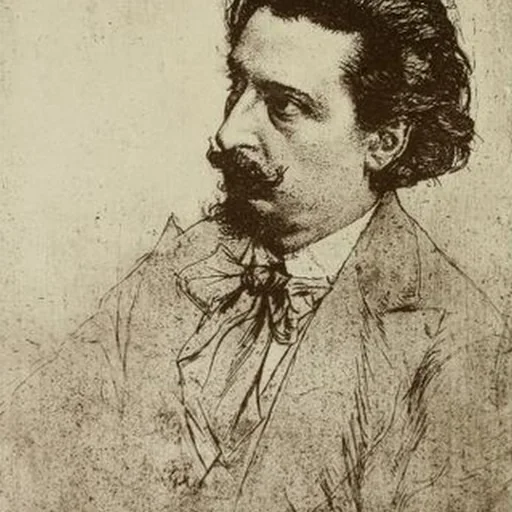
Willem Linnig the Younger (20 August 1842 in Antwerp – 3 September 1890 in Antwerp) was a Belgian painter and engraver who is best known for his history and genre scenes, landscapes and still lifes.

 An Old Corner
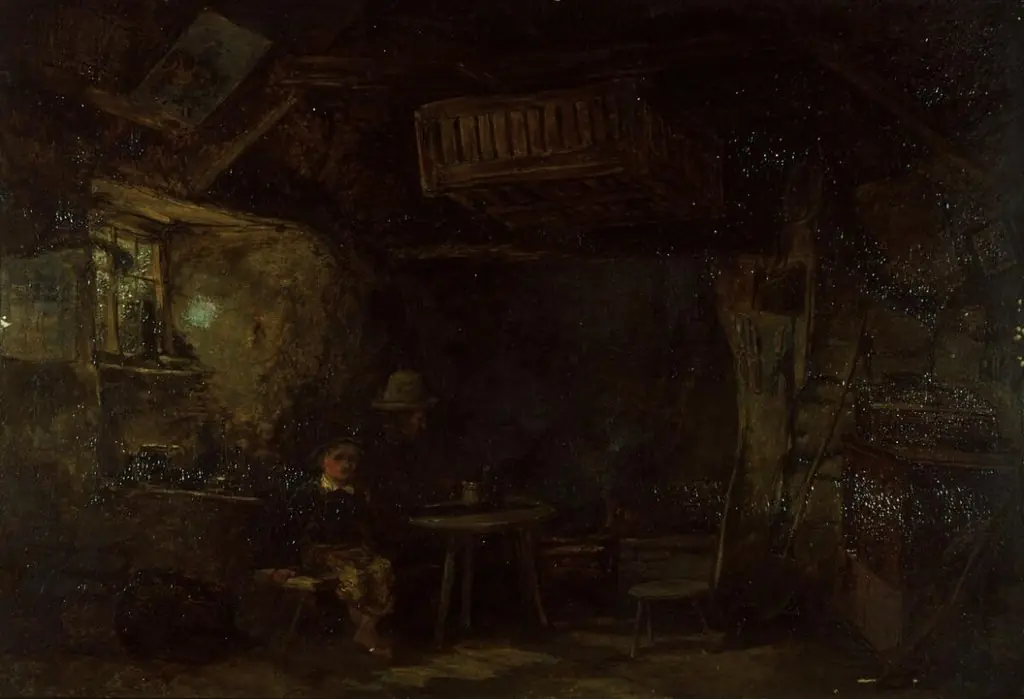 Interior of a Welsh cottage
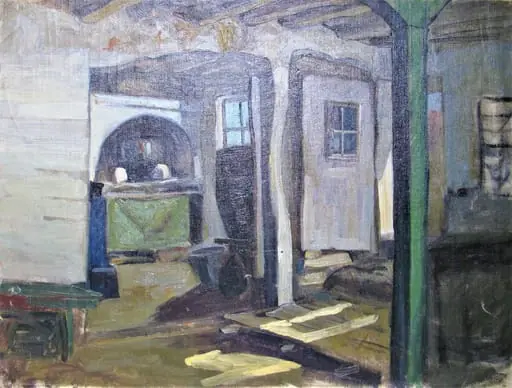 Interior țărănesc
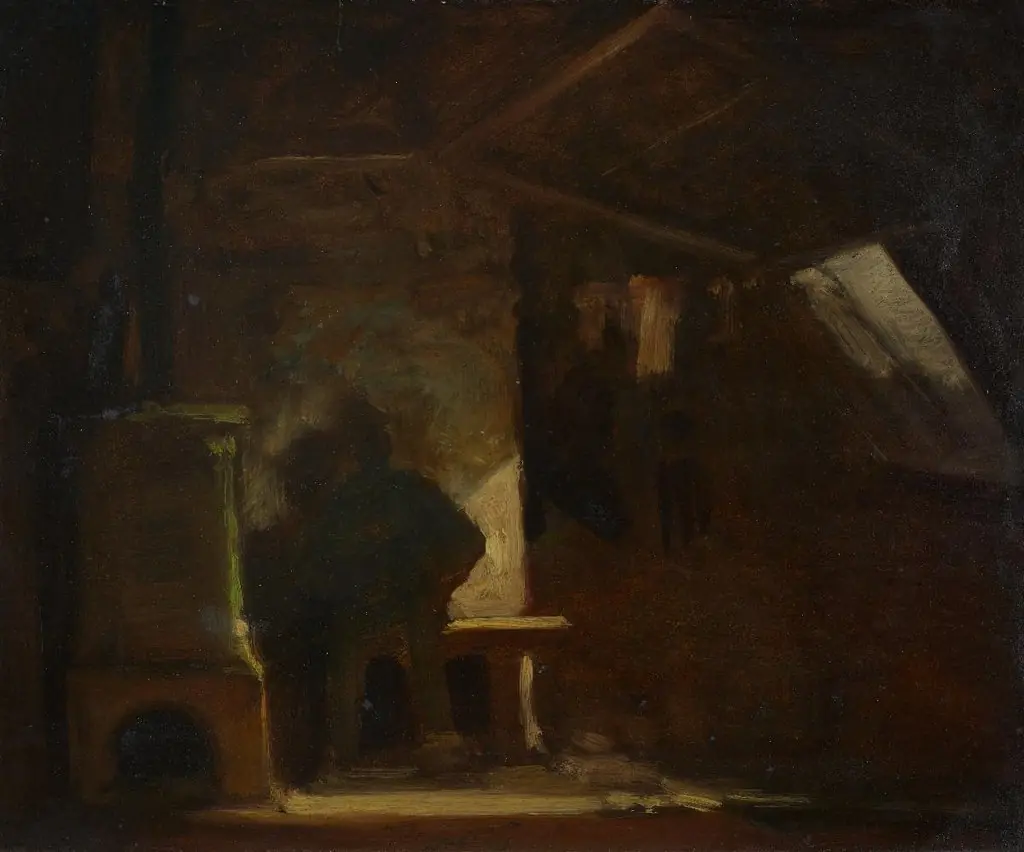 Dachstube. Studie
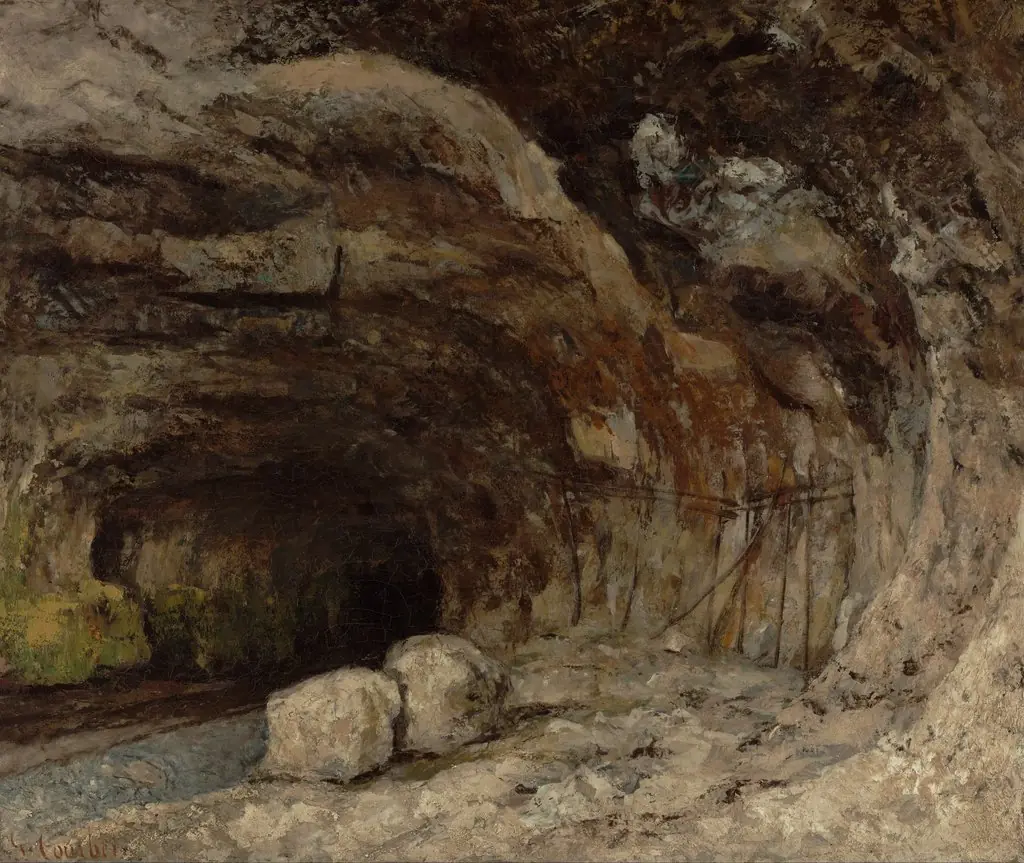 Grotto of Sarrazine near Nans-sous-Sainte-Anne
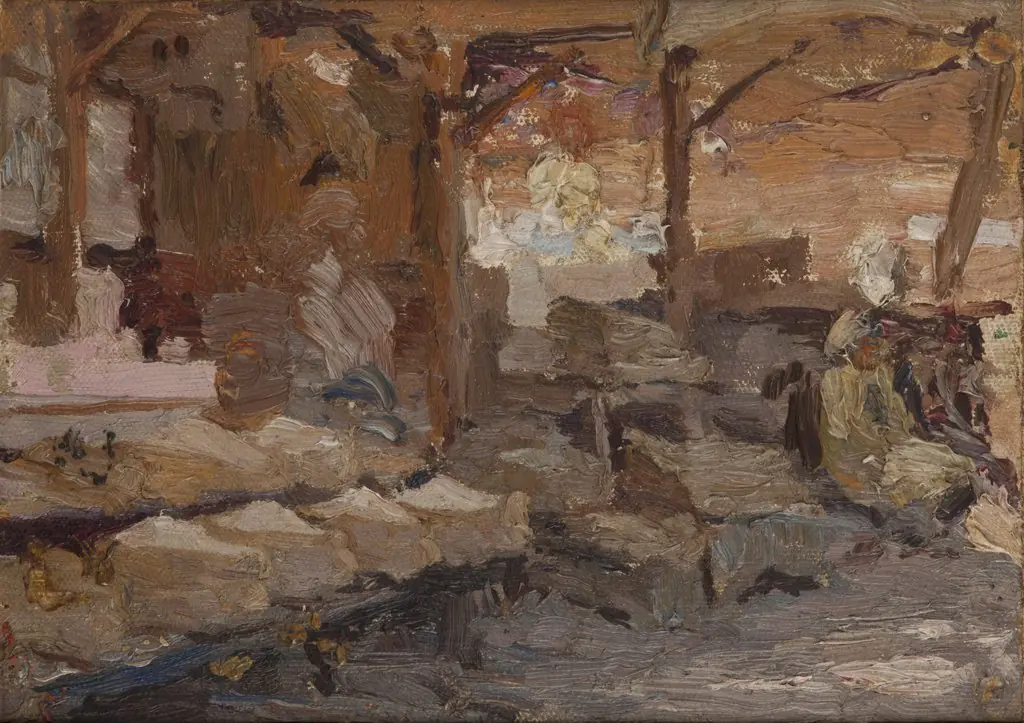 Bursa (Rose Soap Market)
 In the barn
 The Interior of the Tomb of King Casimir the Great
 Woman at a Well in an Italian Farmhouse
 Refectorio de las Cárceles de San Francisco en Asís
 The Kitchen of the Rôtisserie des Deux Paons