Artwork
The Treachery of Images
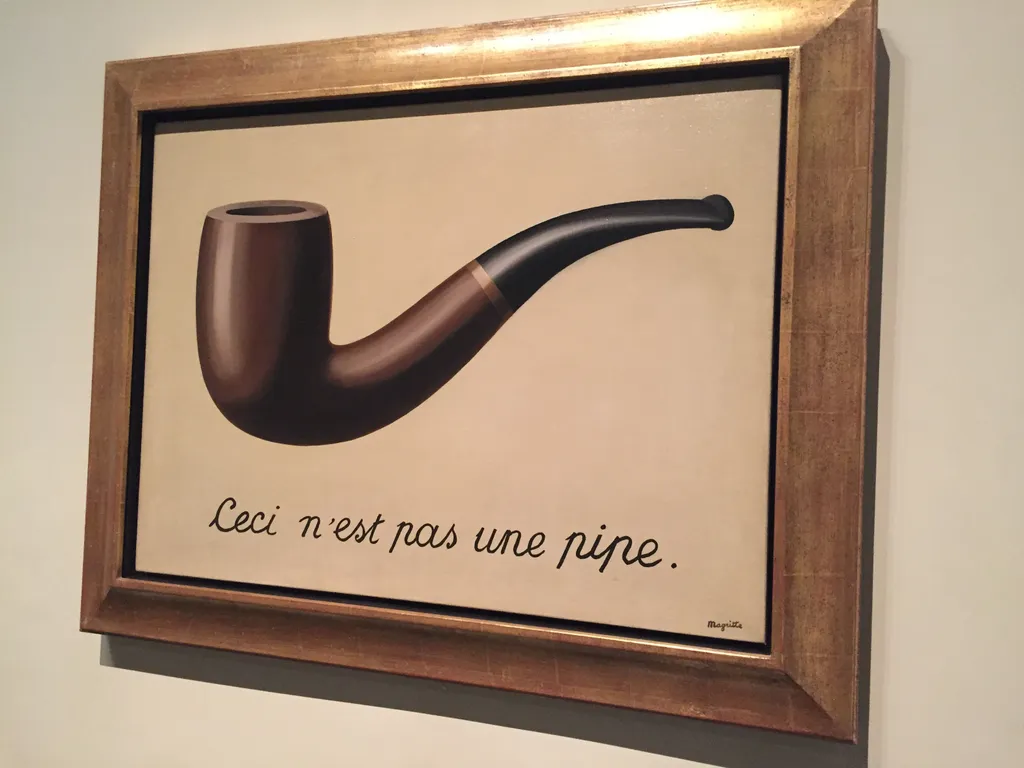
The Treachery of Images is an oil painting by the Surrealist artist René Magritte. It dates from 1929 and is held in the collection of the Los Angeles County Museum of Art.
About this work
The Treachery of Images is a painting by René Magritte. It was created in 1929.
This painting is also known by other names, such as This Is Not a Pipe. The different names suggest that the painting might be playing with the idea of what is real and what is not.
You can learn more about the artist who created this work by looking up René Magritte.
Overview
The Treachery of Images is a 1929 oil painting by Belgian surrealist René Magritte, currently held at the Los Angeles County Museum of Art. It is one of several works by the artist to explore the relationship between representation and reality.
Subject & Meaning
The painting depicts a realistic image of a pipe, accompanied by the text 'Ceci n'est pas une pipe' (This is not a pipe), challenging the viewer's perception of the difference between an object and its representation.
Technique & Style
Executed in a realistic style, the work subverts expectations by combining a detailed image with a contradictory caption, exemplifying Magritte's surrealist approach to art.
Context
The painting was created during a period of intense surrealist activity, with Magritte's work influencing and being referenced by writers such as André Breton and Paul Éluard in their discussions on poetry and language.
Legacy
The Treachery of Images has been cited alongside philosophical ideas, such as Alfred Korzybski's 'The map is not the territory', highlighting its significance in exploring the boundaries between language, representation, and reality.
Artist & collection

Artist
René François Ghislain Magritte was a Belgian surrealist artist known for his depictions of familiar objects in unfamiliar, unexpected contexts, which often provoked questions about the nature and boundaries of reality and representation.