Artwork
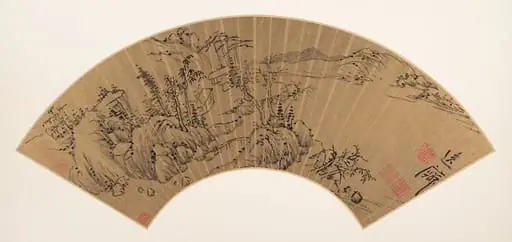
清 任薰 高士臨風 扇面|Scholar in the Wind
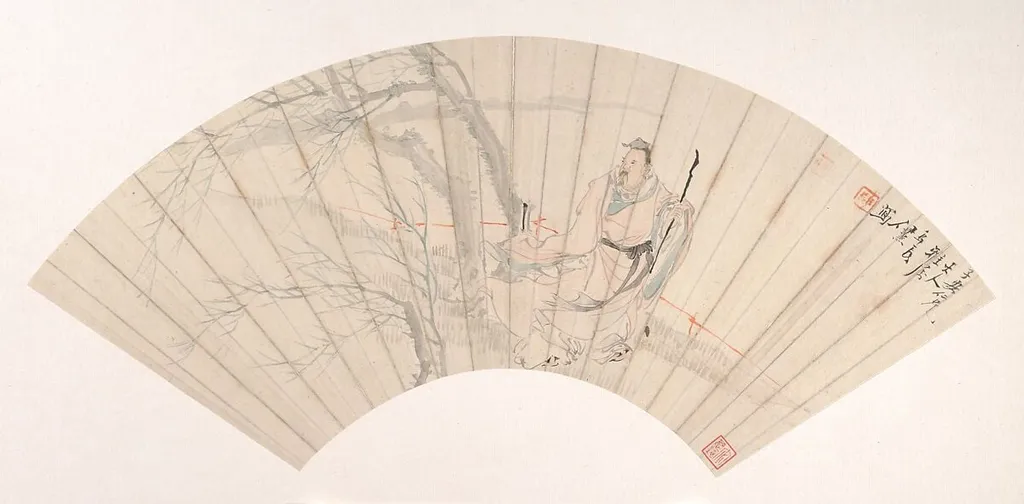
清 任薰 高士臨風 扇面|Scholar in the Wind is an ink painting by the Impressionist artist Ren Xun. It dates from 1880 and is held in the collection of the Metropolitan Museum of Art.
About this work
Overview
Ren Xun’s fan painting, dated to around 1880 in the late Qing period, presents a solitary scholar poised on a craggy outcrop. Executed on alum‑paper mounted as a folding‑fan leaf, the work measures only a few centimeters across, inviting close, handheld viewing rather than wall display.
Subject & Meaning
The figure, dressed in a flowing robe, stands with one hand concealed in his sleeve and the other grasping a fan, his beard animated by an unseen breeze. Pine trees rise behind him, suggesting a contemplative encounter with nature that reflects the literati ideal of harmonious solitude.
Technique & Style
Ren employs fine, dry brush strokes to render the jagged rock surface and the delicate movement of the scholar’s garments. Ink is combined with subtle color washes, while cross‑hatching creates texture in the foliage, all compressed into the limited space of the fan format.
History & Provenance
The piece originates from the artist’s later career, a period when portable fan paintings were popular among educated elites for personal enjoyment. It remains a representative example of Qing‑era album leaf art, though specific ownership records prior to its museum acquisition are not documented.
Context
Fan paintings served both functional and aesthetic purposes, often exchanged as gifts among scholars. Ren Xun’s work aligns with this tradition, embodying the era’s emphasis on brush mastery and the integration of poetry, painting, and calligraphy within a compact, intimate object.
Artist & collection


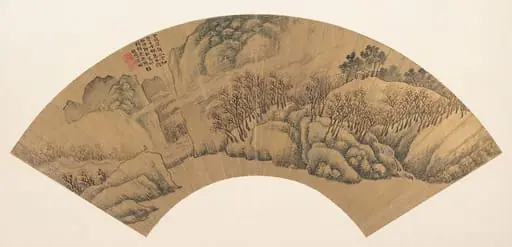 明 吳彬 翠壁丹楓 扇|Azure Cliff with Red Maples
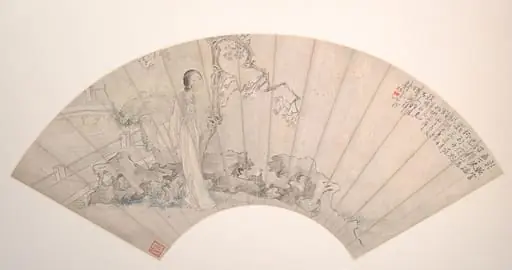 清 錢慧安 仕女圖 摺扇|Woman in a garden
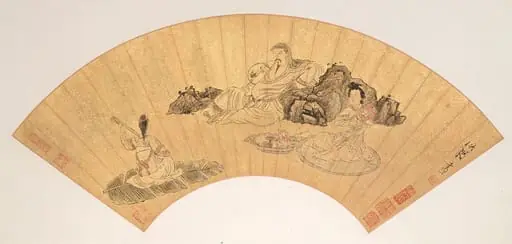 明 陳洪綬 山水花鳥人物圖 扇冊|Landscapes and Flowers
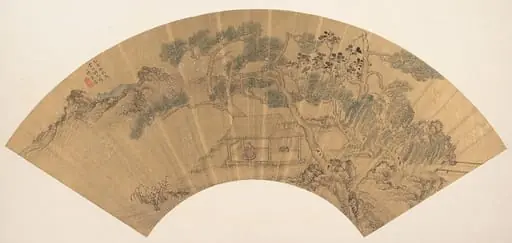 明 陳季淳 山水人物圖 扇頁|Landscape with figure
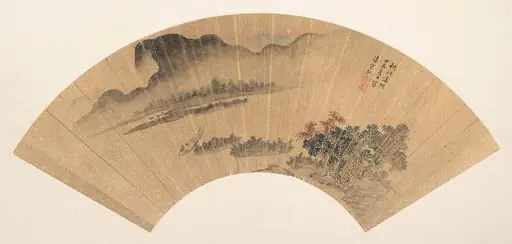 明/清 潘雲馭 秋江落照 扇|Setting Sun on the Autumn River
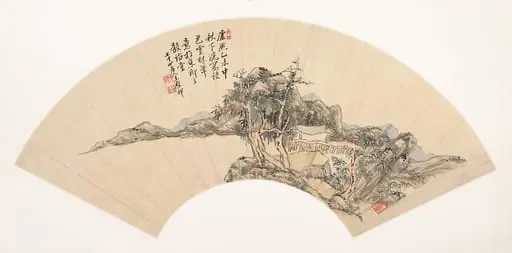 清 倣王原祁 倪雲林筆意山水 扇面|Landscape in the Style of Ni Zan
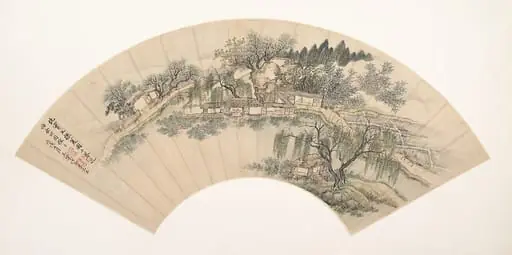 清 佚名 倣王翬 倣仇實父採菱圖 扇|Gathering Water Chestnuts
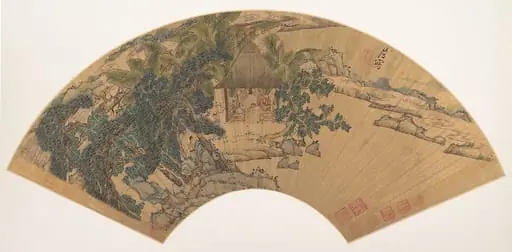 明 陳洪綬 山水圖 扇|Landscape
 明 鄒之麟 山水圖 扇面|Landscape