Artwork
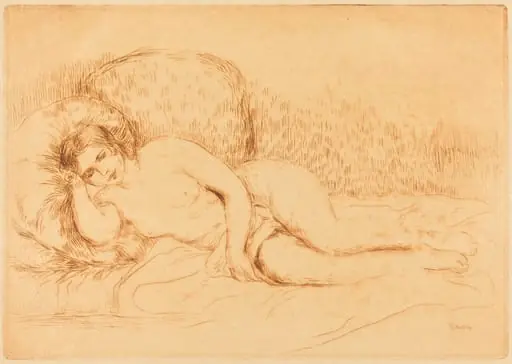
Female Nude Reclining (Femme nue couchee)
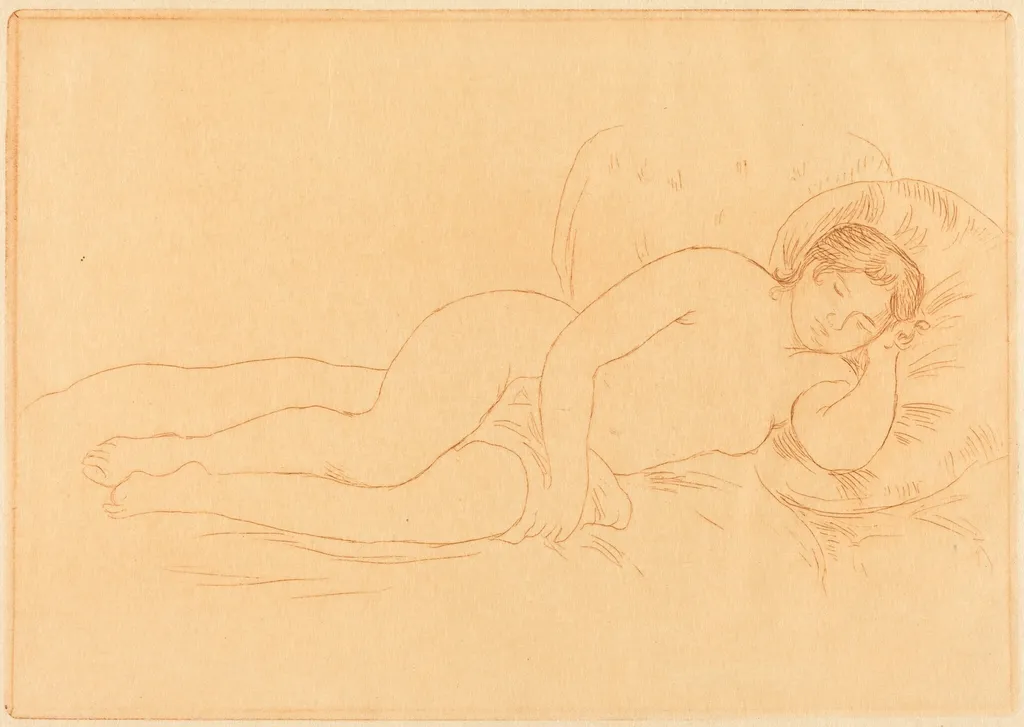
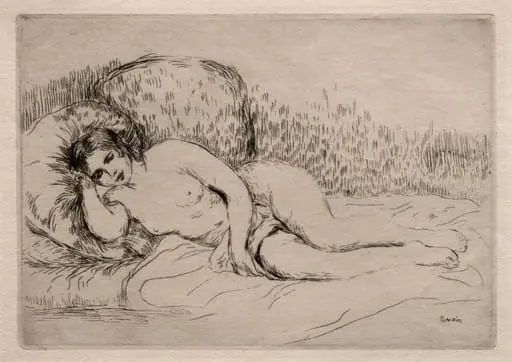
Female Nude Reclining (Femme nue couchee) is an ink print by the Impressionist artist Auguste Renoir. It dates from 1906 and is held in the collection of the National Gallery of Art.
About this work
Overview
The warm tone of the paper enhances the softness of the figure, while the ink appears subtly worn, suggesting repeated handling or impressions.
Created in 1906, this color etching by Auguste Renoir depicts a reclining female figure on Japanese paper. Unlike his finished paintings, the work embraces spontaneity, using minimal ink and delicate lines to suggest form rather than define it. The warm tone of the paper enhances the softness of the figure, while the ink appears subtly worn, suggesting repeated handling or impressions. It functions as a quiet, intimate study rather than a public display piece.
Subject & Meaning
The subject is a woman lying on her side, head propped on one hand, her body curved in a natural, unposed alignment. There is no narrative or symbolic intent—only the observation of a momentary posture. The absence of detail and the loose rendering emphasize physical presence over idealization, reflecting Renoir’s interest in the body as lived experience rather than classical form.
Technique & Style
Renoir employed color etching, using acid to bite lines into a metal plate, then printing in subtle hues on thin Japanese paper. The lines are light, fluid, and rapidly applied, avoiding heavy shading or contouring. The technique mimics the immediacy of drawing, with ink appearing translucent and delicate. The paper’s texture and tone integrate with the ink, creating a sense of fragility and ephemerality.
History & Provenance
This print was made late in Renoir’s career, during a period when he increasingly turned to graphic media due to arthritis limiting his brushwork. It was likely produced for private circulation or as a study for larger works. Its worn appearance suggests it was handled frequently, possibly by the artist or close associates, indicating its role as a personal, working image rather than a commercial print.
Context
In early 20th-century France, etching experienced a revival among Impressionists seeking alternatives to oil painting. Renoir, influenced by Degas and other printmakers, used the medium to explore form with reduced means. This work aligns with his broader shift toward simplified, tactile representations of the body, distancing itself from academic tradition while retaining a sense of warmth and humanity.
Legacy
The print exemplifies Renoir’s late-period engagement with printmaking as a means of intimate expression. Its unpolished quality has influenced later artists who valued process over finish. Though not widely exhibited during his lifetime, it now stands as a testament to his enduring fascination with the human form, rendered not for grandeur but for quiet, tactile presence.
Artist & collection
Artist
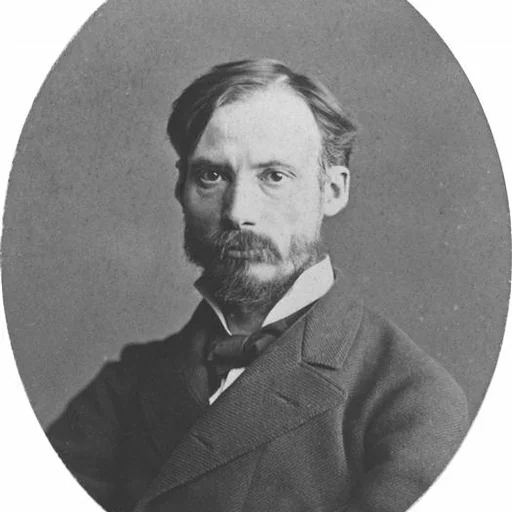
Pierre-Auguste Renoir was born on 25 February 1841 in Limoges, the son of a tailor and a seamstress.