Artwork
Woman Reclining (Femme couchee)
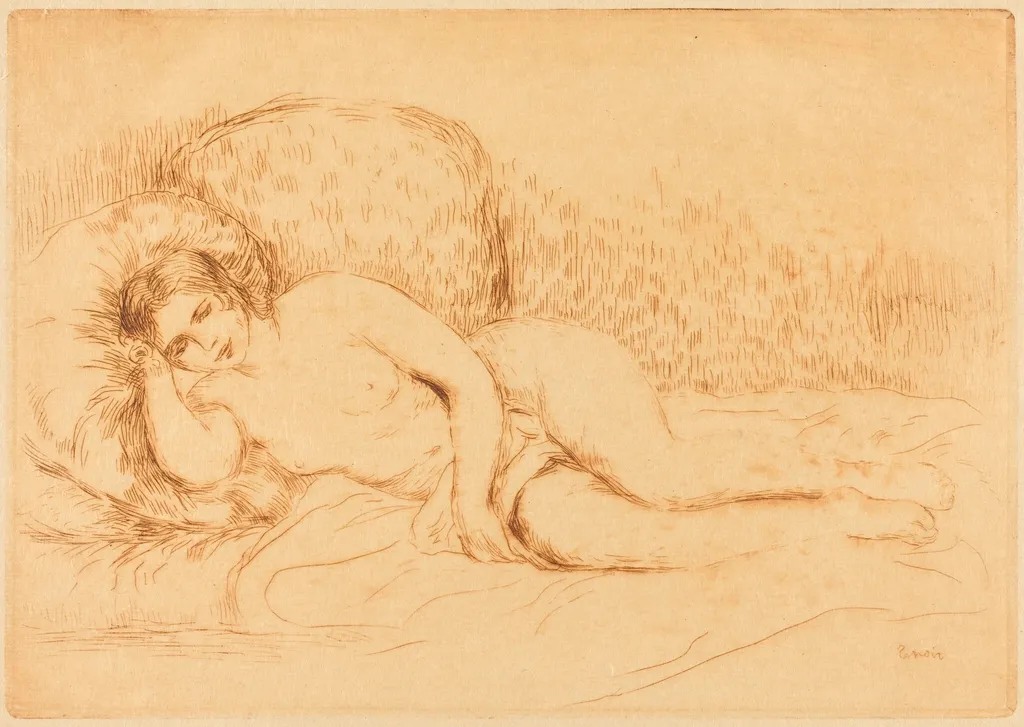
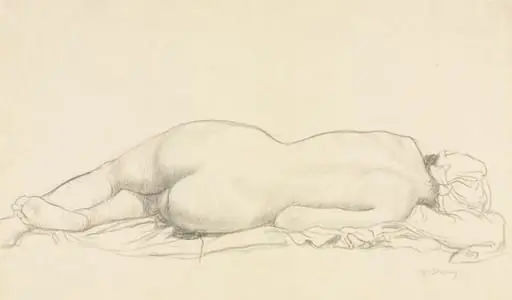
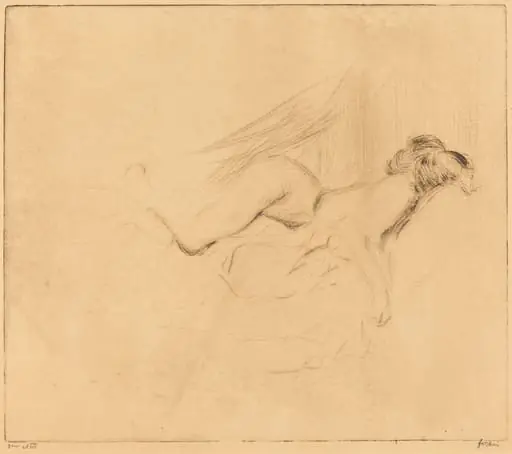
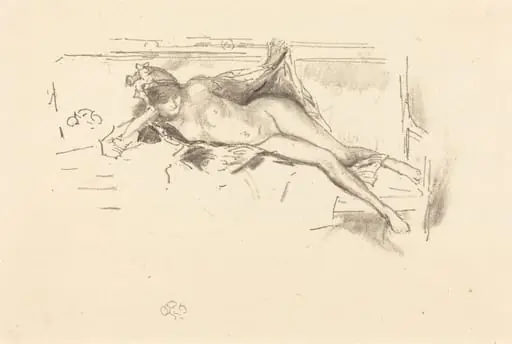
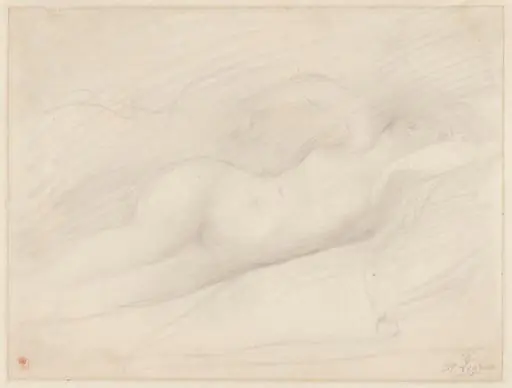
Woman Reclining (Femme couchee) is an ink print by the Impressionist artist Auguste Renoir. It dates from 1906 and is held in the collection of the National Gallery of Art.
About this work
Overview
Woman Reclining (Femme couchée) is a color etching executed by Auguste Renoir in 1906. The work is printed on a sheet of Japan paper that carries a warm, yellowish hue, which accentuates the delicate line work. As a print, it belongs to Renoir’s later period when he explored graphic media alongside his more familiar oil paintings.
Subject & Meaning
The image presents a solitary female figure lying amid tall grass. Her posture is relaxed: one arm supports her head while the other rests lightly on the ground. The composition conveys a sense of quiet repose and an intimate connection with the natural environment, inviting the viewer to contemplate the calmness of an outdoor moment.
Technique & Style
The use of color on Japan paper adds a subtle tonal richness, while the loose, swift lines retain the painterly quality characteristic of his work.
Renoir employed a traditional etching process, incising the design with needles before treating the plate with acid to create varied line depths. He combined light and dark strokes to suggest the texture of hair, the drapery of clothing, and the surrounding grass. The use of color on Japan paper adds a subtle tonal richness, while the loose, swift lines retain the painterly quality characteristic of his work.
History & Provenance
Created in the final years of Renoir’s life, this print reflects his interest in expanding his artistic repertoire beyond canvas. While specific ownership records are limited, the work has been documented in catalogues of Renoir’s prints and appears in collections that focus on early 20th‑century French graphic art.
Own this work as a print
Artist & collection
Artist
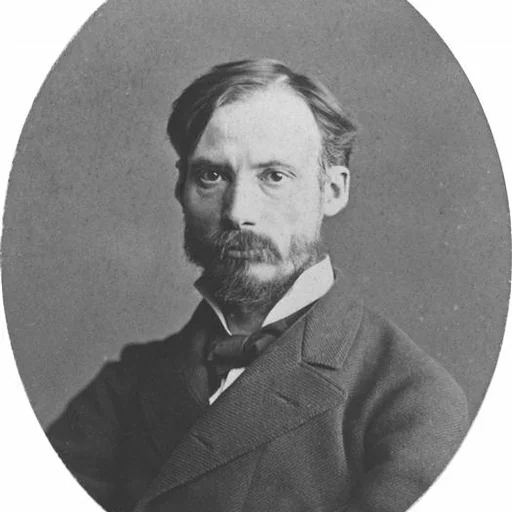
Pierre-Auguste Renoir was born on 25 February 1841 in Limoges, the son of a tailor and a seamstress.