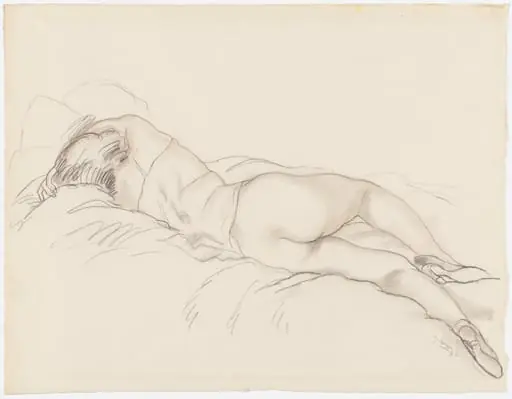
Artwork
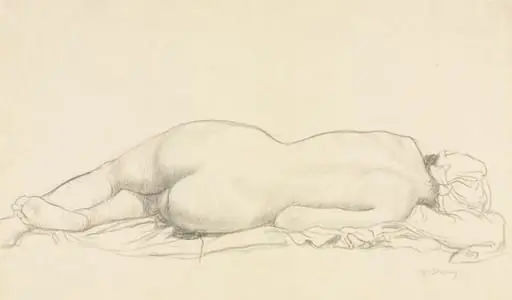
Study of a 'Sleeping Odalisque' after Ingres
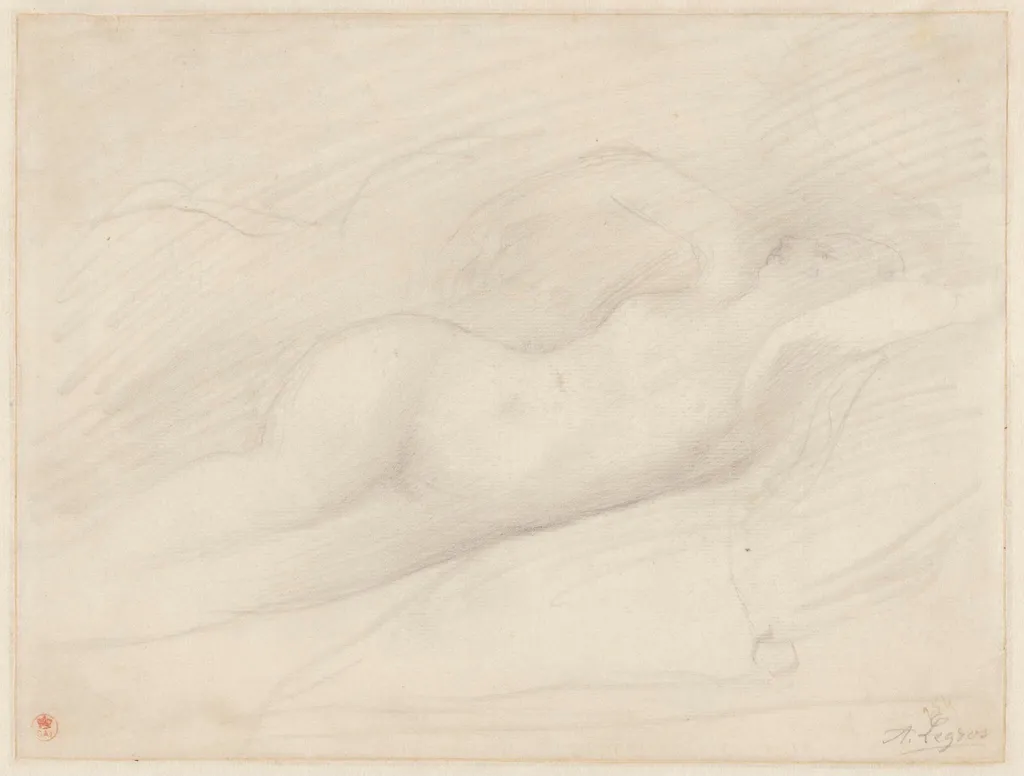
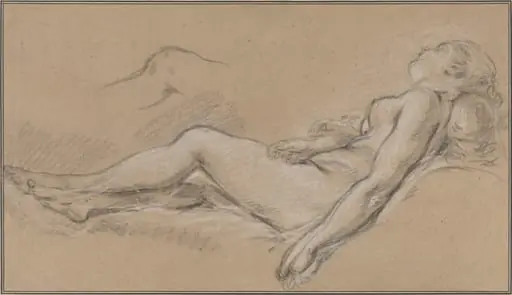
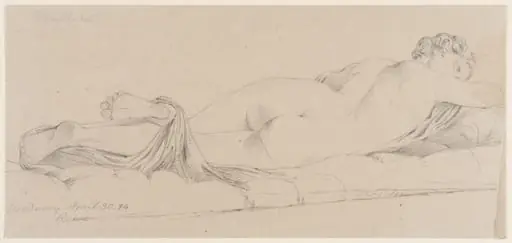
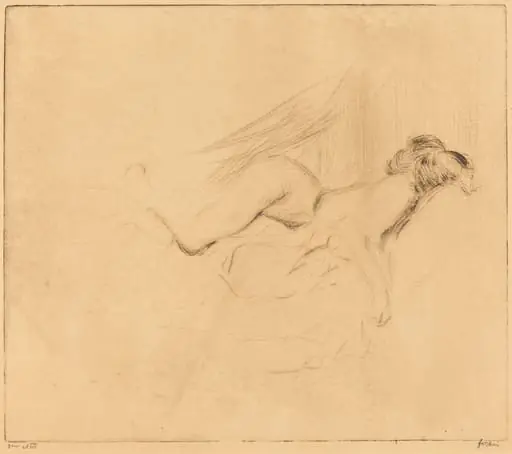
Study of a 'Sleeping Odalisque' after Ingres is a drawing by Alphonse Legros. It dates from 1850 and is held in the collection of the Victoria and Albert Museum.
About this work
Overview
Executed in pencil or charcoal, the work reflects Legros’s engagement with academic traditions and his interest in anatomical precision.
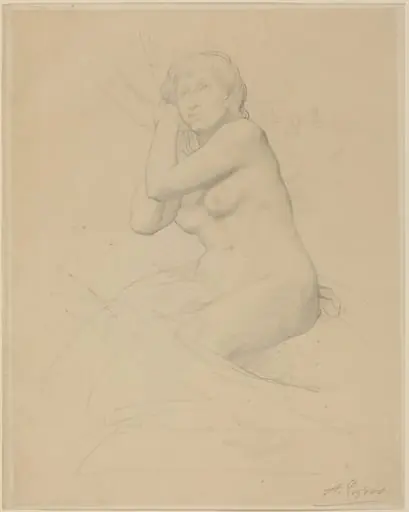
This 1850 drawing by Alphonse Legros is a careful study of a reclining female figure, inspired by Jean-August-Dominique Ingres’s treatment of the odalisque theme. Executed in pencil or charcoal, the work reflects Legros’s engagement with academic traditions and his interest in anatomical precision. Signed by the artist, it stands as a deliberate exercise in reinterpretation rather than an independent composition.
Subject & Meaning
The figure, rendered in a state of repose, aligns with the 19th-century European convention of the odalisque—a reclining female form often associated with exoticism and private contemplation. Her relaxed posture, turned head, and extended limbs suggest quiet introspection rather than narrative action. The subject is not identified by name or context, emphasizing form and presence over story.
Technique & Style
Legros employs a controlled line quality and subtle tonal gradations to define the figure’s contours and the soft transitions of flesh. Shading is used sparingly but effectively to suggest volume and the weight of the body against the surface. The drawing’s realism stems from careful observation, not idealization, reflecting a disciplined approach to figure study common in academic ateliers.
History & Provenance
Created in 1850, the drawing emerged during Legros’s formative years in Paris, when he was actively studying the works of established masters like Ingres. While its early ownership is undocumented, its existence as a signed study indicates it was preserved as a pedagogical or personal reference. It remains a trace of Legros’s early artistic development before his later recognition in England.
Context
In the mid-19th century, academic artists routinely produced studies after canonical works to refine technique and internalize compositional principles. Ingres’s odalisques were frequently cited as models of line and form. Legros’s drawing participates in this tradition, demonstrating how emerging artists engaged with established imagery not as imitation, but as a means of learning.
Legacy
Though not widely exhibited, this drawing contributes to understanding Legros’s artistic foundation and his place within the French academic lineage. It reveals his commitment to observational discipline and his respect for Ingres’s formal language. As a study, it holds value not for originality but for its testament to the rigorous training practices of its time.
Artist & collection

Artist
Alphonse Legros (French pronunciation: ; 8 May 1837 – 8 December 1911) was a French, later British, painter, etcher, sculptor, and medallist.