Artwork
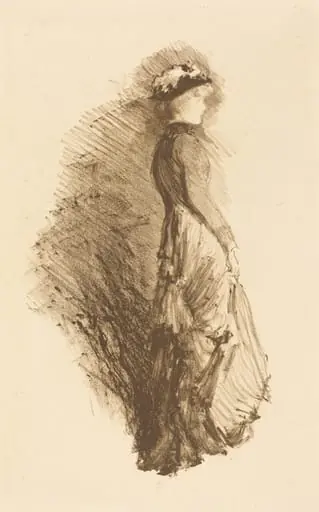
Young Woman Standing
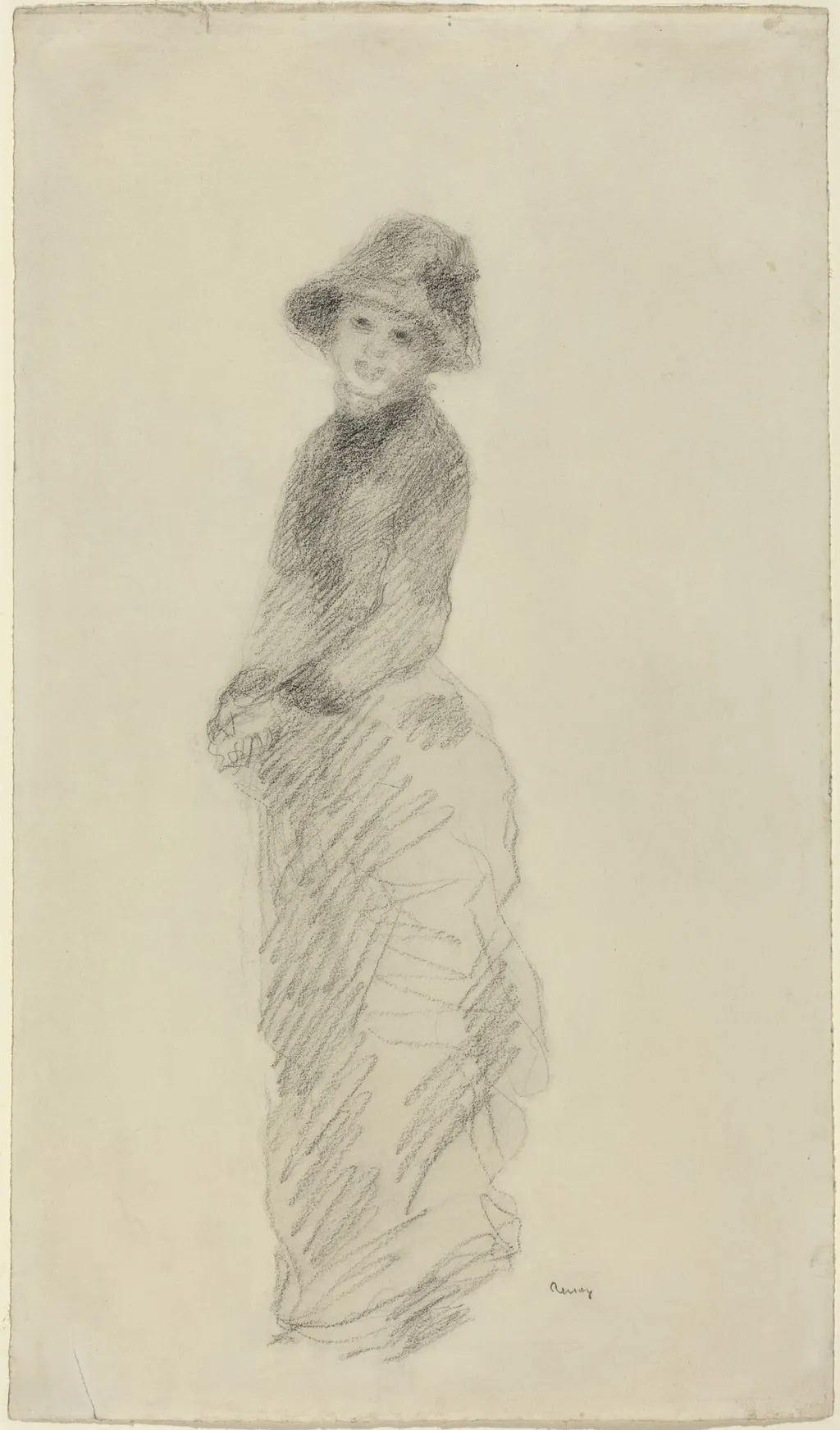
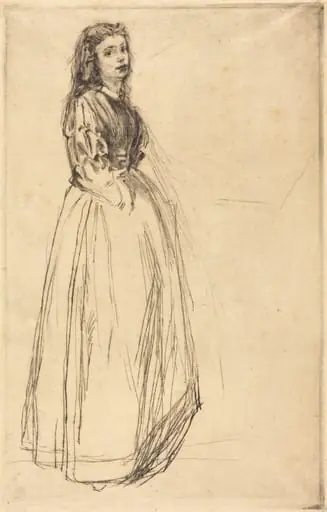
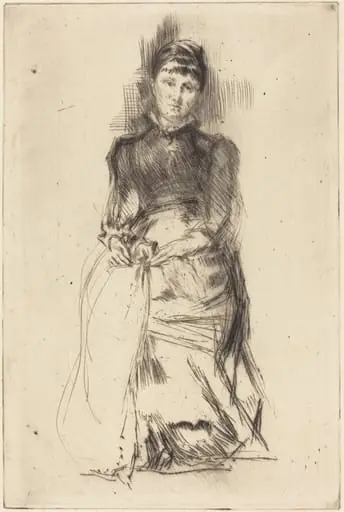
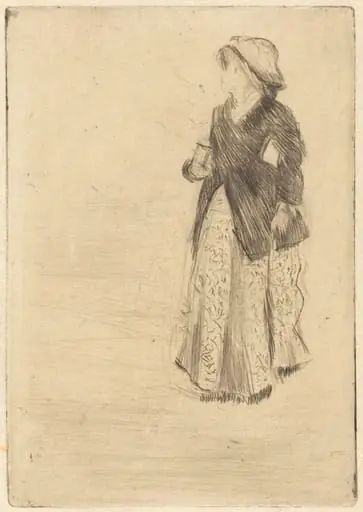
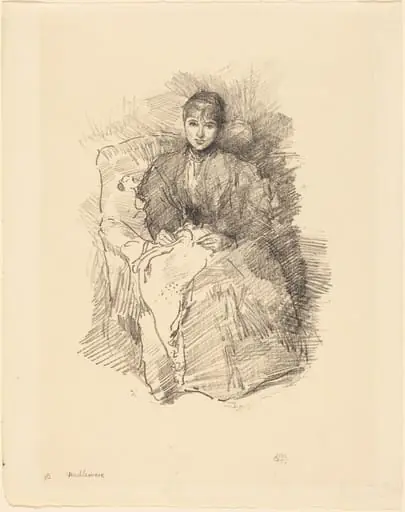
Young Woman Standing is a chalk drawing by the Impressionist artist Auguste Renoir. It dates from 1880 and is held in the collection of the National Gallery of Art.
About this work
Overview
The medium’s softness and the artist’s loose handling suggest it was made as a rapid study, prioritizing presence and posture over finish.
Created around 1880, this drawing by Auguste Renoir depicts a standing woman in profile, rendered in black chalk on wove paper. The composition is uncluttered, with no background details to distract from the figure. The medium’s softness and the artist’s loose handling suggest it was made as a rapid study, prioritizing presence and posture over finish. Its intimacy reflects Renoir’s interest in everyday figures, captured in fleeting moments rather than formal portraiture.
Subject & Meaning
The woman, dressed in a long gown with a high collar and a hat, stands with hands gently clasped before her, conveying quiet composure. Her sideways stance and downward gaze suggest introspection or stillness, common in Renoir’s studies of women in private moments. There is no narrative context, nor symbolic intent—instead, the focus lies in the quiet dignity of the pose, reflecting the artist’s sensitivity to ordinary human presence.
Technique & Style
Renoir employed black chalk with fluid, economical strokes to define form and suggest volume. The lines are loose and responsive, capturing the fall of fabric and the curve of the body without rigid outlines. Subtle gradations of tone, achieved through smudging and varying pressure, create soft shadows that model the figure without harsh contrast. This approach aligns with the tradition of preparatory sketches, valuing immediacy and gesture over precision.
History & Provenance
The drawing is dated to approximately 1880, a period when Renoir was deeply engaged in figure studies, often working from live models in his studio. It likely originated as part of a series of sketches used to explore posture and drapery for larger paintings. Its survival as a standalone work suggests it was valued for its expressive quality, though its early ownership remains undocumented in public records.
Context
In the 1880s, Renoir increasingly turned to drawing as a means to refine his understanding of the human form, especially after his exposure to Renaissance and Neoclassical works during a trip to Italy. This drawing reflects a shift toward more structured compositions, yet retains the spontaneity of Impressionist practice. Such studies were common among artists of the time, serving as bridges between observation and finished works.
Legacy
Though not widely exhibited during Renoir’s lifetime, this drawing exemplifies his enduring commitment to capturing the human figure with sensitivity and restraint. It contributes to a broader understanding of his process, revealing how sketches informed his paintings. Today, it stands as a quiet testament to the value of informal study in the development of a major artist’s vision.
Artist & collection
Artist
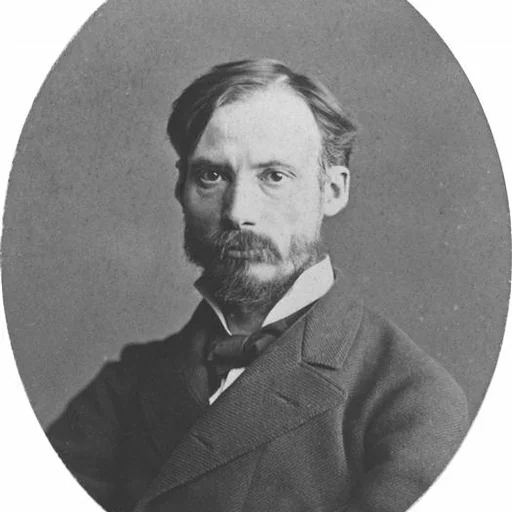
Pierre-Auguste Renoir was born on 25 February 1841 in Limoges, the son of a tailor and a seamstress.