Artwork
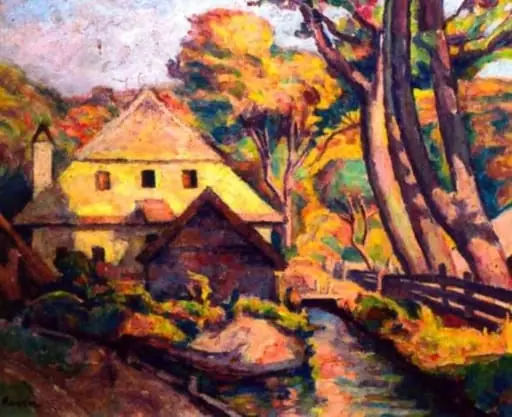
Sat pe malul apei
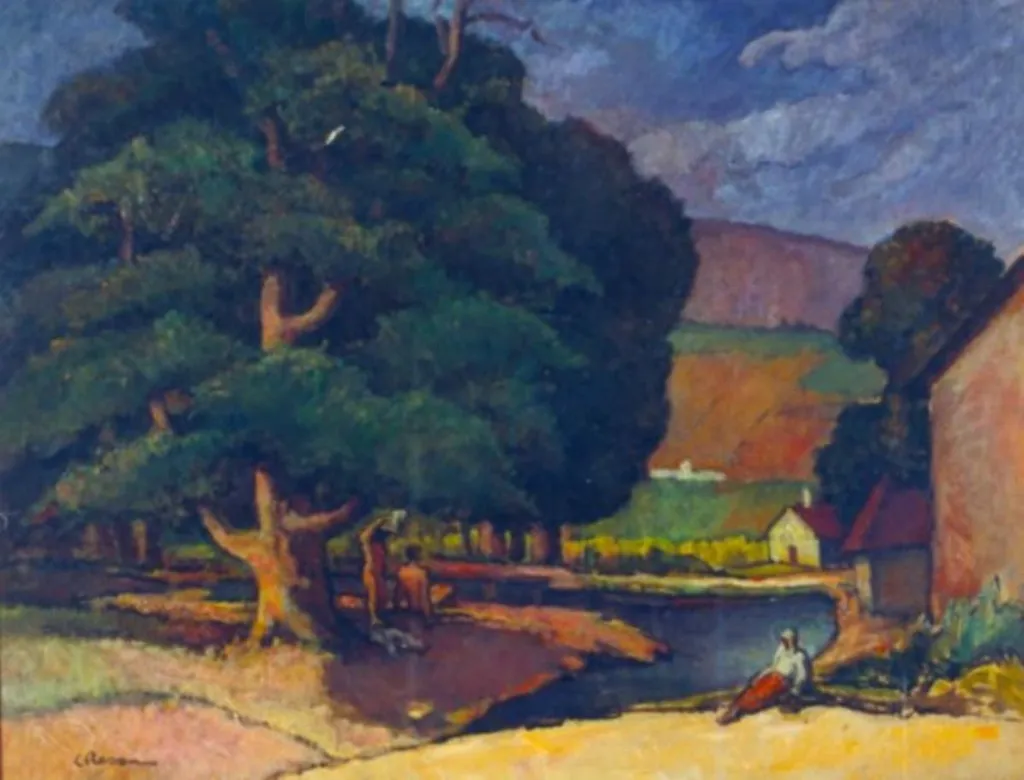
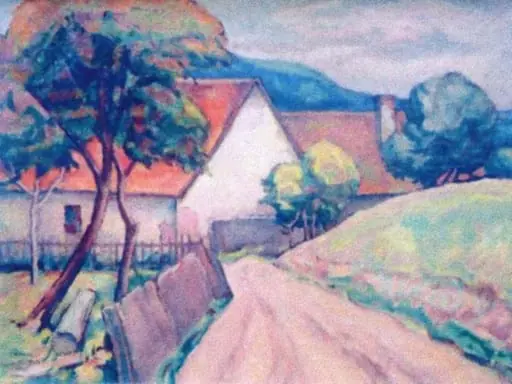
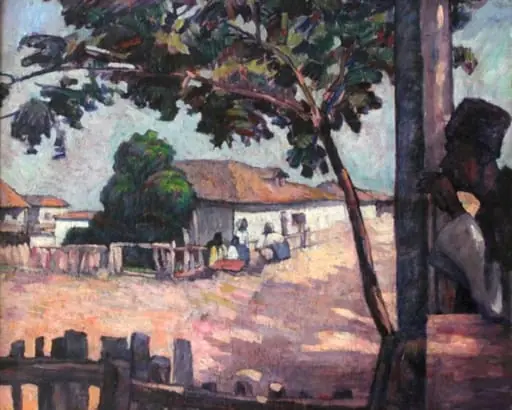
Sat pe malul apei is an unspecified painting by Camil Ressu. It dates from 1949 and is held in the collection of the Cotroceni National Museum.
About this work
Overview
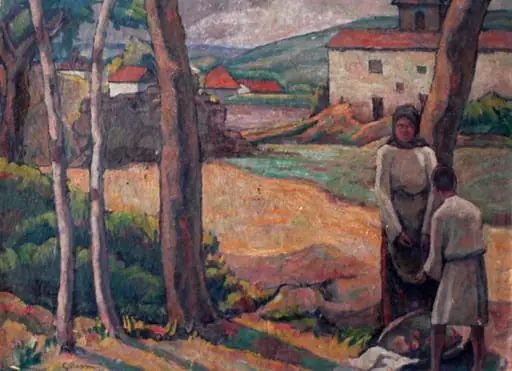
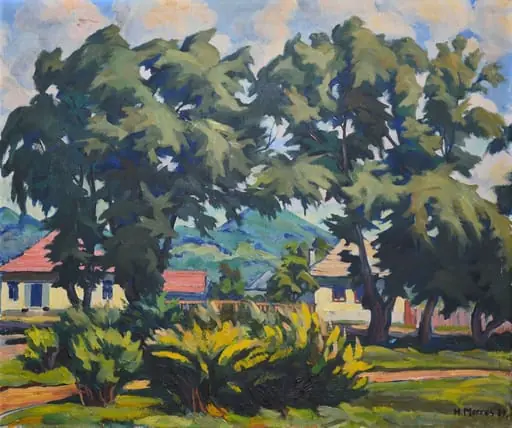
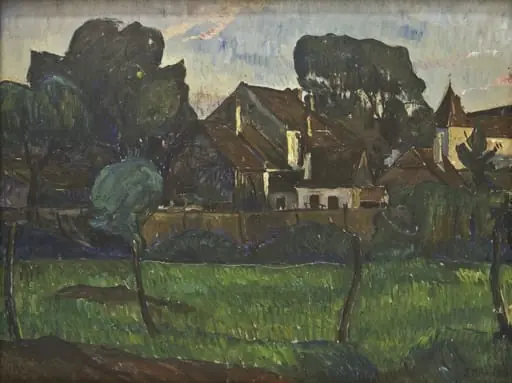
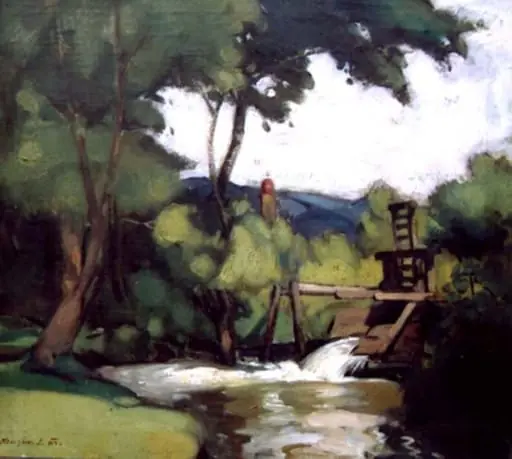
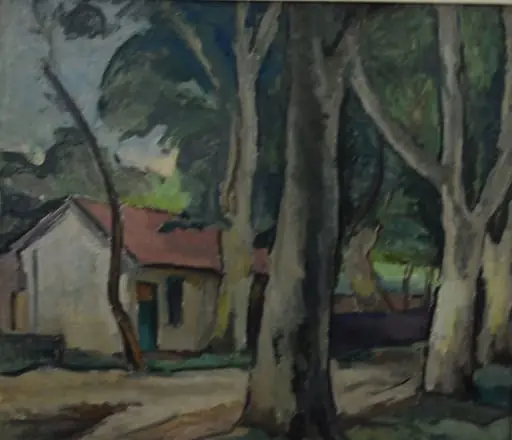
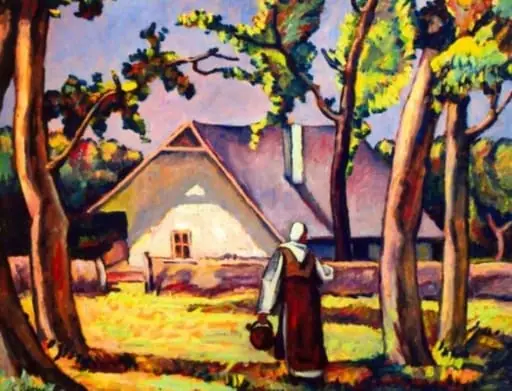
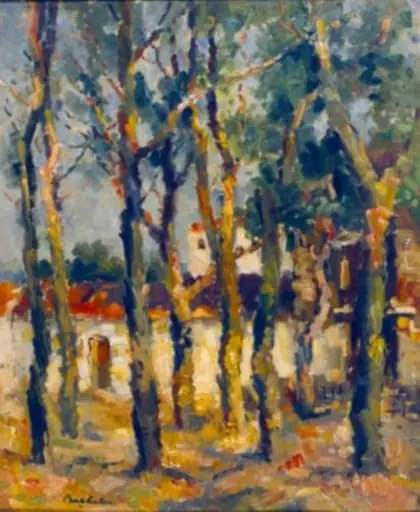
Painted around 1949 by Camil Ressu, Sat pe malul apei depicts a tranquil riverside village scene. The work is part of the collection at the Museum of Ethnography and reflects the artist’s interest in rural Romanian life during the mid-20th century. Its subdued palette and textured surface distinguish it from more polished academic styles of the period, emphasizing atmosphere over detail.
Subject & Meaning
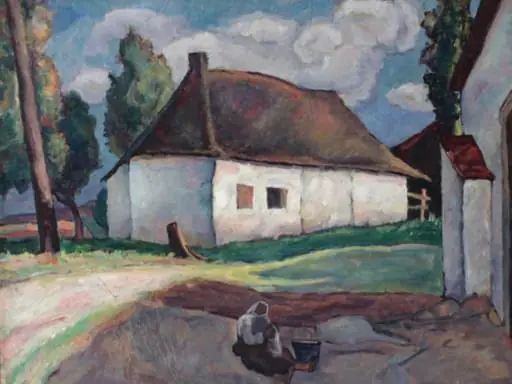
The painting presents a solitary figure standing near the water’s edge, facing a quiet river that separates the viewer from a small white structure on the opposite bank. A bridge links the two shores, suggesting connection without human activity. The absence of movement or interaction conveys stillness and solitude, evoking a sense of quiet contemplation rather than narrative drama.
Technique & Style
Ressu employed thick, expressive brushwork to build form and texture, particularly in the sky and rolling hills. The impasto technique gives the surface a tactile quality, with uneven strokes suggesting wind, light, and terrain. Colors—burnt oranges, deep greens, and muted blues—are applied with deliberate irregularity, enhancing the emotional tone without relying on precise realism.
History & Provenance
Created in the late 1940s, the painting entered the Museum of Ethnography’s collection shortly after its completion. Its acquisition reflects institutional interest in documenting vernacular Romanian landscapes during a period of cultural redefinition. No significant changes in ownership are documented, and the work has remained in public hands since its creation.
Context
Ressu painted this scene during a time when Romanian artists were navigating state expectations and personal expression. While official art promoted socialist realism, Ressu maintained a more introspective, regional focus. This work aligns with a quieter tradition of Romanian landscape painting that valued emotional resonance over ideological messaging.
Legacy
Sat pe malul apei endures as an example of Ressu’s commitment to capturing the quiet dignity of rural life. Though not widely exhibited, it contributes to the understanding of postwar Romanian art beyond state-sanctioned themes. Its textured surfaces and restrained palette continue to inform discussions on regional modernism in Eastern European painting.
Artist & collection

Artist
Camil Ressu was a Romanian painter and academic, one of the most significant art figures of Romania.