Artwork
Gate of the Oil Market, Athens
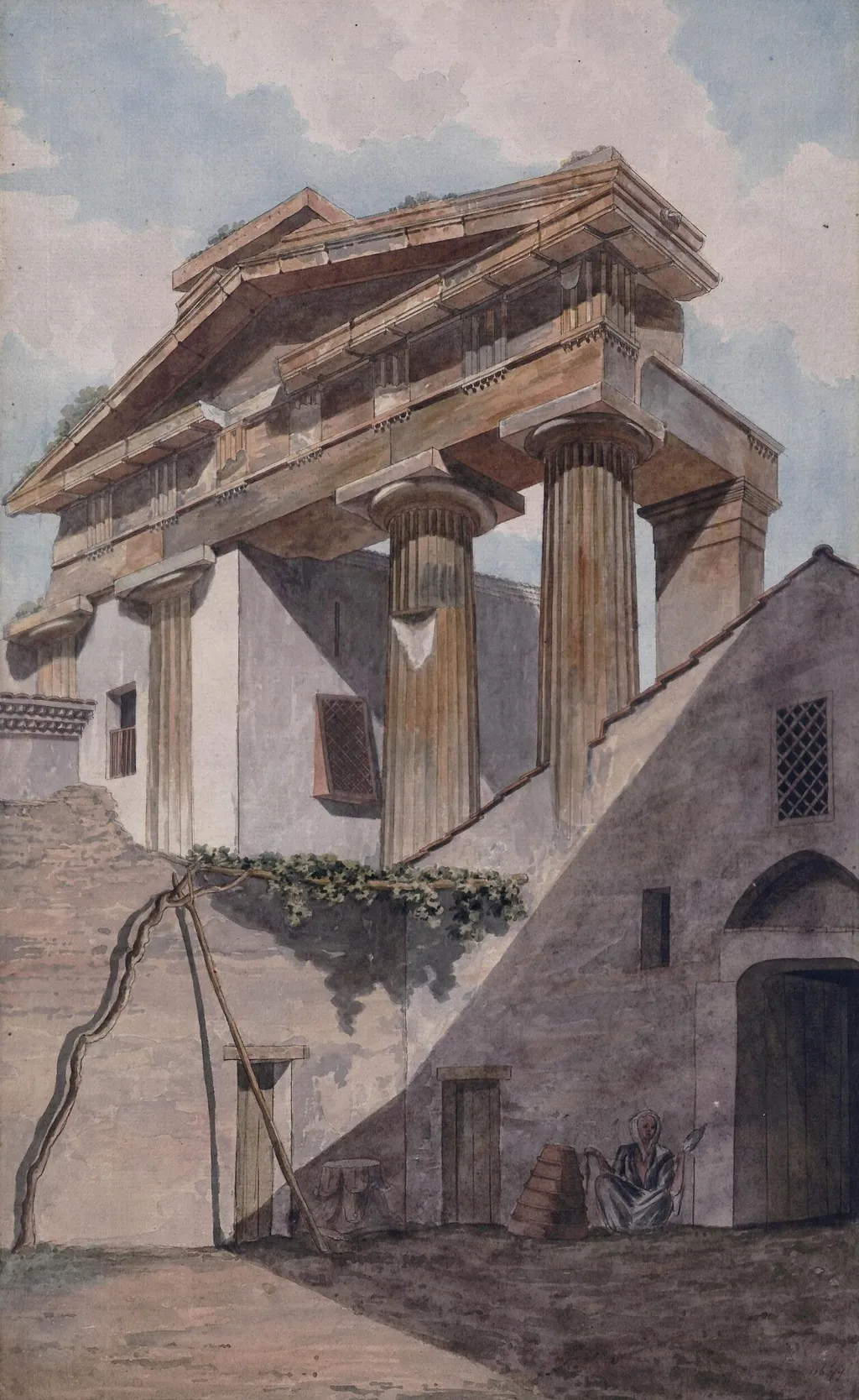
Gate of the Oil Market, Athens is a watercolor work on paper by the Romanticist artist Willey Reveley. It dates from 1785 and is held in the collection of the Victoria and Albert Museum.
About this work
Overview
The work is a precise, observational study of an ancient structure, rendered with delicate washes and fine linear detail.
Created in 1785, this watercolour by Willey Reveley captures the Gate of the Oil Market in Athens. The work is a precise, observational study of an ancient structure, rendered with delicate washes and fine linear detail. Reveley’s approach reflects the topographical precision common among British travelers documenting classical sites during the late 18th century, blending documentary intent with aesthetic sensitivity.
Subject & Meaning
The gate, a remnant of classical antiquity, stands as a symbol of Athens’ layered history. Its columns and triangular pediment suggest Roman or Hellenistic origins, while the solitary figure in traditional dress—robe and turban—hints at the living culture surrounding the ruins. The inclusion of vegetation climbing the walls underscores nature’s reclamation of human architecture, subtly evoking themes of time and decay.
Technique & Style
Reveley employed transparent watercolour washes to suggest the luminous quality of Mediterranean light. The white stone of the structure is rendered with minimal pigment, allowing the paper’s brightness to define form, while brown accents outline architectural details. Delicate brushwork captures the texture of stone and foliage, and the soft sky, with its pale clouds, adds atmospheric depth without overt dramatization.
History & Provenance
Willey Reveley, an English architect and draftsman, traveled through the Ottoman-controlled Greek territories in the 1780s, documenting antiquities for British patrons. This watercolour likely originated from his sketchbook during that journey. It entered later collections through familial or institutional acquisition, preserving its role as a record of pre-independence Greece’s architectural landscape.
Context
In the late 18th century, European interest in classical antiquity intensified, fueled by archaeological exploration and Enlightenment ideals. British travelers like Reveley produced detailed records of Greek ruins before widespread tourism or restoration. His work contributed to a growing visual archive that informed architectural revival movements and scholarly understanding of the ancient world.
Legacy
Reveley’s watercolour remains a valuable historical document, offering insight into the condition of Athenian monuments before modern excavation. Its restrained style contrasts with later Romanticized depictions, preserving a more factual record. Today, it serves as a reference for scholars studying the transmission of classical imagery and the evolution of archaeological illustration in the Western tradition.
Artist & collection

Artist
Willey Reveley (1760–1799) was an 18th-century English architect, born at Newton Underwood near Morpeth, Northumberland.

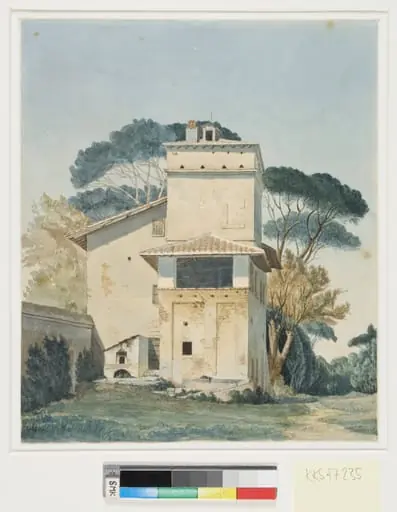 Raffaels atelier i Villa Borgheses have. Rom
![N.West View of the Tower of the Winds [Athens],, by Unknown](https://artifactworldgallery.com/img/unknown--n-west-view-of-the-tower-of-the-winds-athens--73307e85a9220672-w320.webp) N.West View of the Tower of the Winds [Athens],
N.West View of the Tower of the Winds [Athens],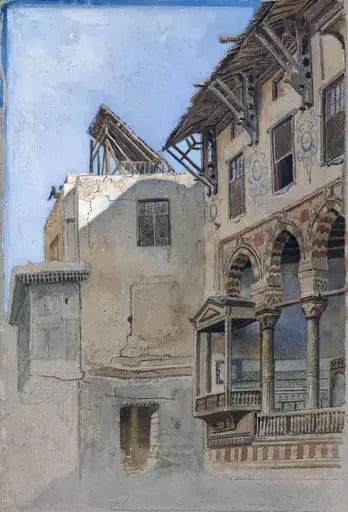 Loggia of the Summer Reception Room (Makad) in the House of the Memluk Raduan Bey, Cairo
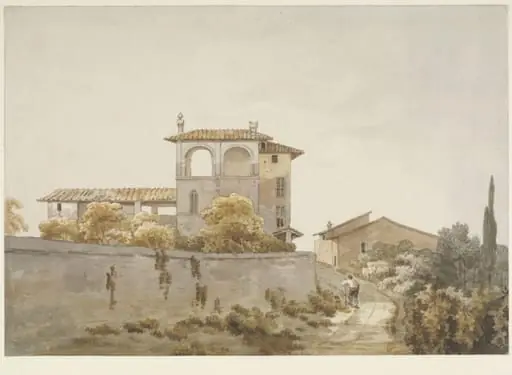 Italian villa
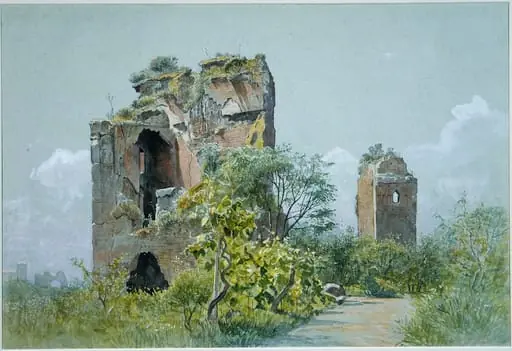 Baths of Trajan (Sette Sale, Villa Brancaccio, Rome)
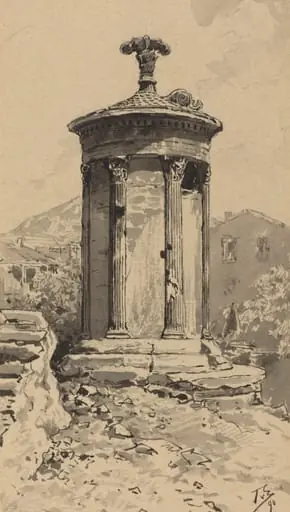 Monument of Lysicrates
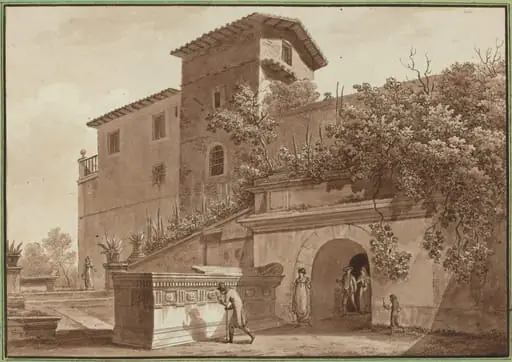 Tomb of Scipios
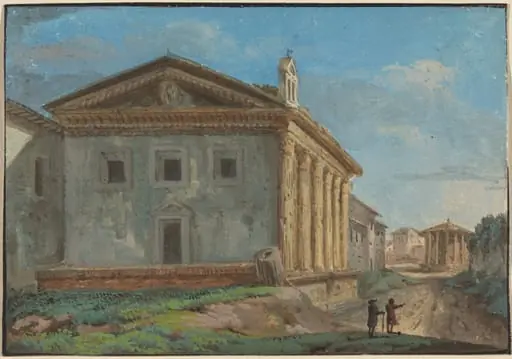 Tempio della Fortuna Virile with the Tempio di Vesta in the Distance
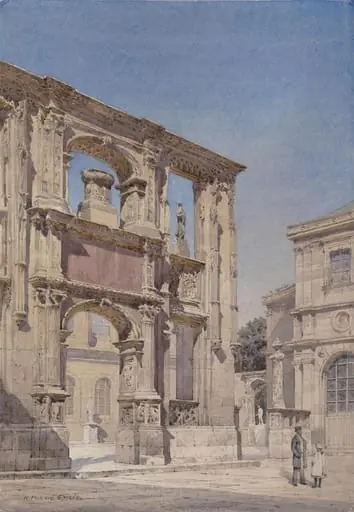 Part of the Chateau de Gaillon re-erected in the court of the Palais des Beaux Arts
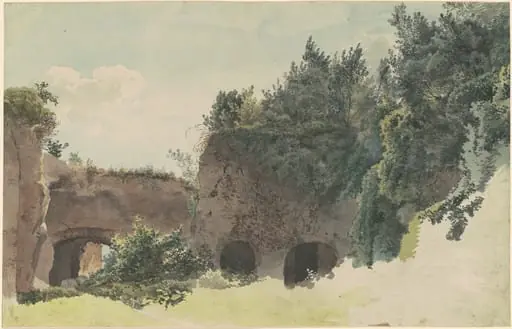 Ancient Roman Ruins Overgrown with Trees and Bushes
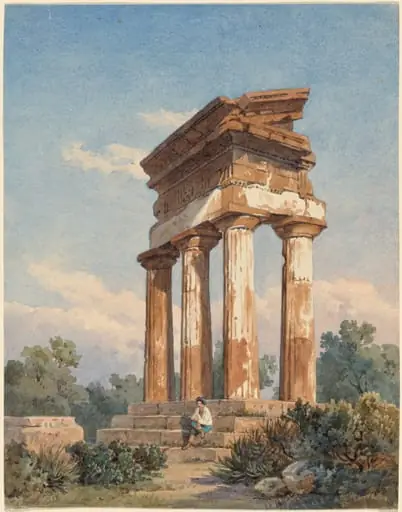 A Temple Ruin in Agrigento
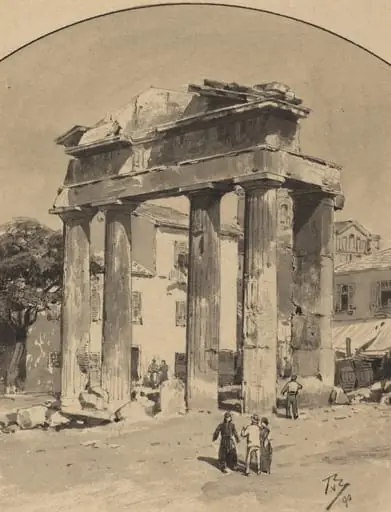 Old Market Gate