Artwork
Raffaels atelier i Villa Borgheses have. Rom
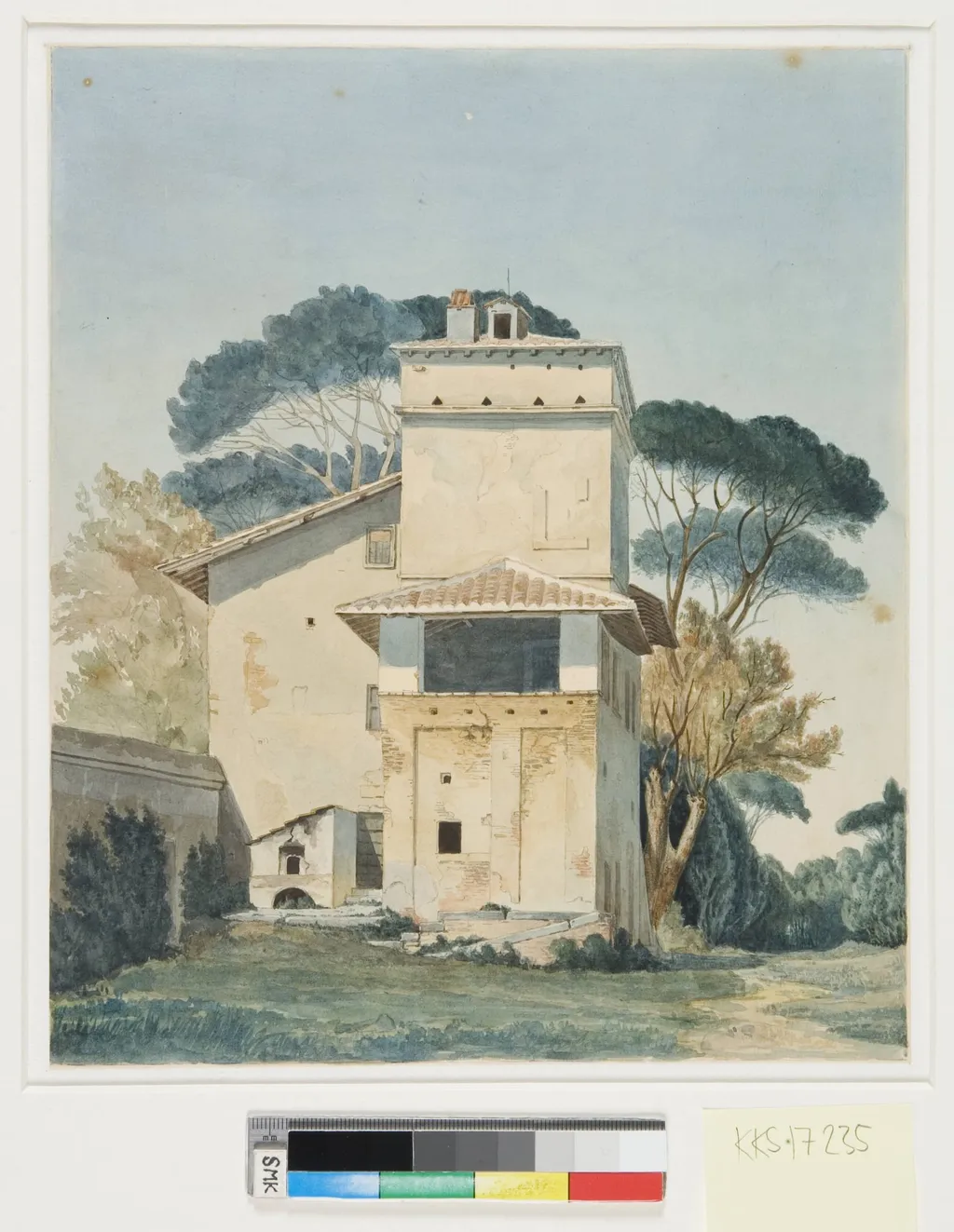
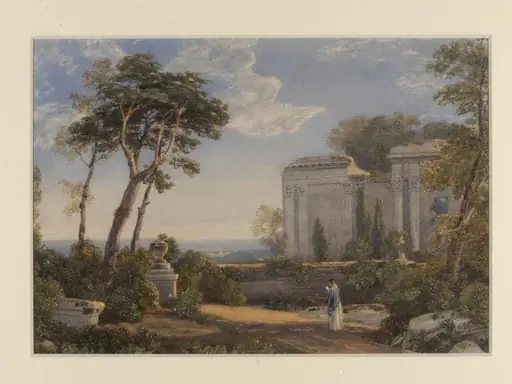
Raffaels atelier i Villa Borgheses have. Rom is an unspecified painting by Unknown. It dates from 1850 and is held in the collection of the Statens Museum for Kunst. Created around 1850, the work titled “Raffaels atelier i Villa Borgheses have.
About this work
Overview
Created around 1850, the work titled “Raffaels atelier i Villa Borgheses have. Rom” is an image held in the collection of the Museum of Ethnography. The piece is attributed to the artist recorded as 1157_person. It depicts a weathered stone structure with a prominent tower, a modest porch, and surrounding vegetation under a softly clouded sky.
Subject & Meaning
The composition centers on an aged building whose simple geometry and worn façade convey a sense of quiet endurance. The surrounding trees and uneven grass suggest a lived-in, perhaps rural, setting, inviting contemplation of the passage of time and the interplay between architecture and nature.
Technique & Style
The artist emphasizes the effects of light across the stone surfaces, creating contrasts that highlight certain areas while allowing shadows to recede. This handling of illumination reflects a chiaroscuro approach, where the gradations of brightness and darkness give the scene a three‑dimensional quality despite its flat medium.
History & Provenance
The image entered the Museum of Ethnography’s holdings sometime after its creation in the mid‑nineteenth century, though precise acquisition details remain undocumented. Its attribution to 1157_person situates it within the broader output of that period, linking it to the artistic currents circulating in Europe around 1850.
Context
The depicted structure evokes architectural elements reminiscent of Roman villas, aligning the work with a 19th‑century fascination for classical antiquity. By portraying a modest, weathered edifice rather than a grand monument, the piece reflects a shift toward more intimate, everyday subjects in the visual culture of the era.
Artist & collection

 Domestic Scene
 Giacomo and Cardinal Marco, investing Andrea, Abbot of San Zeno, with his Benefice
 The Nymph of Fontainebleau
 Portrait of a Woman
 Madonna and Child with Saints in the Enclosed Garden
 Venus and Minerva
 Family Group of Four on Sofa
 Wall painting from Room H of the Villa of P. Fannius Synistor at Boscoreale
 Italian villa
 The Garden of San Miniato near Florence
 A View from Hadrian's Villa, Tivoli
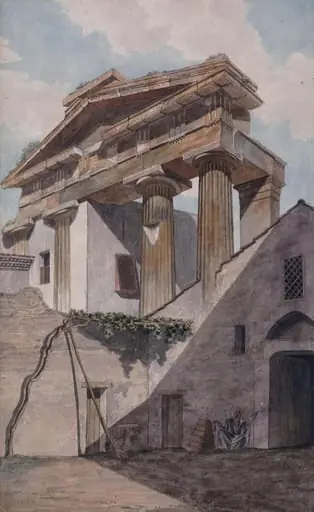 Gate of the Oil Market, Athens
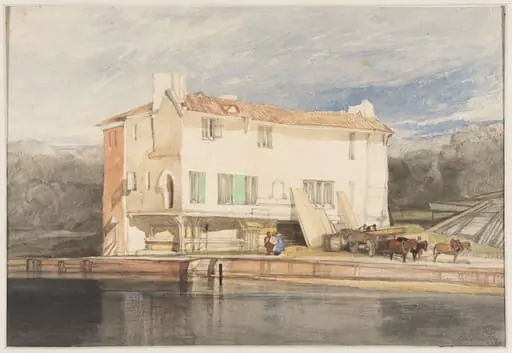 House and River
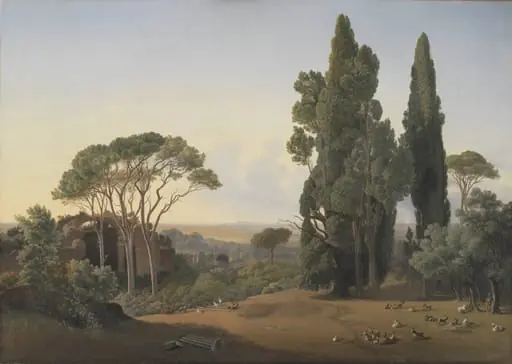 A View from Hadrian's Villa, Tivoli
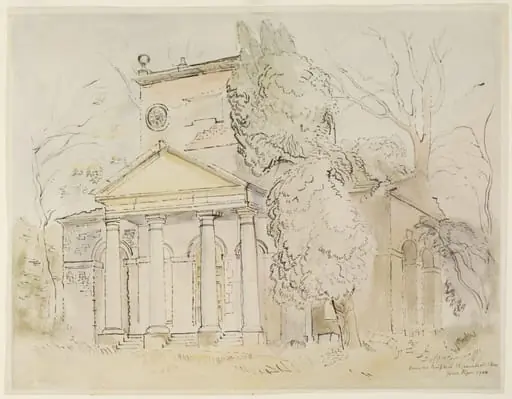 The Ruined Temple of Friendship in the Grounds at Stowe
 Ruins: A Classical Composition
 Petit eglise que e trouve sur le chemin da Puzzuoli (sic)