Artwork
Memorial to Admiral Sir Clowdisley Shovell
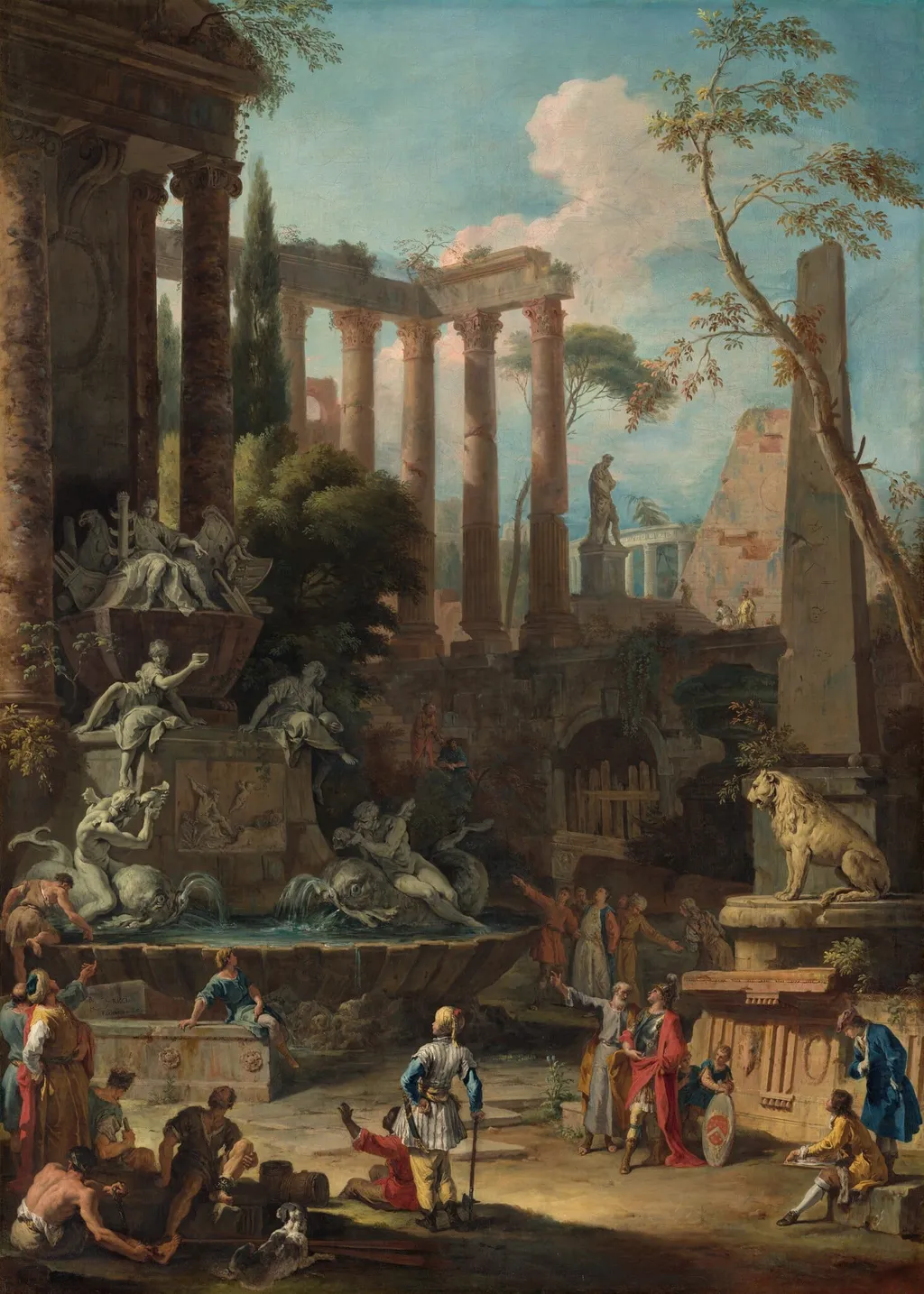
Memorial to Admiral Sir Clowdisley Shovell is an oil painting by the Baroque artist Sebastiano Ricci. It dates from 1725 and is held in the collection of the National Gallery of Art.
About this work
Overview
Sebastiano Ricci’s 1725 oil on canvas, titled Memorial to Admiral Sir Clowdisley Shovell, presents a bustling garden setting.
Sebastiano Ricci’s 1725 oil on canvas, titled Memorial to Admiral Sir Clowdisley Shovell, presents a bustling garden setting. Central to the composition is a fountain spilling water, surrounded by a crowd in period dress. Ruined columns and statues frame the scene, while a lion sculpture occupies a pedestal on the right. The work combines architectural decay with lively figures, creating a complex visual narrative.
Subject & Meaning
The painting juxtaposes the remnants of classical architecture with figures ranging from laborers to aristocrats, suggesting a meditation on memory and the passage of time. The presence of a shield‑bearing gentleman in red and a group gathered near a small temple evokes notions of honor and commemoration, aligning the work with the memorial function implied by its title.
Technique & Style
Ricci employs a luminous palette and deft handling of light, allowing chiaroscuro to model forms and give depth to the garden’s foliage and stone. The brushwork is fluid, particularly in the rendering of water and drapery, while the intricate detailing of tools and attire demonstrates the artist’s skill in integrating genre elements within a historical tableau.
History & Provenance
Created in 1725, the canvas was likely commissioned to honor Admiral Sir Clowdisley Shovell, a notable figure in early 18th‑century naval history. Though specific ownership records are sparse, the work has been documented in European collections since the late 18th century, reflecting its continued relevance as a commemorative piece.
Context
Ricci worked during the late Baroque period, a time when grand historical subjects were often blended with everyday scenes. The inclusion of classical ruins mirrors contemporary fascination with antiquity, while the varied social strata of the figures reflect the era’s interest in portraying both elite and common life within a single composition.
Own this work as a print
Artist & collection