Artwork
The Last Communion of Saint Mary of Egypt
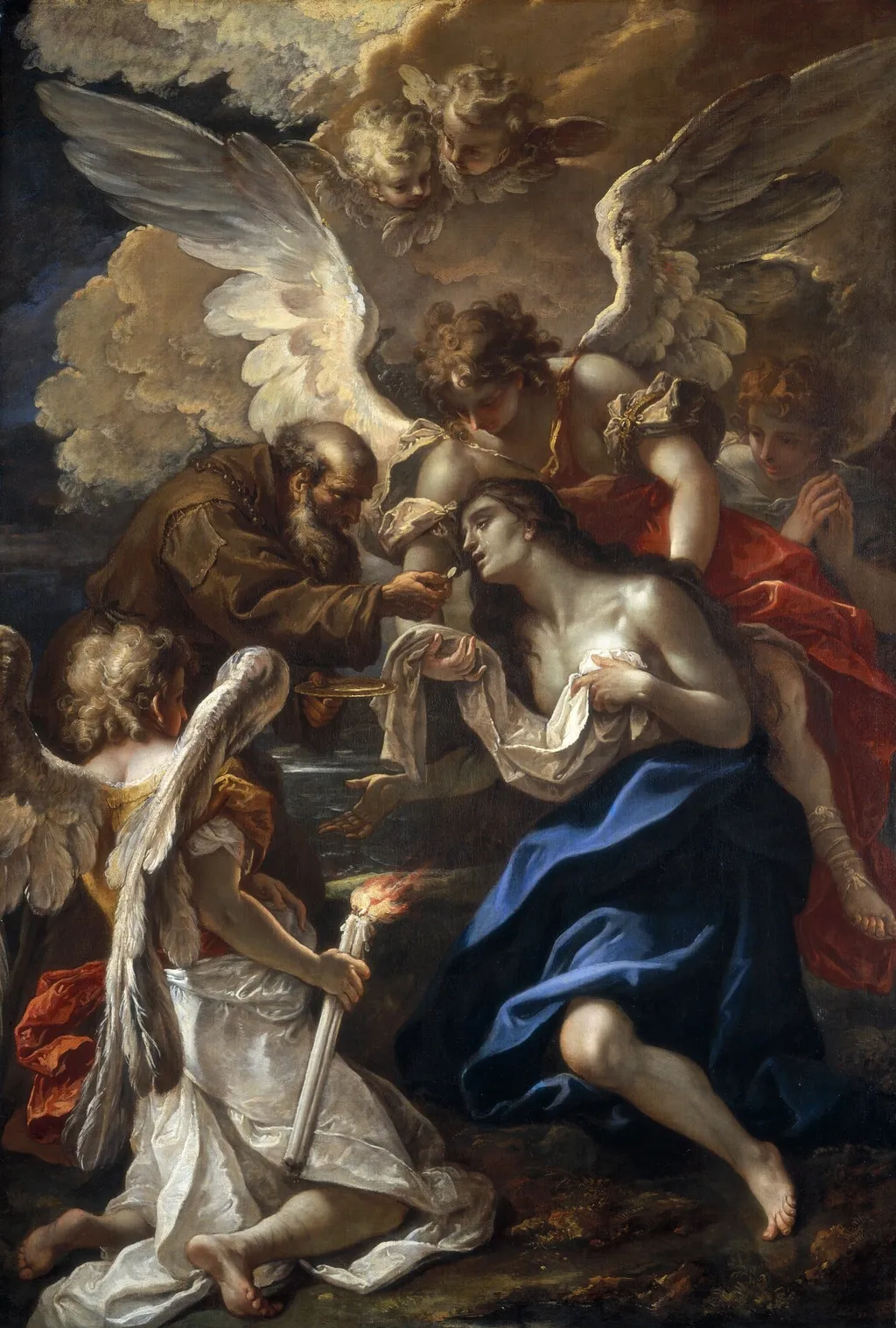
The Last Communion of Saint Mary of Egypt is an oil painting by the Baroque artist Sebastiano Ricci. It dates from 1695 and is held in the collection of the National Gallery of Art.
About this work
Overview
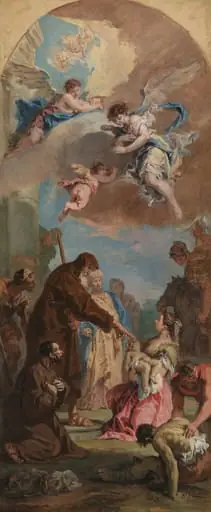
Sebastiano Ricci’s oil on canvas, dated around 1695, portrays the final communion of a holy woman, traditionally identified as Saint Mary of Egypt. The composition centers on a solemn ritual in which the saint receives the Eucharist from a kneeling priest, set against a celestial backdrop populated by angels and a distant figure of Christ.
Subject & Meaning
The work illustrates the moment of Saint Mary of Egypt’s last sacrament, emphasizing themes of repentance and redemption. Her blue robe and the white cloth over her arm convey purity, while the priest’s humble posture underscores the reverence of the rite. The surrounding angels and Christ in the clouds suggest divine approval of her penitent life.
Technique & Style
Ricci employs chiaroscuro, contrasting bright illumination on the central figures with deeper shadows in the surrounding space, which creates a three‑dimensional effect and heightens the emotional intensity. The brushwork is fluid, characteristic of late Baroque painting, and the golden plate bearing the host catches the light, drawing focus to the sacramental act.
History & Provenance
Executed circa 1695, the painting reflects Ricci’s mature period when he was active in Venice and the broader Italian art market. While specific ownership records are scarce, the work has been associated with ecclesiastical collections that valued depictions of saints’ penitential narratives.
Context
The subject aligns with the Counter‑Reformation emphasis on saints as exemplars of piety and conversion. Saint Mary of Egypt, a desert hermit celebrated for her extreme asceticism, was a popular figure in 17th‑century devotional art, serving as a moral exemplar for viewers.
Own this work as a print
Artist & collection