Artwork
Girl Tending Cows
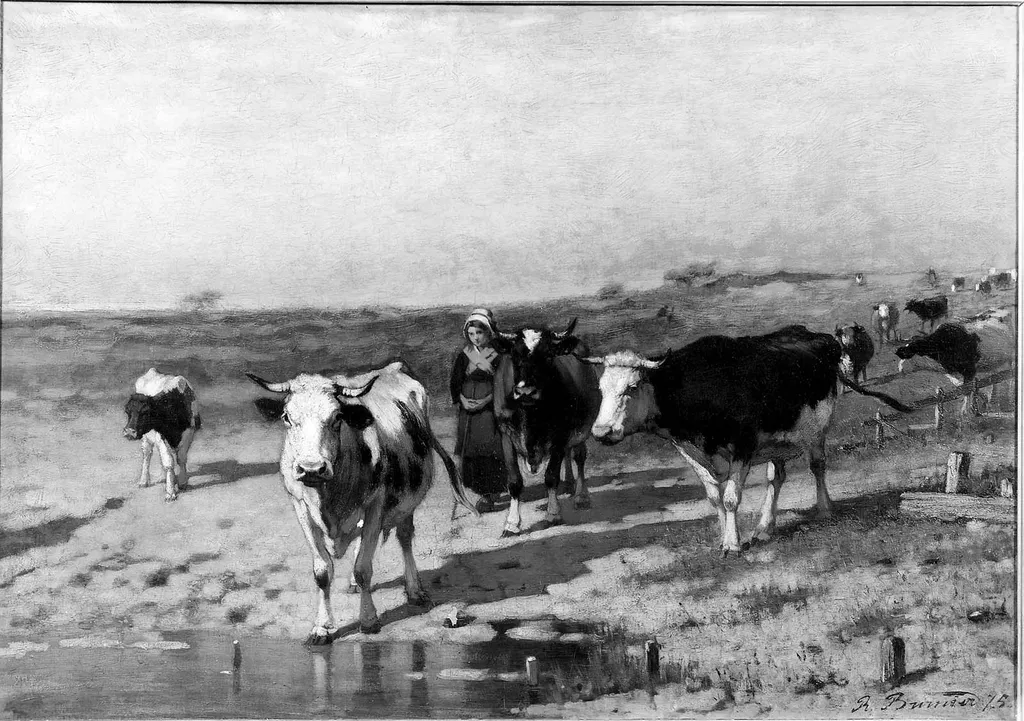
Girl Tending Cows is an oil painting by Richard Burnier. It dates from 1865 and is held in the collection of the Museum of Fine Arts Boston.
About this work
Overview
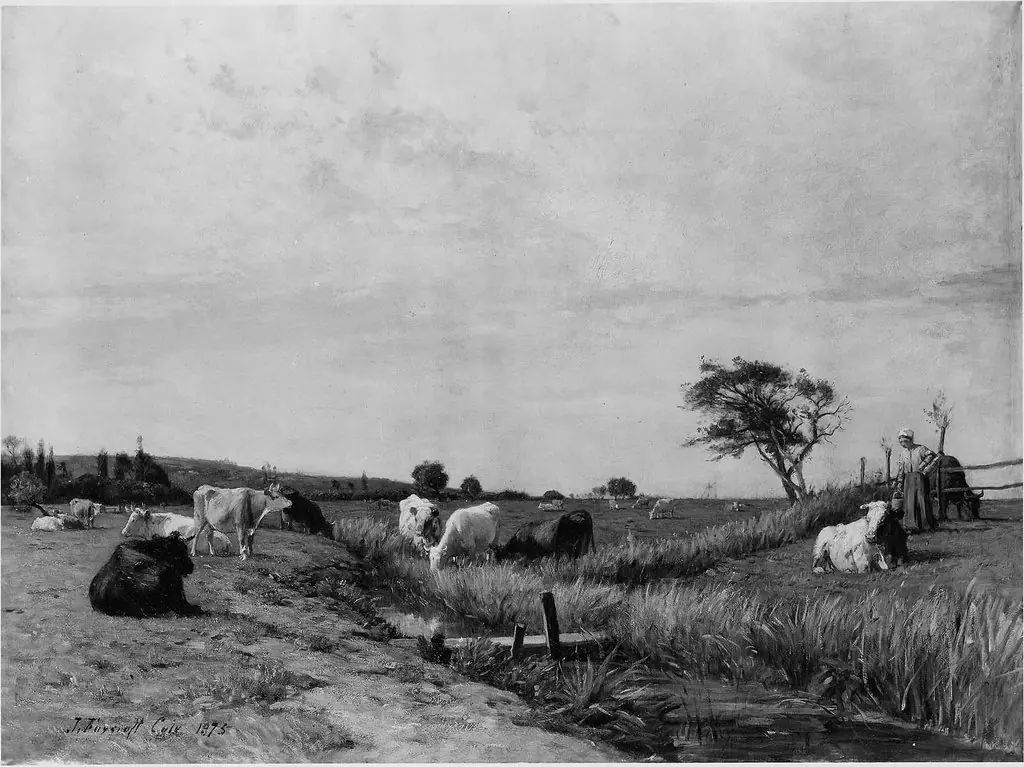
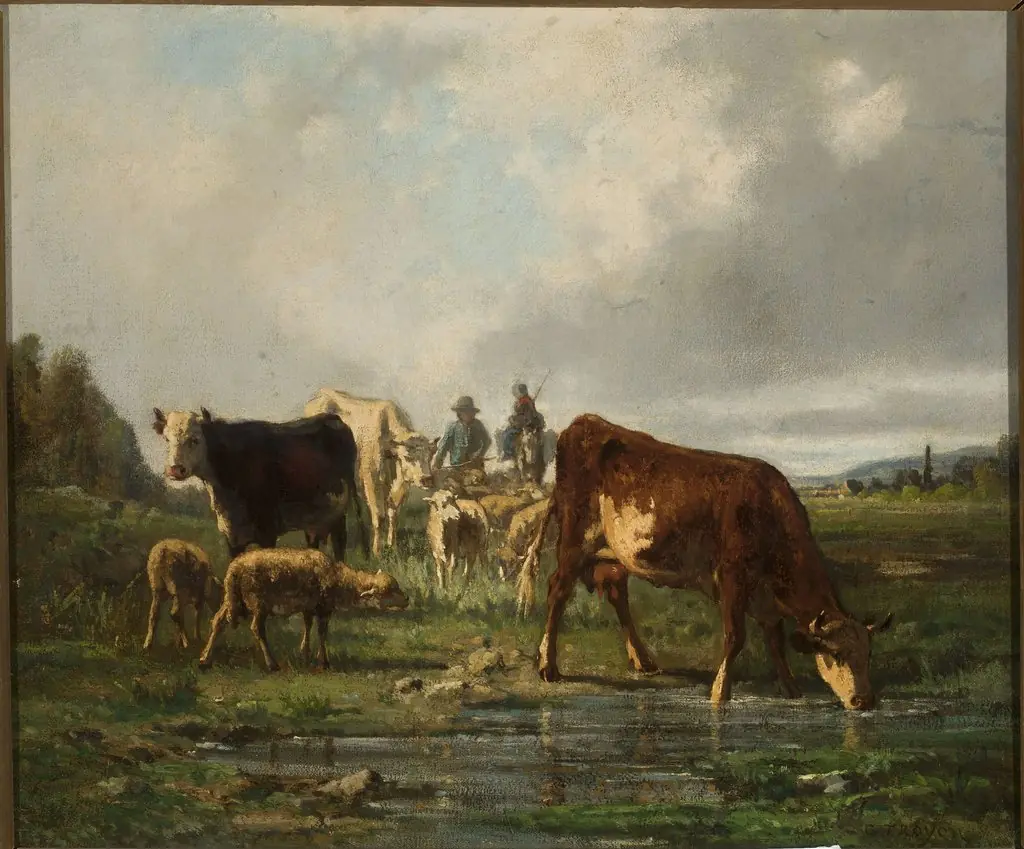
Painted around 1865 by Richard Burnier, this oil on canvas depicts a rural scene of quiet labor. The work is part of the collection at the Museum of Fine Arts, Boston, and reflects a 19th-century interest in everyday rural life. Its composition centers on a solitary figure engaged in a routine task, framed by a tranquil landscape that emphasizes stillness over drama.
Subject & Meaning
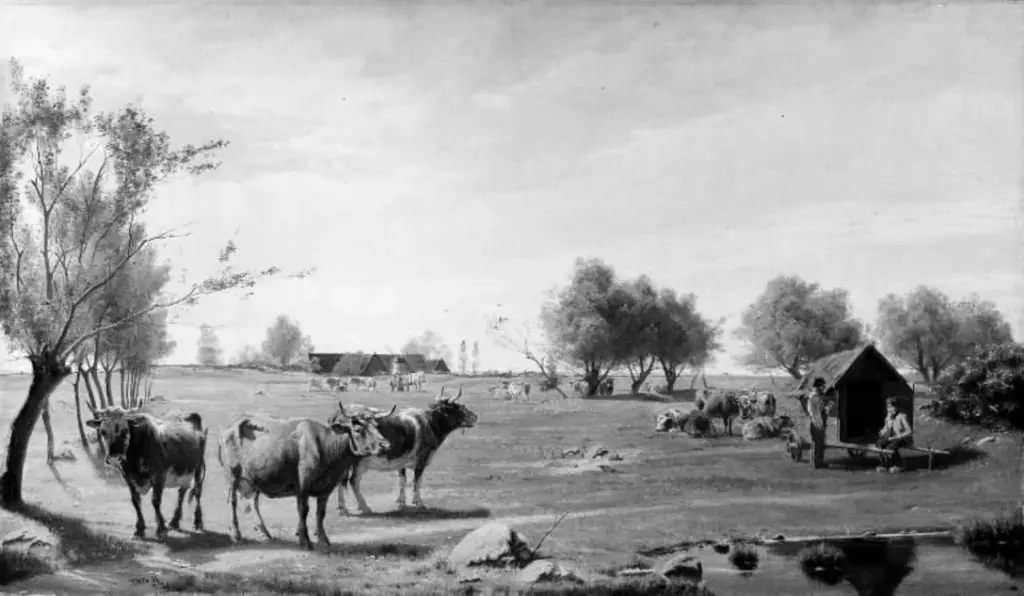
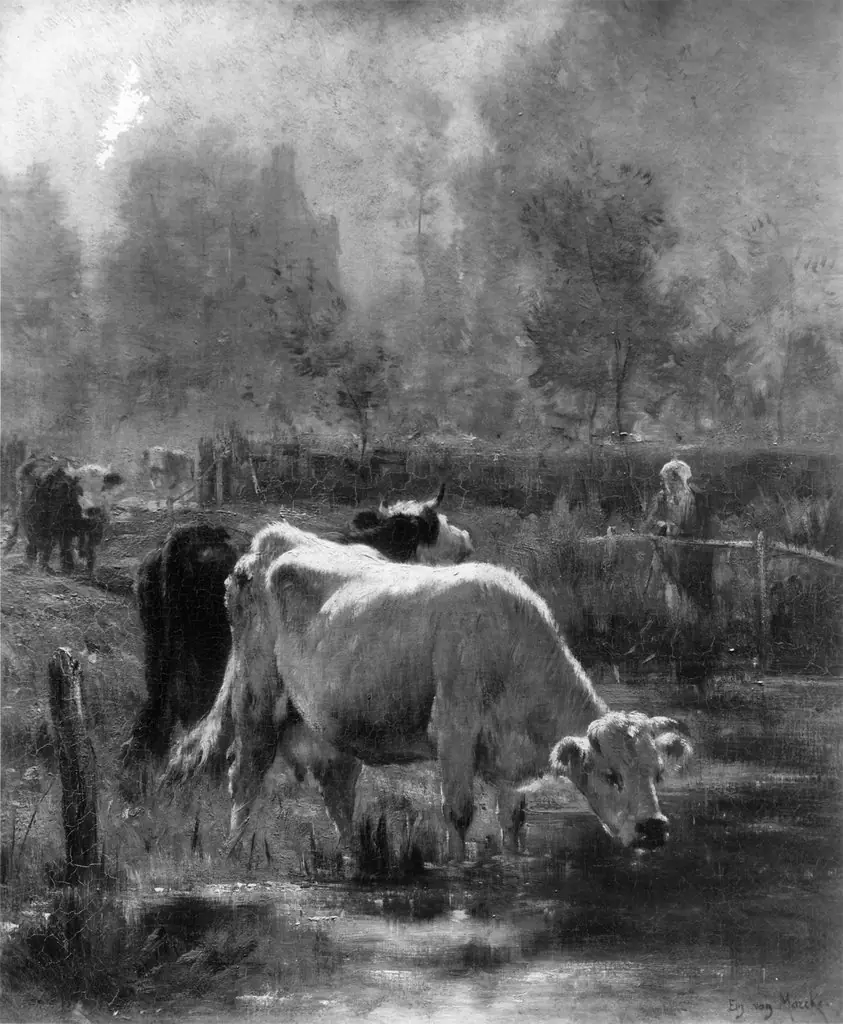
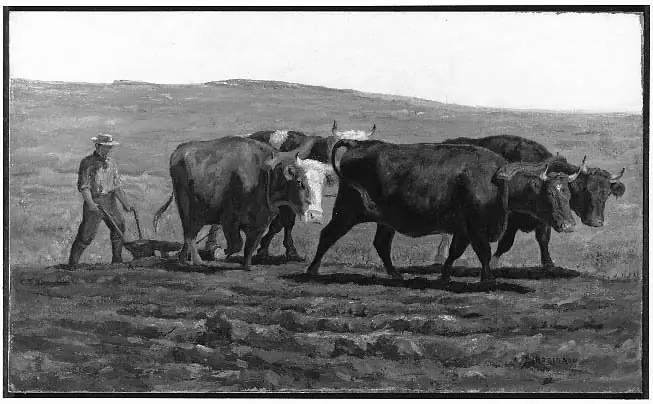
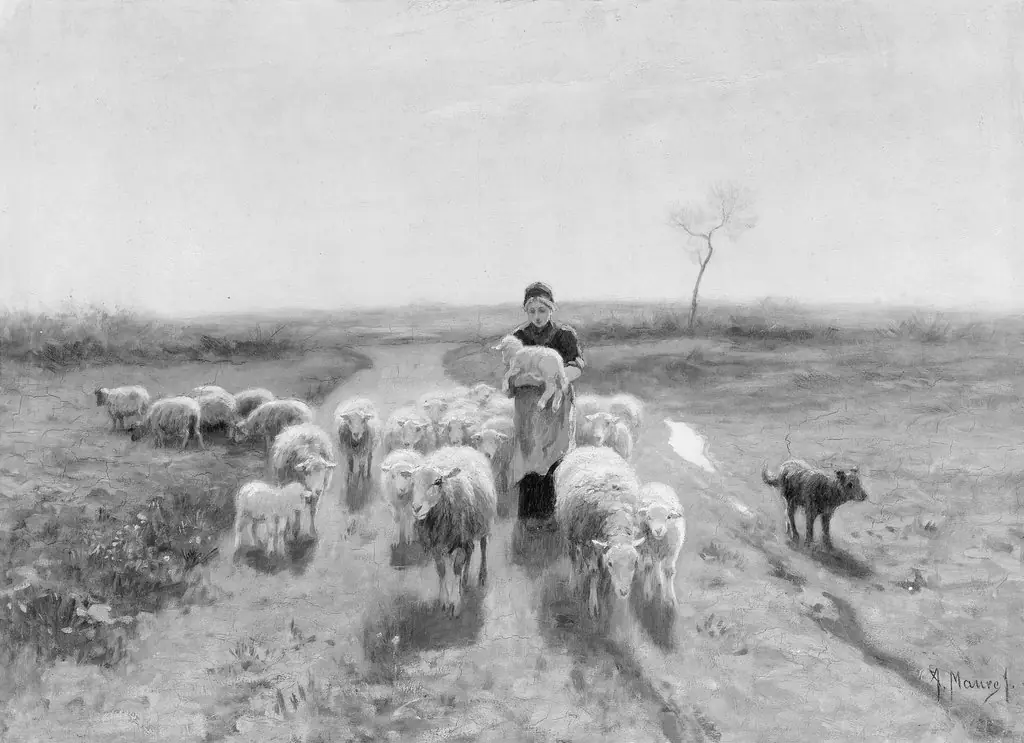
A young girl, dressed in a long dress and wide-brimmed hat, stands calmly amid a small herd of black-and-white cattle. She holds a staff, suggesting her role as a herder. Her downward gaze and composed posture convey quiet responsibility rather than hardship. The scene avoids sentimentality, presenting rural labor as an unremarkable, natural part of daily existence.
Technique & Style
Burnier employs soft brushwork and layered glazes to achieve subtle transitions in light and atmosphere. The hazy background, rendered with muted tones, recedes gently behind the more defined foreground figure and animals. Light falls evenly across the scene, enhancing the sense of depth without dramatic contrast, reinforcing the painting’s tranquil mood through tonal harmony.
History & Provenance
The painting entered the Museum of Fine Arts, Boston’s collection in the late 19th or early 20th century, likely through a private acquisition or donation. While Burnier’s broader oeuvre remains understudied, this work is among the few documented pieces attributed to him. Its preservation suggests it was valued early on for its quiet realism and technical restraint.
Context
Created during a period when European and American artists increasingly turned to rural subjects, the painting aligns with broader trends in genre painting. Unlike idealized pastoral scenes, Burnier’s work avoids romanticism, instead offering a restrained observation of agricultural life. It reflects a growing interest in authenticity over narrative embellishment in mid-19th-century art.
Legacy
Though not widely reproduced or critically celebrated, the painting endures as a quiet example of regional realism. It contributes to the understanding of lesser-known 19th-century artists who documented ordinary life with modesty and attention to detail. Its presence in a major museum underscores its role as a representative artifact of its time and place.
Artist & collection