Artwork
Politics in an Oyster House
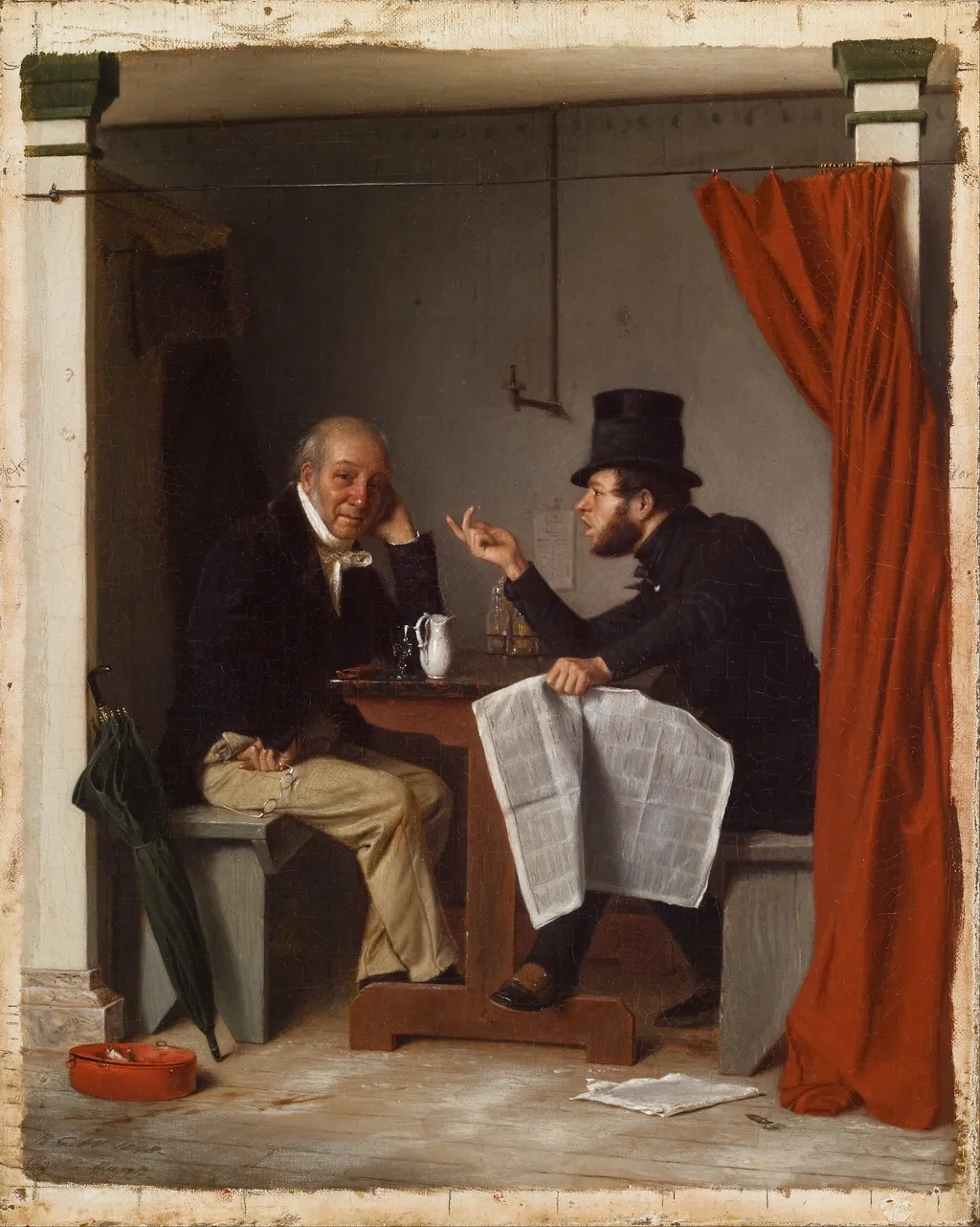
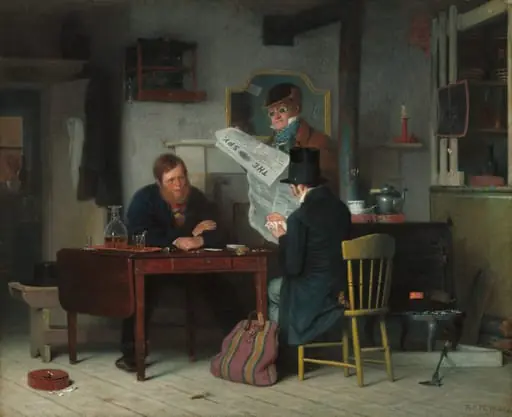
Politics in an Oyster House is an oil painting by Richard Caton Woodville, Sr.. It dates from 1848 and is held in the collection of the Walters Art Museum.
About this work
Overview
In 1848, American painter Richard Caton Woodville, Sr. created the oil work *Politics in an Oyster House*. The canvas captures a quiet interior where two men converse amid modest furnishings, their gestures and expressions suggesting a heated exchange.
Subject & Meaning
The scene centers on a pair of gentlemen—one seated at a table, the other on a bench—engaged in a political discussion. Their body language, a hand supporting a head and a newspaper held aloft, conveys disagreement, hinting at the contentious public debates of the mid‑nineteenth century.
Technique & Style
Executed in oil, the painting employs a limited palette of muted grays, deep reds, and subdued greens. Light falls softly on the figures, emphasizing texture in the clothing and the sheen of the newspaper, while the dim interior creates a sense of intimacy and focus on the dialogue.
History & Provenance
Woodville, a Baltimore native trained in Düsseldorf, spent much of his brief career abroad, ultimately dying in London at thirty. Though his oeuvre comprises fewer than twenty paintings, *Politics in an Oyster House* was exhibited during his lifetime and reproduced in prints, contributing to his contemporary reputation.
Context
Created amid the revolutionary fervor of 1848, the work reflects the era’s political turbulence, especially in Europe and the United States. The informal setting of an oyster house—a common gathering place for working‑class patrons—underscores how political discourse permeated everyday life.
Artist & collection
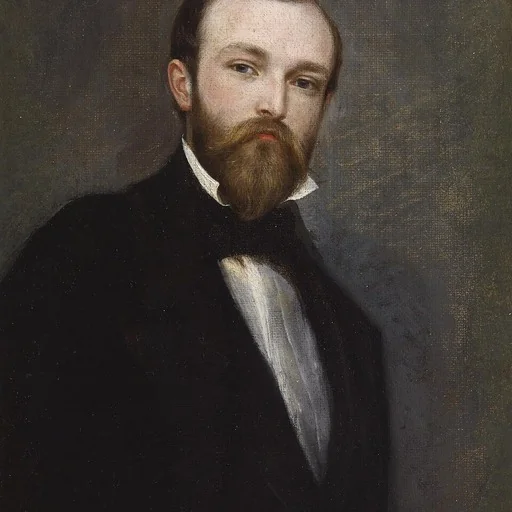
Artist
Richard Caton Woodville (30 April 1825 – 13 August 1855) was an American artist from Baltimore who spent his professional career in Europe, after studying in Düsseldorf under the direction of Karl Ferdinand Sohn.

 Waiting for the Stage
 The Tough Story - Scene in a Country Tavern
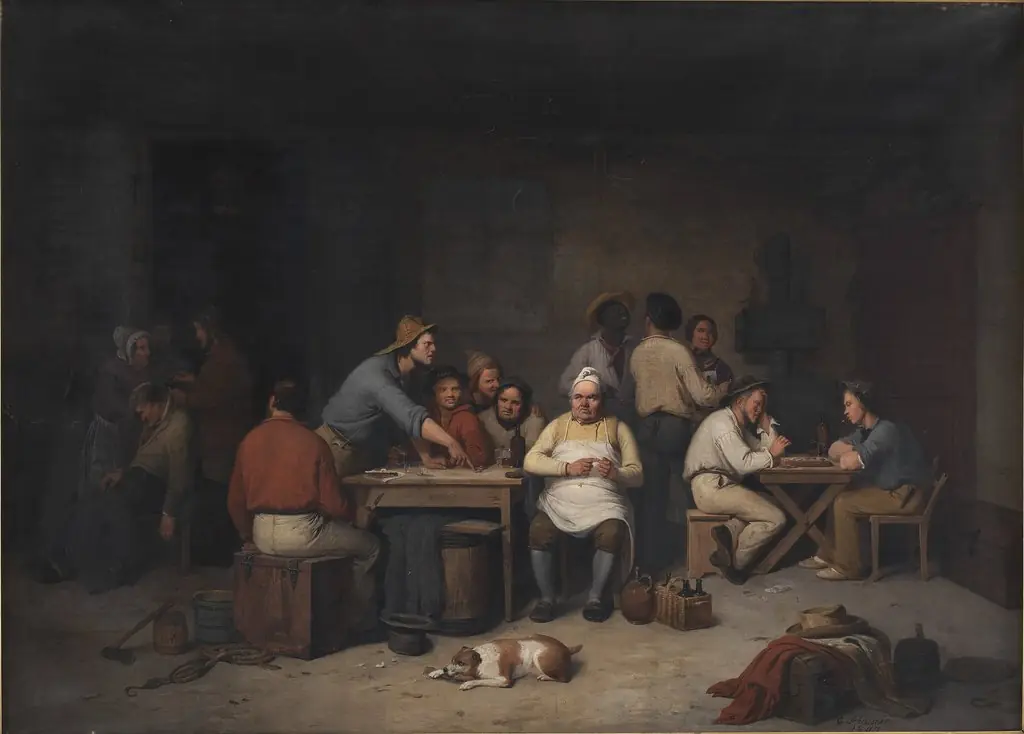 En scene i værtshuset Brokkensbod
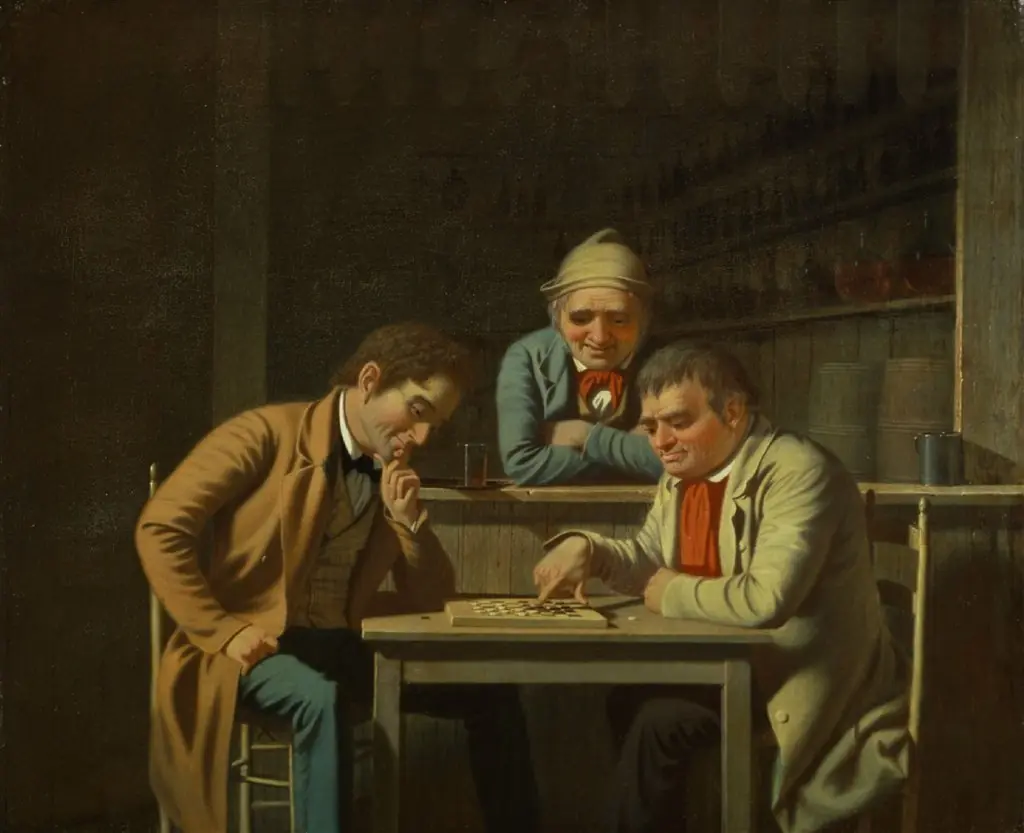 The Checker Players
 En scene i værtshuset Brokkensbod
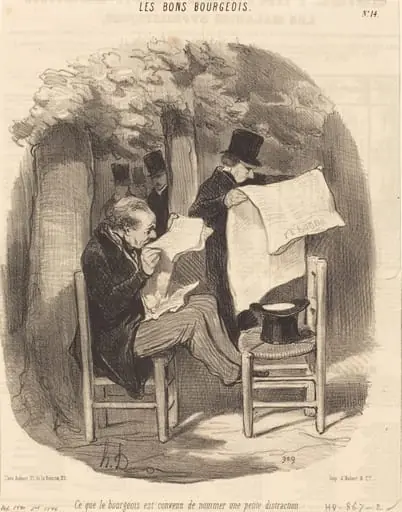 Ce que le bourgeois est convenu de nommer une... distraction
 Talking It Over
 Je compte sur vous pour signer
 Calculating
 Caricatures du jour: La Lecture des mystères de Paris
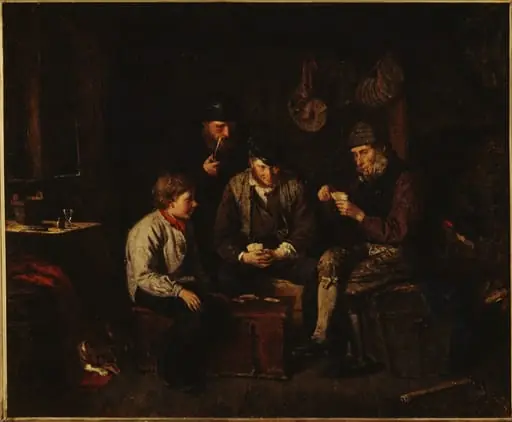 Ahvenanmaalaisia miehiä pelaamassa korttia kajuutassa (Ristiässä)
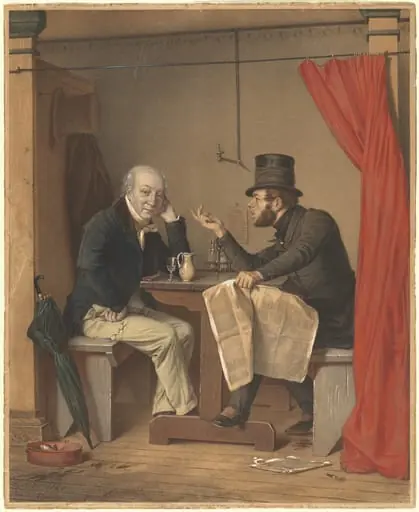 Politics in an Oyster House