Artwork
The Grand Canal, Venice, Looking Toward the Rialto
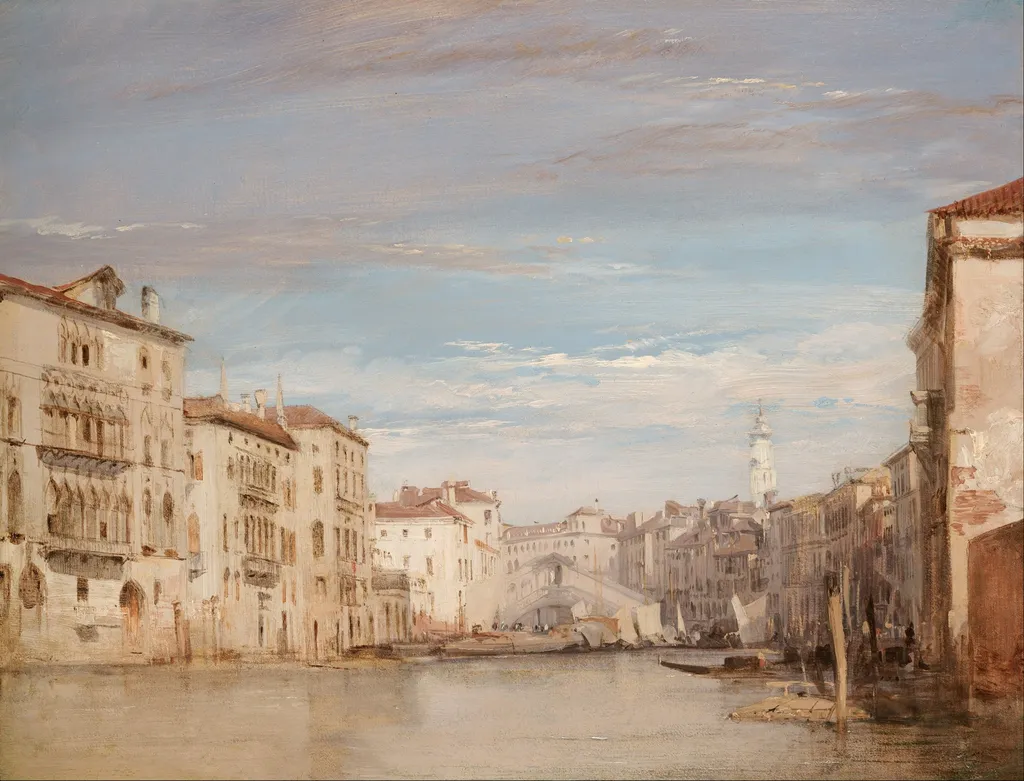
The Grand Canal, Venice, Looking Toward the Rialto is an unspecified painting by Richard Parkes Bonington. It dates from 1826 and is held in the collection of the Kimbell Art Museum.
About this work
Overview
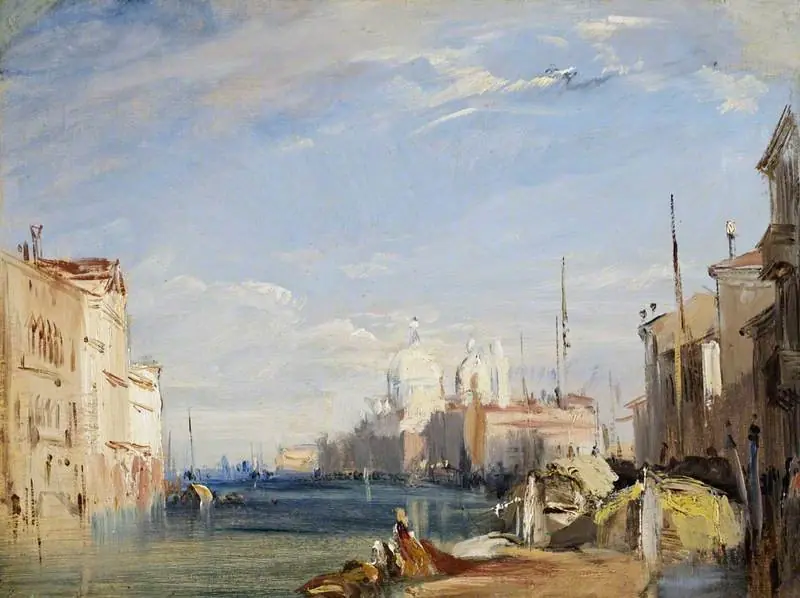
Painted in 1826 by English artist Richard Parkes Bonington, this work captures a quiet stretch of Venice’s Grand Canal viewed from near the Rialto Bridge.
Painted in 1826 by English artist Richard Parkes Bonington, this work captures a quiet stretch of Venice’s Grand Canal viewed from near the Rialto Bridge. Executed during Bonington’s time in Italy, the painting exemplifies his focus on light and atmosphere, blending observational precision with a lyrical sensitivity to place. Though brief in career, his Venetian scenes became central to his legacy in British Romantic landscape painting.
Subject & Meaning
The scene presents the Grand Canal as a living artery of the city, framed by centuries-old palazzos and the distant Rialto Bridge. No figures dominate; instead, the architecture and water convey the rhythm of daily life. The composition invites contemplation rather than narrative, emphasizing harmony between built environment and natural light, reflecting a Romantic ideal of place as emotionally resonant.
Technique & Style
Bonington employed thin, fluid washes and delicate brushwork to render the play of sunlight on water and stone. His handling of atmosphere avoids heavy detail, favoring tonal gradations that suggest depth and air. The buildings’ textures emerge through subtle shifts in hue and value, while the sky and canal are rendered with a luminous transparency that recalls Dutch and Venetian precedents, yet feels distinctly modern in its immediacy.
History & Provenance
Created during Bonington’s 1825–1826 stay in Venice, the painting was likely made en plein air before being refined in his studio. It entered private collections in Britain shortly after his death in 1828 and was later acquired by public institutions. Its survival in relatively intact condition reflects its early recognition among collectors of Romantic landscape work.
Context
Bonington worked amid a wave of British artists drawn to Italy for its light and classical ruins. His Venetian views responded to both the picturesque tradition and emerging interest in topographical accuracy. Unlike grand historical scenes favored by academies, his quiet urban vistas offered a new kind of visual poetry—one grounded in sensory experience rather than allegory.
Legacy
Though he died young, Bonington’s approach influenced later British watercolorists and even French Impressionists through his emphasis on transient light and spontaneous brushwork. His Venetian paintings, including this one, helped redefine landscape as a vehicle for mood and perception, shifting focus from idealized scenery to the nuanced reality of place.
Own this work as a print
Artist & collection
Artist
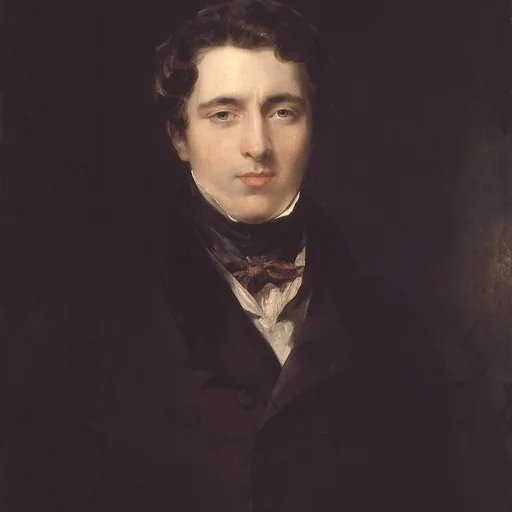
Richard Parkes Bonington (25 October 1802 – 23 September 1828) was an English Romantic landscape painter.

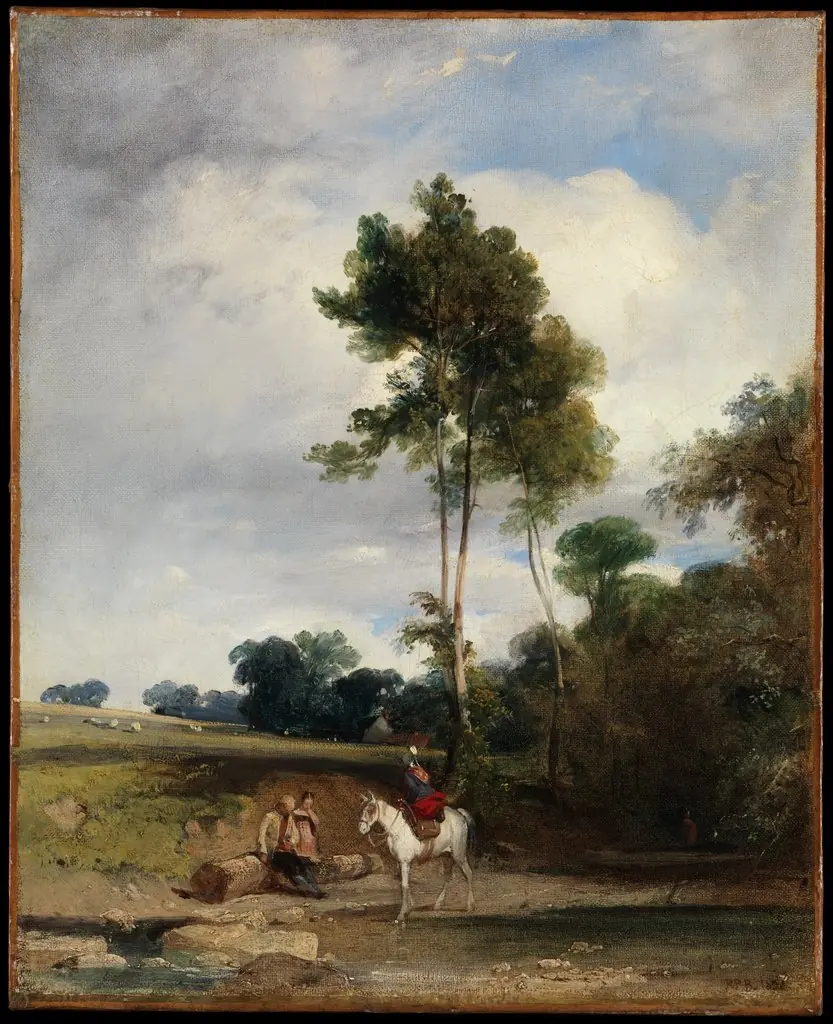
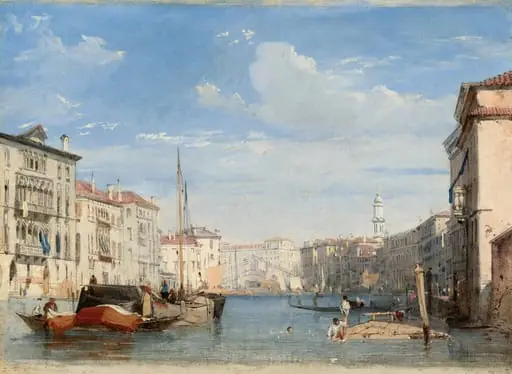
 The Grand Canal in Venice with the Rialto Bridge
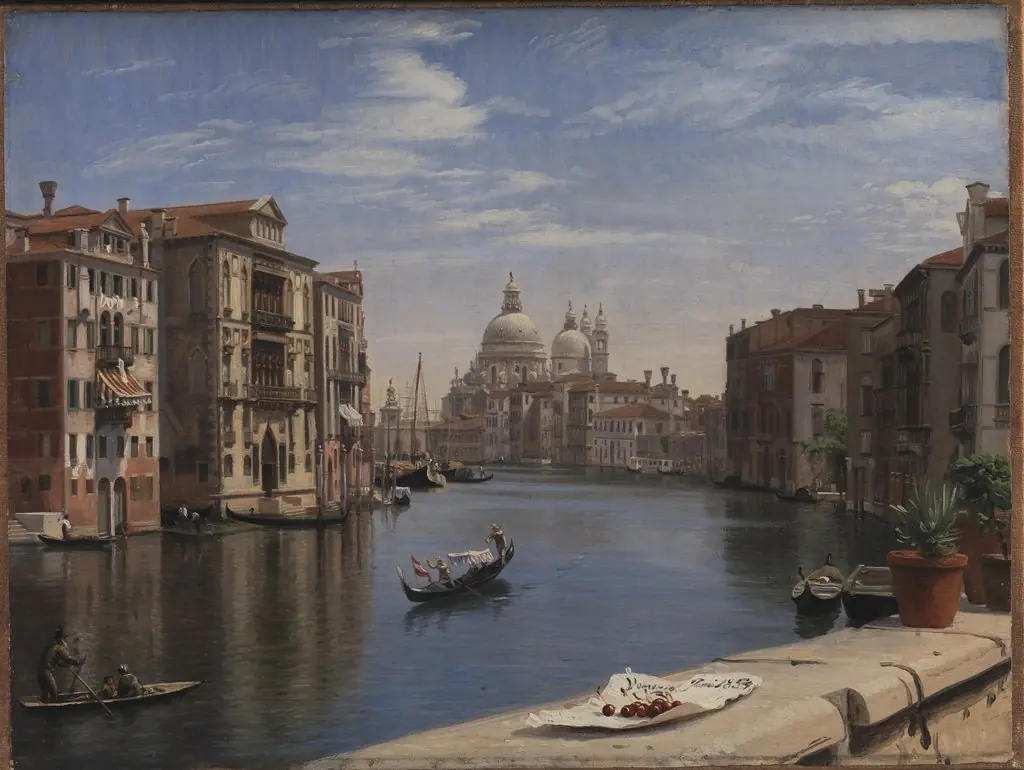 View of the Grand Canal, Venice. In the Background S. Maria della Salute
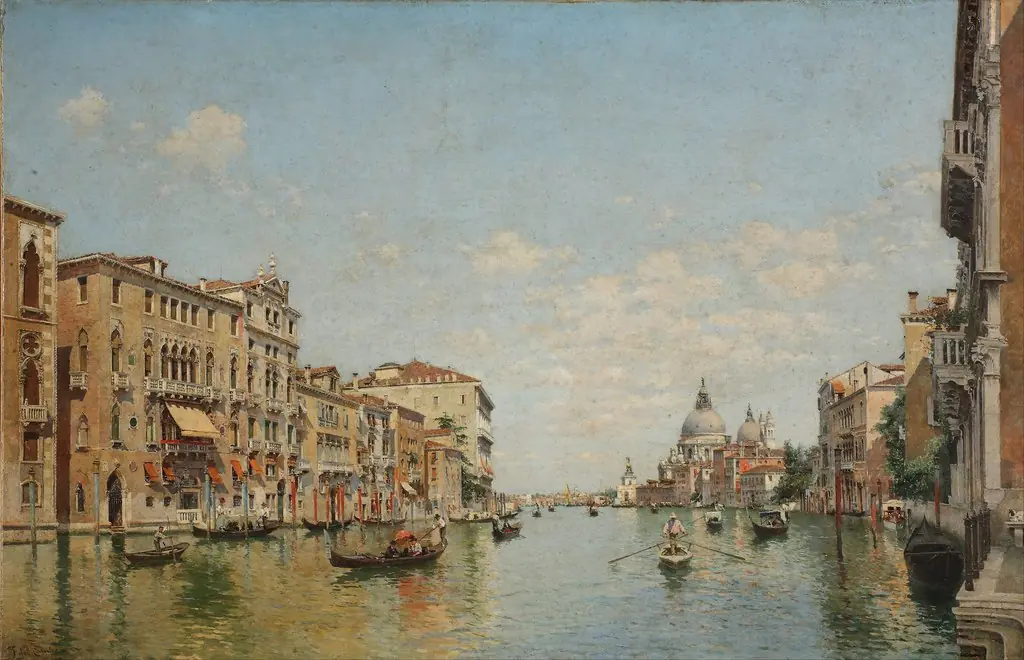 View of the Grand Canal of Venice
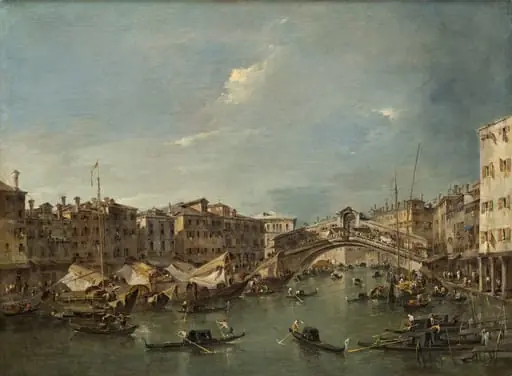 Grand Canal with the Rialto Bridge, Venice
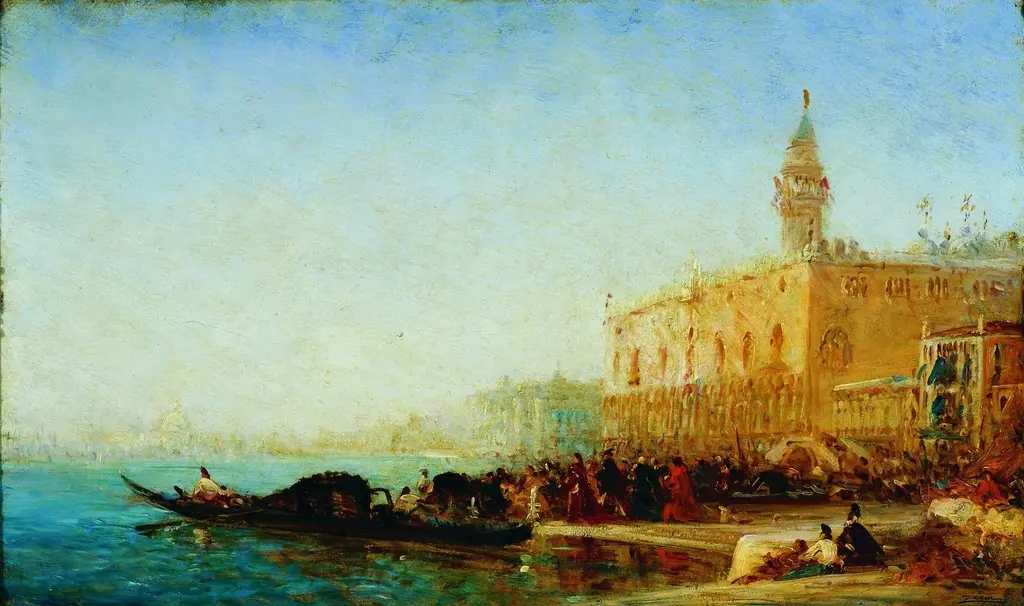 Venice - the grand canal
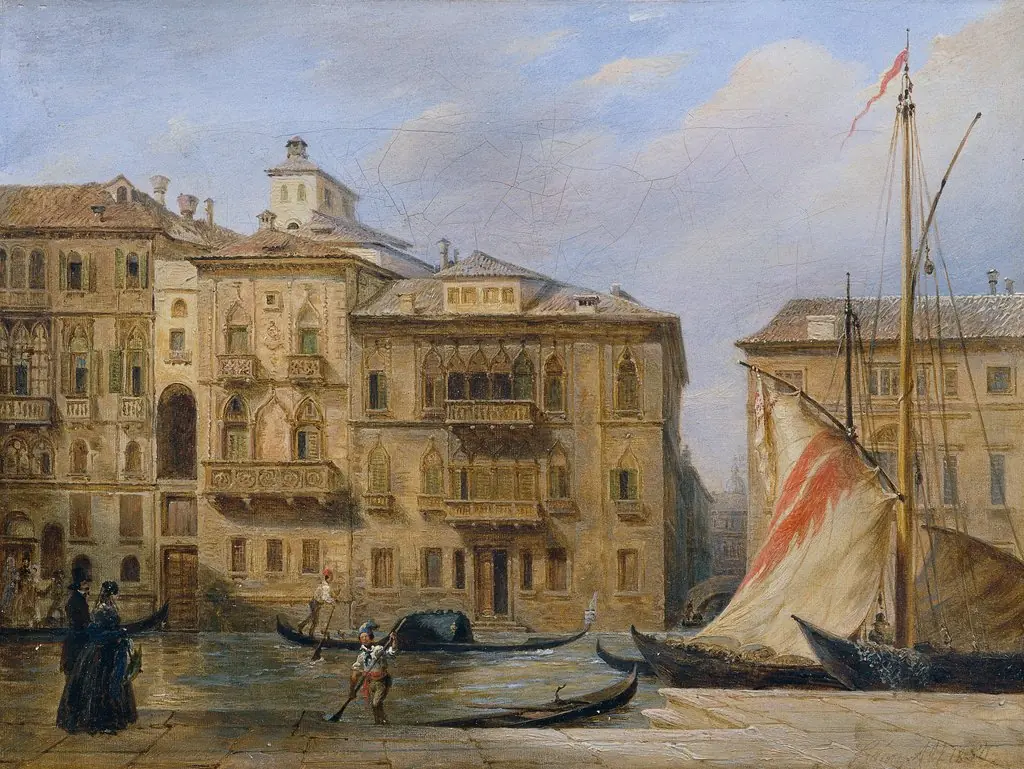 The Grand Canal in Venice
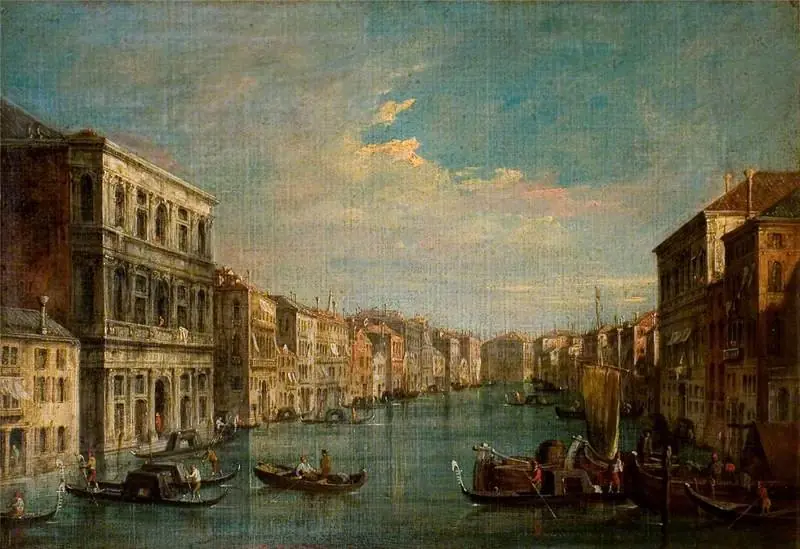 Venice: The Grand Canal Looking South-West from Palazzo Grimani
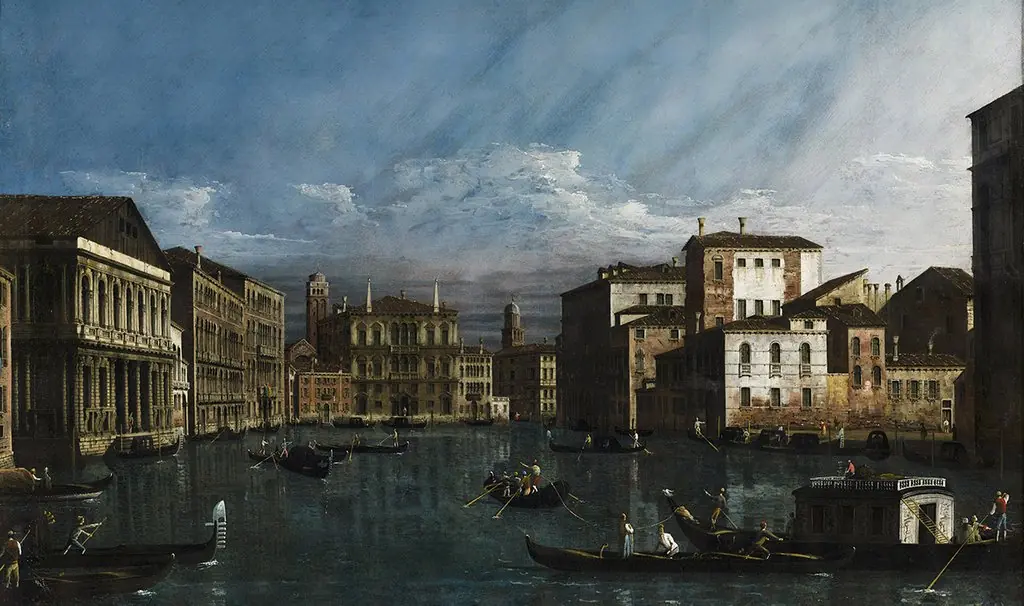 The Grand Canal in Venice