Artwork
Untitled
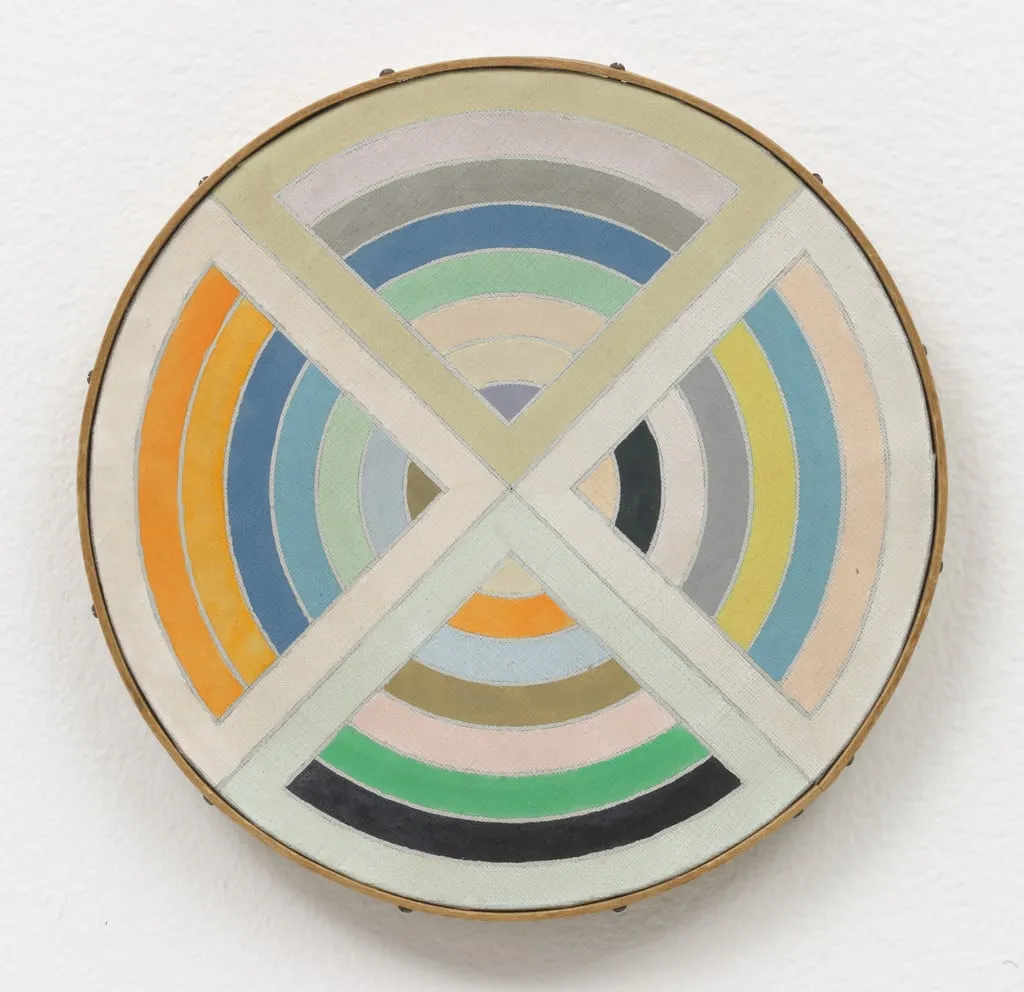
Untitled is a paint painting by the Pop art artist Richard Pettibone. It dates from 1971 and is held in the collection of the Museum of Modern Art.
About this work
Overview
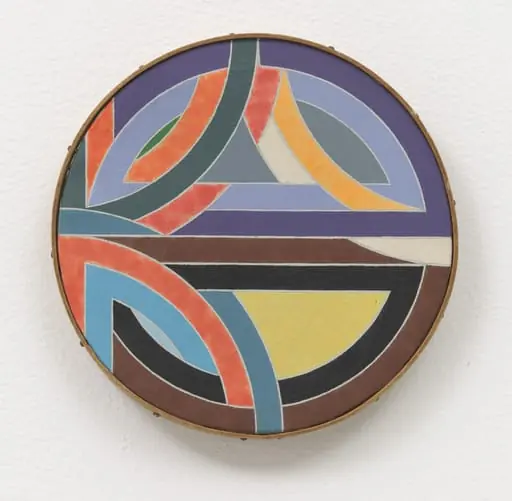
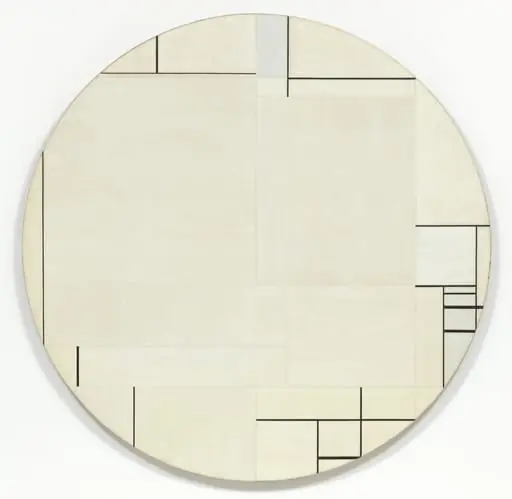
Created in 1971, this untitled painting by Richard Pettibone is executed in synthetic polymer paint on a circular canvas. It belongs to The Museum of Modern Art’s collection and exemplifies the artist’s interest in reinterpreting established visual forms through minimal, geometric abstraction. The work avoids narrative or symbolic complexity, instead focusing on the interplay of shape and color.
Subject & Meaning
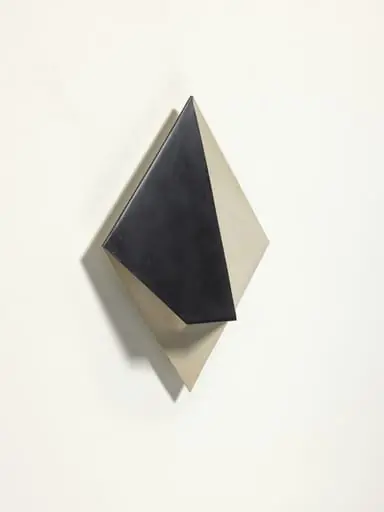
A black oval disrupts one segment, introducing subtle tension without resolving into clear symbolism.
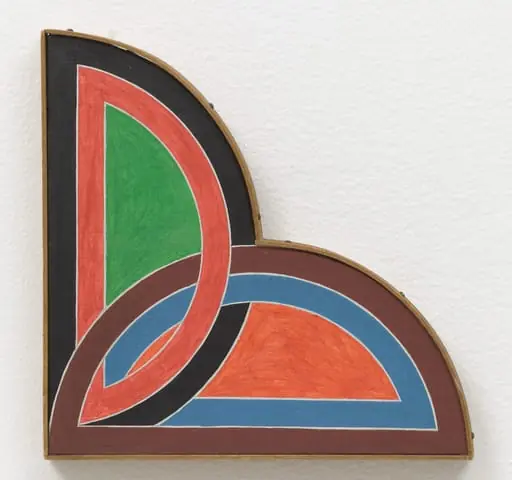
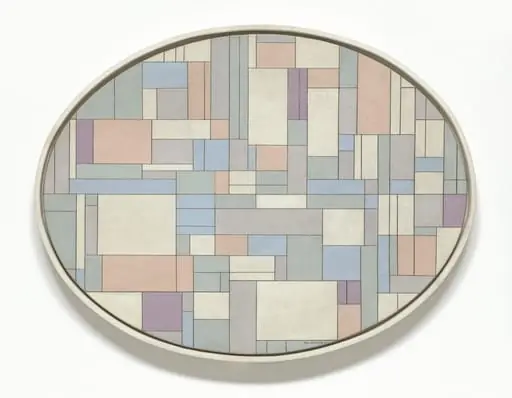
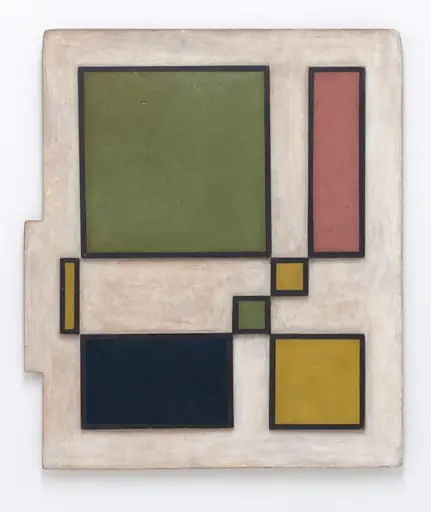
The painting presents no figurative subject. Instead, it arranges overlapping circles and rectangles into a structured, target-like composition. A black oval disrupts one segment, introducing subtle tension without resolving into clear symbolism. The work invites attention to formal relationships rather than external meaning, reflecting a post-minimalist tendency to question how meaning is constructed visually.
Technique & Style
Pettibone applied flat, unmodulated hues—blue, orange, yellow, and green—with sharp, clean edges. Colors abut one another without blending, emphasizing the precision of form over expressive brushwork. The circular support reinforces the work’s rhythmic geometry, while the limited palette enhances visual clarity. The technique reflects a deliberate restraint, aligning with contemporary investigations into perception and structure.
History & Provenance
Painted in 1971, the work entered The Museum of Modern Art’s collection shortly after its creation. It emerged during a period when artists were reevaluating abstraction beyond the gestures of Abstract Expressionism. Pettibone’s use of industrial paint and geometric precision situates the piece within broader 1970s dialogues about reproduction, seriality, and the dematerialization of the art object.
Context
This work aligns with the era’s interest in systems-based art and the legacy of Hard-Edge painting. Pettibone, known for reworking famous artworks on a small scale, here applies similar logic to abstract forms, stripping them of authorial gesture. The painting engages with contemporaneous movements like Minimalism and Color Field, yet resists their scale and emotional weight, favoring quiet, calculated composition.
Legacy
The painting contributes to a lineage of works that treat abstraction as a field for formal inquiry rather than emotional expression. Its restrained palette and geometric discipline influenced later artists exploring the boundaries between design and painting. Though not widely exhibited, it remains a quiet example of how simplicity can generate visual rhythm and structural tension.
Artist & collection

Artist
Richard Pettibone was an American artist. He was known for his appropriation art, a practice that involves replicating or reinterpreting existing artworks. He is best known for his meticulously crafted miniature copies…