Artwork
Langstone Mill, Hampshire
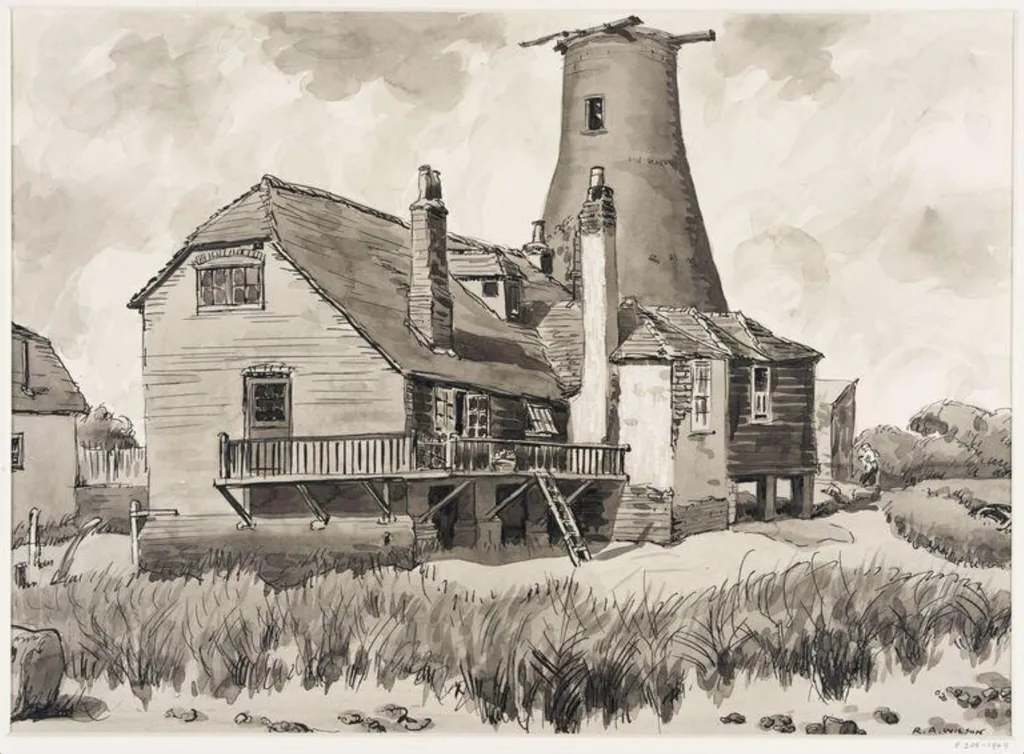
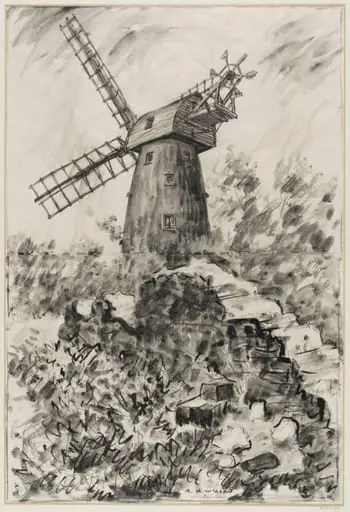
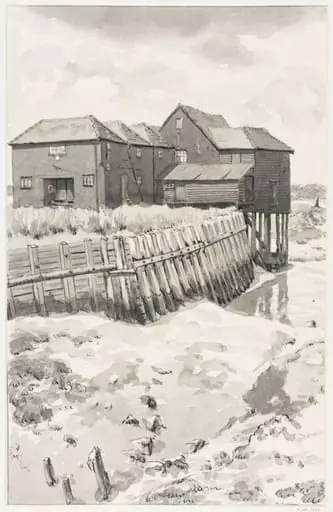
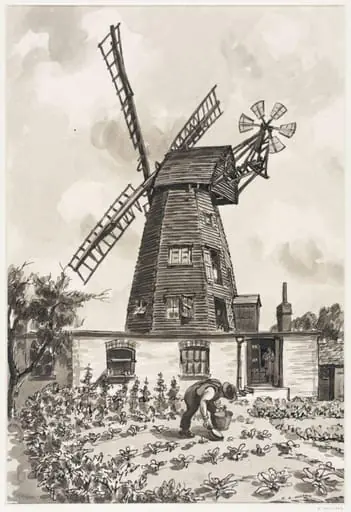
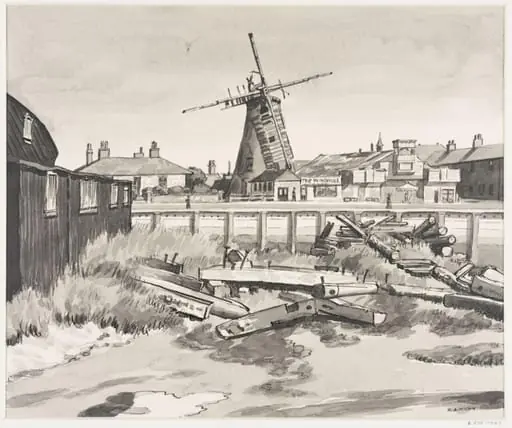
Langstone Mill, Hampshire is a drawing by Robert Arthur Wilson. It dates from 1933 and is held in the collection of the Victoria and Albert Museum.
About this work
Overview
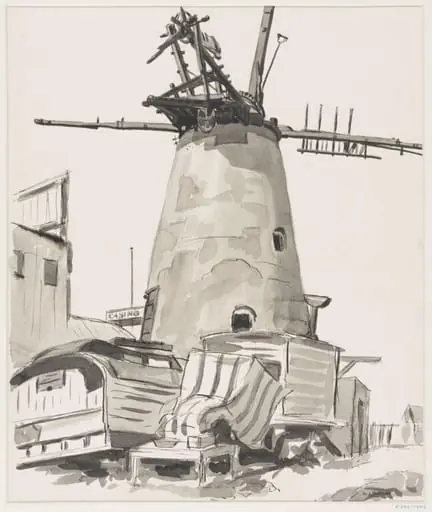
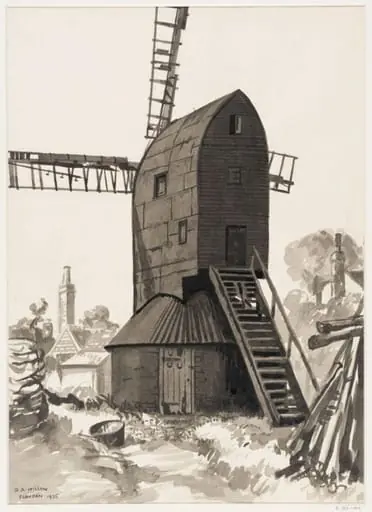
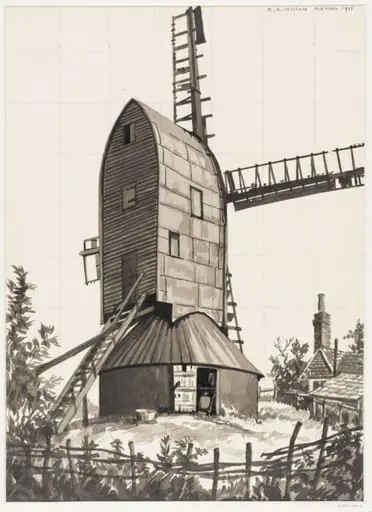
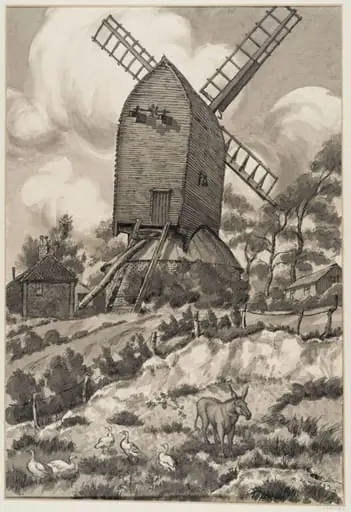
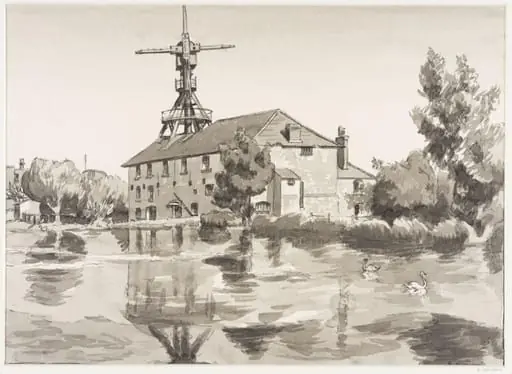
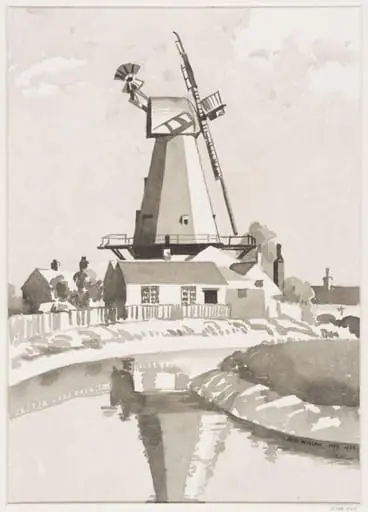
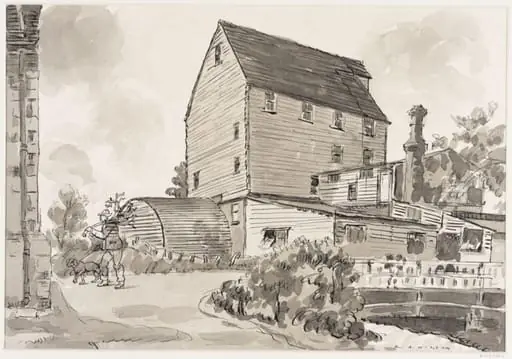
Robert Arthur Wilson’s 1933 drawing titled *Langstone Mill, Hampshire* records a rural industrial scene. Executed in graphite on paper, the work measures a modest size and is part of the Victoria and Albert Museum’s collection. The composition centers on a brick tower mill accompanied by a lower ancillary structure, both rendered with precise linear detail.
Subject & Meaning
The image captures a functional windmill set within the Hampshire landscape, emphasizing the relationship between the tall tower, its chimney, and the adjacent building with a deck and ladder. By focusing on architectural elements rather than human activity, Wilson foregrounds the built environment’s role in early‑twentieth‑century countryside life.
Technique & Style
Wilson employs a dense network of cross‑hatching to model form and surface texture, varying the density of lines to achieve a range of gray tones. This method creates a sense of depth, distinguishing the solid mass of the tower from the lighter planes of the surrounding structures, while maintaining a consistent, observational realism.
History & Provenance
Created in 1933, the drawing entered the Victoria and Albert Museum’s holdings through acquisition (specific accession details are recorded in the museum’s catalogue). It remains catalogued as a representative example of Wilson’s architectural draughtsmanship from the interwar period.
Context
During the early 1930s, British artists often turned to industrial and rural subjects, documenting a landscape in transition. Wilson’s choice of a Hampshire mill reflects this trend, situating the work within a broader movement that combined topographical accuracy with an interest in the visual character of regional architecture.
Artist & collection