Artwork
West Ashling Mill, Sussex
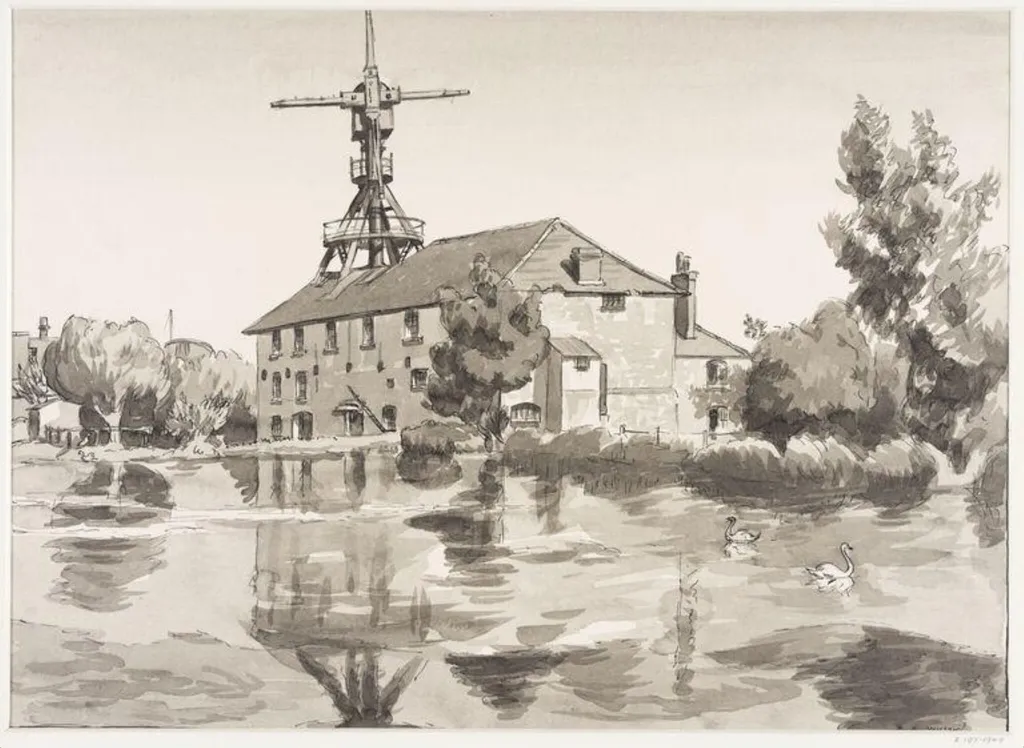
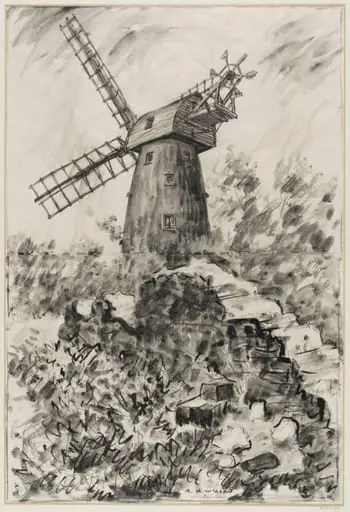
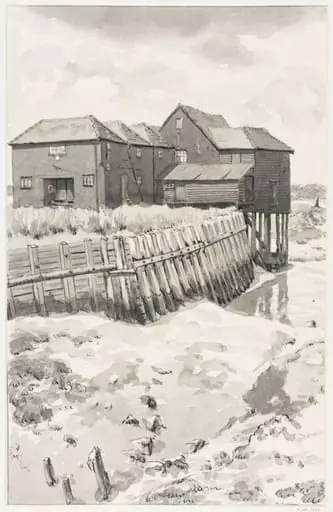
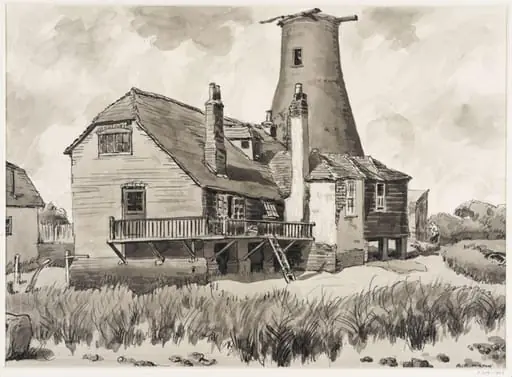
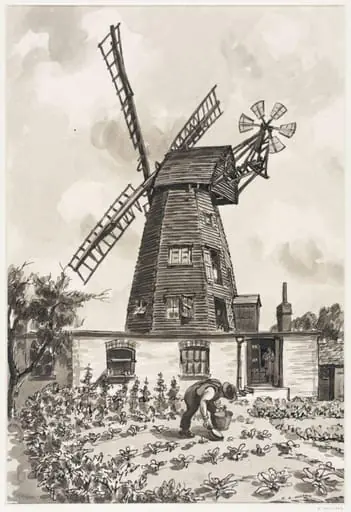
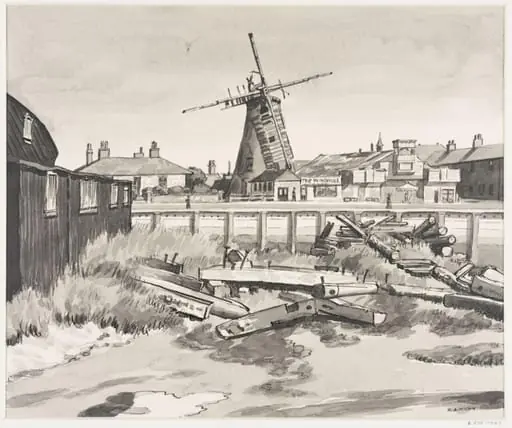
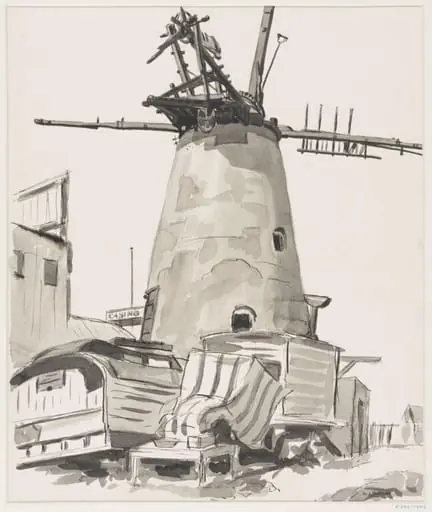
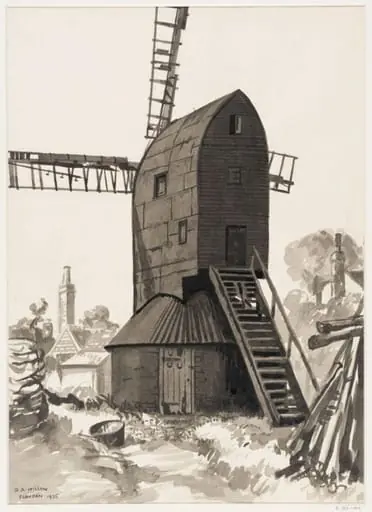
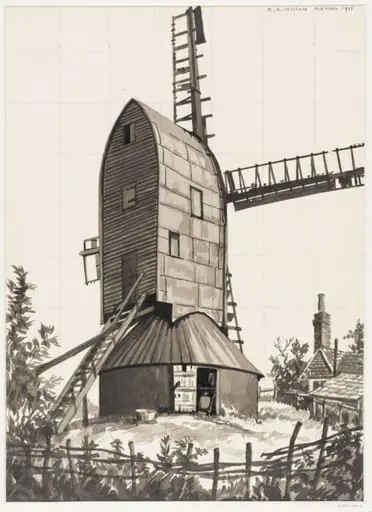
West Ashling Mill, Sussex is a drawing by Robert Arthur Wilson. It dates from 1933 and is held in the collection of the Victoria and Albert Museum.
About this work
Overview
Created in 1933 by Robert Arthur Wilson, this pencil drawing captures a rural scene in West Ashling, Sussex. It is part of the Victoria and Albert Museum’s collection, where it is preserved as a quiet example of early 20th-century British topographical drawing. The work’s modest scale and restrained technique reflect a deliberate focus on observation rather than dramatic expression.
Subject & Meaning
The scene centers on a windmill with wooden sails and a nearby stone structure, both framed by trees and a still pond. Swans glide across the water, their forms mirrored in the surface, reinforcing a sense of calm. The absence of human figures and the muted tones suggest an emphasis on solitude and the enduring presence of rural architecture, evoking a contemplative mood rather than narrative.
Technique & Style
Wilson employed soft, delicate pencil strokes and subtle cross-hatching to model form without heavy contrast. The water’s surface is rendered with light, rhythmic lines that suggest reflection without detail, enhancing the stillness of the scene. The architecture is simplified, with minimal shading, allowing the composition’s balance and atmosphere to take precedence over architectural precision.
History & Provenance
The drawing entered the Victoria and Albert Museum’s collection after its creation in 1933, likely acquired as part of a broader effort to document British landscape and vernacular architecture. Its provenance remains unremarkable, with no record of public exhibition prior to its inclusion in the museum’s holdings, suggesting it was intended as a personal study or regional record.
Context
In the early 1930s, many British artists turned to rural subjects as industrialization reshaped the countryside. Wilson’s work aligns with a quiet tradition of topographical drawing that valued accuracy and serenity over romanticism. This piece reflects a broader cultural interest in preserving the visual character of England’s diminished agricultural landscape through careful observation.
Legacy
Though not widely exhibited, the drawing contributes to a modest but significant body of work documenting Sussex’s rural heritage. Its restrained aesthetic and technical clarity make it a representative example of mid-20th-century British draftsmanship, valued more for its quiet fidelity than for stylistic innovation.
Artist & collection