Artwork
Wray Common Mill, Reigate, Surrey
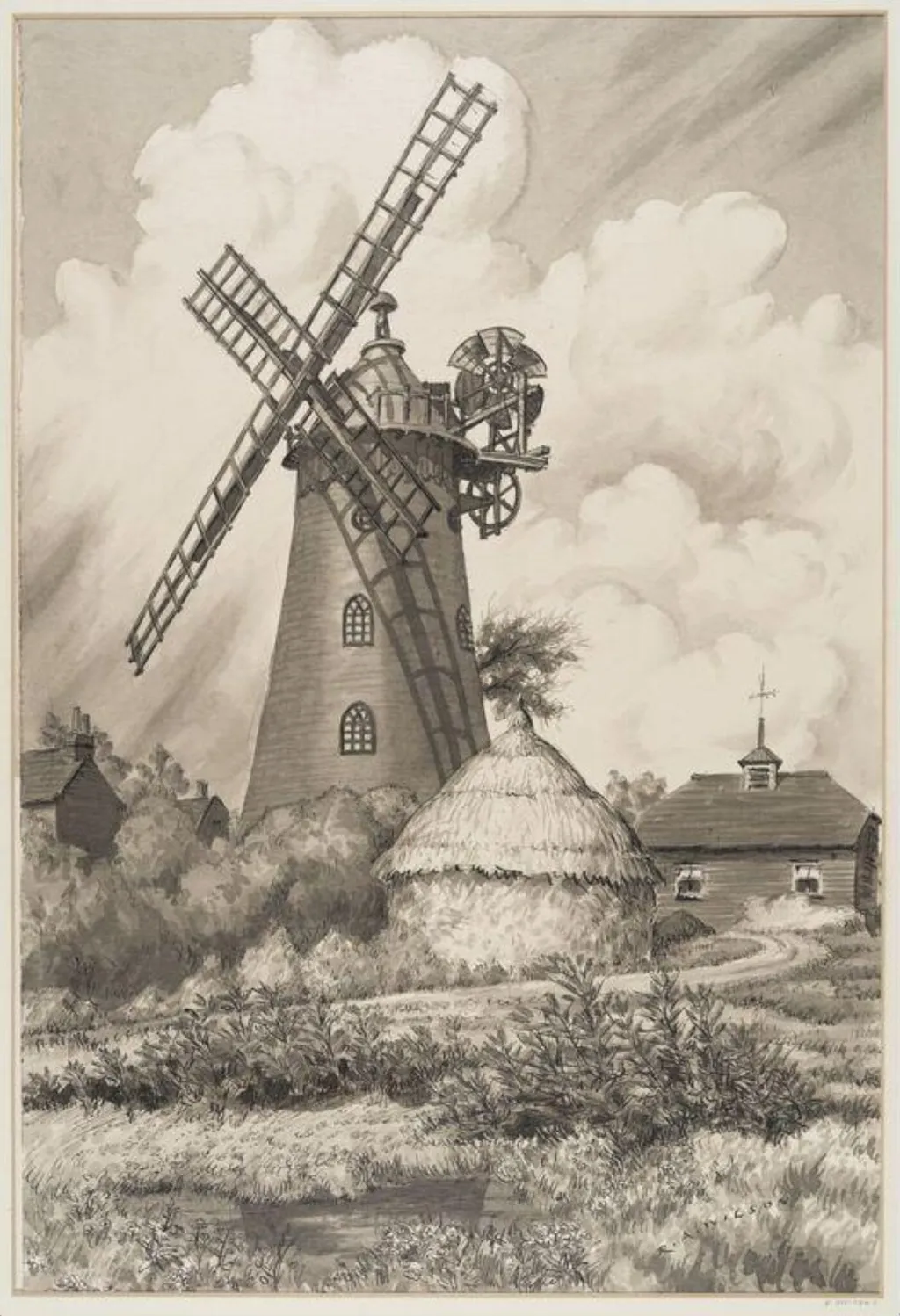
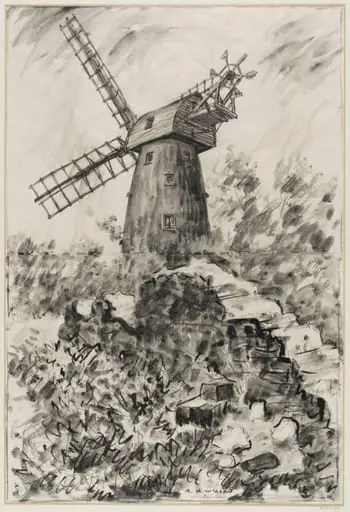
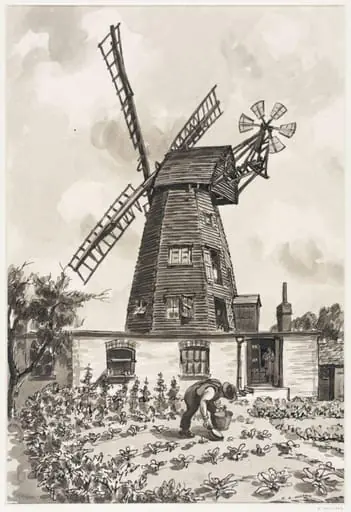
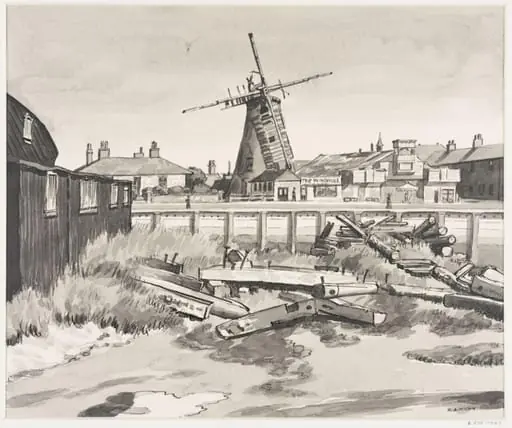
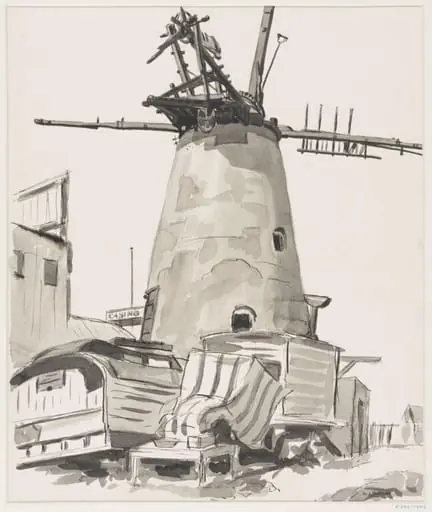
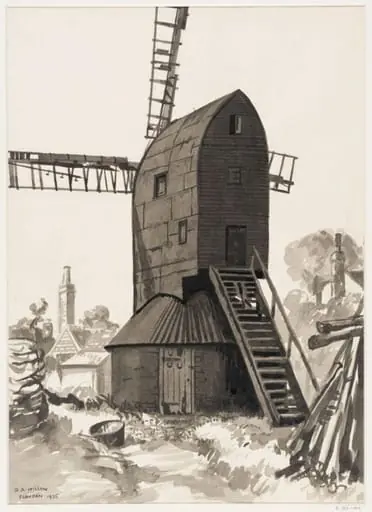
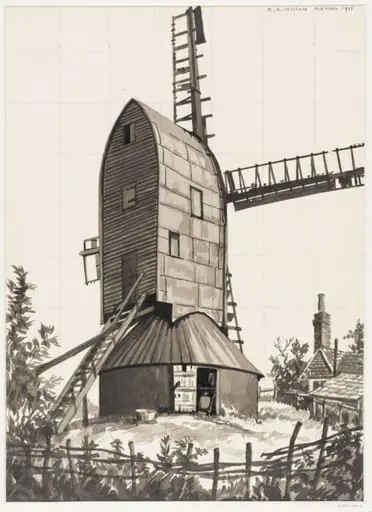
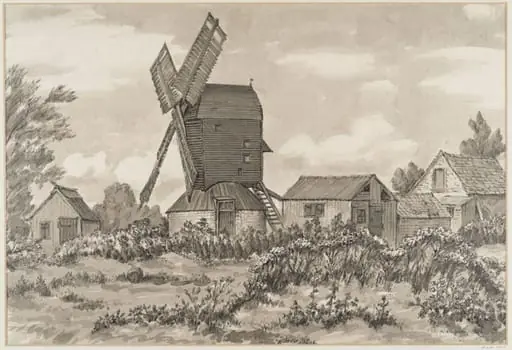
Wray Common Mill, Reigate, Surrey is a drawing by Robert Arthur Wilson. It dates from 1945 and is held in the collection of the Victoria and Albert Museum.
About this work
Overview
Created around 1945 by Robert Arthur Wilson, this pencil or ink drawing depicts Wray Common Mill, a historic windmill located in Reigate, Surrey.
Created around 1945 by Robert Arthur Wilson, this pencil or ink drawing depicts Wray Common Mill, a historic windmill located in Reigate, Surrey. The work is part of the Victoria and Albert Museum’s collection and represents a quiet, observational record of a rural structure during a period of post-war transition in the English countryside. The composition centers on the mill, framed by surrounding vegetation and a modest outbuilding.
Subject & Meaning
The drawing focuses on a functional windmill, an emblem of pre-industrial agriculture, set within a modest rural setting. The inclusion of a thatched outbuilding suggests the presence of associated domestic or agricultural activity. The scene conveys no overt narrative, but rather a deliberate attention to place and structure, reflecting an interest in preserving the visual character of fading rural infrastructure.
Technique & Style
Wilson employs fine, controlled lines to render the mill’s wooden cladding and thatched roof with careful texture, emphasizing materiality and craftsmanship. Background elements like trees and shrubs are rendered with looser, more suggestive strokes, creating atmospheric depth without competing for attention. The contrast between detailed foreground and softer background enhances the mill’s prominence as the focal point.
History & Provenance
The drawing was made in the mid-1940s, a time when many traditional windmills in England were falling into disuse. It entered the Victoria and Albert Museum’s collection as part of its broader effort to document vernacular architecture and rural life. The work’s provenance is not publicly detailed beyond its acquisition by the museum, but its preservation reflects institutional interest in topographical records of the period.
Context
In post-war Britain, there was growing awareness of the loss of historic rural structures due to mechanization and neglect. Wilson’s drawing aligns with a broader movement among artists and antiquarians to record such sites before they disappeared. The depiction of Wray Common Mill reflects a quiet, documentary impulse rather than romantic idealization, capturing the mill as it existed in its then-current state.
Legacy
As a modest but precise record of a specific place and time, the drawing contributes to the historical archive of English vernacular architecture. While not widely exhibited, its presence in the V&A underscores its value as a primary source for understanding the visual and material culture of mid-20th-century rural Surrey. It remains a quiet testament to a vanishing landscape.
Artist & collection