Artwork
Untitled
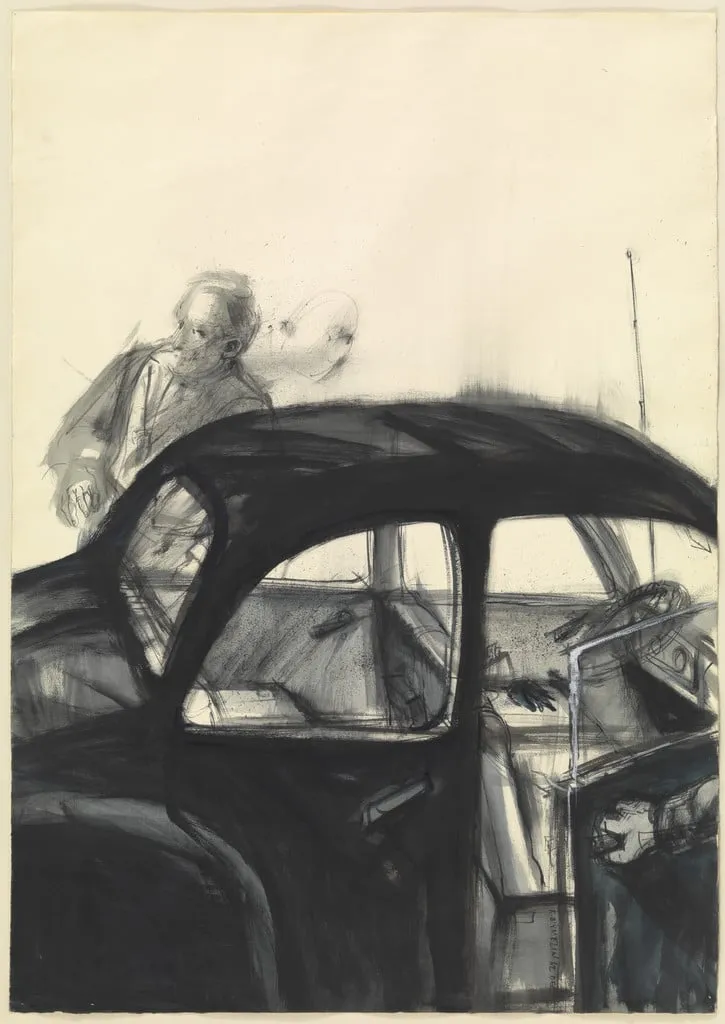
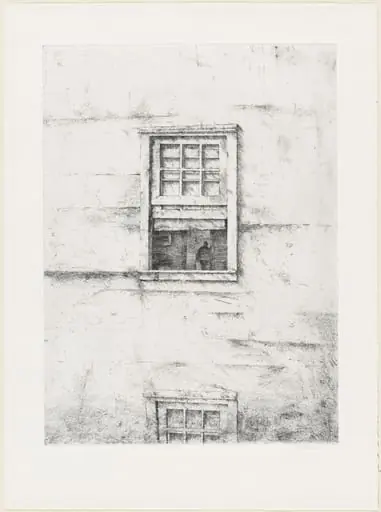
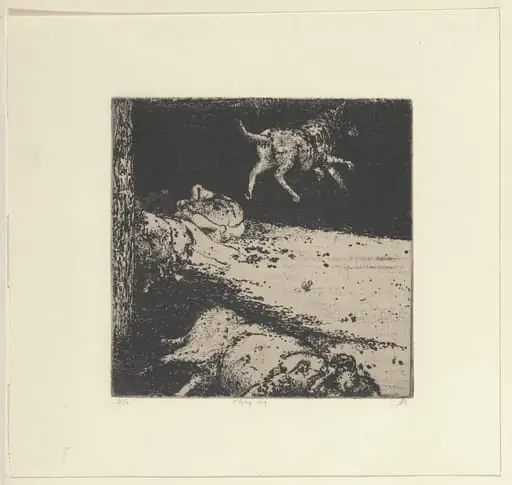
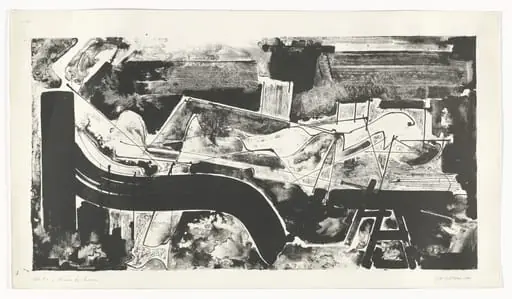
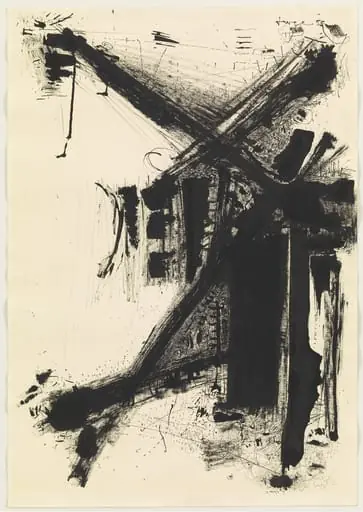
Untitled is a watercolor drawing by Robert Birmelin. It dates from 1962 and is held in the collection of the Museum of Modern Art.
About this work
If you like how he breaks things down, look up the technique of watercolor, glazing—it’s how he builds depth with thin, see-through layers.
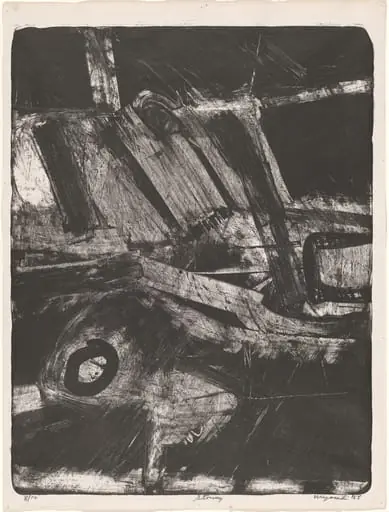
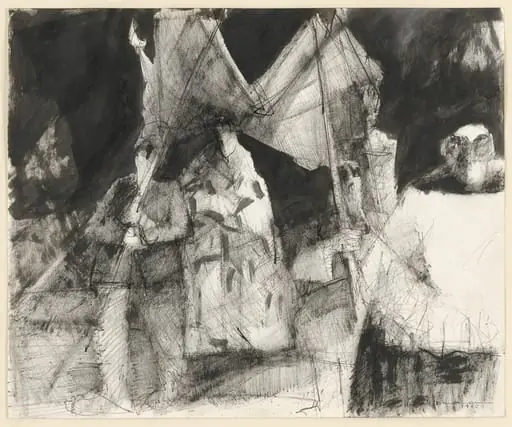
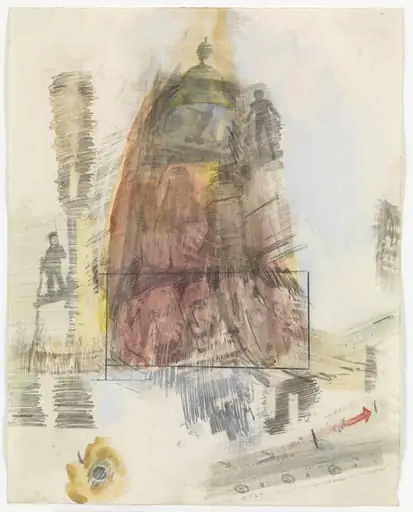
You see a jumble of car doors, handles, and hinges floating against a pale background. The lines are loose, almost scribbled, but the shapes feel solid—like you could reach out and touch them.
Birmelin painted this in 1962, when artists were playing with everyday objects in new ways. Here, he turns something ordinary into something strange, almost like a puzzle. The doors don’t connect to anything; they just exist, half-recognizable but not quite real.
If you like how he breaks things down, look up the technique of watercolor, glazing—it’s how he builds depth with thin, see-through layers.
Overview
Created in 1962, this drawing by Robert Birmelin combines ink, watercolor, and gouache on paper. It is part of The Museum of Modern Art’s collection. The work presents fragmented automotive elements—doors, handles, hinges—suspended in a pale, unmodeled space. No clear context or environment is given, and the forms appear detached from functional or spatial logic, inviting a contemplative rather than narrative response.
Subject & Meaning
The subject consists of isolated car parts, stripped of their usual context and reassembled without structural coherence. These objects, familiar yet dislocated, evoke a sense of mechanical ambiguity. Birmelin transforms the mundane into the enigmatic, suggesting a quiet critique of industrial familiarity. The forms resist identification, prompting viewers to question perception and the reliability of everyday visual cues.
Technique & Style
Birmelin employs layered watercolor washes and delicate gouache to build subtle tonal depth, while ink defines loose, sketch-like contours. The lines are spontaneous yet deliberate, suggesting movement without narrative direction. Glazing techniques allow underlying hues to show through, creating a sense of translucency and spatial ambiguity. The result is a tension between the solidity of form and the fragility of medium.
History & Provenance
Executed in 1962, the work emerged during a period when American artists were re-examining ordinary objects through abstract and surreal lenses. It entered The Museum of Modern Art’s collection shortly after its creation, reflecting institutional interest in postwar drawing practices. No record of prior ownership or exhibition history beyond the museum’s acquisition is publicly documented.
Context
In the early 1960s, artists across the U.S. and Europe were moving away from pure abstraction toward hybrid forms that incorporated recognizable elements. Birmelin’s work aligns with this trend, echoing contemporaries who explored the uncanny potential of domestic and mechanical subjects. His approach avoids overt political or social commentary, focusing instead on perceptual disorientation and formal experimentation.
Legacy
Though not widely exhibited since its acquisition, the drawing remains a quiet example of 1960s American drawing practice. It contributes to a broader understanding of how artists used water-based media to destabilize representation without abandoning figuration. Its presence in MoMA’s collection affirms its role in documenting the era’s nuanced engagement with the ordinary.
Artist & collection

Artist
Robert Birmelin is an American figurative painter, printmaker and draughtsman. In other contexts he is also known as August Robert or A. Robert Birmelin. He was born in Newark, New Jersey and currently resides in Leonia, New Jersey.