Artwork
Donor Henri de Werl, protected by St. John the Baptist
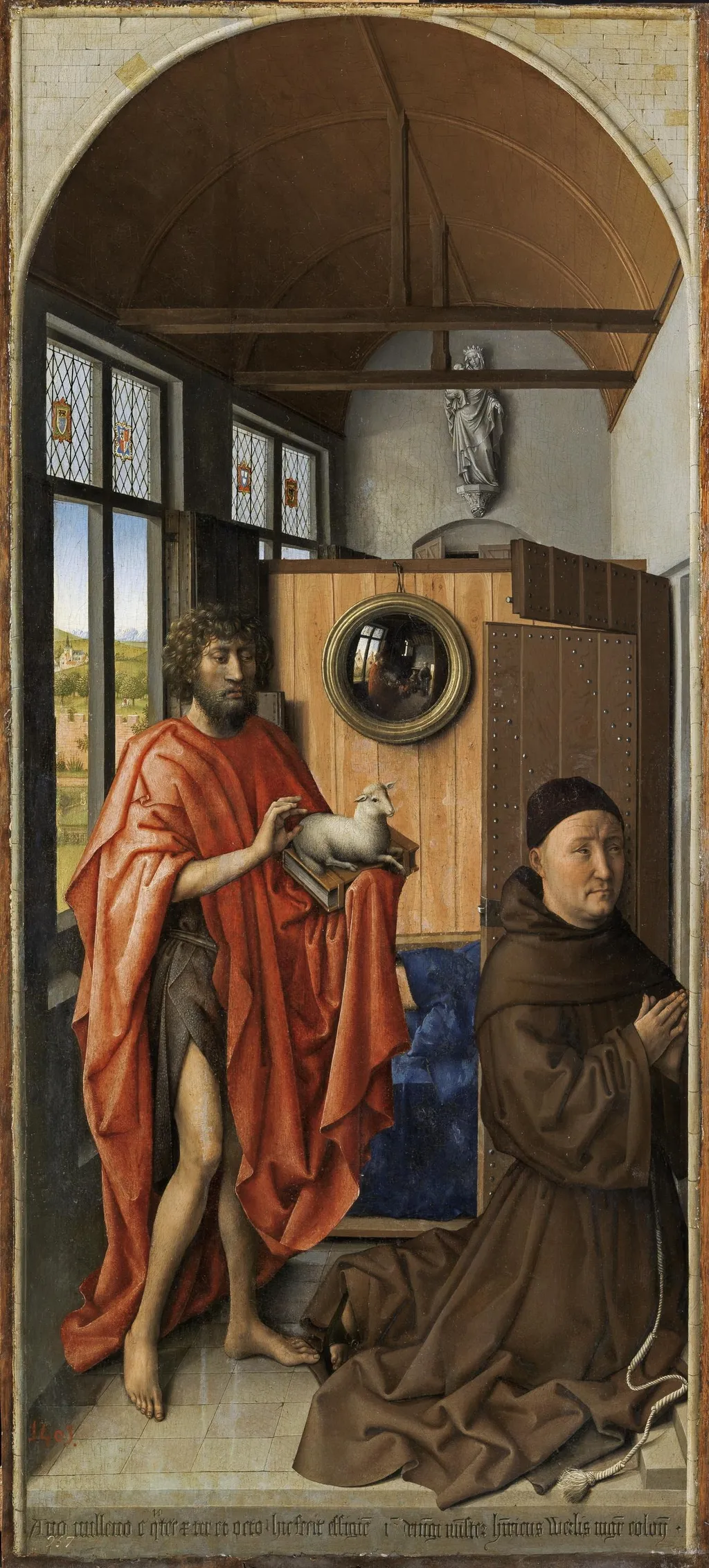
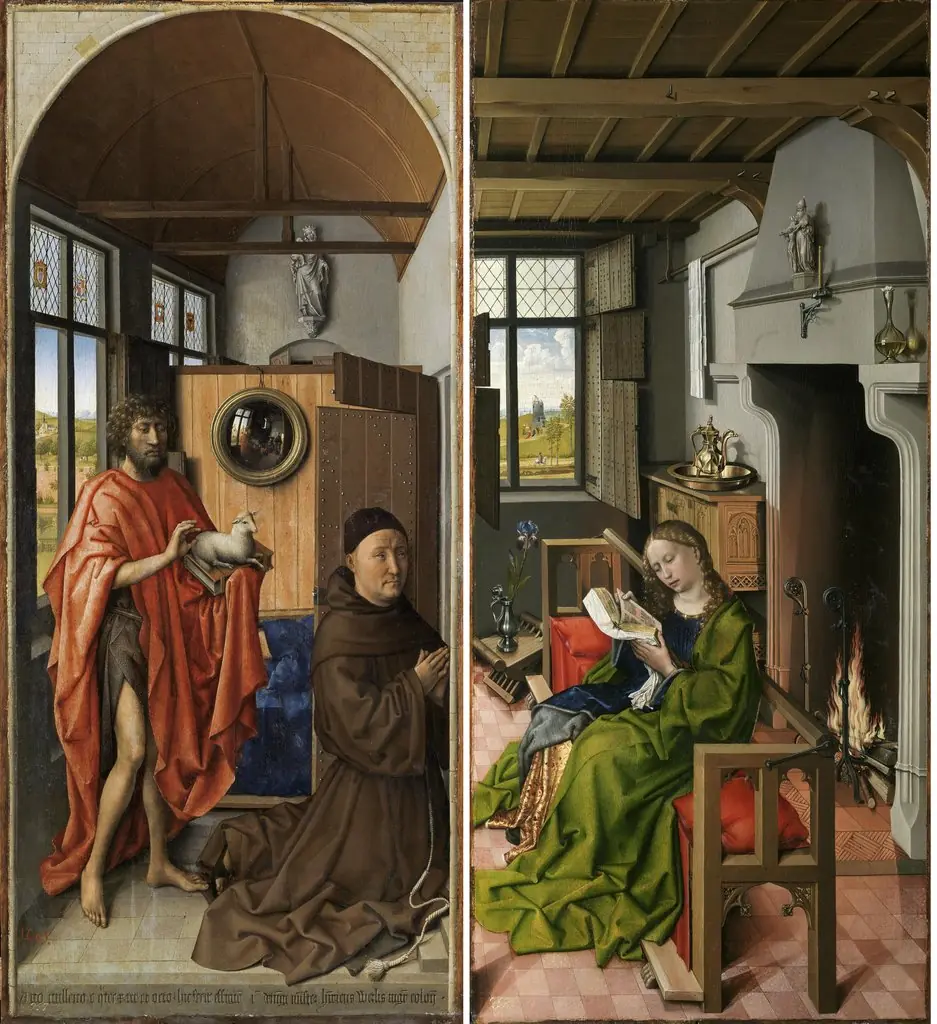
Donor Henri de Werl, protected by St. John the Baptist is an oil painting by the Northern Renaissance artist Robert Campin. It dates from 1438 and is held in the collection of the Museo del Prado.
About this work
Overview
Created in 1438 by Robert Campin, a prominent early Netherlandish painter, this oil on panel presents a devotional scene that pairs a patron with Saint John the Baptist. The work is part of the Prado Museum’s collection in Madrid and exemplifies the detailed, naturalistic approach characteristic of the Northern Renaissance.
Subject & Meaning
The composition features two figures in an intimate interior: a donor, shown kneeling in a brown robe, offers prayer, while Saint John the Baptist stands beside him in a vivid red garment, holding a small lamb—a traditional symbol of Christ’s sacrifice. A book and a reflective mirror placed in the background reinforce themes of contemplation and spiritual revelation.
Technique & Style
Campin employs oil paint to achieve fine surface detail, from the texture of the tiled floor to the sheen of the fabrics. His handling of light creates subtle reflections in the mirror and on the animal’s fur, while the precise rendering of facial features reflects the artist’s pioneering interest in realism and observation.
History & Provenance
The painting entered the Spanish royal collections before being transferred to the Museo del Prado, where it remains on display. Its attribution to Campin has been reinforced by stylistic comparison with other works linked to the Master of Flémalle, a name historically associated with the artist.
Context
Executed during a period when Netherlandish painters such as Jan van Eyck were redefining religious imagery, the work illustrates the growing trend of integrating donors directly into sacred narratives, thereby personalizing devotion and showcasing patronage.
Artist & collection
Artist
Robert Campin (Valenciennes (France) c. 1375 - Tournai (Belgium) 26 April 1444) now usually identified with the Master of Flémalle (earlier the Master of the Merode Triptych, before the discovery of three other similar…