Artwork
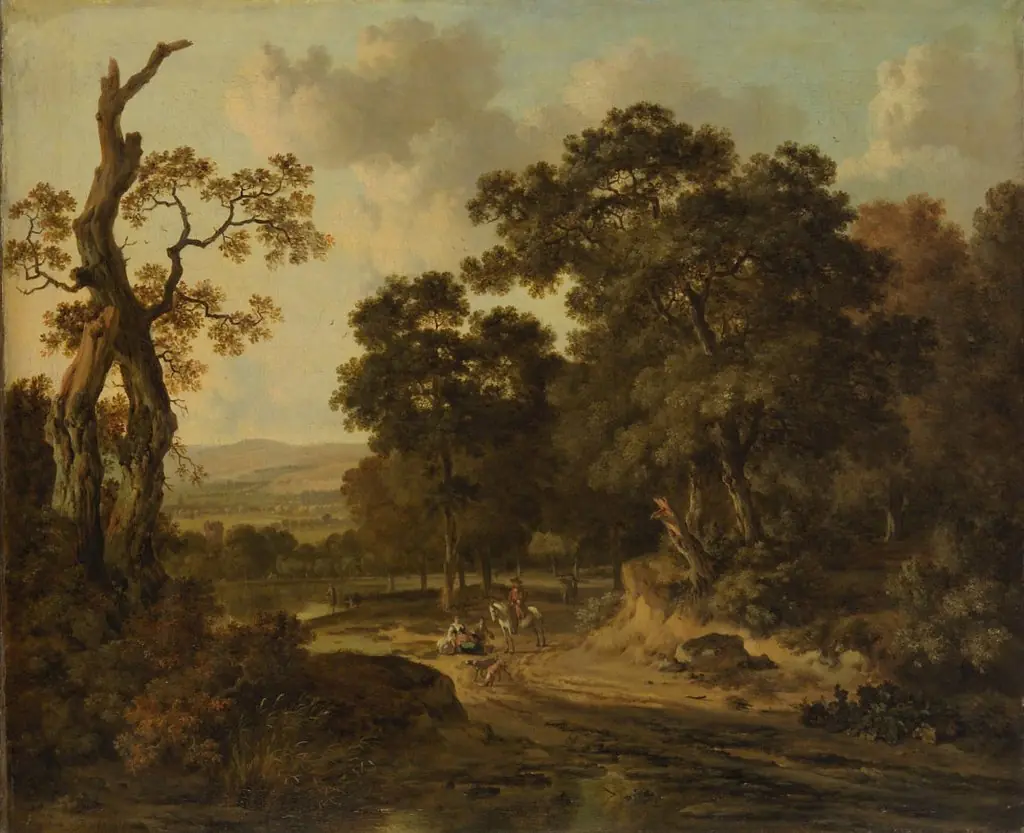
A Landscape with Peasants and a Dog
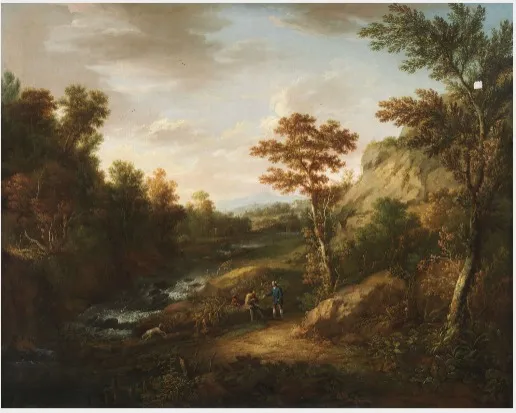
A Landscape with Peasants and a Dog is an oil painting by Robert Carver. It dates from 1754 and is held in the collection of the National Gallery of Ireland.
About this work
This painting shows a landscape with trees, a river, and people. The people are standing near the river, and there's a dog with them. The sky is cloudy and blue.
The painting is done in oil paint, and it's quite old - from 1754. The artist who made it is Robert Carver.
If you want to see more paintings like this, check out the National Gallery of Ireland.
Overview
Executed in the mid-18th century, it reflects Carver’s dual practice as both a theatrical scene painter and a creator of independent landscape works.
Robert Carver’s 1754 oil painting presents a quiet rural scene in the Irish countryside. Executed in the mid-18th century, it reflects Carver’s dual practice as both a theatrical scene painter and a creator of independent landscape works. The piece is part of the National Gallery of Ireland’s collection, where it stands as one of the few surviving examples of his framed compositions, offering insight into provincial Irish art of the period.
Subject & Meaning
The painting depicts a group of peasants gathered near a river, accompanied by a dog, engaged in unremarkable daily activity. No narrative or symbolic gesture is emphasized; instead, the focus lies in the ordinary rhythm of rural life. The absence of dramatic action suggests an interest in quiet observation rather than idealized pastoralism, aligning with a growing 18th-century appreciation for everyday rural existence.
Technique & Style
Carver employed oil paint to render soft atmospheric effects, with muted tones dominating the sky and landscape. Brushwork is restrained, favoring gentle transitions between earth, water, and foliage. The figures are rendered with minimal detail, their forms integrated into the broader composition rather than isolated as subjects. This approach reflects a practical, observational style common among provincial artists of the time.
History & Provenance
The painting has remained in Ireland since its creation, eventually entering the National Gallery of Ireland’s holdings. Its survival is notable, as many of Carver’s works were lost or dispersed. While little documentation exists about its early ownership, its presence in the national collection since the 19th century underscores its recognized value as a representative example of Irish landscape painting from the period.
Context
In mid-18th-century Ireland, landscape painting was not yet a dominant genre among local artists, who often focused on portraiture or religious subjects. Carver’s work emerged alongside a modest rise in secular landscape interest, influenced by English and Dutch precedents. His background in theatre design likely informed his compositional sense, balancing natural elements with human figures in a contained, stage-like space.
Legacy
Carver’s painting contributes to the understanding of Irish art beyond elite portraiture, revealing a regional engagement with landscape as a subject. Though not widely known today, it remains a key reference for scholars studying provincial artistic practice in 18th-century Ireland. Its preservation allows continued study of how rural life was visually recorded outside major urban centers.
Artist & collection
Artist
Robert Carver (c. 1730–1791) was an Irish painter, who worked as a painter of theatre scenery as well as painting framed works. Carver was one of the leading landscape painters in the second half of eighteenth century Ireland.

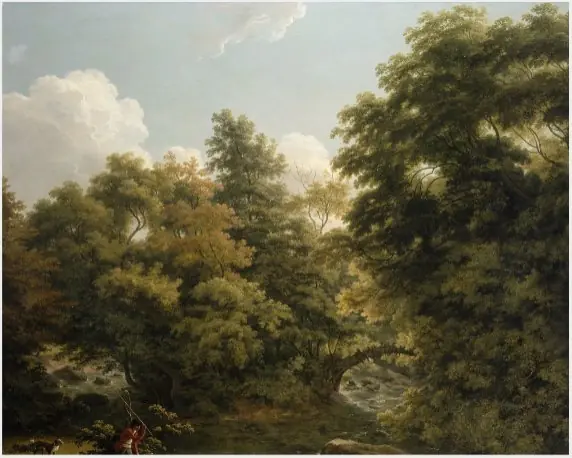 The River in the Demesne at Charleville
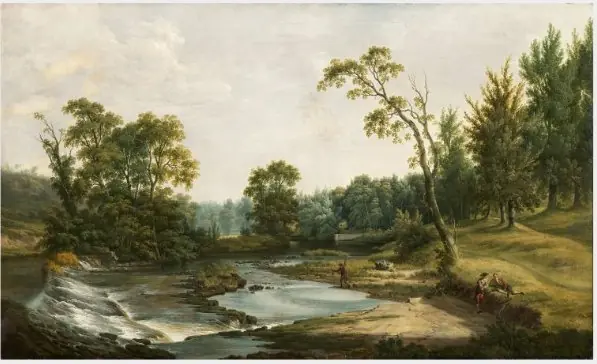 The Weir in Lucan House Demesne
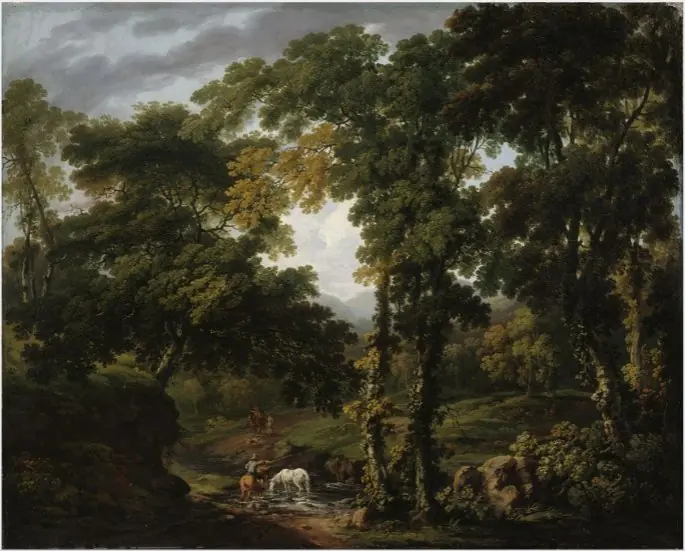 A Wooded River Landscape with Figures and Horses at a Ford and Fallow Deer in a Clearing
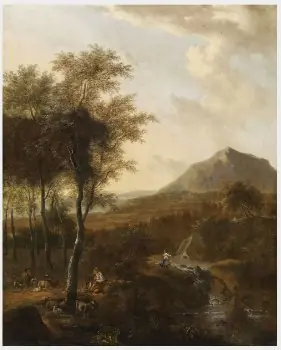 An Italianate Landscape
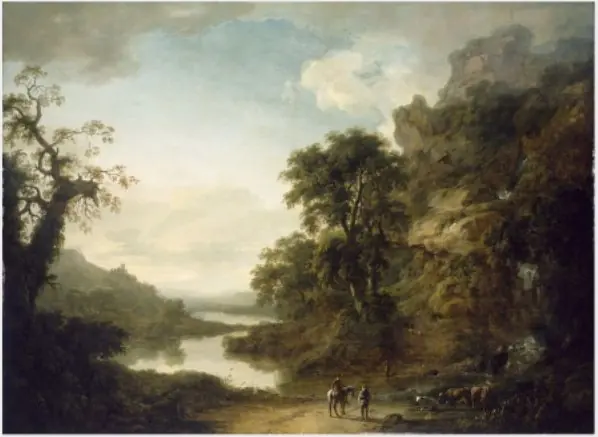 A Landscape
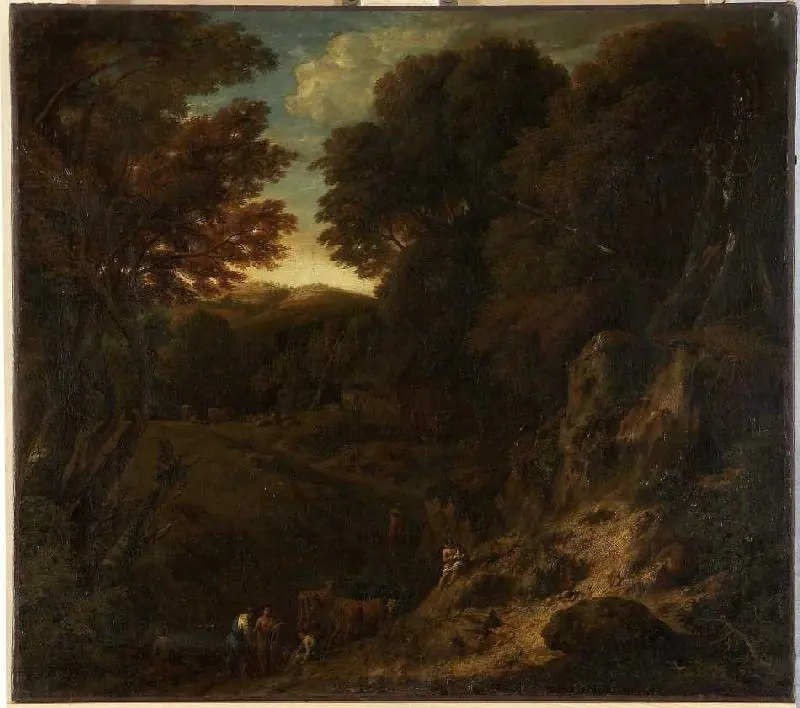 Italian forest landscape with cattle watering tanks
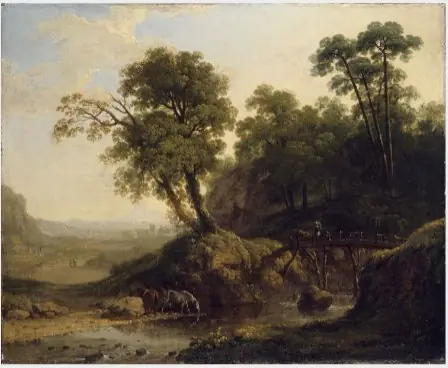 Landscape with a River and Horses by a Wooden Bridge
 Italianate Landscape
 A Landscape, Homeward Bound
 Diogenes Throwing away His Bowl (after Nicolas Poussin)
 A Woodland Scene
 Waldeingang