Artwork
Man with a Walking Stick, Seen in Profile [recto]
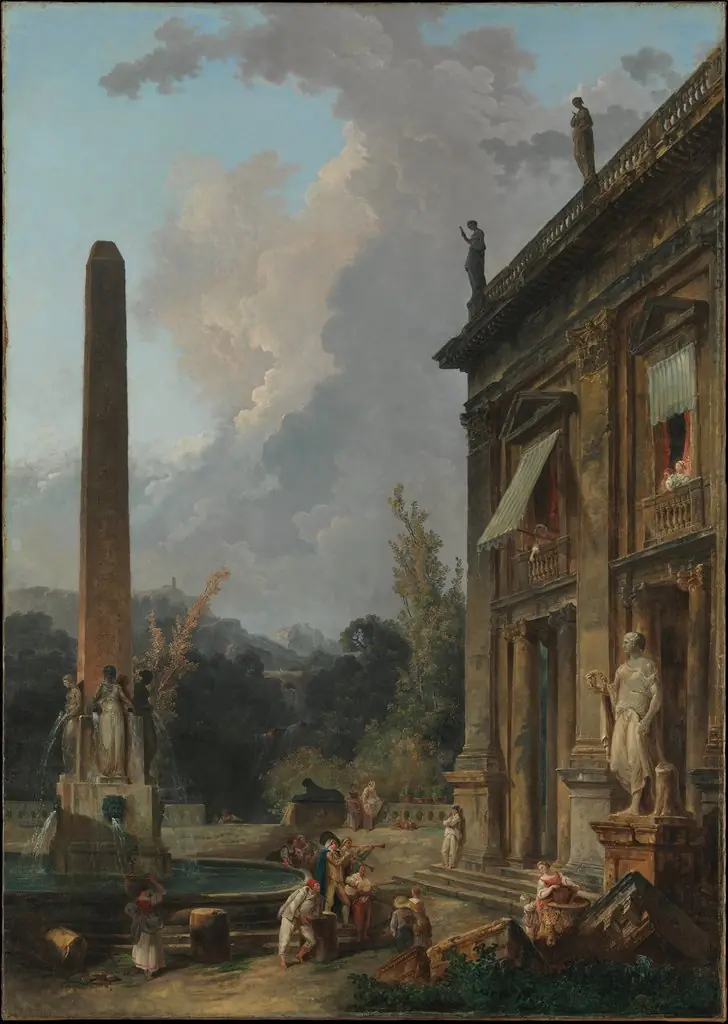
![Man with a Walking Stick, Seen in Profile [recto], by Hubert Robert, chalk, 1760](https://artifactworldgallery.com/img/hubert-robert--man-with-a-walking-stick-seen-in-profile-recto--9a2de0af8c4d35fd-w1024.webp)
Man with a Walking Stick, Seen in Profile [recto] is a chalk drawing by the Romanticist artist Hubert Robert. It dates from 1760 and is held in the collection of the National Gallery of Art.
About this work
Overview
Created around 1760, this drawing by Hubert Robert is a study in figure and movement executed in black chalk on laid paper. It captures a solitary man walking in profile, his posture and stride rendered with minimal yet deliberate strokes. The work belongs to a broader body of sketches Robert produced as preparatory studies, reflecting his attention to human presence within imagined environments.
Subject & Meaning
The figure, anonymous and unidealized, moves through an undefined space, suggesting a pedestrian in a landscape rather than a specific individual. His walking stick and low-brimmed hat imply everyday life, while the lack of context invites contemplation of solitude and motion. Robert’s focus on the figure’s rhythm rather than identity aligns with his interest in atmospheric, transient moments.
Technique & Style
Robert employed loose, rapid chalk strokes to suggest form and movement, avoiding fine detail in favor of expressive gesture. Subtle shifts in pressure create chiaroscuro effects, modeling the figure’s coat and hat with minimal lines. The paper’s textured surface and irregular edges enhance the sketch’s immediacy, reinforcing its function as a working study rather than a finished piece.
History & Provenance
The drawing originates from Robert’s personal sketchbook collection, likely made during his early years in Rome, where he studied classical ruins and urban life. It remained in his possession until his death, later entering institutional collections through documented acquisitions. Its survival reflects Robert’s habit of preserving preparatory work as artistic records.
Context
In the 1760s, Robert was developing his signature style—blending topographical observation with imaginative reconstruction. While known for architectural capricci, he frequently sketched figures to animate his scenes. This drawing exemplifies his practice of observing pedestrians in Roman streets, later integrating such studies into larger compositions of ruins and landscapes.
Legacy
This sketch illustrates Robert’s contribution to the evolution of the artist’s study as a distinct genre. His unembellished figures, rendered with sensitivity to posture and motion, influenced later Romantic draftsmen who valued spontaneity and emotional tone over idealization. The work remains a quiet testament to the artist’s eye for the ordinary within the sublime.
Artist & collection
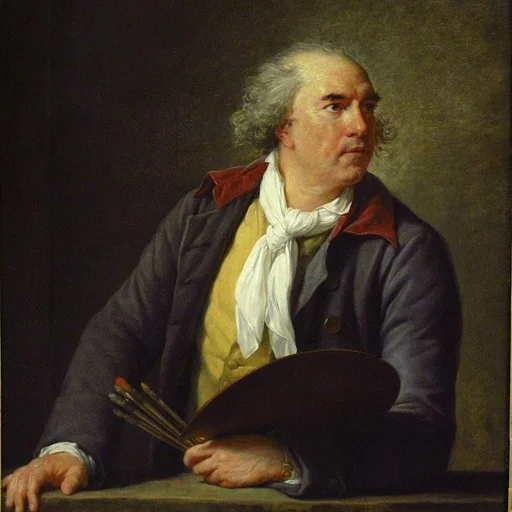
Artist
Hubert Robert (French pronunciation: ; 22 May 1733 – 15 April 1808) was a French painter in the school of Romanticism, noted especially for his landscape paintings and capricci, or semi-fictitious picturesque depictions of ruins in Italy…

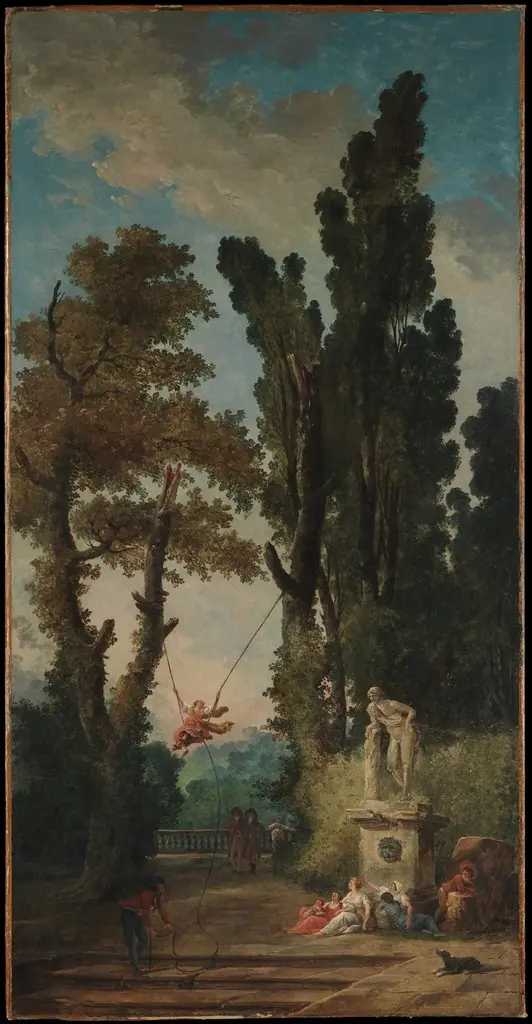
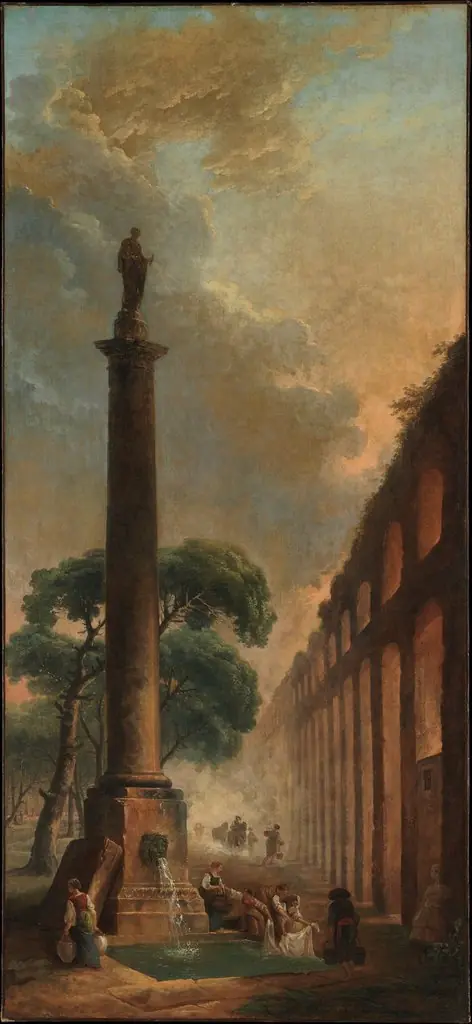
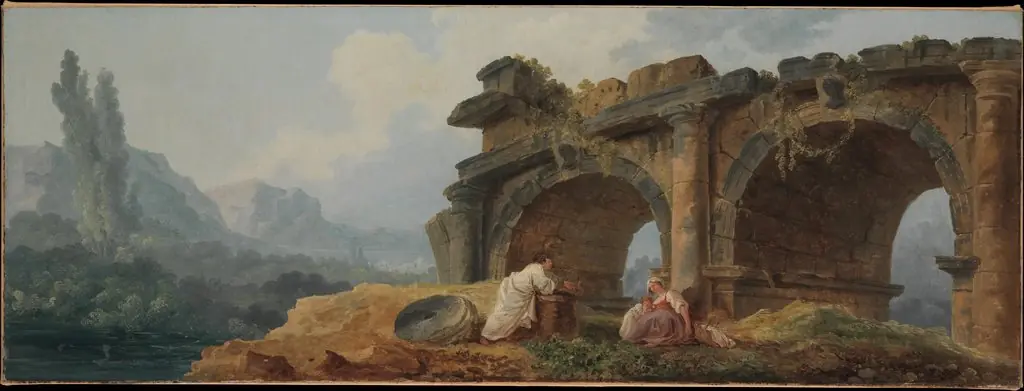
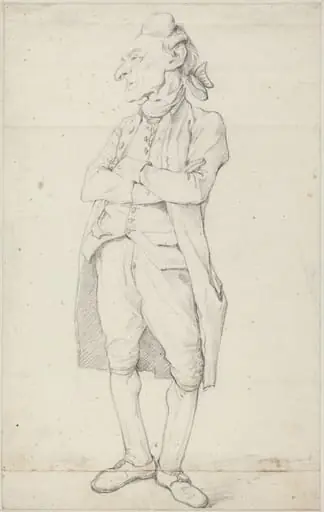 A Gentleman Standing with His Arms Crossed
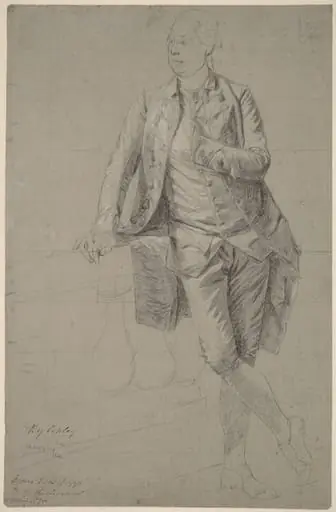 A Gentleman
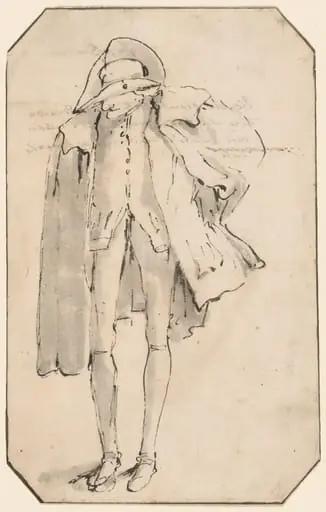 Standing Figure Wearing a Hat
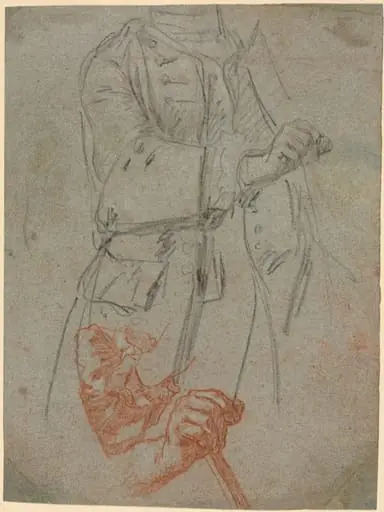 Studies of a Costume, Sleeve, and Hand
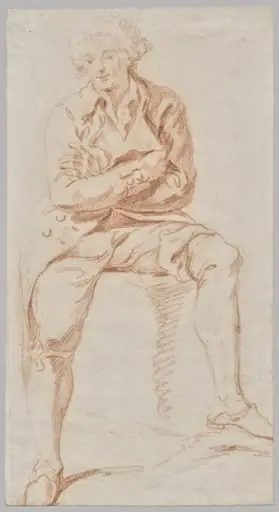 A Man Seated on the Edge of a Table
![Study of a Seated Man [recto], by Allan Ramsay](https://artifactworldgallery.com/img/allan-ramsay--study-of-a-seated-man-recto--ecc95c68788b0e76-w320.webp) Study of a Seated Man [recto]
Study of a Seated Man [recto]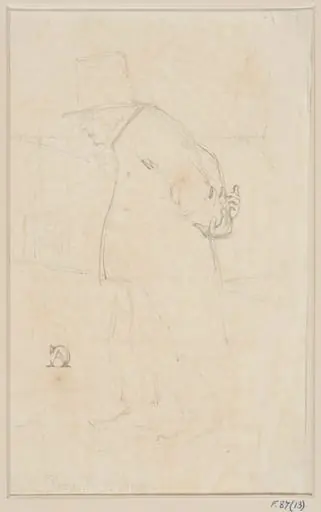 William Godwin, novelist and historian
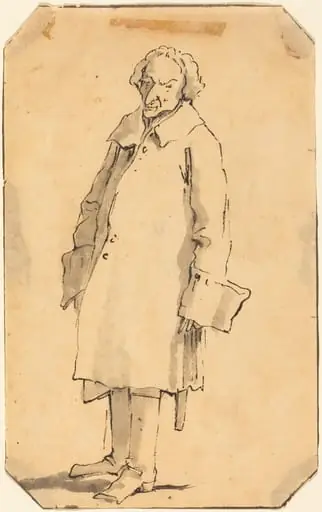 A Standing Man Wearing a Great Coat and Boots
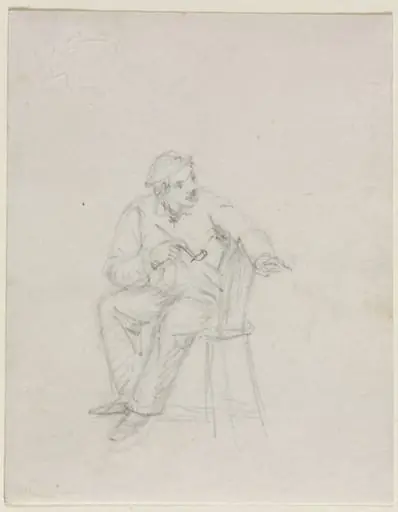 Man Smoking a Pipe
![Woman and Smaller Male Figure on Grand Stairway [recto], by Hubert Robert](https://artifactworldgallery.com/img/hubert-robert--woman-and-smaller-male-figure-on-grand-stairway-recto--637e2104bb3633b6-w320.webp) Woman and Smaller Male Figure on Grand Stairway [recto]
Woman and Smaller Male Figure on Grand Stairway [recto]