Artwork
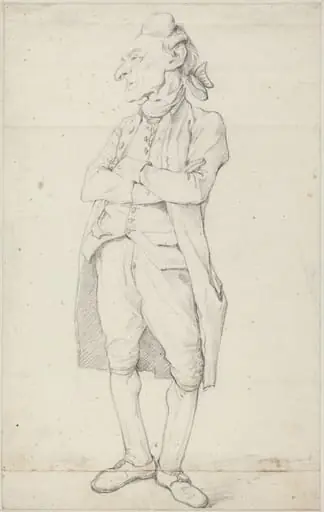
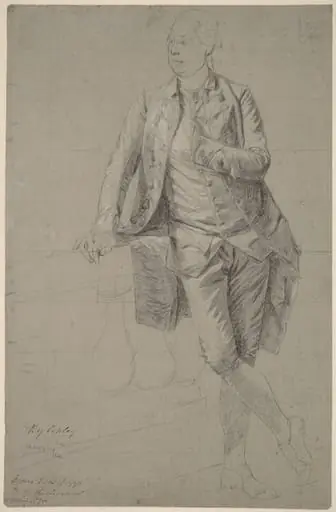
Standing Figure Wearing a Hat
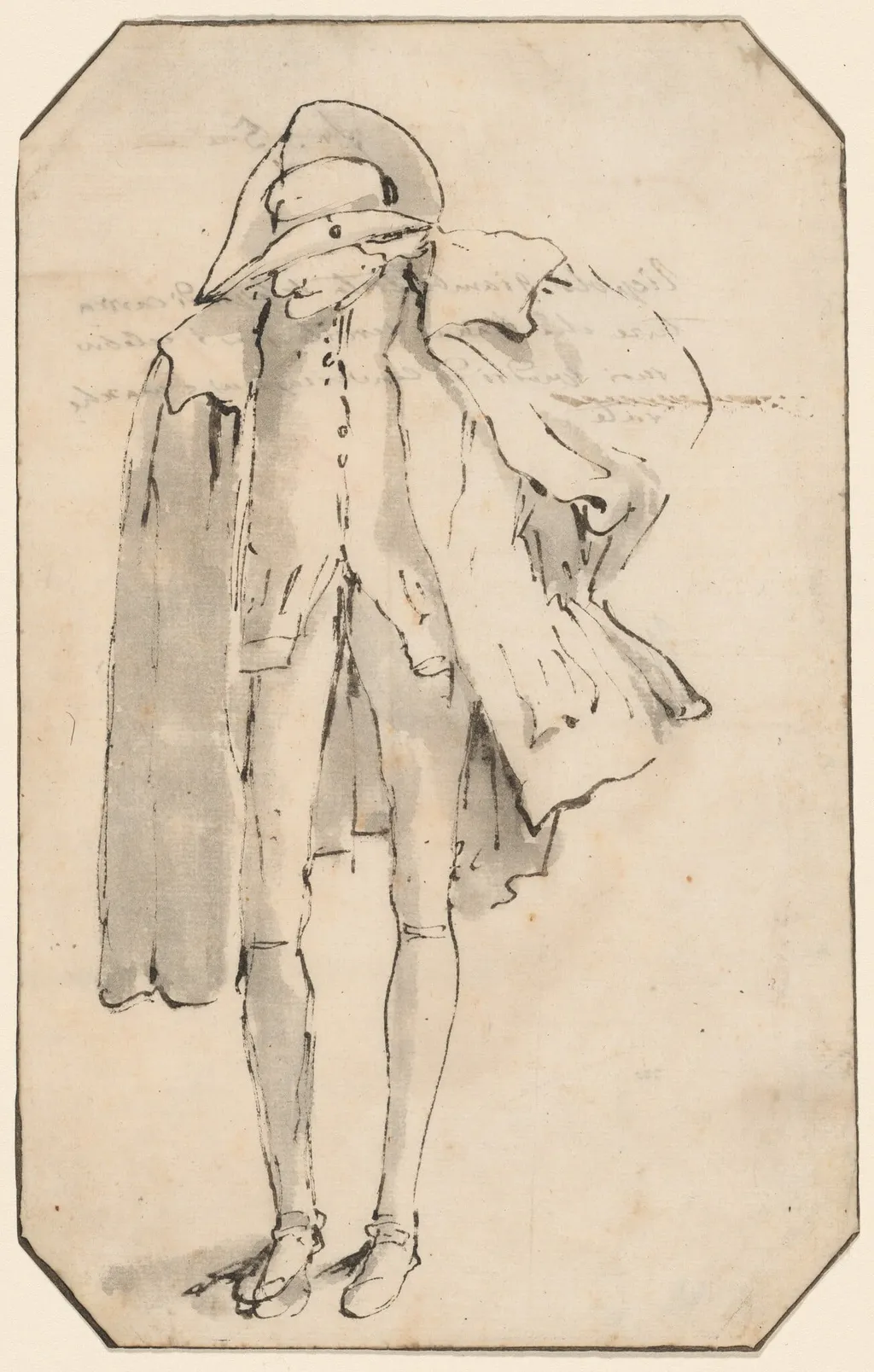
Standing Figure Wearing a Hat is an ink drawing by the Baroque artist Giovanni Battista Tiepolo. It dates from 1760 and is held in the collection of the National Gallery of Art.
About this work
Overview
Created around 1760, this drawing by Giovanni Battista Tiepolo is executed in pen and black ink with gray wash on laid paper.
Created around 1760, this drawing by Giovanni Battista Tiepolo is executed in pen and black ink with gray wash on laid paper. It exemplifies his mastery of rapid, fluid draftsmanship and his ability to convey form and atmosphere with minimal means. As a leading Venetian artist of the 18th century, Tiepolo produced numerous works on paper that served both as preparatory studies and independent compositions, reflecting his deep engagement with figure and costume.
Subject & Meaning
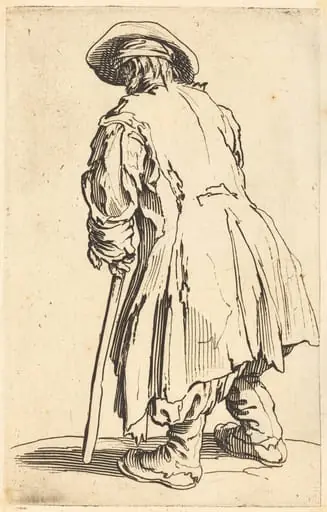
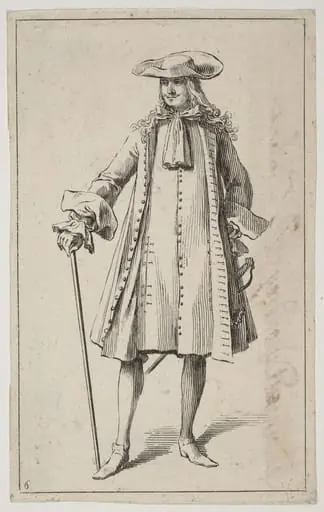
The drawing portrays a solitary figure in period dress, wearing a broad-brimmed hat that obscures the face and a long coat with a cape draped over one shoulder. The figure stands slightly turned to the right, suggesting a moment of pause or contemplation. No narrative context is provided, and the anonymity of the subject invites interpretation as a study of posture, costume, or social type rather than a specific individual.
Technique & Style
Tiepolo employed fine pen lines to define the contours of the figure and garment folds, while gray washes added tonal depth and subtle modeling. The washes are applied with controlled fluidity, suggesting light falling across fabric and creating a sense of volume without heavy shading. The use of laid paper, with its visible chain lines, enhances the tactile quality of the work and aligns with 18th-century drawing practices.
History & Provenance
The drawing originates from Tiepolo’s later period, when he was actively engaged in large-scale decorative projects across Europe. While its early ownership is undocumented, it entered institutional collections in the modern era as part of broader efforts to preserve Venetian graphic art. Its survival reflects the value placed on Tiepolo’s drawings as autonomous works, distinct from his painted commissions.
Context
Tiepolo worked alongside contemporaries like Canaletto and Guardi, contributing to Venice’s vibrant artistic culture. While his large frescoes emphasized theatrical grandeur, his drawings often focused on intimate studies of dress, gesture, and light. This piece aligns with a broader tradition of Italian draftsmanship that valued observation and economy of line, bridging the Baroque and emerging Neoclassical sensibilities.
Legacy
Tiepolo’s drawings, including this one, influenced later generations of artists through their expressive freedom and technical precision. They were collected by connoisseurs and studied as models of draftsmanship. Though less known than his murals, these works remain essential to understanding his creative process and the evolving role of drawing in 18th-century European art.
Artist & collection

Artist
Giovanni Battista Tiepolo, also known as Giambattista Tiepolo, was an Italian painter and printmaker from the Republic of Venice who painted in the Rococo style, considered an important member of the 18th-century Venetian school.

![Man with a Walking Stick, Seen in Profile [recto], by Hubert Robert](https://artifactworldgallery.com/img/hubert-robert--man-with-a-walking-stick-seen-in-profile-recto--9a2de0af8c4d35fd-w320.webp)