Artwork
Ruined Farm
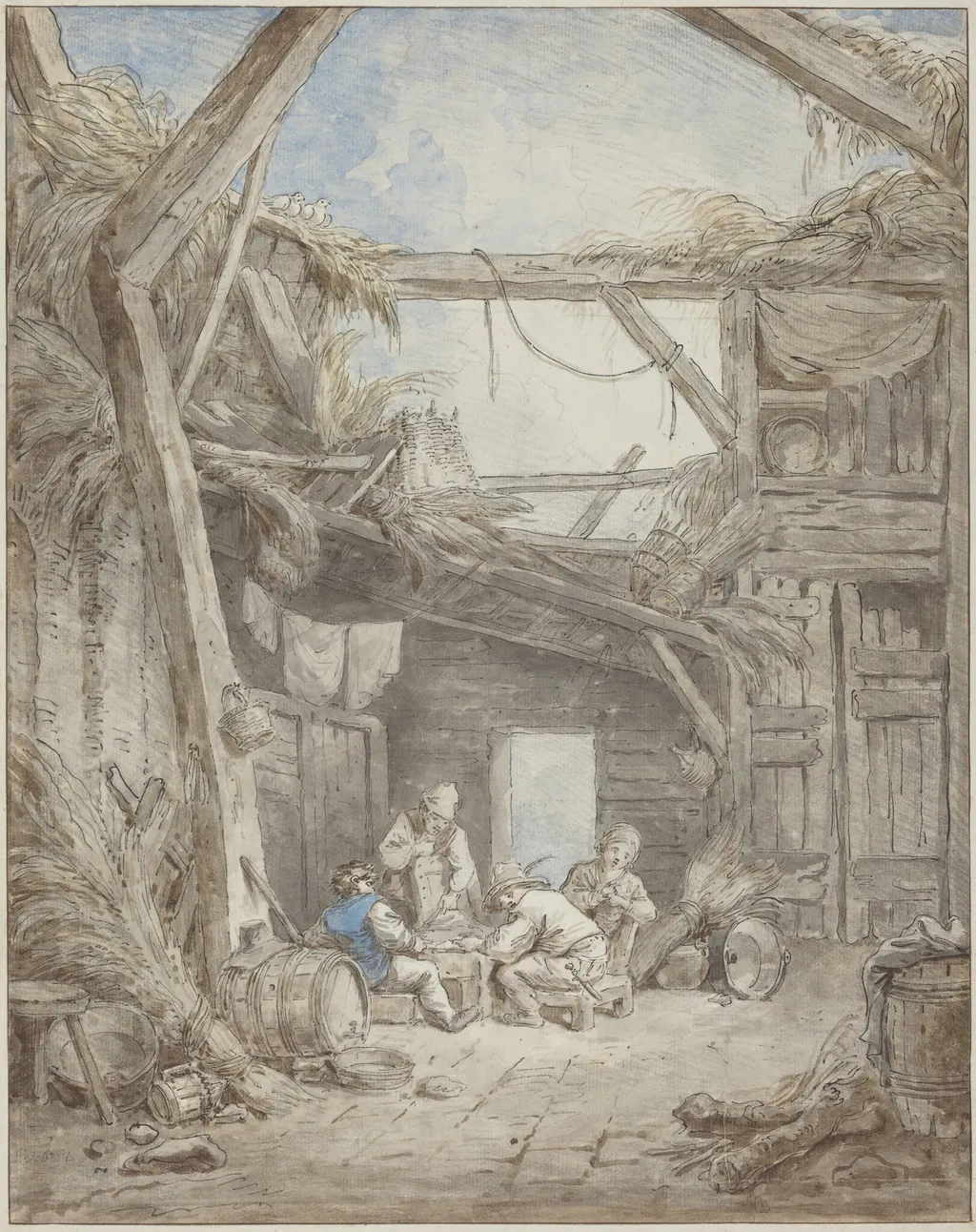
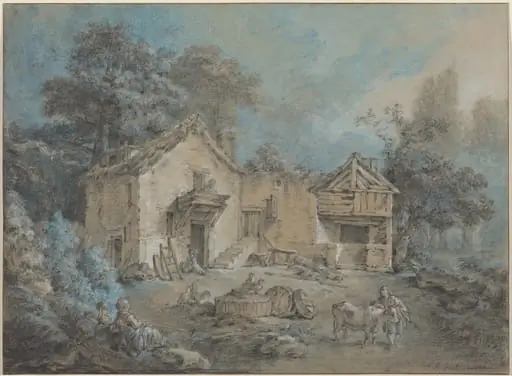
Ruined Farm is an ink drawing by the Romanticist artist Hubert Robert. It dates from 1772 and is held in the collection of the National Gallery of Art.
About this work
Overview
Created circa 1772, this drawing by French artist Hubert Robert portrays a dilapidated farmstead. Executed on laid paper, the composition centers on a modest group of figures engaged in everyday tasks amid crumbling architecture, set against a sprawling tree and a distant structure that hints at a once‑functional estate.
Subject & Meaning
The scene juxtaposes human activity with architectural decay, suggesting a quiet persistence of daily life despite the loss of the farm’s former vigor. Simple clothing and informal gestures convey a sense of community, while the surrounding ruins evoke contemplation of transience and the passage of time.
Technique & Style
Robert combined precise pen and black‑ink drawing with gray‑brown washes and touches of blue watercolor, overlaying a black chalk counterproof and adding further details in black chalk. The layered approach creates atmospheric depth, while the handling of light and shadow reflects the Romantic interest in mood and the picturesque.
History & Provenance
The work belongs to Robert’s early period, when he was developing his reputation for capriccio landscapes that blend observation with imagination. It remains a representative example of his practice of rendering Italian and French ruins, and it is held in a public collection that acquired it through 19th‑century museum acquisitions.
Artist & collection

Artist
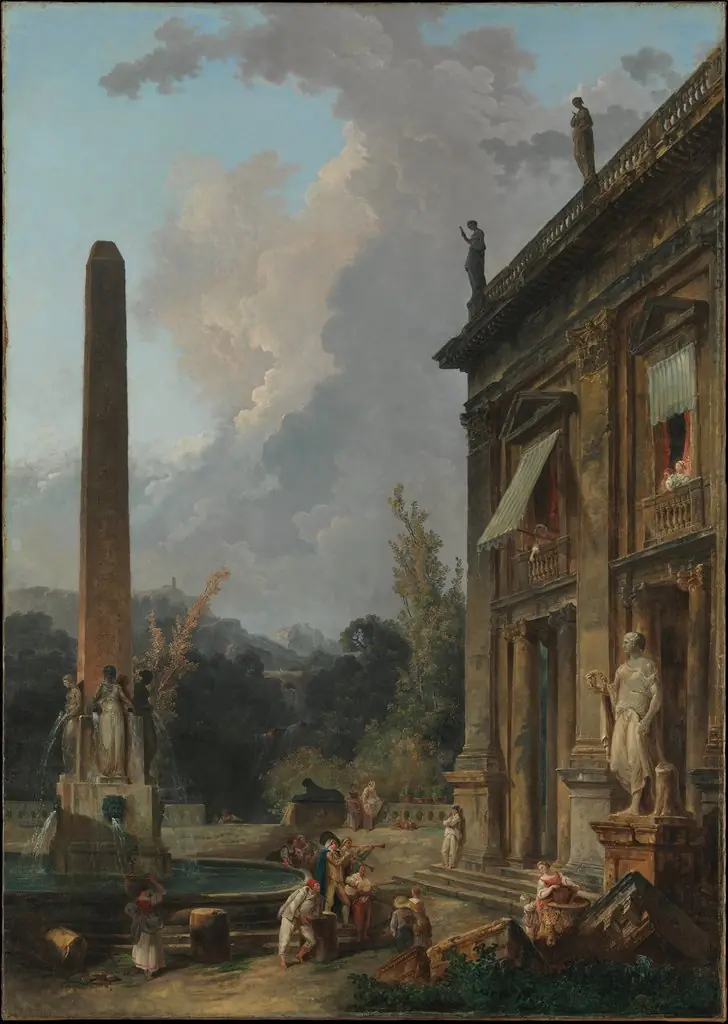
Hubert Robert (French pronunciation: ; 22 May 1733 – 15 April 1808) was a French painter in the school of Romanticism, noted especially for his landscape paintings and capricci, or semi-fictitious picturesque depictions of ruins in Italy…

 Farm Scene
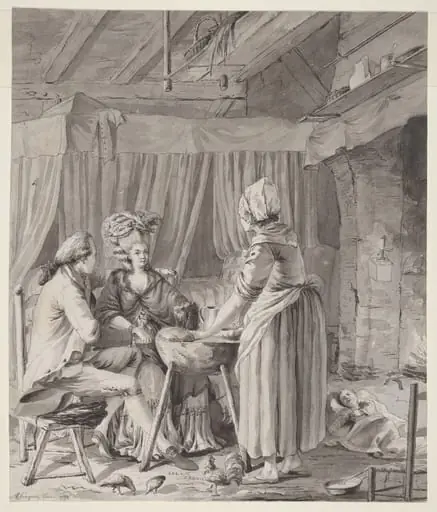 Elegant Couple Lunching in a Country Cottage
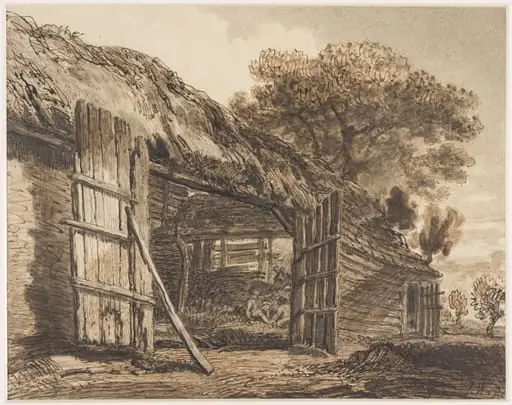 A Study from Nature.
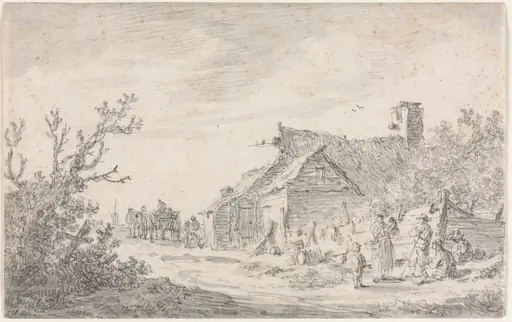 Landscape with a Cottage and Figures
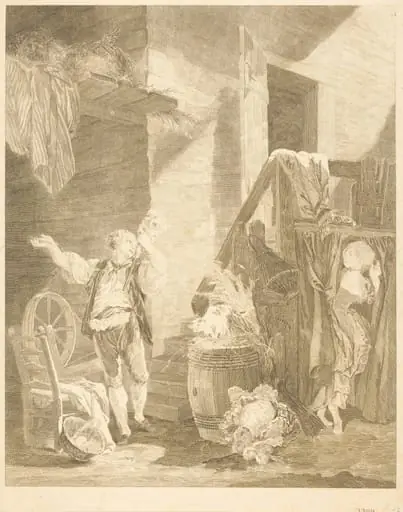 Rose et Colas
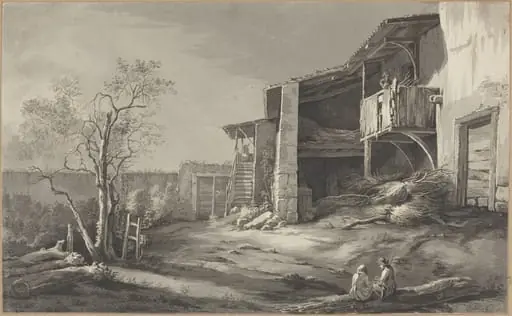 A Farmyard
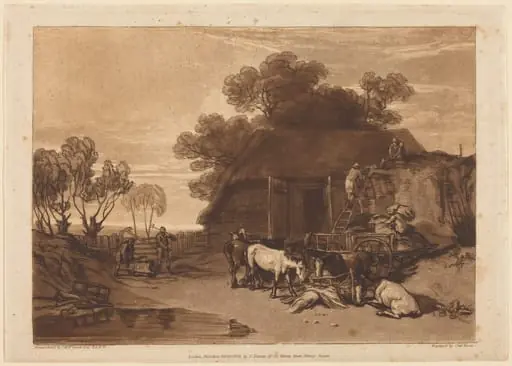 The Straw Yard
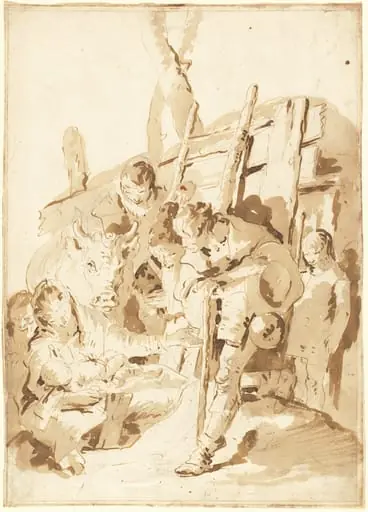 The Adoration of the Shepherds
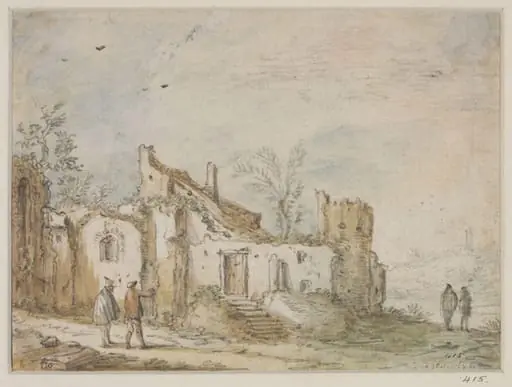 Untitled
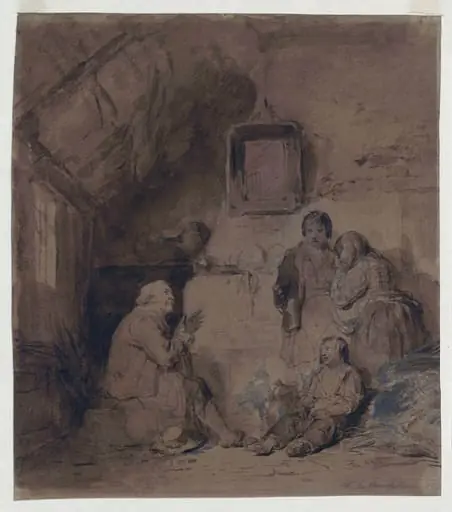 A Poor Family Lamenting Their Situation in Their Humble Home
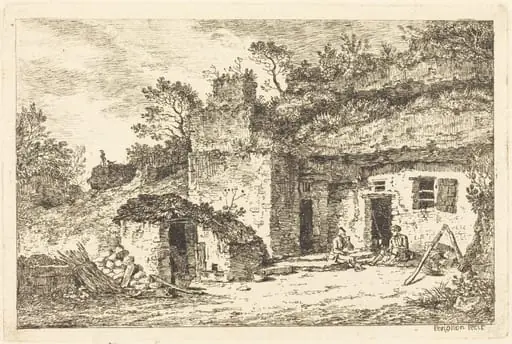 A Cottage with Two Men Seated at the Doorway
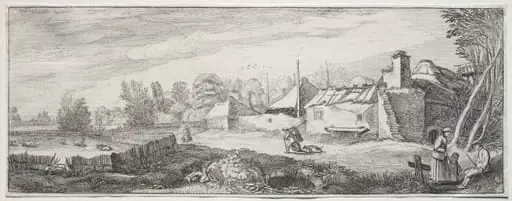 Some Pleasing Landscapes and Ruins of Ancient Monuments: Dilapidated Farm