Artwork
A Farmyard
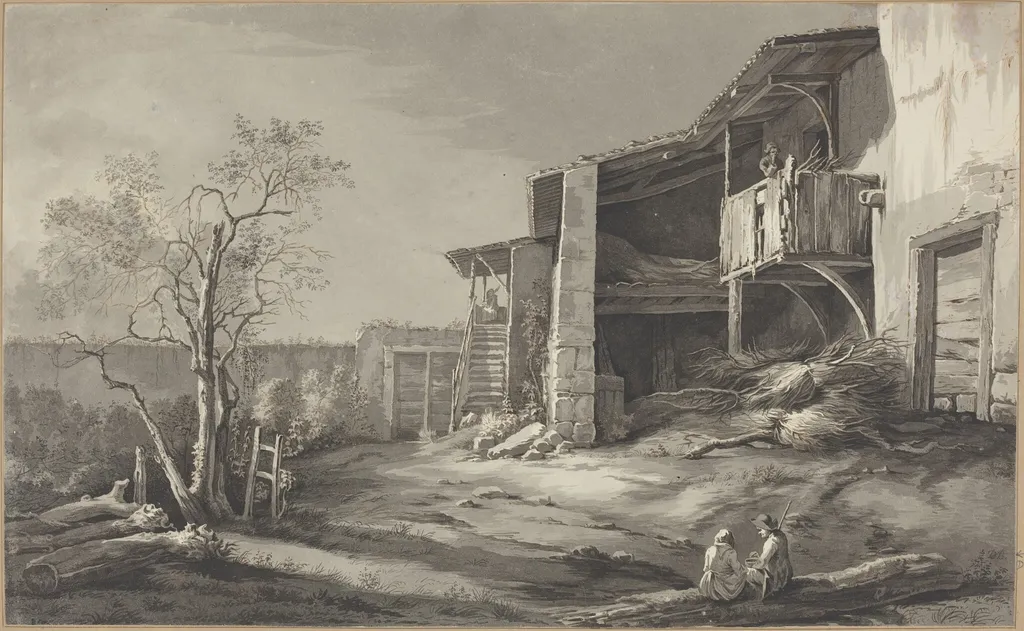
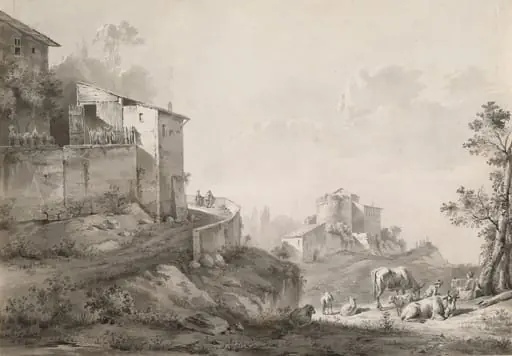
A Farmyard is an ink drawing by the Baroque artist Jean-Jacques de Boissieu. It dates from 1773 and is held in the collection of the National Gallery of Art.
About this work
Overview
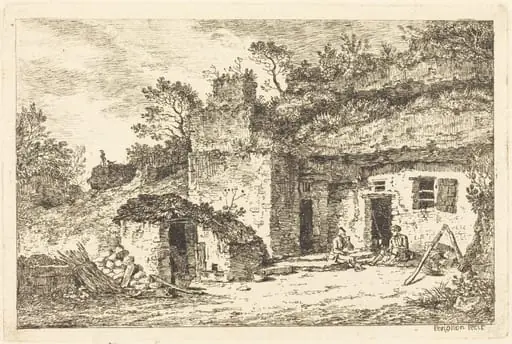
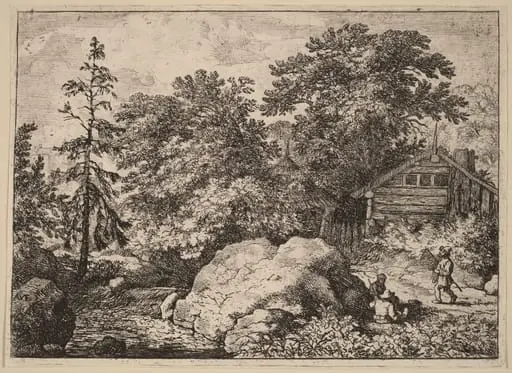
The composition captures a modest, aging structure surrounded by scattered tools and bare trees, with figures engaged in quiet, unremarkable activities.
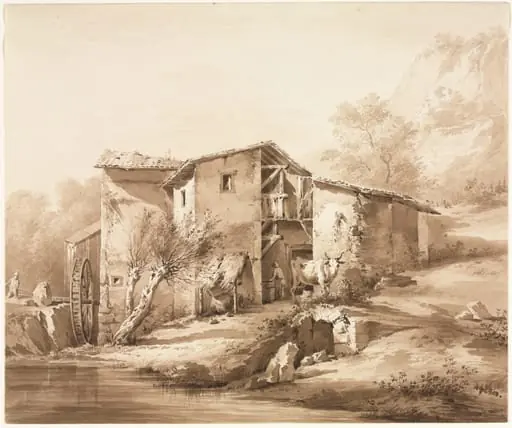
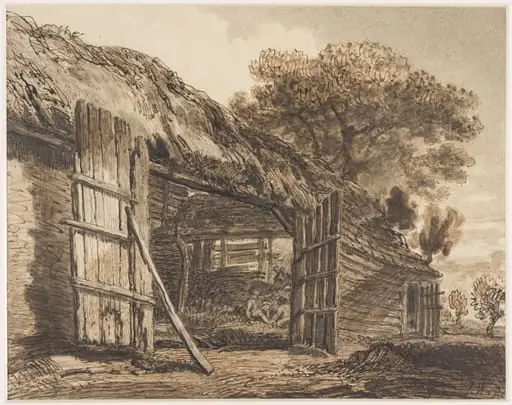
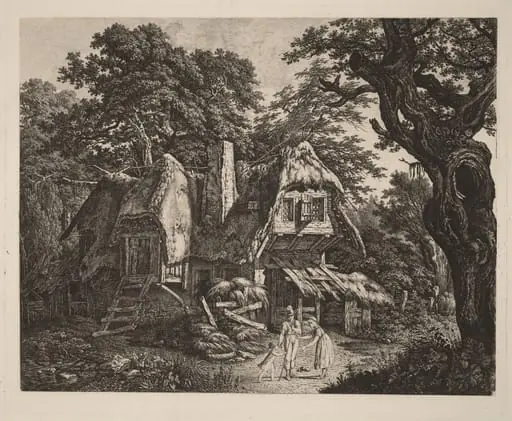
Created in 1773 by Jean-Jacques de Boissieu, this drawing depicts a rural French farmstead rendered in pen and ink with gray wash. The composition captures a modest, aging structure surrounded by scattered tools and bare trees, with figures engaged in quiet, unremarkable activities. The artist employed subtle tonal variations to suggest depth and texture, avoiding idealization in favor of a grounded, observational approach.
Subject & Meaning
The scene presents an unembellished view of agricultural life, emphasizing decay and routine. A woman leans from a balcony, another stands in a doorway, and two figures rest near a stream—one holding a stick as if pausing mid-task. These gestures suggest daily rhythms rather than narrative drama. The cluttered yard and weathered architecture convey a sense of time-worn endurance, reflecting the quiet dignity of rural labor.
Technique & Style
De Boissieu used fine pen lines and layered gray washes to simulate the textures of weathered wood, stone, and earth. Cross-hatching defines shadowed areas, while sparse, deliberate strokes suggest the roughness of surfaces and the thinness of winter foliage. The technique prioritizes tactile realism over dramatic contrast, aligning with 18th-century draftsmanship that valued observation over theatricality.
History & Provenance
The drawing was produced during de Boissieu’s early career, a period when he focused on topographical and rural subjects. It likely originated as a study from direct observation, possibly during travels in the French countryside. The work remained within private collections until entering a public collection in the 19th century, where its modest scale and medium preserved its status as a study rather than a finished piece.
Context
In the decades before the French Revolution, artists increasingly turned to everyday rural life as a subject worthy of attention. De Boissieu’s work reflects this shift, distancing itself from grand historical or mythological themes. His focus on humble structures and unposed figures aligns with broader Enlightenment interests in authenticity and the natural world.
Legacy
Though not widely exhibited during his lifetime, de Boissieu’s drawings like this one influenced later generations of French draftsmen who valued quiet realism. The work stands as an example of how meticulous ink technique could convey atmosphere and material presence without color or grandeur, contributing to a tradition of observational drawing that persisted into the 19th century.
Artist & collection
Artist
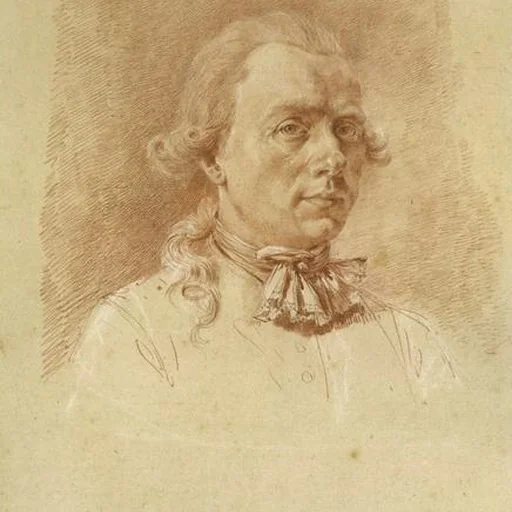
Jean-Jacques de Boissieu (1736–1810) was a French artist, born in Lyon.