Artwork
Two Studies of the Statue of Alexander and Bucephalus [verso]
![Two Studies of the Statue of Alexander and Bucephalus [verso], by Hubert Robert, chalk, 1760](https://artifactworldgallery.com/img/hubert-robert--two-studies-of-the-statue-of-alexander-and-bucephalus-verso--c8baec3f622cceea-w1024.webp)
Two Studies of the Statue of Alexander and Bucephalus [verso] is a chalk drawing by the Romanticist artist Hubert Robert. It dates from 1760 and is held in the collection of the National Gallery of Art.
About this work
Overview
Created circa 1760, this drawing by French artist Hubert Robert records two quick studies of a statue portraying Alexander the Great mounted on his famed horse, Bucephalus. Executed in graphite and black chalk on laid paper, the work functions as a preparatory sketch, capturing the dynamic posture of both rider and animal in a few gestural lines.
Subject & Meaning
The figures reference the legendary Macedonian ruler and his horse, a frequent emblem of classical heroism. By rendering the statue in a provisional manner, Robert emphasizes the narrative potential of the ancient motif, aligning his own Romantic fascination with antiquity and the dramatic possibilities of heroic subjects.
Technique & Style
Robert employs loose, flowing strokes of graphite and black chalk, allowing the forms to emerge through soft shading and subtle blending reminiscent of sfumato. The laid paper’s texture contributes to the sketch’s aged appearance, while the minimal line work conveys movement and immediacy, characteristic of his preparatory studies.
History & Provenance
The drawing belongs to Robert’s early output, produced before his later fame as a painter of capricci and ruinous landscapes. Its paper shows signs of wear, suggesting long-term handling, though specific ownership records prior to its inclusion in museum collections remain undocumented.
Artist & collection
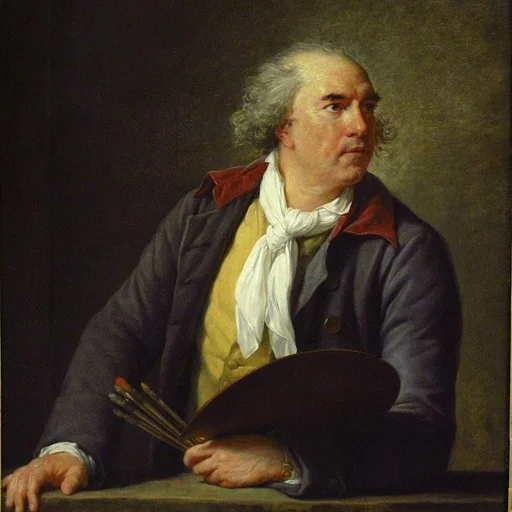
Artist
Hubert Robert (French pronunciation: ; 22 May 1733 – 15 April 1808) was a French painter in the school of Romanticism, noted especially for his landscape paintings and capricci, or semi-fictitious picturesque depictions of ruins in Italy…

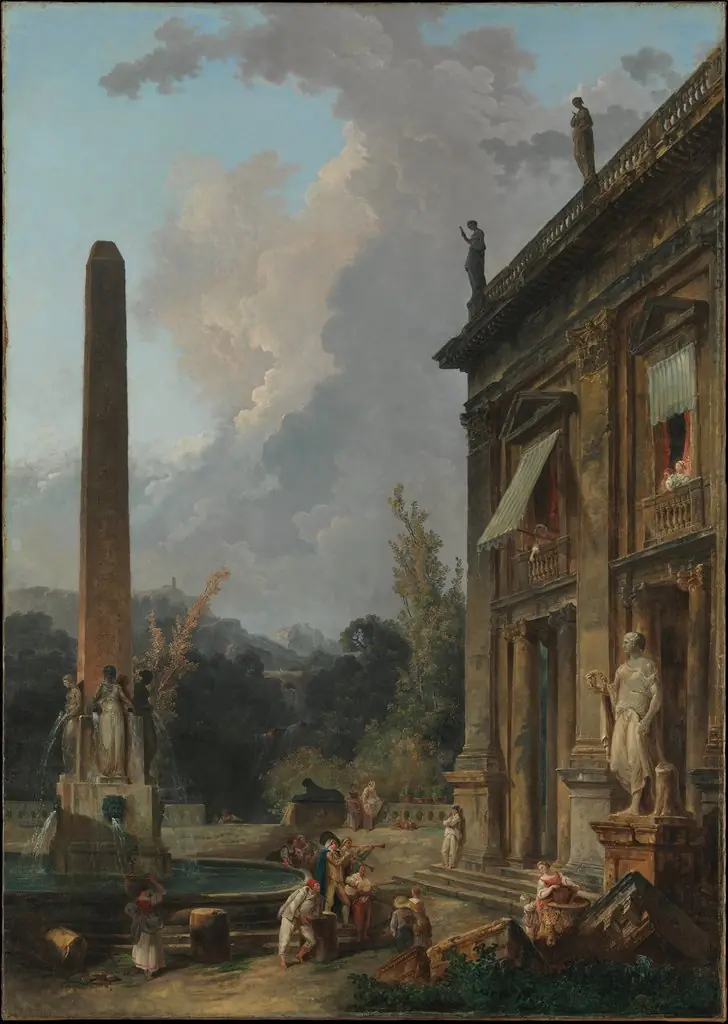
![Apollo and Studies of the Artist's Own Hand [recto], by Francesco Fontebasso](https://artifactworldgallery.com/img/francesco-fontebasso--apollo-and-studies-of-the-artist-s-own-hand-recto--ee93288e84456aea-w320.webp) Apollo and Studies of the Artist's Own Hand [recto]
Apollo and Studies of the Artist's Own Hand [recto] Musician and Dancing Figures
 A woman approaching a kneeling man
![Female Figure (Penitent Magdalene?) [verso], by Donato Creti](https://artifactworldgallery.com/img/donato-creti--female-figure-penitent-magdalene-verso--b0756d00ad6853a6-w320.webp) Female Figure (Penitent Magdalene?) [verso]
Female Figure (Penitent Magdalene?) [verso] Lot and His Daughters (recto); Sketch for Lot and His Daughters (verso)
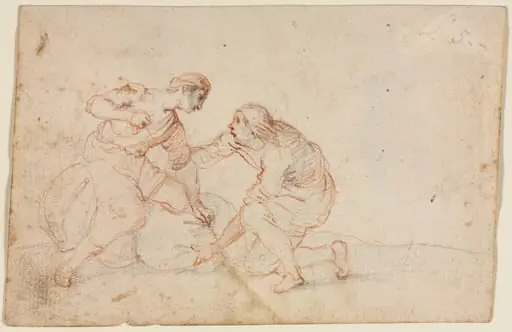 Two Men Tying a Bundle (recto)
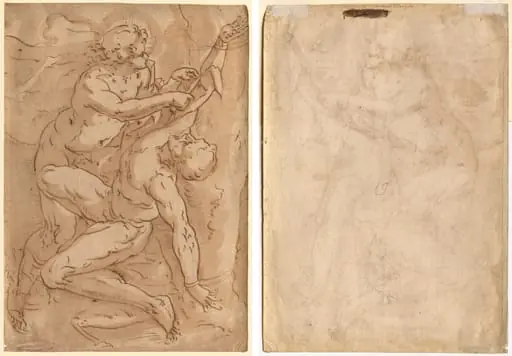 Apollo Flaying Marsyas (recto); Two Sketches of a Mother and Child (verso)
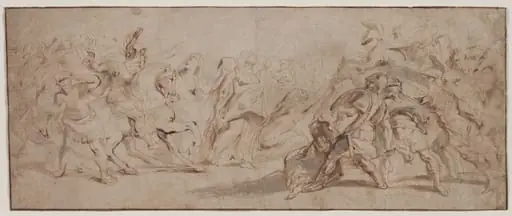 Reconciliation of the Romans and the Sabines (recto)