Artwork
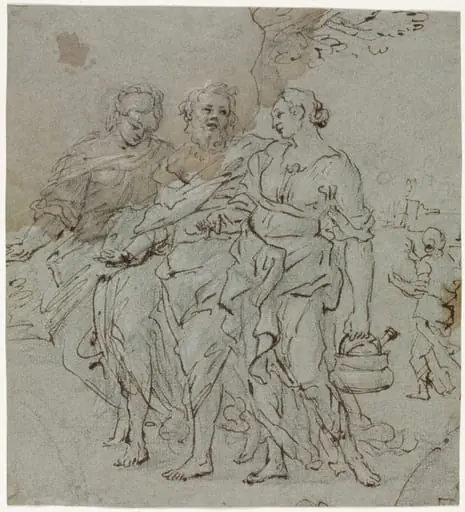
Lot and His Daughters (recto); Sketch for Lot and His Daughters (verso)
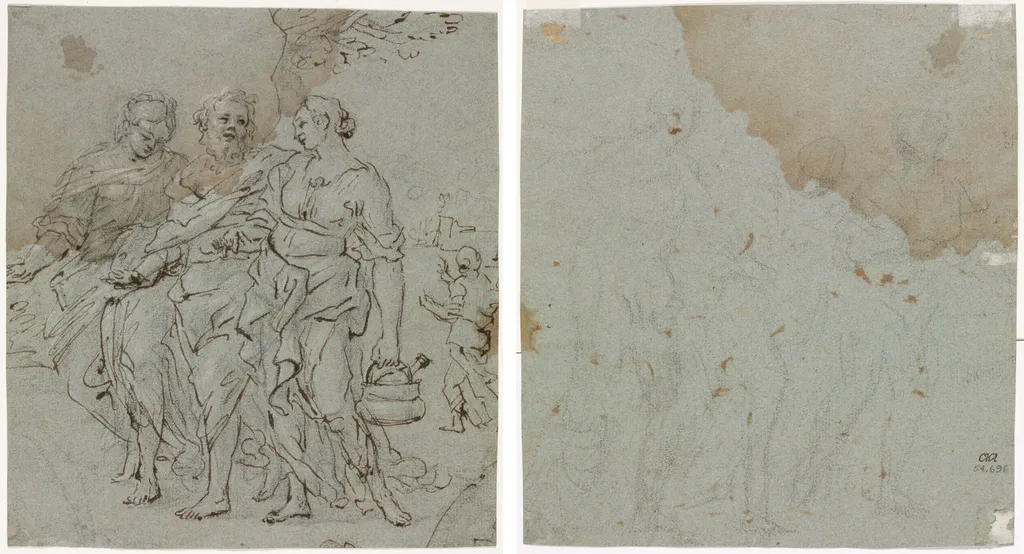
Lot and His Daughters (recto); Sketch for Lot and His Daughters (verso) is a drawing by the Baroque artist Pietro da Cortona. It dates from 1604 and is held in the collection of the Cleveland Museum of Art.
About this work
Overview
Executed in pen and ink with wash, the work reflects the artist’s process of exploring form and movement before committing to a final design.
This double-sided drawing by Pietro da Cortona, dated around 1604, presents a preparatory study for a larger composition. One side shows a finished depiction of Lot and his daughters, while the reverse bears a looser, rapid sketch of the same subject. Executed in pen and ink with wash, the work reflects the artist’s process of exploring form and movement before committing to a final design. It is held in the collection of the Cleveland Museum of Art.
Subject & Meaning
The scene illustrates a moment from Genesis in which Lot’s daughters, believing themselves the last humans on earth, intoxicate their father to ensure his lineage. Cortona captures the tense, intimate interaction between the three figures, emphasizing psychological unease and moral ambiguity. The composition avoids overt moralizing, instead focusing on human vulnerability and the rawness of the moment.
Technique & Style
Cortona employed fluid pen lines and diluted ink washes to model form with economy and urgency. Chiaroscuro is suggested through graded tones rather than heavy shading, giving the figures a sculptural presence. The recto displays controlled, deliberate strokes, while the verso reveals spontaneous, gestural marks—evidence of the artist working through composition and posture in real time.
History & Provenance
Created early in Cortona’s career, likely during his formative years in Rome, the drawing predates his major fresco commissions. It remained in private hands until entering the Cleveland Museum of Art’s collection. Its survival as a two-sided study is uncommon, offering rare insight into the artist’s working method before he became known for grand-scale ceiling decorations.
Context
In early 17th-century Italy, artists increasingly turned to rapid figure studies to capture motion and emotion, moving beyond rigid Mannerist conventions. Cortona’s drawing aligns with this shift, reflecting the Baroque emphasis on drama and psychological immediacy. His contemporaries, including Caravaggio and Annibale Carracci, also prioritized naturalism and expressive gesture in preparatory works.
Legacy
This drawing stands as a testament to Cortona’s skill in translating narrative into dynamic form through minimal means. Though later celebrated for monumental frescoes, this intimate study reveals the foundational role of sketching in his practice. It remains a key example of how Baroque artists used drawing not merely as preparation, but as a medium of creative exploration.
Artist & collection
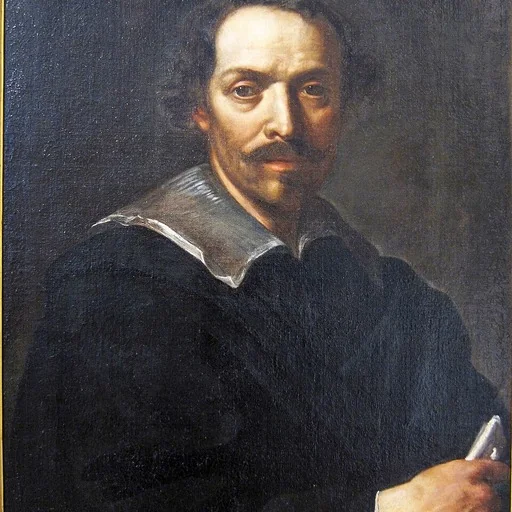
Artist
Pietro da Cortona (Italian: ; 1 November 1596 or 1597 – 16 May 1669) was an Italian Baroque painter and architect.

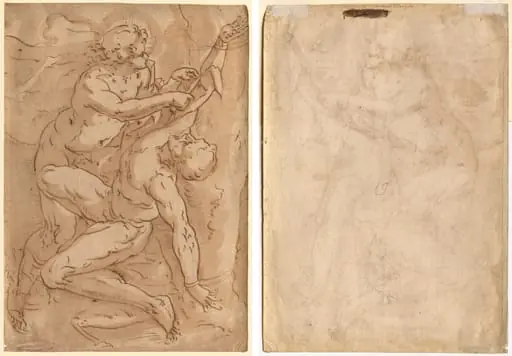 Apollo Flaying Marsyas (recto); Two Sketches of a Mother and Child (verso)
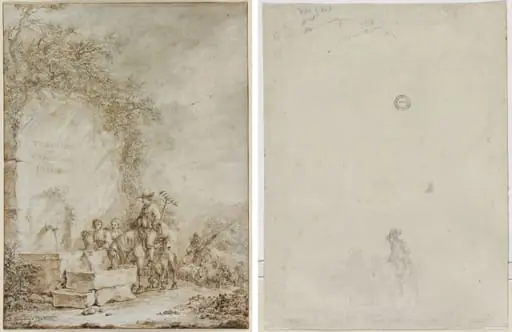 Frontispiece for an Album of Drawings: Peasants at a Fountain (recto); Sketch of Peasants at a Fountain (verso)
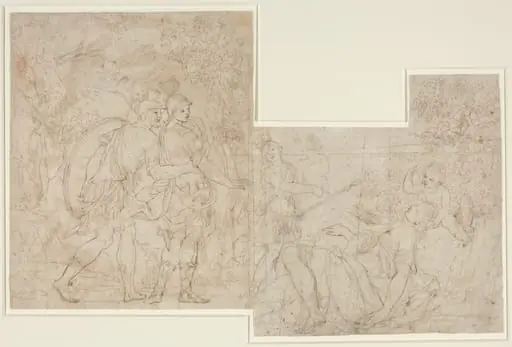 Three Soldiers Discovering a Sleeping Woman
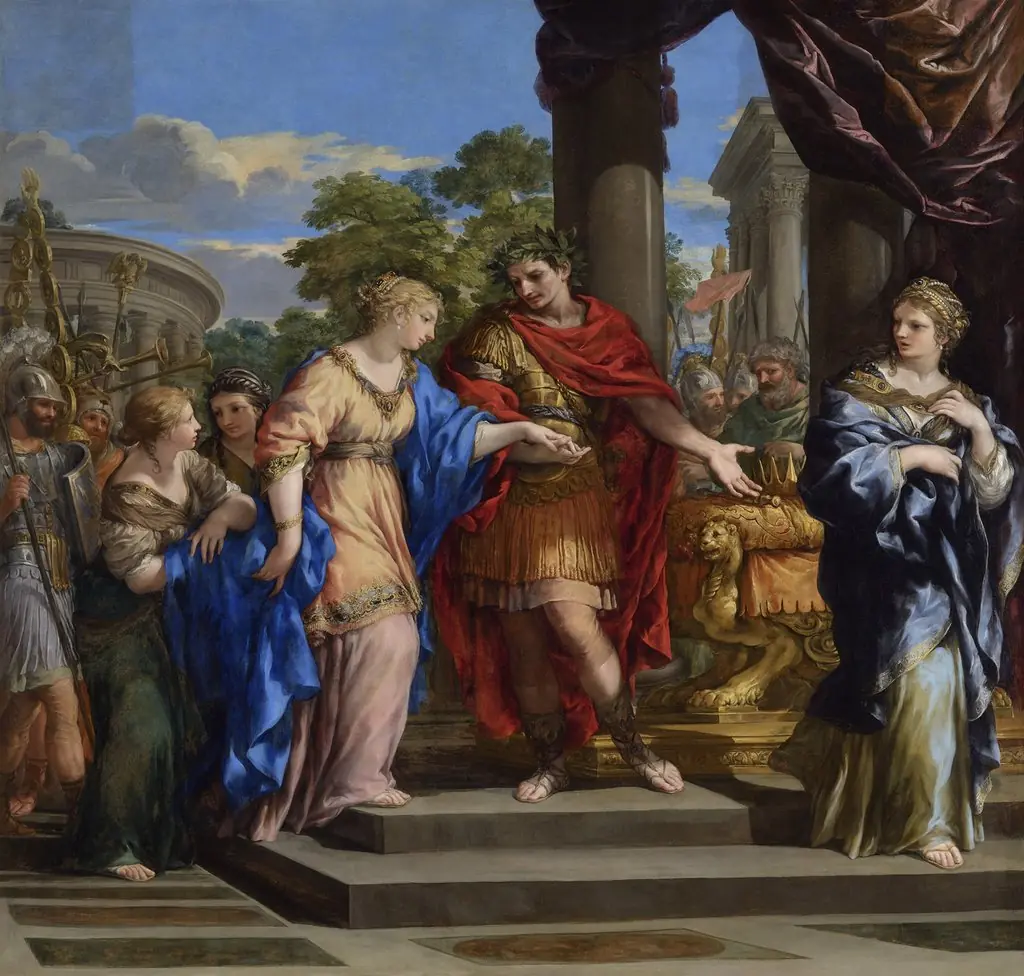
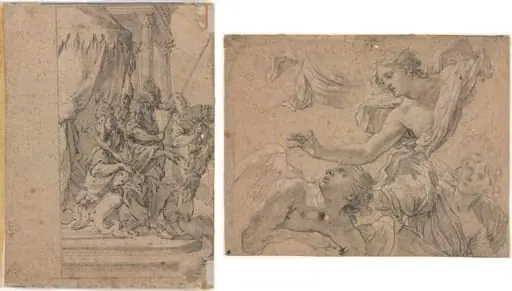 Studies of Angels (recto); Panthea before Cyrus? (verso)
![Two Studies of the Statue of Alexander and Bucephalus [verso], by Hubert Robert](https://artifactworldgallery.com/img/hubert-robert--two-studies-of-the-statue-of-alexander-and-bucephalus-verso--c8baec3f622cceea-w320.webp) Two Studies of the Statue of Alexander and Bucephalus [verso]
Two Studies of the Statue of Alexander and Bucephalus [verso]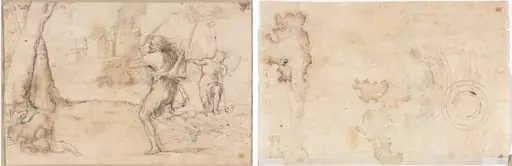 Romulus and Remus Found by Faustulus (recto) Concentric Circles (verso)
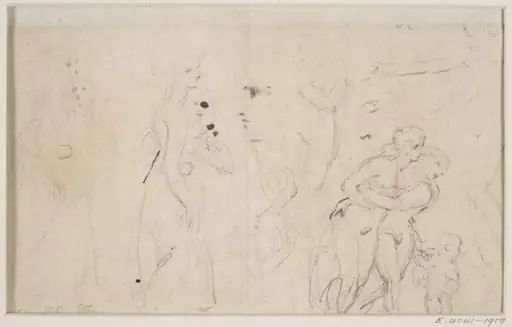 Untitled
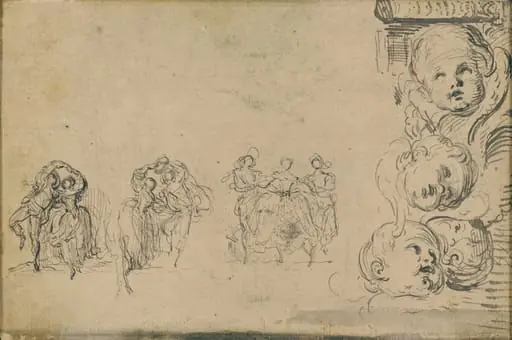 Sketches of Dancers and Heads of Putti
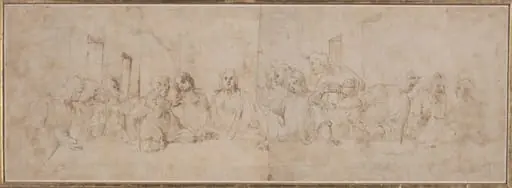 a) The Last Supper; b) Putti
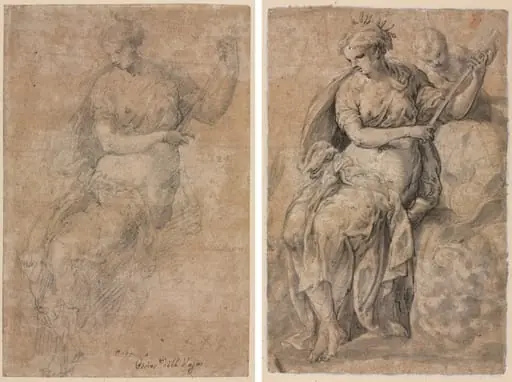 Allegorical Figure (recto and verso)
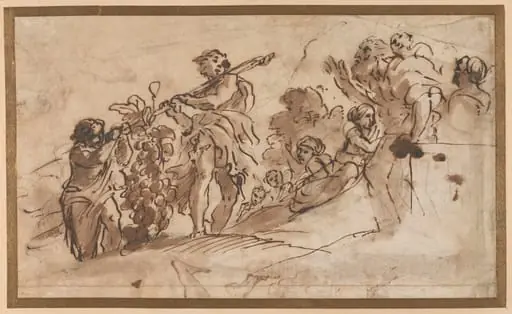 The Return of the Spies from the Promised Land
 Lot and His Daughters (recto)