Artwork
Marie-Julie Clary, Queen of Naples (1777-1845)
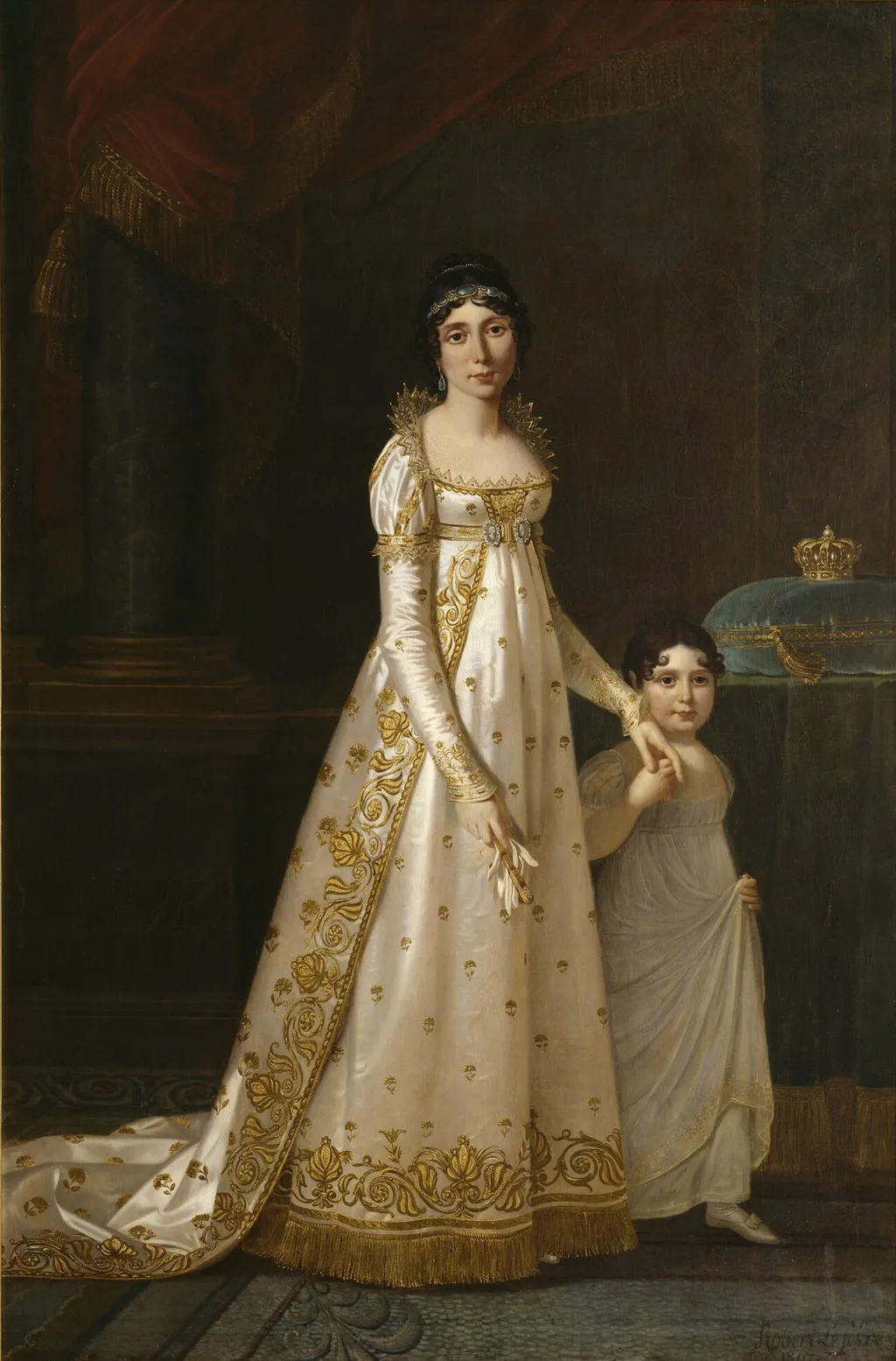
Marie-Julie Clary, Queen of Naples (1777-1845) is an oil painting by the Neoclassicist artist Robert Lefèvre. It dates from 1807 and is held in the collection of the Palace of Versailles.
About this work
Overview
Robert Lefèvre’s 1807 oil portrait presents Julie Clary, who reigned as Queen of Naples, alongside a young child. Executed in the neoclassical idiom, the painting resides in the collection of the Palace of Versailles and exemplifies the French court’s portraiture of the early nineteenth century.
Subject & Meaning
The central figure is Julie Clary, attired in a light‑coloured silk gown trimmed with gold embroidery, her hair gathered and bound with a modest headband. She holds the hand of a small child in a plain white dress, whose raised finger draws attention to the intimate, maternal aspect of the composition.
Technique & Style
Lefèvre employs a restrained palette of muted tones against a dark backdrop, allowing the gilded details of the queen’s dress to emerge with clarity. The crisp rendering of the fabric’s folds, the smooth modelling of flesh, and the precise linearity reflect the influence of Jacques‑Louis David and the broader neoclassical emphasis on classical restraint.
History & Provenance
Created during Lefèvre’s mature period, the portrait was likely commissioned to commemorate Clary’s status as queen. After its completion, the work entered the royal collection and has remained in the Palace of Versailles, where it is displayed among other portraits of the Napoleonic era.
Context
The painting belongs to the genre of official portraiture that flourished under the Napoleonic regime, where rulers and their families were depicted with dignified simplicity. Lefèvre’s choice of neoclassical motifs—high waist, puffed sleeves, and a subdued background—aligns the queen’s image with contemporary ideals of virtue and antiquity.
Own this work as a print
Artist & collection
Artist
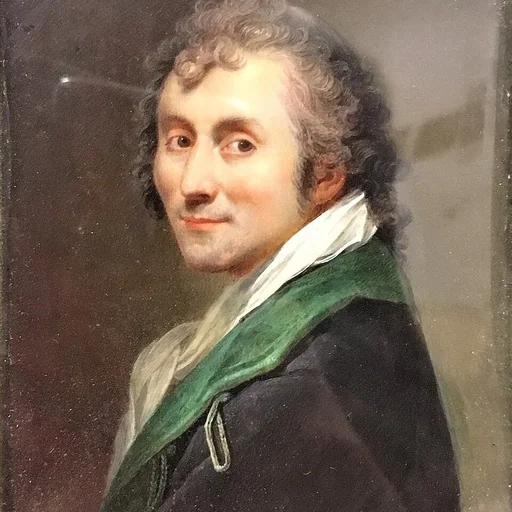
Robert Jacques François Faust Lefèvre (French pronunciation: , 24 September 1755, in Bayeux – 3 October 1830, in Paris) was a French painter of portraits, history paintings and religious paintings.

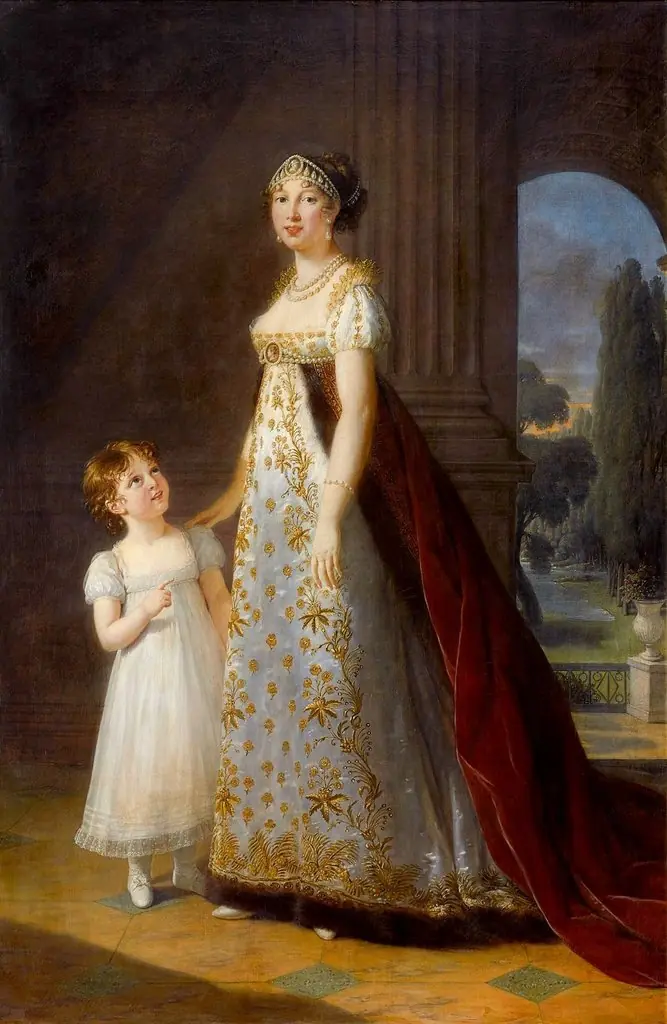 Caroline Murat with her daughter Letizia
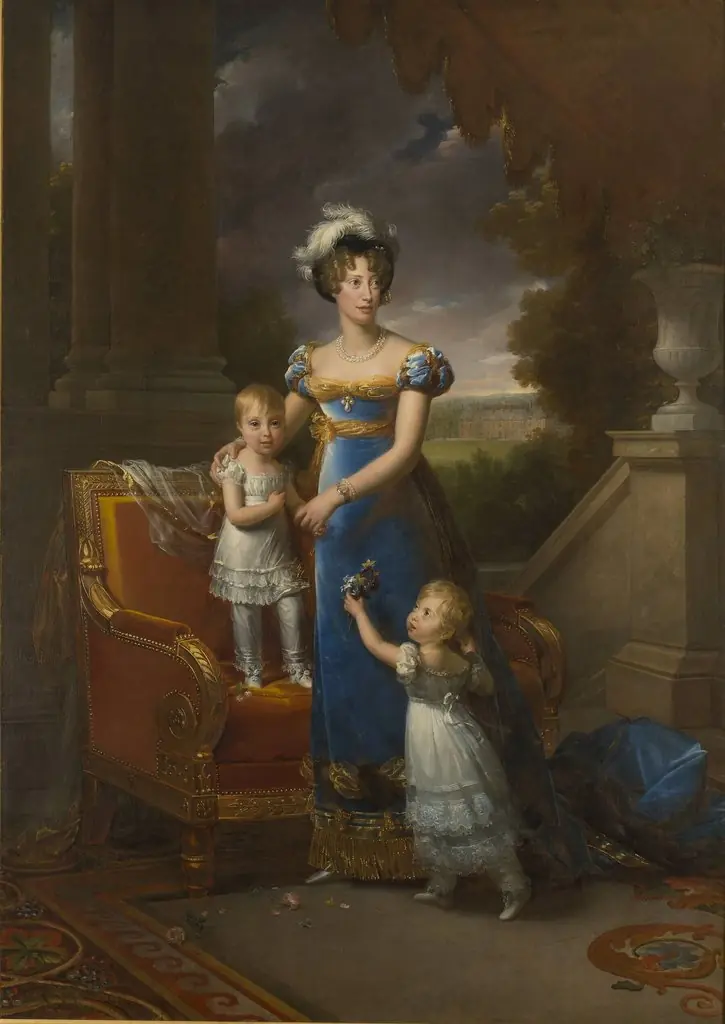 The Duchess of Berry and her Children
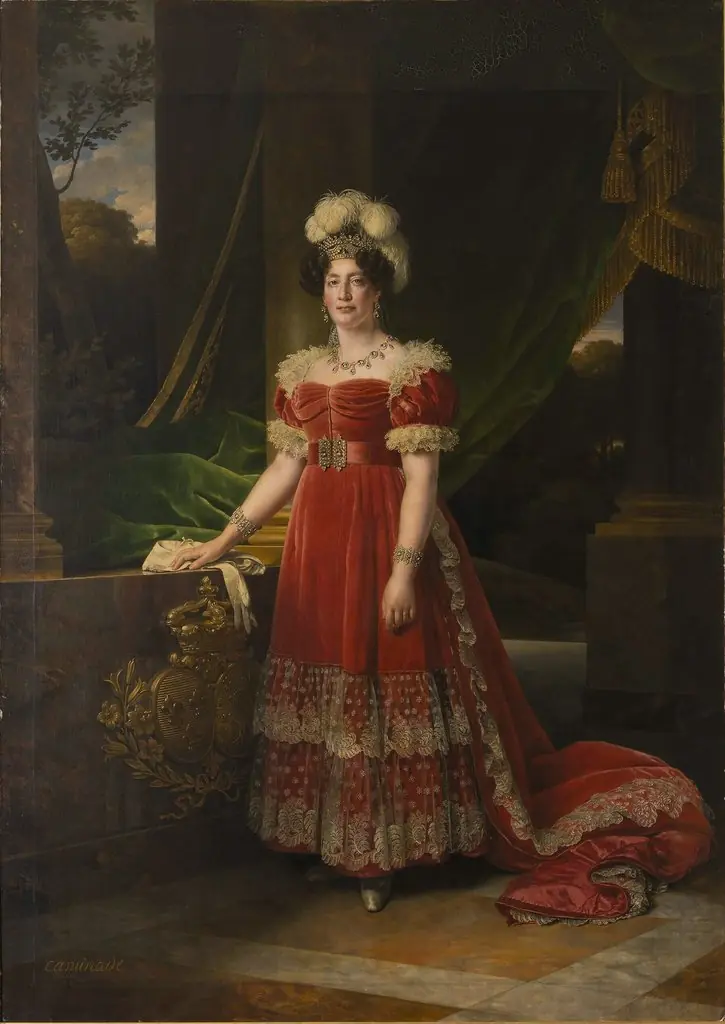 Portrait of Marie Thérèse of France, Duchess of Angoulême (1778-1851)
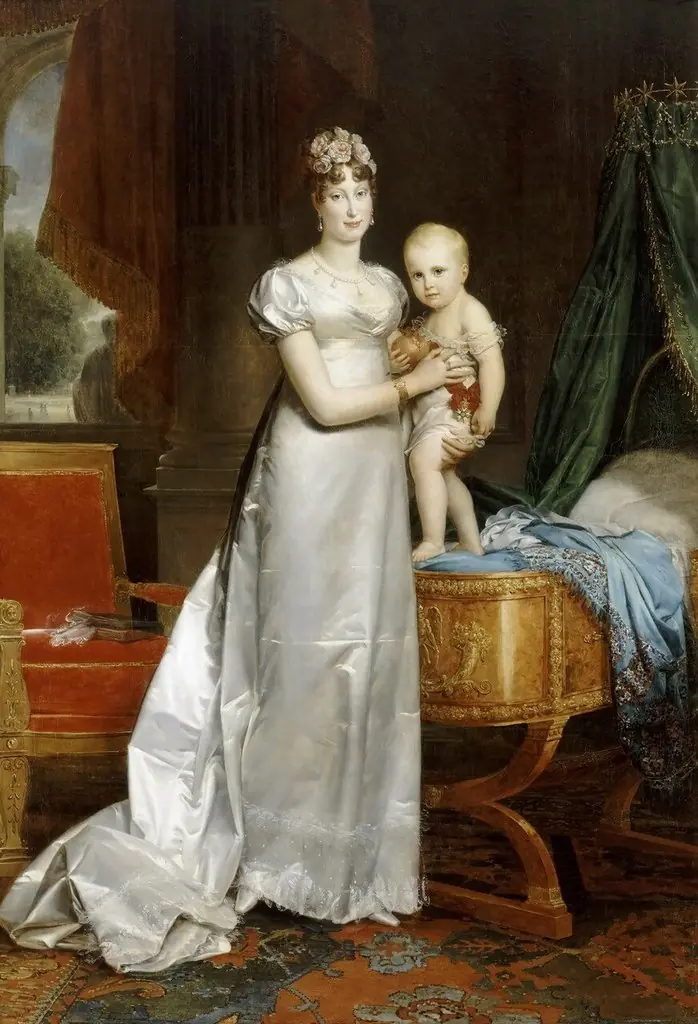 Marie-Louise, Empress of the French, and the Roi de Rome
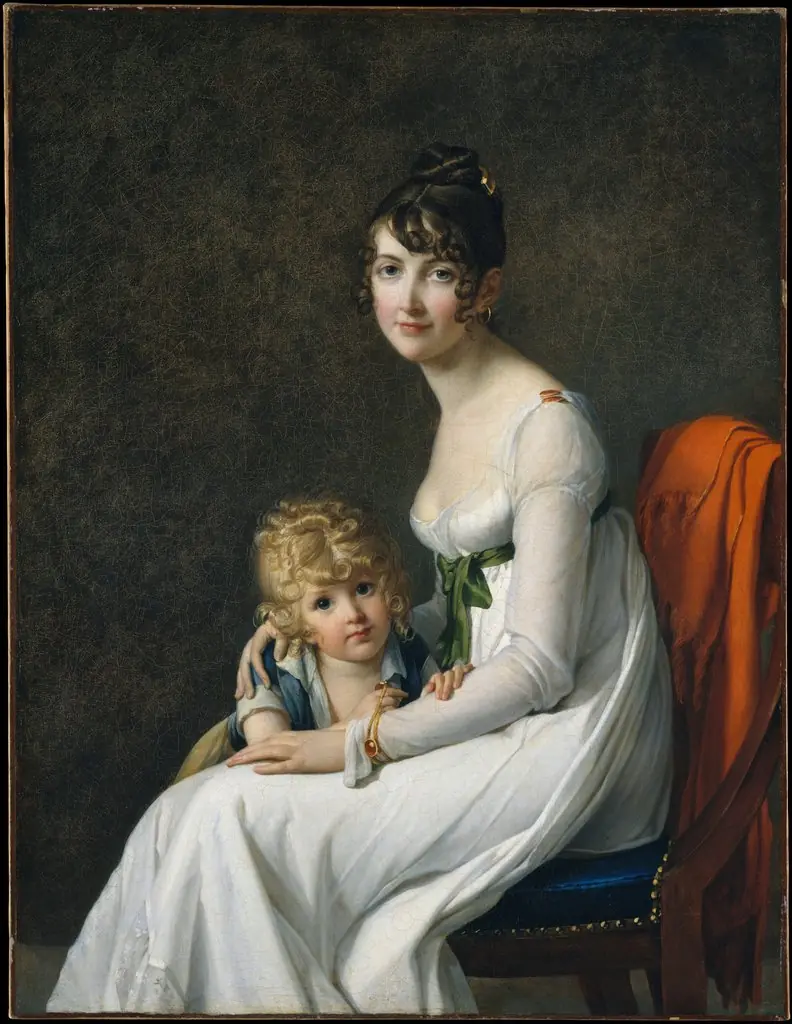 Madame Philippe Panon Desbassayns de Richemont (Jeanne Eglé Mourgue, 1778–1855) and Her Son, Eugène (1800–1859)
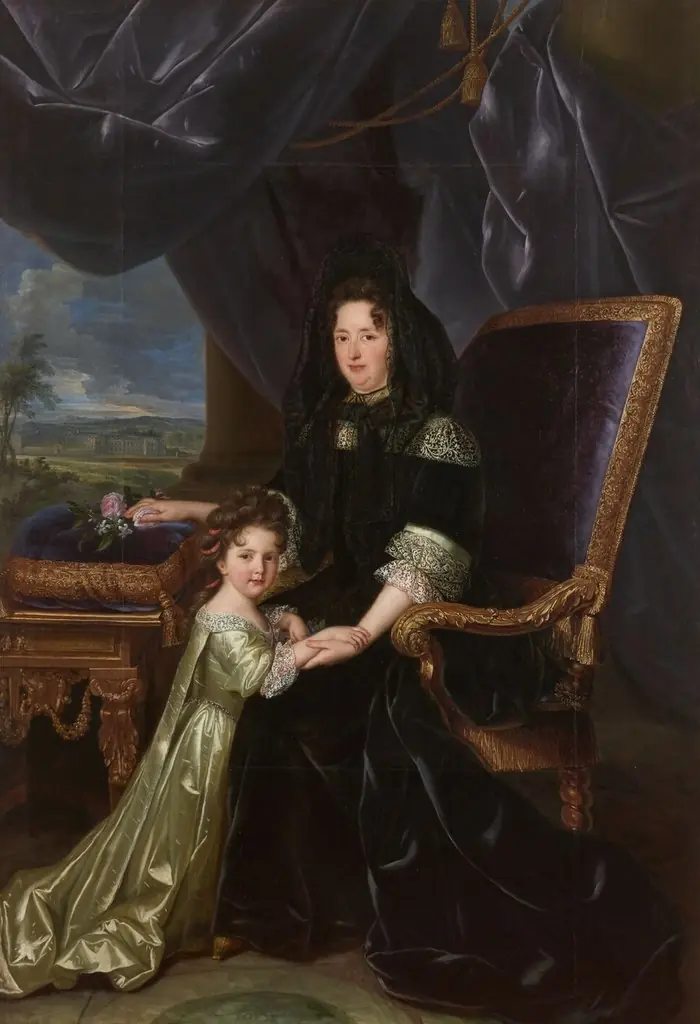 Françoise Charlotte d'Aubigné with her aunt Madame de Maintenon.
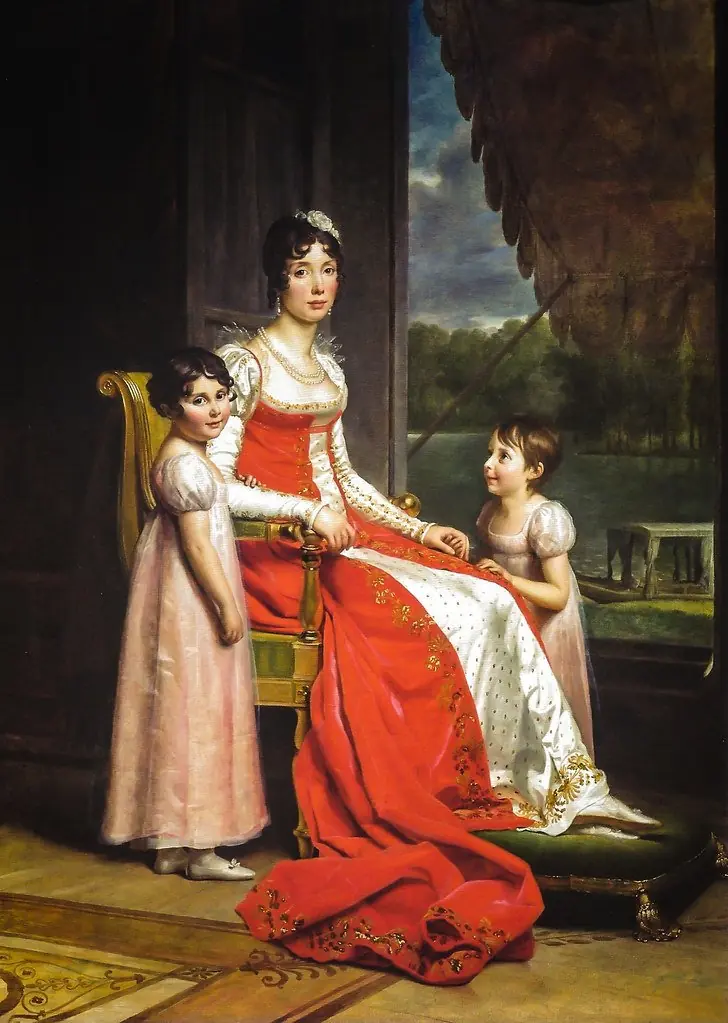 Julie Bonaparte as Queen of Spain with her Daughters, Zénaïde and Charlotte