Artwork
Untitled
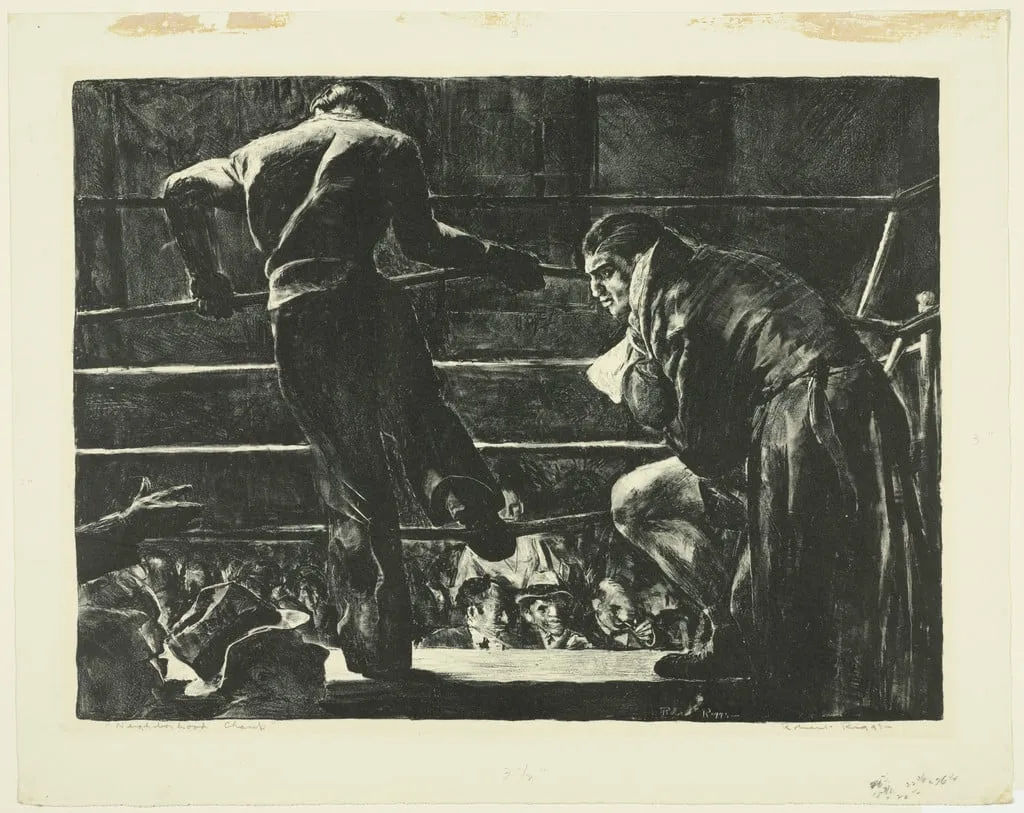
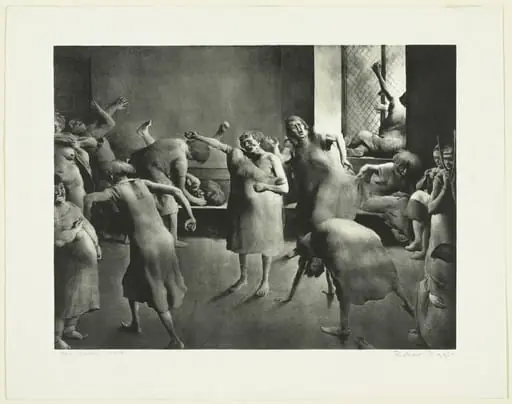
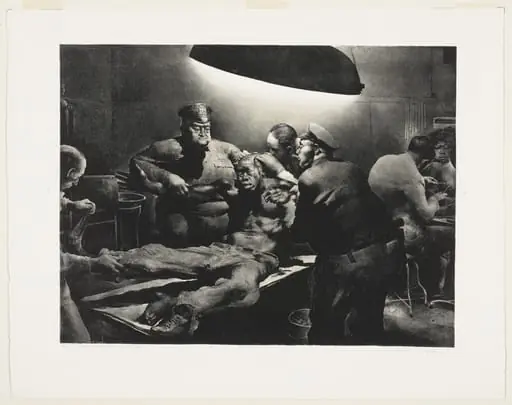
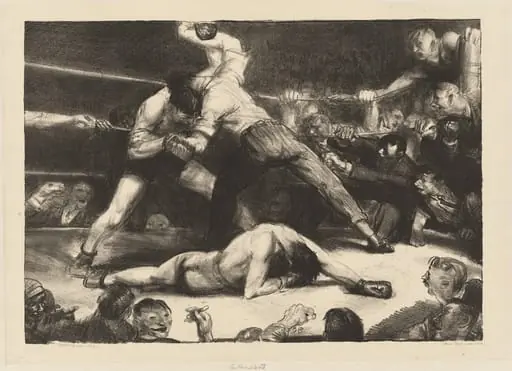
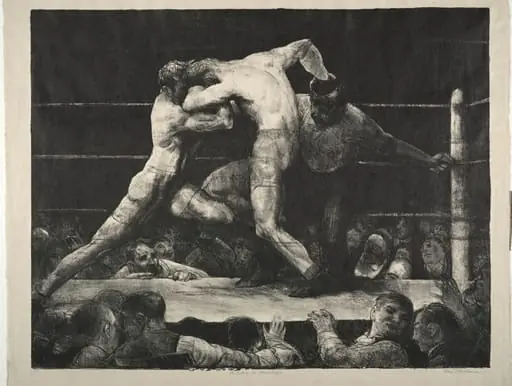
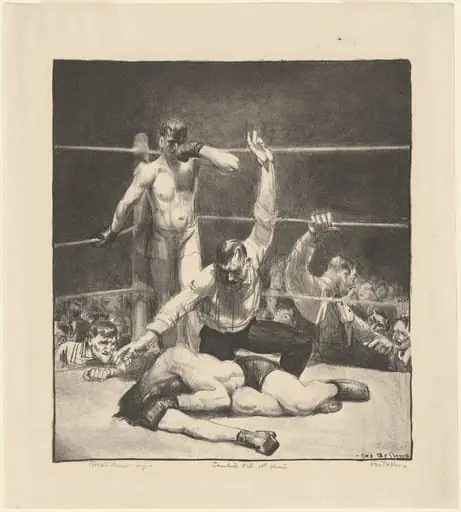
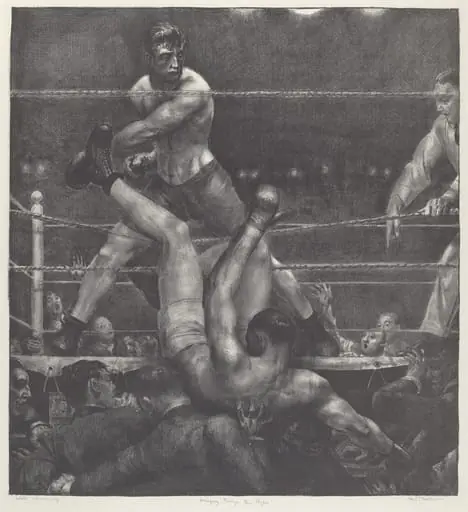
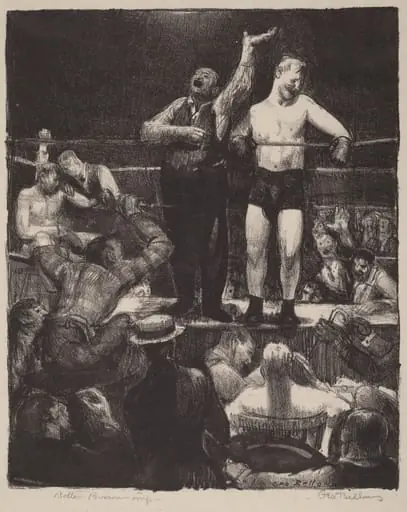
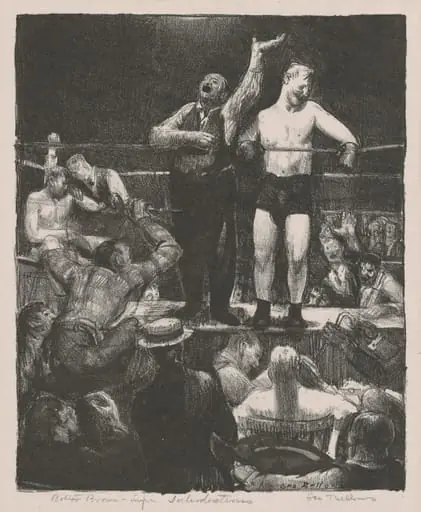
Untitled is an ink print by Robert Riggs. It dates from 1930 and is held in the collection of the Museum of Modern Art.
About this work
Overview
Robert Riggs created this black-and-white lithograph around 1930. It is part of the collection at The Museum of Modern Art. The work captures a quiet, intimate moment between two figures in an enclosed space, rendered with sharp tonal contrasts. The medium of lithography allowed for fine detail and a range of grays, enhancing the atmospheric quality of the scene.
Subject & Meaning
Two men are depicted in a dim interior: one stands on a chair, reaching upward, while the other kneels, holding a lantern. Their postures suggest a deliberate, urgent search. The absence of clear context—no identifiable objects or setting—leaves the purpose of their actions ambiguous, inviting interpretation as a metaphor for discovery, labor, or hidden knowledge.
Technique & Style
Lines are controlled yet expressive, with textures suggested through ink density rather than fine detail, characteristic of early 20th-century printmaking.
Riggs employed lithography to achieve strong chiaroscuro effects, emphasizing the interplay of light and shadow. The lantern’s narrow beam creates a focal point, while the surrounding darkness swallows details, heightening the sense of confinement. Lines are controlled yet expressive, with textures suggested through ink density rather than fine detail, characteristic of early 20th-century printmaking.
History & Provenance
The print entered The Museum of Modern Art’s collection in the early decades of its founding, reflecting the institution’s early interest in American printmakers. While little is documented about Riggs’s personal life or the print’s immediate reception, its inclusion in MoMA’s holdings signals its recognition within the context of interwar American graphic art.
Context
Created during the Great Depression, the image resonates with themes of quiet labor and resourcefulness common in American art of the period. Though not overtly political, its focus on ordinary men in a constrained space aligns with broader cultural narratives of endurance and unseen effort during economic hardship.
Legacy
Riggs’s lithograph remains a modest but resonant example of American printmaking from the 1930s. It contributes to the understanding of how artists used tonal contrast and intimate scenes to convey psychological depth without narrative clarity. The work continues to be studied for its formal economy and emotional restraint.
Artist & collection