Artwork
Untitled
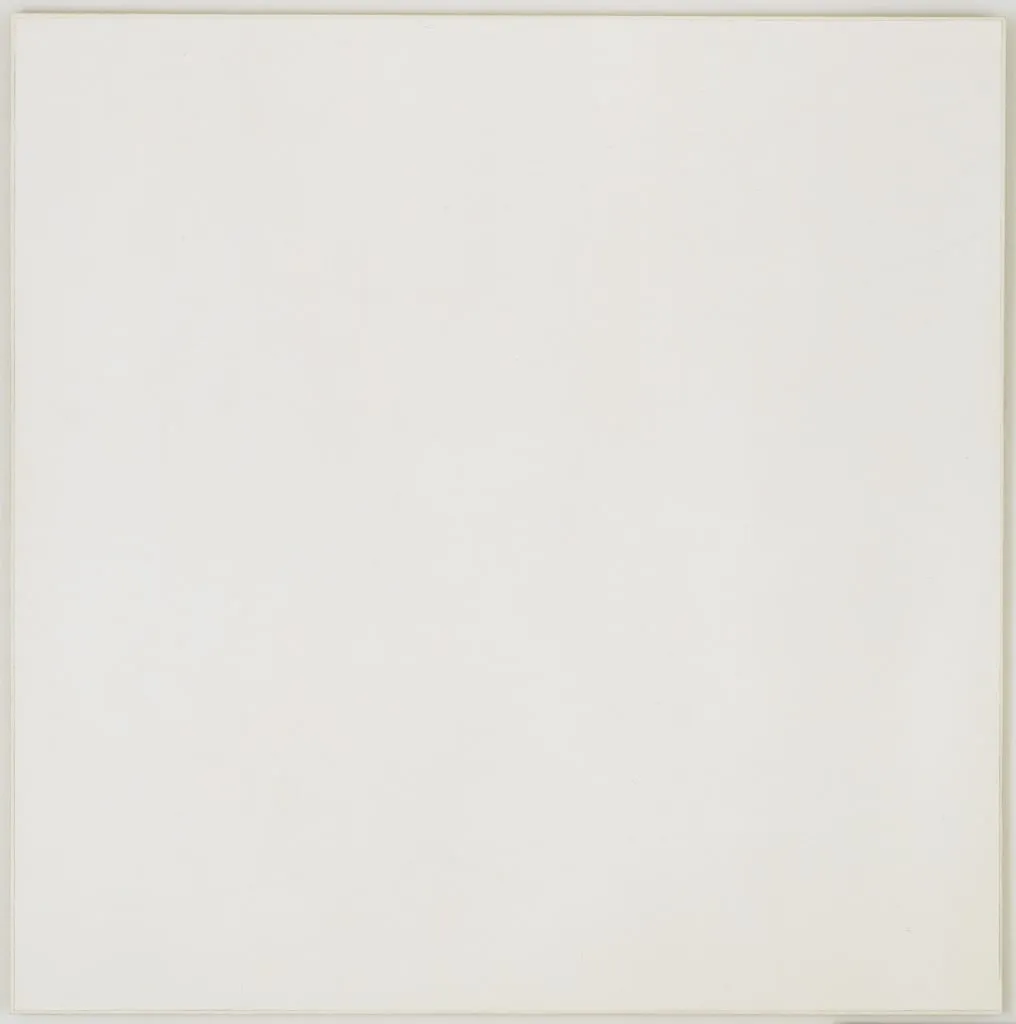
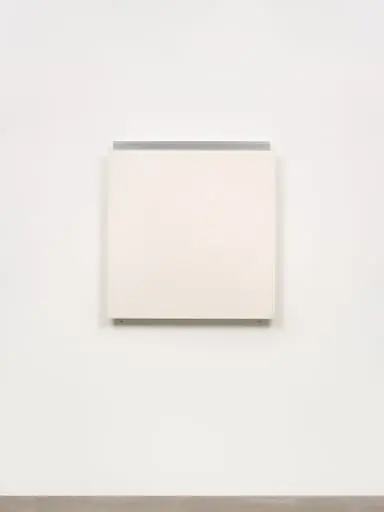
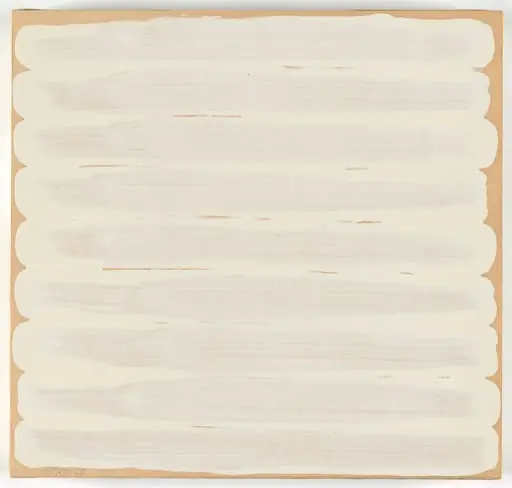
Untitled is an acrylic painting by the Contemporary Abstract artist Robert Ryman. It dates from 1988 and is held in the collection of the Museum of Modern Art.
About this work
Overview
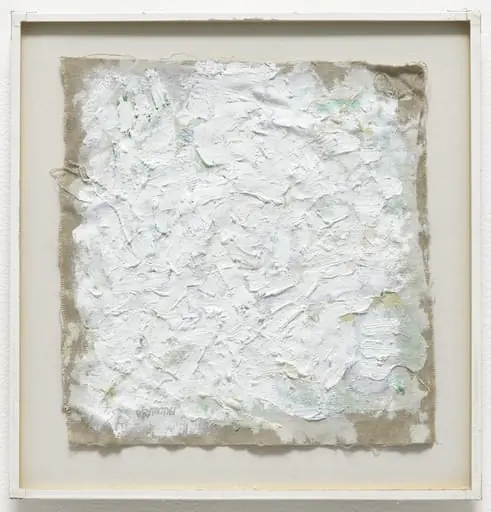
Created in 1988, this acrylic painting on cotton canvas—mounted on fiberglass and wood—belongs to Robert Ryman’s sustained exploration of white as a subject.
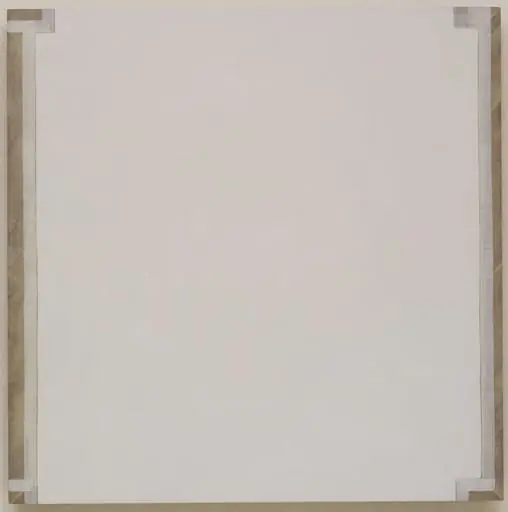
Created in 1988, this acrylic painting on cotton canvas—mounted on fiberglass and wood—belongs to Robert Ryman’s sustained exploration of white as a subject. The work is deliberately devoid of imagery, color variation, or visible brushwork. Its physical presence is minimal, emphasizing materiality over representation. It resides in The Museum of Modern Art’s collection as part of a broader inquiry into painting’s fundamental elements.
Subject & Meaning
The subject is the paint itself: its surface, its application, and its relationship to the support. By restricting the palette to white, Ryman shifts focus from depiction to perception. The work invites attention to the subtle differences in light, texture, and edge that arise from the canvas and mounting. Meaning emerges not from symbolism, but from the viewer’s encounter with the object as a physical entity.
Technique & Style
Ryman applied acrylic paint evenly across the canvas, avoiding visible brushstrokes or impasto. The surface remains uniformly flat, with no modulation in tone or shadow. The canvas is stretched and mounted on fiberglass and wood, a structural choice that ensures stability and a seamless plane. The technique prioritizes consistency and neutrality, rejecting expressive gesture in favor of precision.
History & Provenance
Painted in 1988, the work entered The Museum of Modern Art’s collection shortly after its completion. It is one of many white paintings Ryman produced over five decades, reflecting his lifelong commitment to investigating paint’s properties. The museum acquired it as part of its ongoing documentation of postwar American abstraction, particularly works that challenge conventional notions of composition and form.
Context
Ryman’s work emerged alongside Minimalism and Conceptual Art, yet diverged by focusing on painting’s material conditions rather than industrial forms or theoretical frameworks. While contemporaries explored geometry or language, Ryman returned to the canvas as a site for examining paint, support, and light. His approach resonated with artists questioning the boundaries of the medium in the late 20th century.
Legacy
This painting contributes to a body of work that redefined what a painting could be: not a window to another world, but a self-contained object. Ryman’s insistence on white as a field for perception influenced later artists engaged with monochrome, materiality, and institutional critique. His practice remains a touchstone for discussions on reduction, presence, and the limits of visual representation.
Artist & collection

Artist
Robert Ryman was an American painter identified with the movements of monochrome painting, minimalism, and conceptual art. He was best known for abstract, white-on-white paintings. He lived and worked in New York City.