Artwork
Edith Eleanor
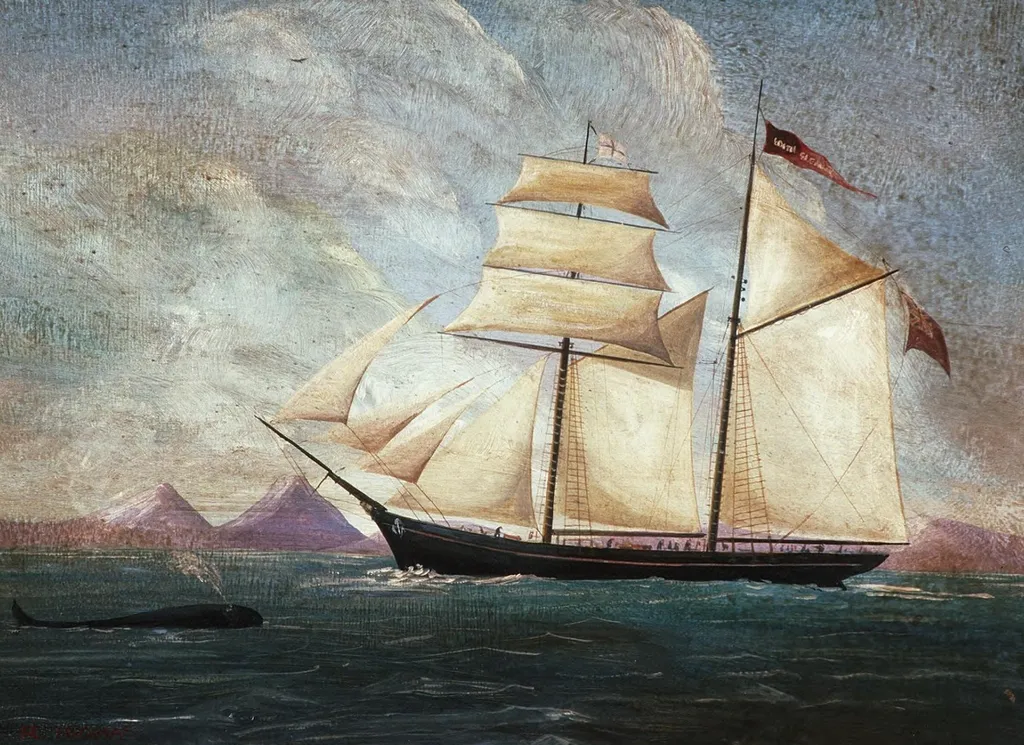
Edith Eleanor is an oil painting by the British Romanticist artist Robert Strickland Thomas. It dates from 1840 and is held in the collection of the National Library of Wales.
About this work
Overview
The composition balances the dynamic motion of sea and sky with the solidity of the ship and the looming presence of the animal.
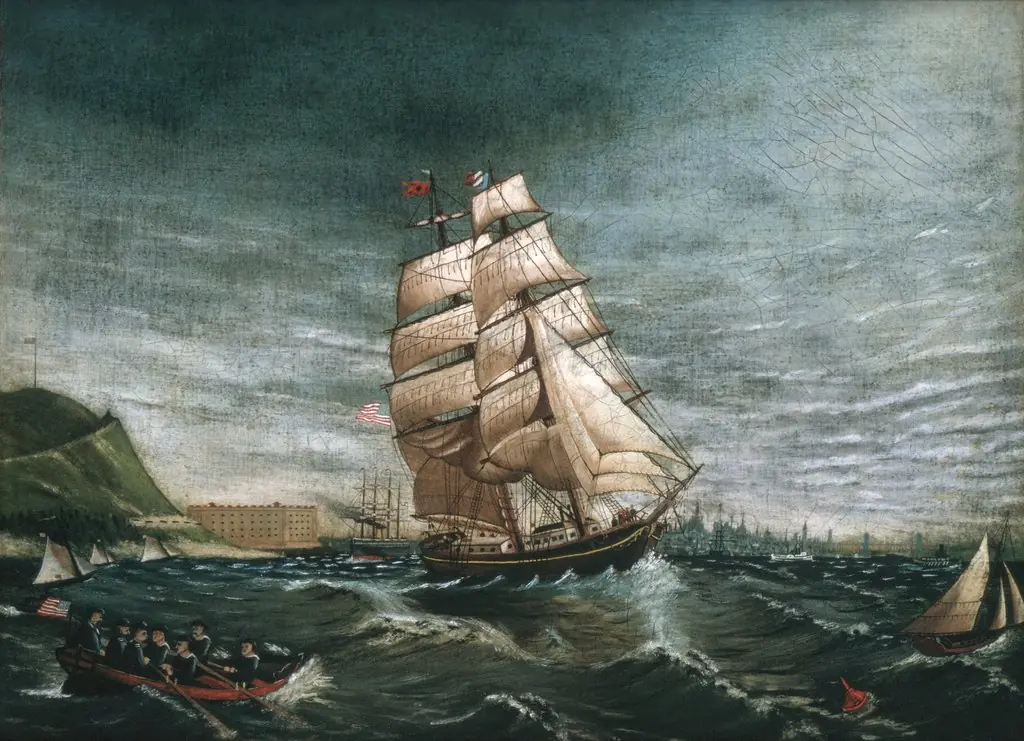
Robert Strickland Thomas’s 1840 oil painting, titled Edith Eleanor, presents a maritime scene in which a dark‑hulled vessel sails under billowing light‑colored sails. A large whale surfaces near the bow, while a rugged, mountainous coastline rises behind a cloud‑filled sky. The composition balances the dynamic motion of sea and sky with the solidity of the ship and the looming presence of the animal.
Subject & Meaning
The work juxtaposes human enterprise and natural power, featuring the ship named Edith Eleanor alongside a massive whale. The red flag on the hull, though its lettering is indistinct, suggests identity or ownership, while the whale’s prominent blowhole emphasizes its vitality. Together, the elements evoke themes of exploration, the risks of seafaring, and the awe inspired by the ocean’s giants.
Technique & Style
Executed in oil on canvas, Thomas employs a restrained palette of dark hull tones, pale sail whites, and deep blues for water, contrasted with the whale’s somber hue. Loose brushwork conveys the wind‑filled sails and churning sea, while sharper detailing defines the ship’s rigging and the rugged outlines of distant mountains. The composition directs the eye along a diagonal from the foreground whale to the vessel.
History & Provenance
Created in 1840, Edith Eleanor entered the collection of the National Library of Wales, where it remains on display. The painting’s provenance traces back to the artist’s own estate before its acquisition by the library, reflecting the institution’s interest in preserving 19th‑century Welsh maritime art.
Context
The mid‑19th century saw heightened interest in marine subjects as Britain’s naval and commercial fleets expanded. Thomas’s depiction aligns with contemporary visual narratives that celebrated seafaring life while acknowledging the perils posed by marine fauna. The inclusion of a whale mirrors popular fascination with cetaceans following the era’s whaling ventures and scientific curiosity.
Artist & collection

 Bell of Plymouth
 Dashing Wave Clipper Ship off Boston Light
 Clipper Ship HURRICANE in the English Channel
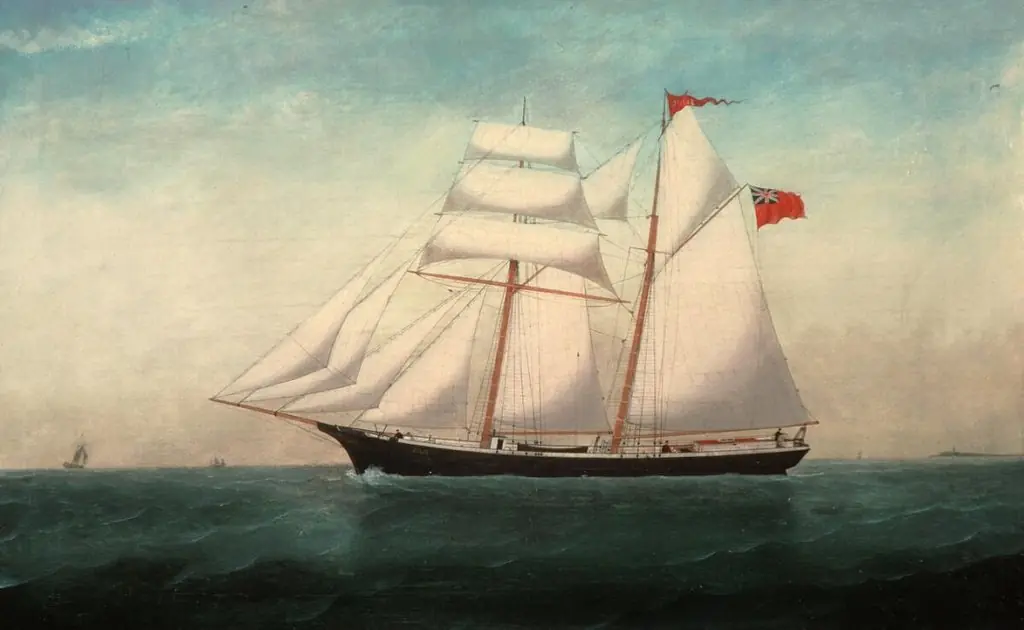 Julie
Julie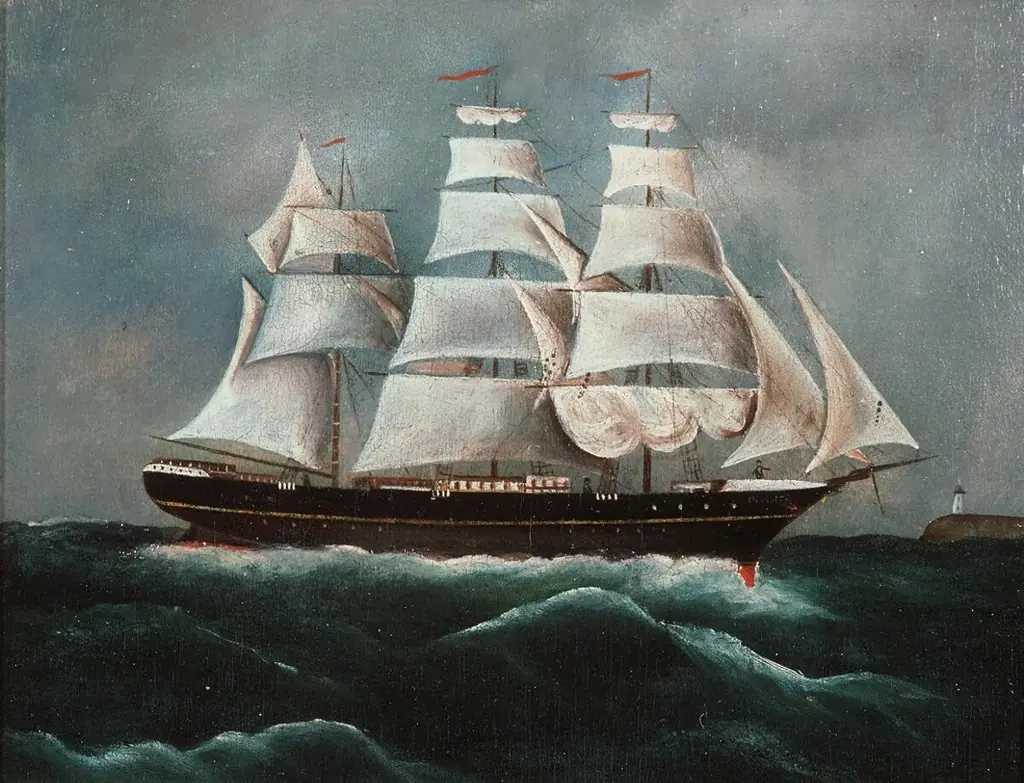 Marys - New Quay built schooner
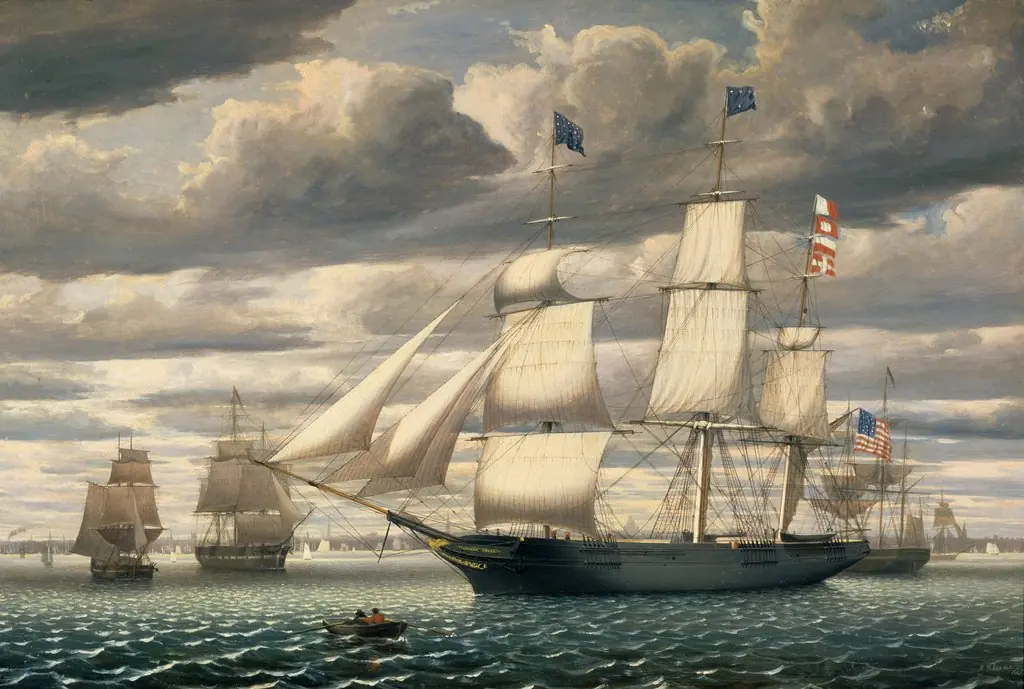 Ship Southern Cross in Boston Harbor, 1851
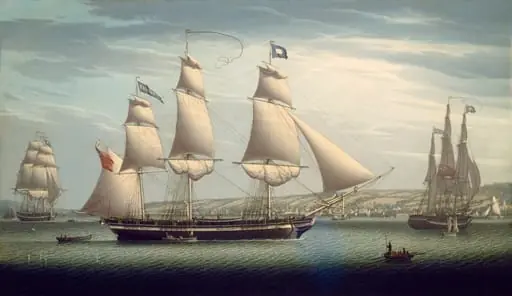 The Ship "Favorite" Maneuvering Off Greenock
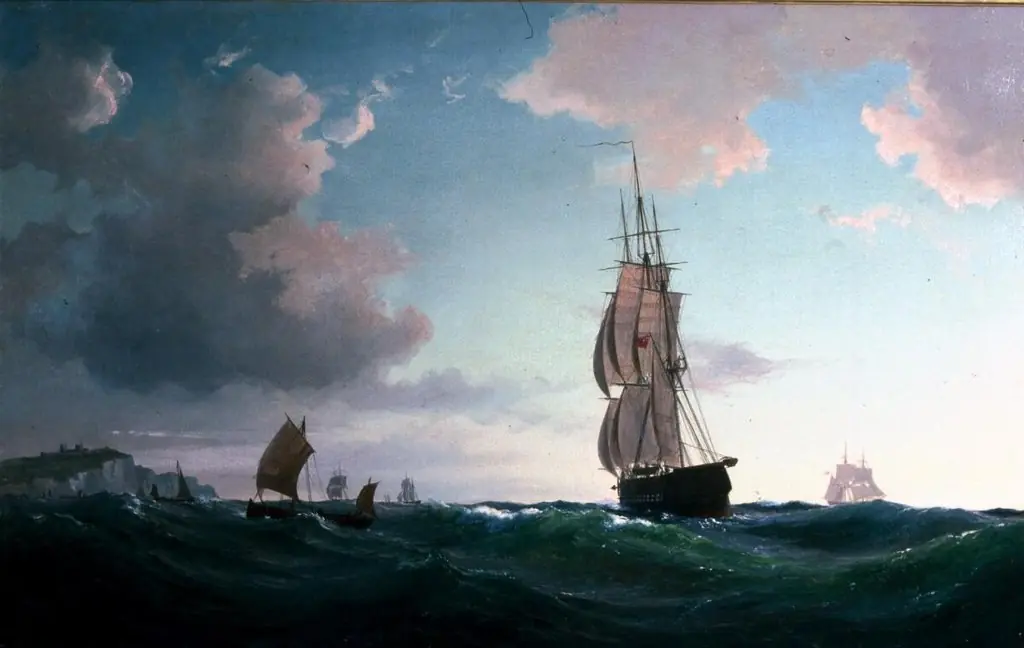 Dover Castle
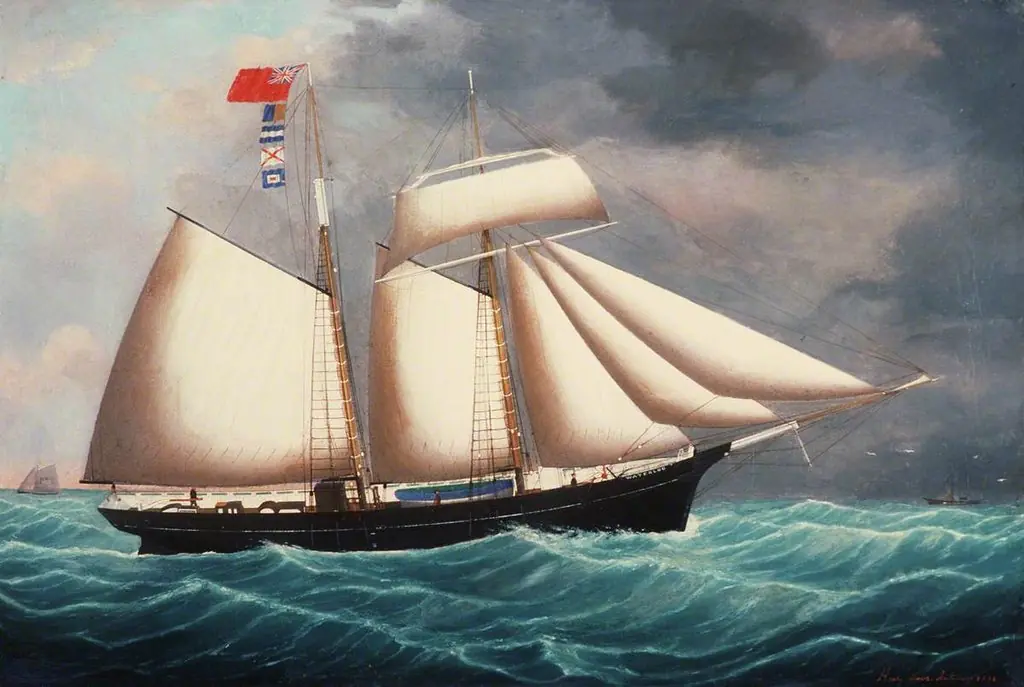 The 'Waterloo'
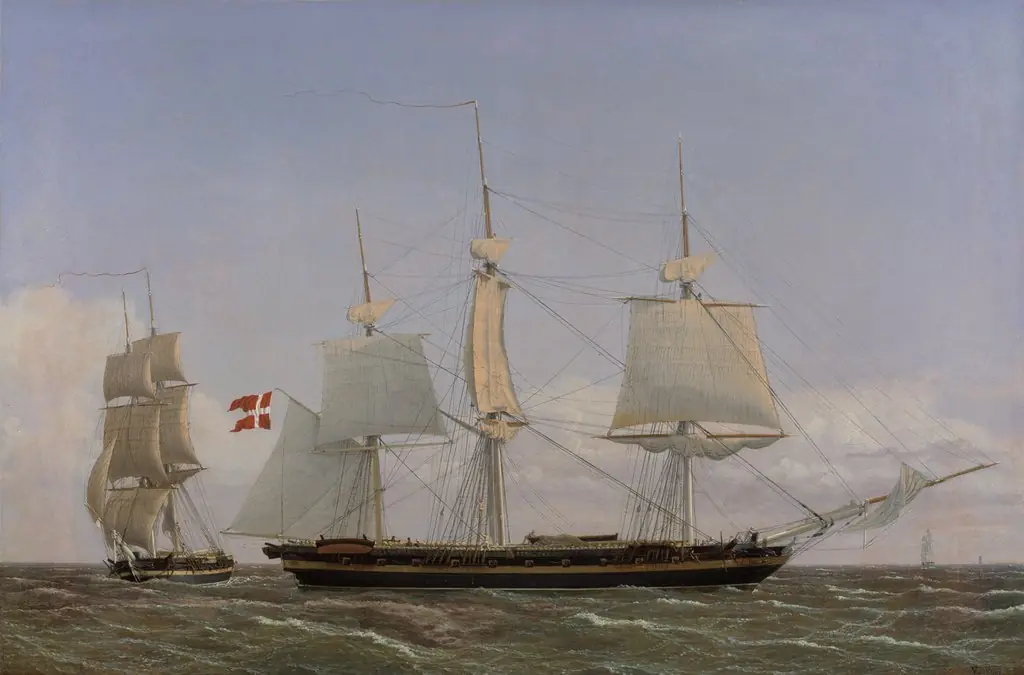 A Danish Corvette Laying t in order to Confer with a Danish Brig: The Scene Being Set in West Indian Waters
 Ships off the Coast of Iceland
 Ship in New York Harbor