Artwork
The Naval College from the River at Greenwich
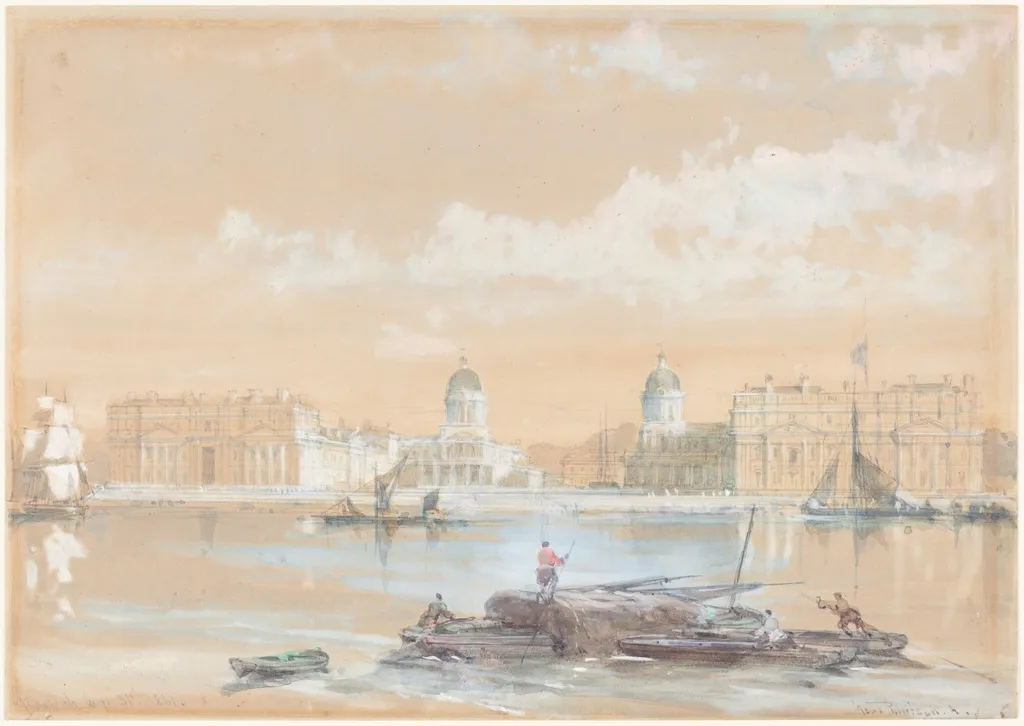
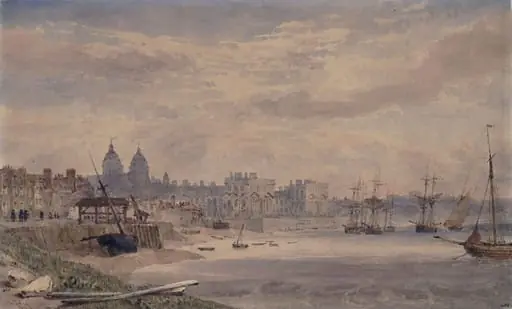
The Naval College from the River at Greenwich is a gouache drawing by the Impressionist artist David Roberts. It dates from 1861 and is held in the collection of the National Gallery of Art.
About this work
Overview
The composition emphasizes quiet observation rather than dramatic spectacle, reflecting a shift in his artistic priorities.
Created in 1861, this watercolor and gouache drawing by Scottish artist David Roberts captures the Royal Naval College in Greenwich as seen from the River Thames. Executed on wove paper with graphite underdrawing, the work exemplifies Roberts’ late-career focus on British architectural subjects after his earlier travels in the Middle East. The composition emphasizes quiet observation rather than dramatic spectacle, reflecting a shift in his artistic priorities.
Subject & Meaning
The scene portrays the Royal Naval College, a symbol of British naval power and institutional tradition, framed by the still waters of the Thames. Small figures in boats—some rowing, others resting—introduce human scale without disrupting the serenity. The absence of activity or narrative tension suggests a contemplative mood, perhaps honoring the institution’s enduring presence amid the rhythms of daily river life.
Technique & Style
Roberts employed layered watercolor and opaque gouache over a light graphite outline to achieve subtle tonal transitions. The river’s surface is rendered with minimal brushwork, suggesting calm through smooth washes, while the building’s columns and domes are delicately defined, fading softly into the hazy background. This restrained palette and atmospheric perspective convey a sense of quiet realism, distinct from his earlier, more detailed Orientalist works.
History & Provenance
Painted during the final decade of Roberts’ life, this work belongs to his later period of domestic subjects following his acclaimed Middle Eastern travels. Though less documented than his lithographs, this drawing reflects his continued engagement with architectural form. It likely remained in private hands after his death in 1864, eventually entering institutional collections as interest in 19th-century British watercolor grew.
Context
In 1861, Greenwich was a place of national pride, housing the Royal Naval College and its legacy of maritime education. Roberts, already established as a Royal Academician since 1841, turned increasingly to British landmarks after his Orientalist phase. This drawing aligns with a broader Victorian interest in documenting architectural heritage, blending topographical accuracy with lyrical atmosphere.
Legacy
Though overshadowed by his earlier lithographic series, this watercolor illustrates Roberts’ adaptability and enduring command of light and structure. It contributes to the canon of British topographical watercolor, demonstrating how architectural subjects could be rendered with emotional subtlety. His ability to balance precision with atmospheric softness influenced later generations of landscape and architectural draftsmen.
Artist & collection
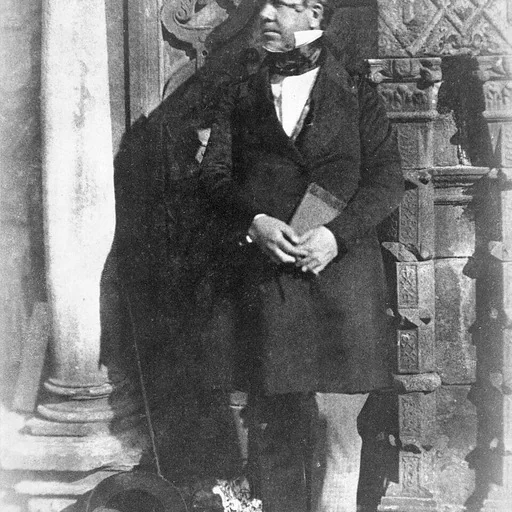
Artist
David Roberts (24 October 1796 – 25 November 1864) was a Scottish painter. He is especially known for The Holy Land, Syria, Idumea, Arabia, Egypt, and Nubia, a prolific series of detailed lithograph prints of Egypt and…