Artwork
Isabel de Borbón, Wife of Philip IV
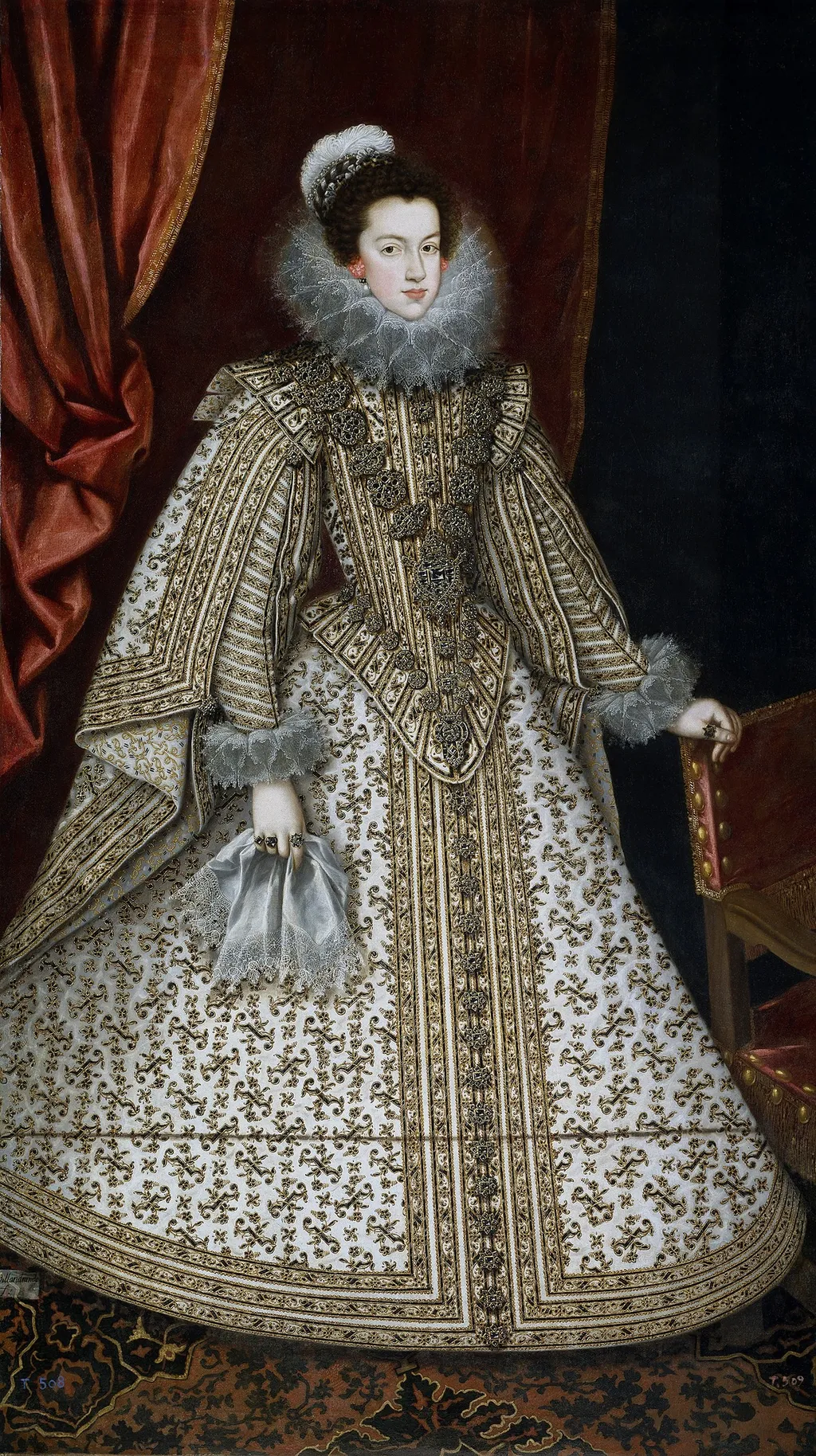
Isabel de Borbón, Wife of Philip IV is an oil painting by the Early Baroque Italian artist Rodrigo de Villandrando. It dates from 1620 and is held in the collection of the Museo del Prado.
About this work
Overview
Rodrigo de Villandrando, a court painter active during the reign of Philip III, executed an oil portrait of Isabel de Borbón, the consort of Philip IV, in 1620. The work exemplifies the early Baroque aesthetic imported from Italy and is now part of the Museo del Prado’s collection.
Subject & Meaning
The painting presents Isabel de Borbón seated amid a richly appointed interior, her posture dignified and her gaze directed outward. She is adorned with a gemstone and holds a white glove, symbols of aristocratic status and refined femininity within the Spanish court.
Technique & Style
Villandrando employs a chiaroscuro scheme, using soft, directional light to isolate the sitter’s face against a dark red wall and patterned rug. The white dress, heavily embroidered with gold thread that resembles woven metal, is rendered with meticulous brushwork that emphasizes texture and the sumptuousness of court attire.
History & Provenance
Created in 1620, the portrait entered the royal collection and later was transferred to the Museo del Prado, where it remains on display. Villandrando’s death two years after its completion opened a vacancy at the court that would eventually be filled by Diego Velázquez, who rose to prominence as the royal painter.
Context
The work reflects the early Baroque period’s interest in dramatic lighting and opulent representation of power. Its Italianate influences align with Spain’s broader artistic exchanges in the early seventeenth century, while the portrait’s formal qualities underscore the political and dynastic significance of the queen consort’s image.
Artist & collection
Artist
Rodrigo de Villandrando (1588 – December 1622) was a court painter during the reign of Philip III of Spain.