Artwork
Prince Philip and the Dwarf, Miguel Soplillo
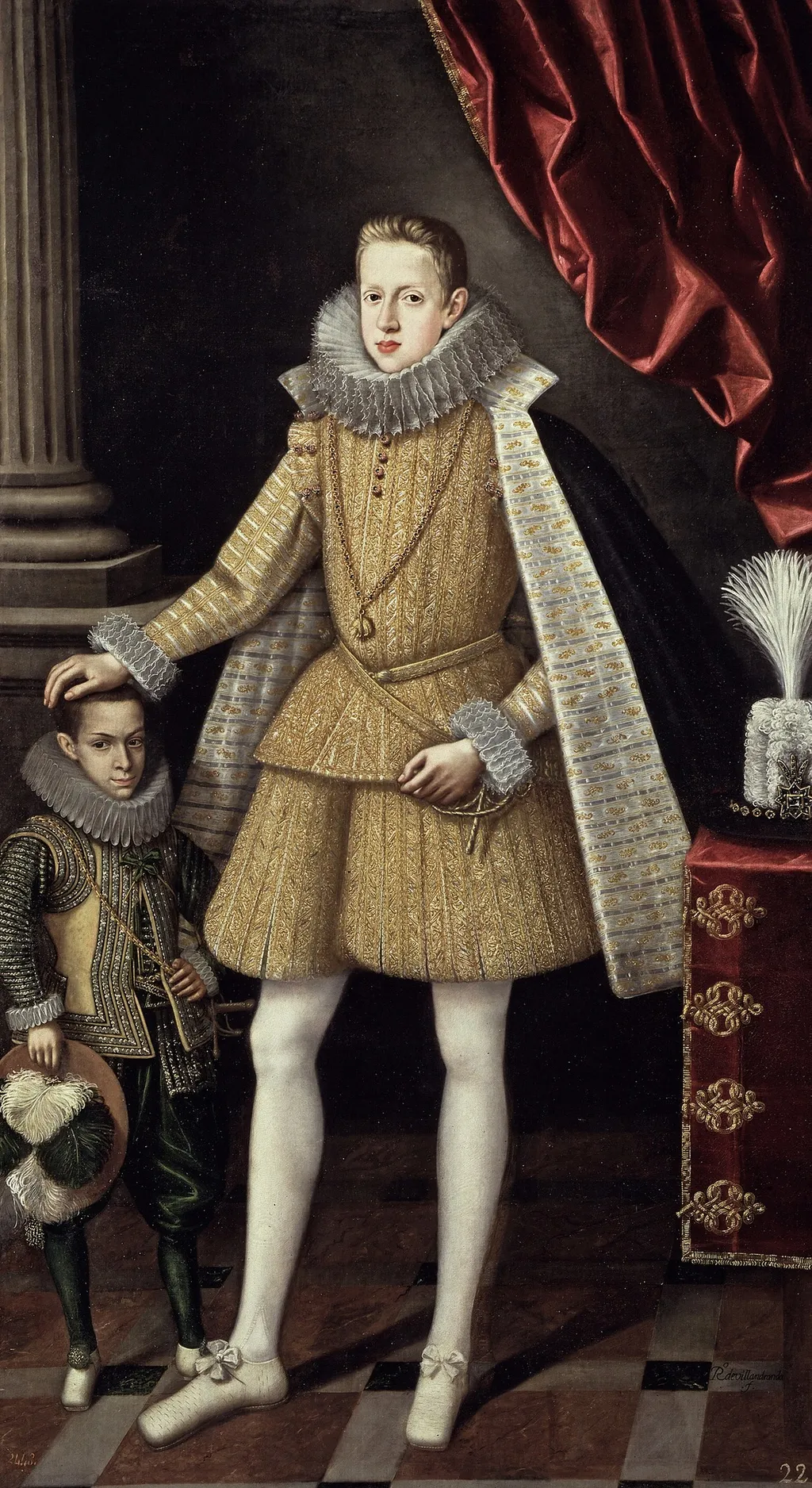
Prince Philip and the Dwarf, Miguel Soplillo is an oil painting by the Early Baroque Italian artist Rodrigo de Villandrando. It dates from 1620 and is held in the collection of the Museo del Prado.
About this work
Overview
Rodrigo de Villandrando, a court painter serving Philip III of Spain, completed the oil portrait of Prince Philip and the dwarf Miguel Soplillo in 1620. Executed in the early Baroque idiom, the work combines the formal elegance of Spanish court portraiture with influences from contemporary Italian painting.
Subject & Meaning
The canvas presents the young Prince Philip in sumptuous 17th‑century attire, standing beside the court dwarf Miguel Soplillo. The prince is shown with the Order of the Golden Fleece, a sword, and jeweled accessories, while the dwarf holds a feathered hat, emphasizing his role as a court attendant and symbol of the prince’s status.
Technique & Style
Villandrando employs a refined brushwork characteristic of early Baroque, with careful modelling of fabrics and metallic surfaces. The composition follows the portrait conventions of Alonso Sánchez Coello and Juan Pantoja de la Cruz, using a darkened backdrop, a red curtain, and a table set with a white fan and golden emblem to enhance depth and richness.
History & Provenance
Since its creation, the painting has remained within Spanish royal collections before entering the Museo del Prado, where it is currently displayed as part of the museum’s holdings of court portraiture from the early 17th century.
Context
The portrait reflects the hierarchical structure of the Spanish court, where dwarfs were often depicted alongside royalty to underscore the sovereign’s power and the intimate, sometimes theatrical, nature of court life during Philip III’s reign.
Artist & collection
Artist
Rodrigo de Villandrando (1588 – December 1622) was a court painter during the reign of Philip III of Spain.
