Artwork
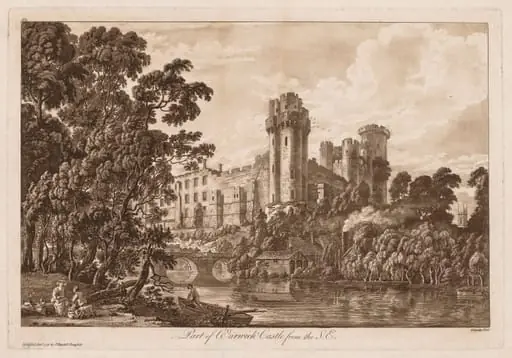
S.E View of Warwick Castle from the River
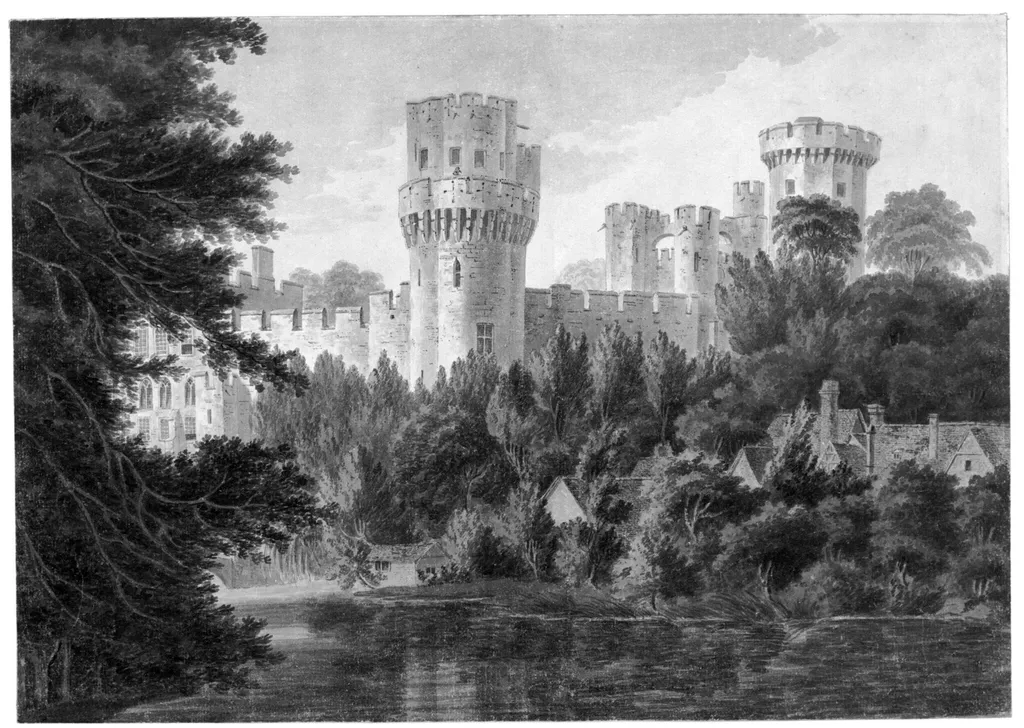
S.E View of Warwick Castle from the River is a watercolor work on paper by the British Romanticist artist J. of Warwick Roe. It dates from 1812 and is held in the collection of the Victoria and Albert Museum. This 1812 watercolour by J.
About this work
Overview
The composition emphasizes the castle’s integration with the surrounding landscape, using soft tonal gradations to suggest depth and atmosphere.
This 1812 watercolour by J. Roe presents a view of Warwick Castle from the riverbank, capturing its medieval structures against a quiet natural setting. The composition emphasizes the castle’s integration with the surrounding landscape, using soft tonal gradations to suggest depth and atmosphere. It belongs to a group of sketches likely intended for reproduction, possibly as illustrations for a published poetic work.
Subject & Meaning
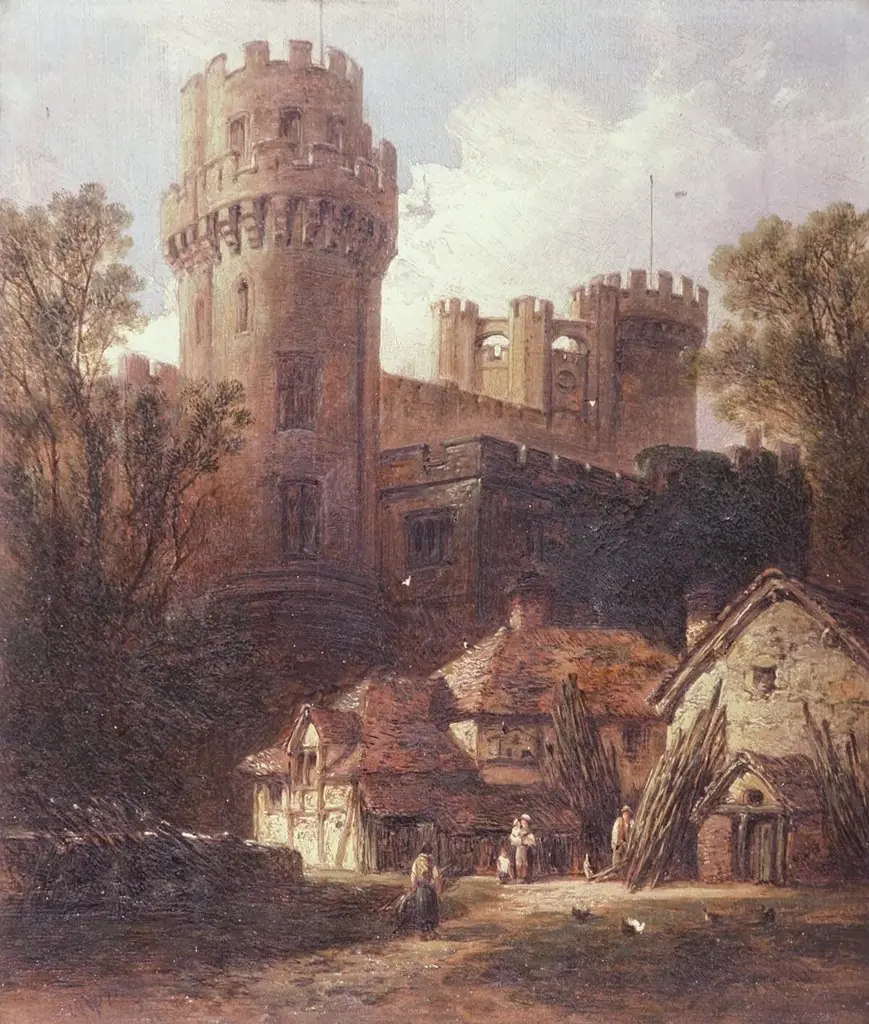
The scene centers on Warwick Castle’s enduring towers—Caesar’s, Guy’s, and the Gatehouse—rising above the riverbank, their weathered stonework blending with the wooded hills. The inclusion of modest dwellings and dense foliage suggests a harmony between human history and the natural world. This arrangement reflects early 19th-century sensibilities that viewed ancient architecture not as dominant, but as quietly absorbed into the rhythms of nature.
Technique & Style
Executed in watercolour, the work employs delicate washes and minimal line work to convey texture and form. Shadows are suggested through subtle gradations rather than bold contours, enhancing the atmospheric quality. The absence of vibrant colour and the restrained palette align with topographical traditions of the period, prioritizing clarity and quiet observation over dramatic effect.
History & Provenance
The watercolour was created as part of a series of views of Warwick Castle, possibly commissioned or collected for publication. Some of these drawings were later adapted by J. Storer into engraved plates for inclusion in an illustrated edition of the poem *Warwick Castle*. Minor alterations in the engravings suggest reinterpretation for print, though Roe’s original composition retained its essential character.
Context
Produced during the Romantic era, the image reflects a broader cultural interest in medieval ruins and their emotional resonance with nature. Artists and writers of the time often portrayed historic sites not as monuments to power, but as quiet witnesses to time’s passage. This perspective aligned with literary trends that valued contemplation, nostalgia, and the sublime in the landscape.
Legacy
Though not widely exhibited today, Roe’s watercolour contributes to a documented visual record of Warwick Castle in the early 1800s. Its inclusion in a published poetic volume helped disseminate a particular aesthetic of historical landscape, influencing how such sites were visually interpreted in print culture. The work remains a modest but representative example of topographical art from the period.
Artist & collection
Artist
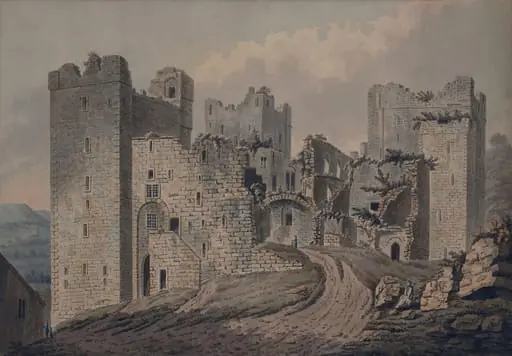
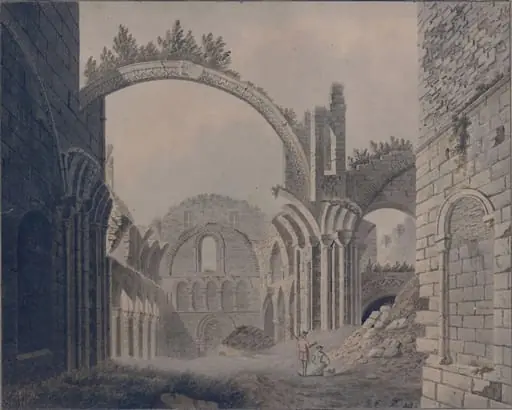
Watercolour artist J. of Warwick Roe captured northern England’s great landmarks in the late 1700s and early 1800s. Three works in our set show the rugged stone of Bolton Castle, the ruins of Lindisfarne Abbey, and a…