Artwork
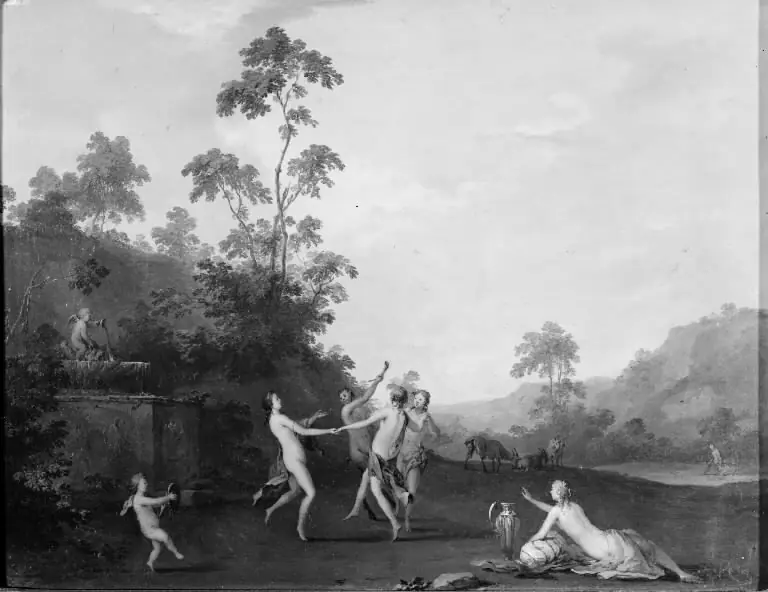
Nymphs and Satyr in front of a Temple
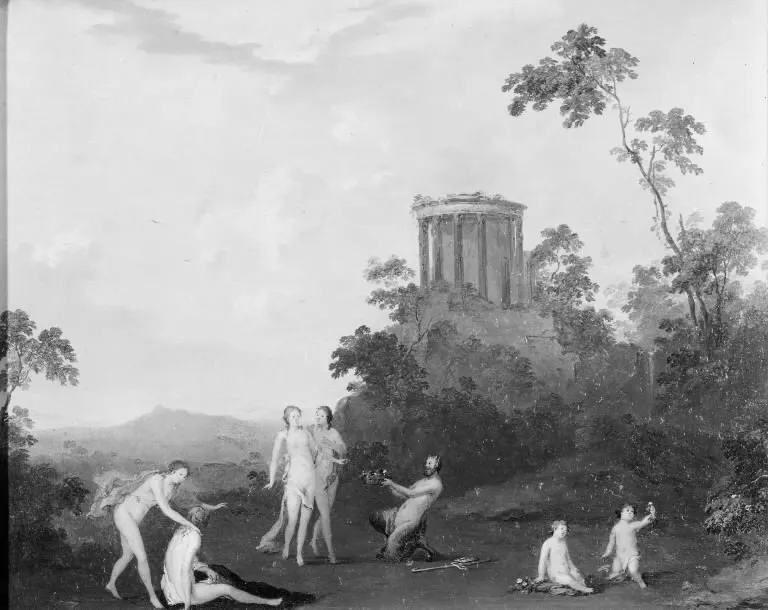
Nymphs and Satyr in front of a Temple is an unspecified painting by the Dutch Golden Age artist Roelant Savery. It dates from 1615 and is held in the collection of the Statens Museum for Kunst.
About this work
Overview
Created in 1615 by the Flemish artist Roelant Savery, this oil painting presents a mythological tableau set within a wooded landscape. Five partially nude figures—three women and two men—are arranged around a modest temple perched on a hill, surrounded by trees and distant rolling terrain. The work is part of the collection of the Statens Museum for Kunst in Copenhagen.
Subject & Meaning
The composition depicts three female figures, likely nymphs, alongside a satyr and another male figure, all rendered in a pastoral setting that evokes classical mythology. The presence of a small temple and the interaction between the figures suggest a narrative drawn from ancient tales of nature spirits and their encounters with humans, reflecting the early‑17th‑century fascination with antiquity.
Technique & Style
Savery employs a gentle chiaroscuro, using soft transitions between light and shadow to model the bodies and give them a slightly ethereal quality. The figures are outlined with delicate brushwork, and the foliage is rendered with fine, leafy details that blend the human forms into the surrounding forest, creating a harmonious balance between figure and landscape.
History & Provenance
Painted during the Dutch Golden Age, the work exemplifies Savery’s interest in combining landscape with mythological subjects, a hallmark of his oeuvre. After remaining in private hands for several centuries, the painting entered the Statens Museum for Kunst, where it has been displayed as part of the museum’s European Baroque collection.
Artist & collection
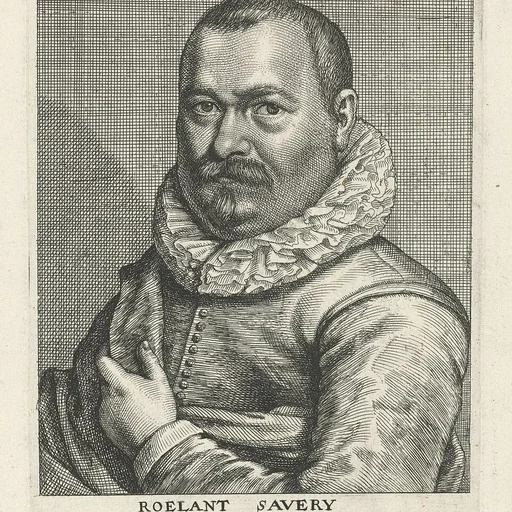
Artist
Roelant Savery (or Roeland(t) Maertensz Saverij, or de Savery, or many variants; 1576 – buried 25 February 1639) was a Flanders-born Dutch Golden Age painter.