Artwork
Overturned Jug and Other Items on the Tablecloth
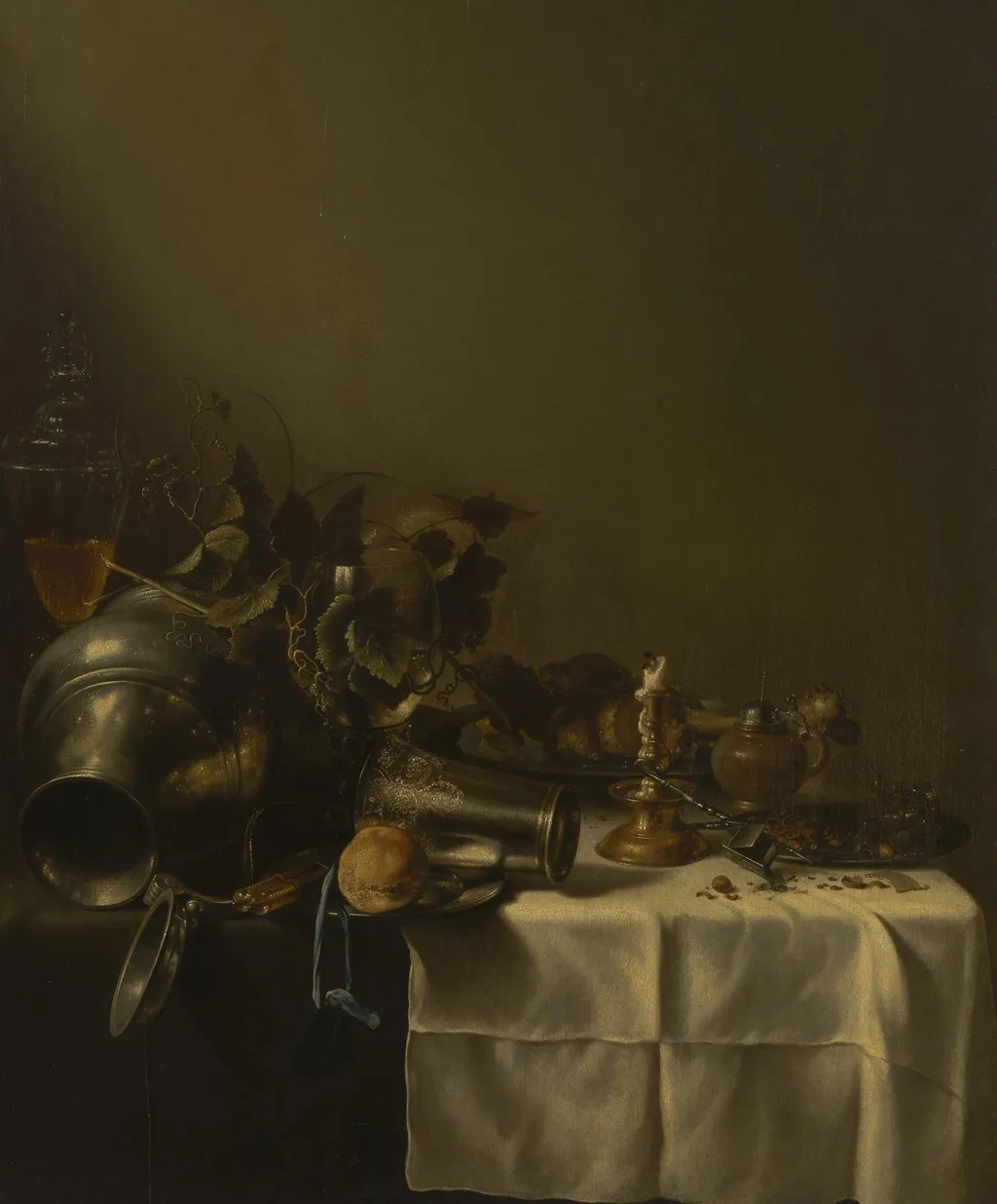
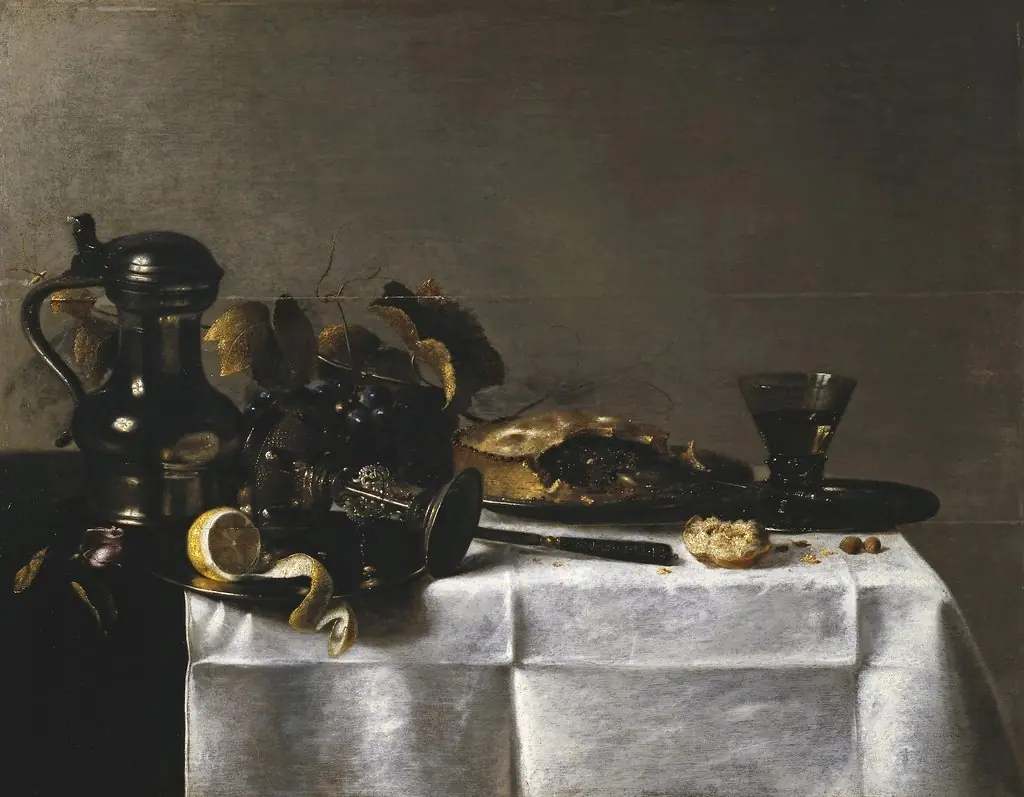
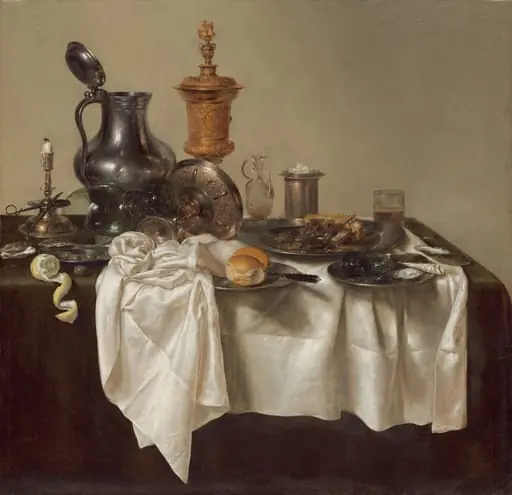
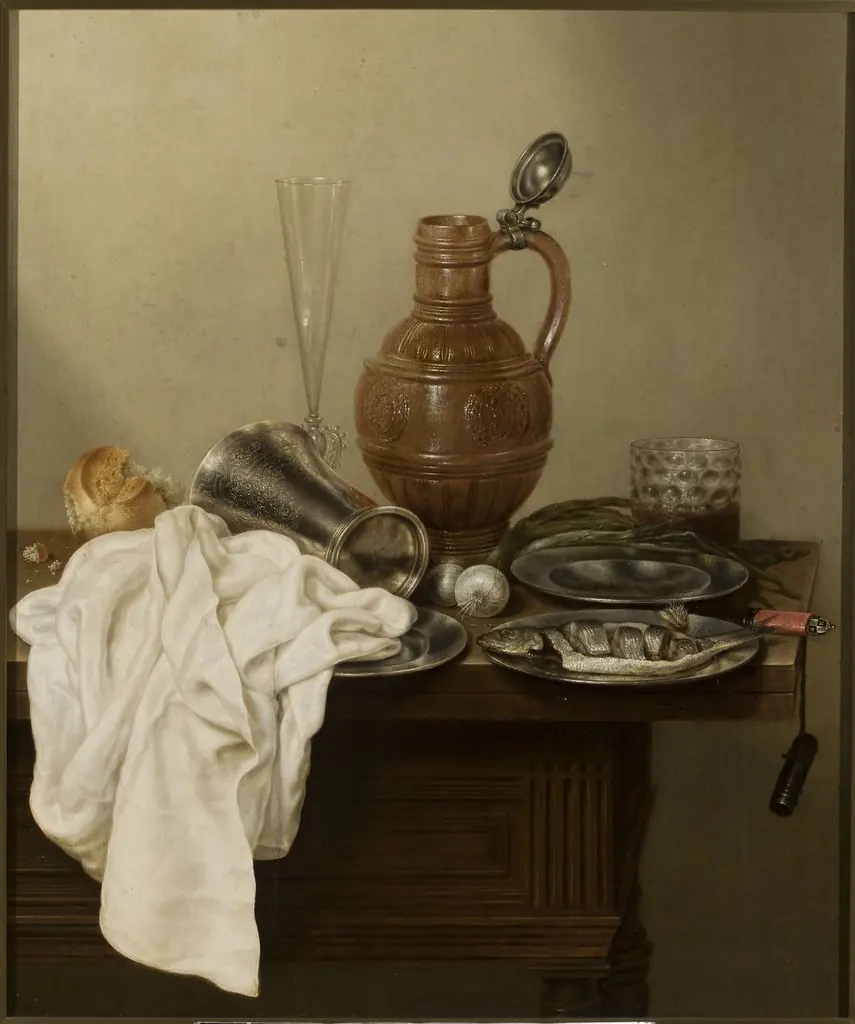
Overturned Jug and Other Items on the Tablecloth is an oil painting by the Dutch Golden Age artist Roelof Koets. It dates from 1633 and is held in the collection of the Hermitage Museum.
About this work
Overview
This composition features an arrangement of common household objects carefully placed upon a draped surface.
Roelof Koets's Overturned Jug and Other Items on the Tablecloth, painted around 1633, is an oil still life. This composition features an arrangement of common household objects carefully placed upon a draped surface. The work exemplifies the artist's engagement with the genre of still life, a popular form during the Dutch Golden Age, which often focused on the detailed depiction of inanimate items.
Subject & Meaning
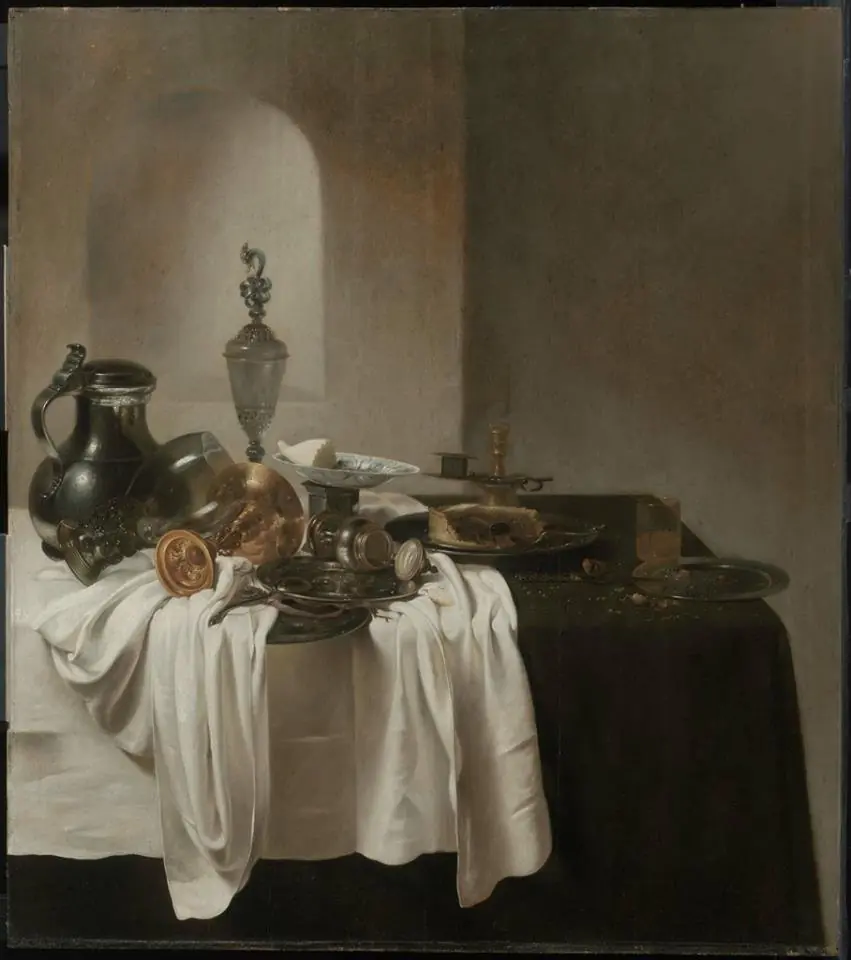
The painting presents a collection of domestic items arranged on a white tablecloth, which is folded over the edge of a table. Prominently featured are an overturned metal jug, a small wax candle, a round loaf of bread, and a ceramic mustard pot. The artist emphasizes the varied textures and forms of these disparate objects, from the reflective surface of the jug to the soft contours of the bread, creating a sense of tangible presence.
Technique & Style
Executed in oil paint, the artwork demonstrates a meticulous approach to rendering diverse materials and forms. Koets employs the medium to capture the distinct qualities of each object, contrasting the substantial, metallic jug with the delicate, cylindrical candle. The varied shapes and sizes of the bread and mustard pot further contribute to the visual interest, highlighting the artist's skill in depicting everyday items with precision and tactile suggestion.
History & Provenance
This still life by Roelof Koets is currently housed in the collection of the State Hermitage Museum. Its presence there contributes to the museum's extensive holdings of Dutch Golden Age painting, offering an example of the period's rich tradition of still-life artistry. The painting's journey to this prominent institution reflects its historical significance within the genre.
Own this work as a print
Artist & collection