Artwork
Saint Luke Drawing the Virgin
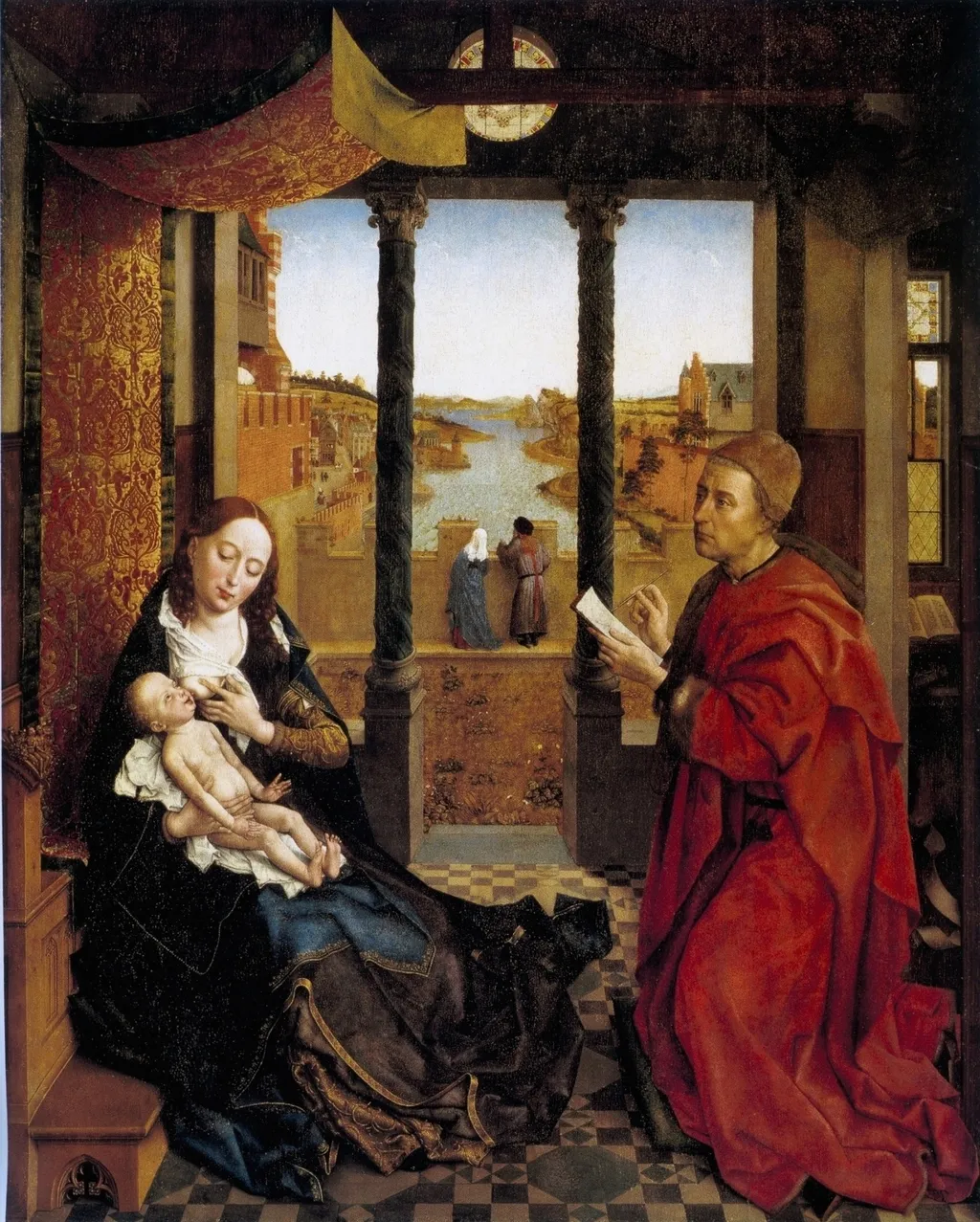
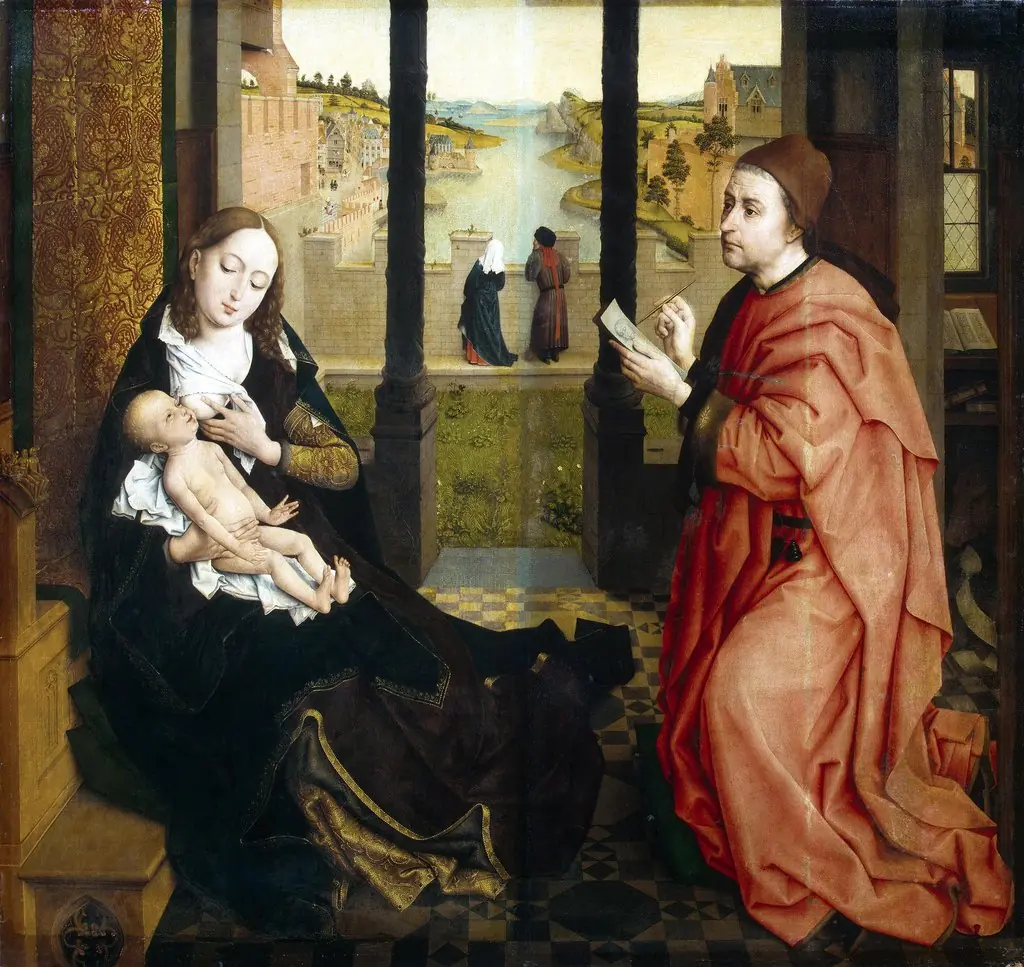
Saint Luke Drawing the Virgin is an oil painting by the Northern Renaissance artist Rogier van der Weyden. It is held in the collection of the Museum of Fine Arts Boston. Created in the mid‑15th century, this panel painting measures roughly three meters across and is executed in oil on oak.
About this work
Overview
Created in the mid‑15th century, this panel painting measures roughly three meters across and is executed in oil on oak. It is traditionally linked to Rogier van der Weyden, a leading figure of Early Netherlandish art. The work resides in the Museum of Fine Arts in Boston and depicts a devotional scene that merges portraiture with symbolic narrative.
Subject & Meaning
The composition presents Saint Luke, the patron saint of artists, seated before the Virgin Mary as she nurses the infant Christ. Luke is shown with his drawing tools, emphasizing his role as a chronicler of sacred events. The setting includes a walled garden and various emblematic details that underscore themes of purity, incarnation, and the transmission of divine knowledge.
Technique & Style
The figures are rendered with meticulous attention to texture, from the sheen of fabrics to the delicate handling of light.
Van der Weyden combines oil and tempera on a wooden panel, achieving a luminous surface and fine modelling of flesh. The figures are rendered with meticulous attention to texture, from the sheen of fabrics to the delicate handling of light. Spatial depth is suggested through a receding interior that opens onto a courtyard, river, and distant town, creating a seamless transition between interior and landscape.
History & Provenance
Scholars date the painting to between 1435 and 1440, based on stylistic analysis and documentary evidence. It entered the collection of the Museum of Fine Arts, Boston, in the early 20th century, where it has been displayed as a key example of van der Weyden’s mature output. The work has been the subject of extensive research concerning its attribution and original function.
Context
The panel reflects contemporary devotional practices that linked artistic creation with sacred narrative. By portraying Luke as an artist, the painting reinforces the notion that visual representation serves as a conduit for theological reflection. The inclusion of carved figures of Adam and Eve on Mary’s throne further connects the scene to the broader biblical story of fall and redemption.
Own this work as a print
Artist & collection
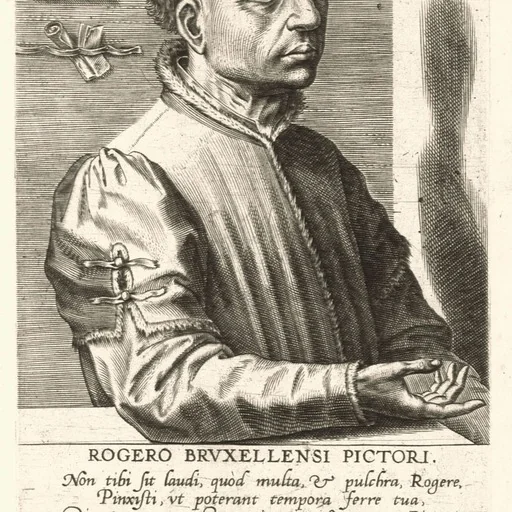
Artist
Rogier van der Weyden (Dutch: ; 1399 or 1400 – 18 June 1464), initially known as Roger de la Pasture (French: ), was an early Netherlandish painter whose surviving works consist mainly of religious triptychs,…