Artwork
Struggle Series, strug14
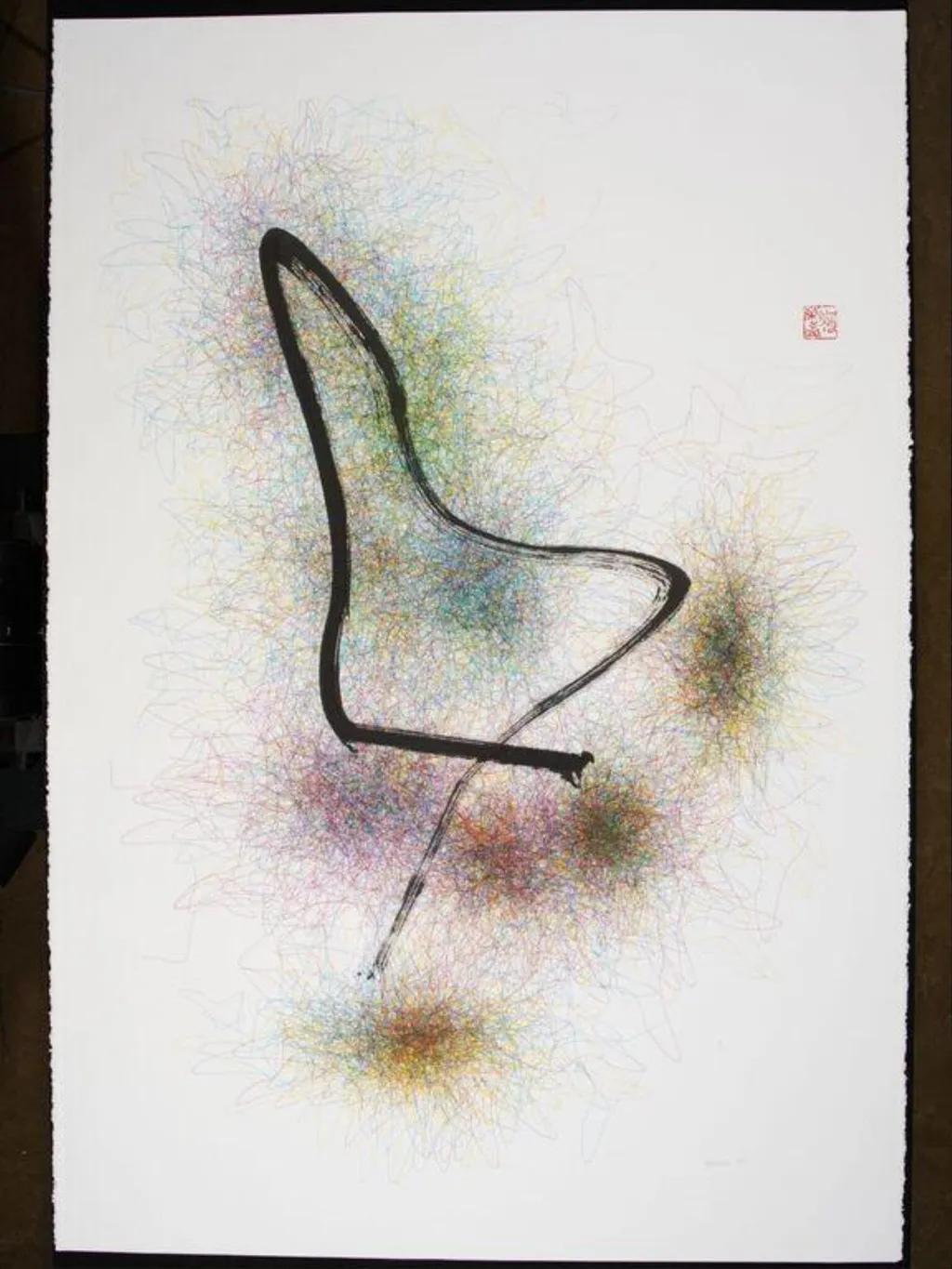
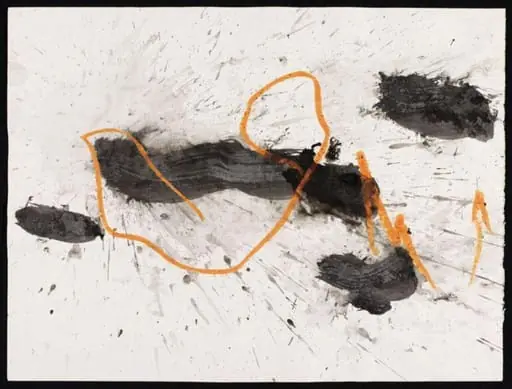
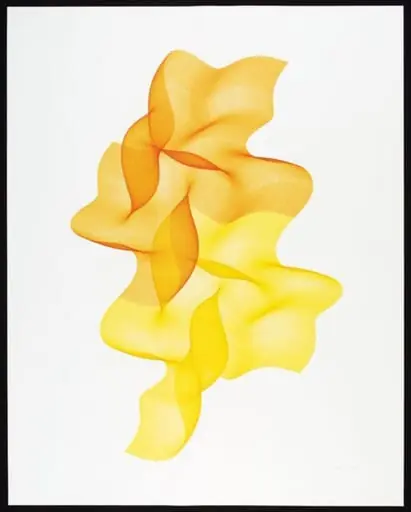
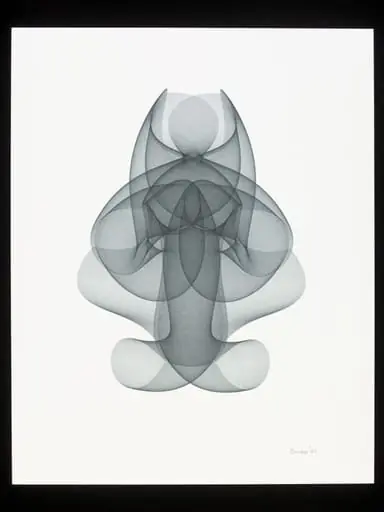
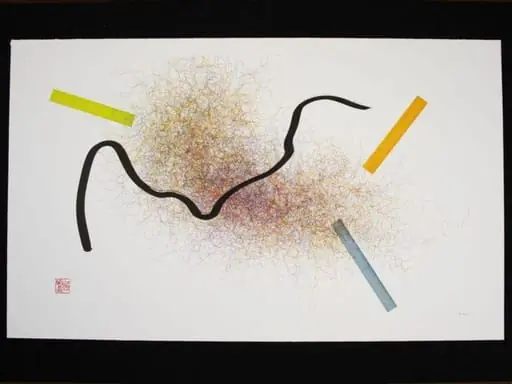
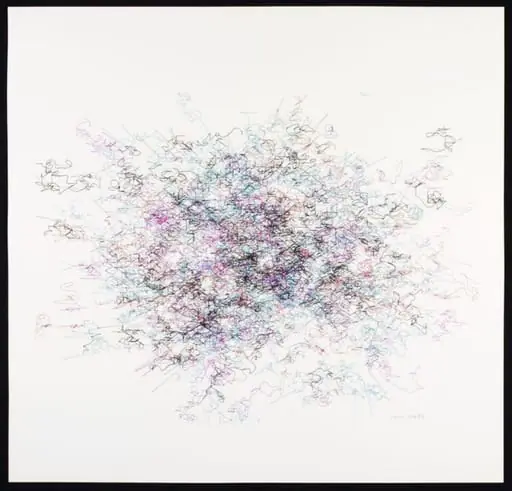
Struggle Series, strug14 is a drawing by Roman Verostko. It dates from 1995 and is held in the collection of the Victoria and Albert Museum.
About this work
This is a 1995 drawing by Roman Verostko. It’s abstract and made with ink on paper. The lines look like brush strokes but were drawn by a computer.
Verostko used a plotter fitted with a Chinese brush. The program controls line size, angle and placement. Each small line mimics the big brush marks you see.
Look up Roman Verostko next.
Overview
Created in 1995, this ink-on-paper drawing by Roman Verostko emerges from a custom-engineered plotter fitted with a Chinese brush. Unlike traditional digital art, the work avoids rasterized output, instead producing physical ink traces through mechanical motion. The result is an abstract composition that mimics hand-brushed calligraphy, though entirely generated by algorithmic instruction.
Subject & Meaning
The drawing holds no representational subject; its meaning arises from the interplay of control and chance. The algorithm dictates the placement, angle, and scale of each stroke, yet the brush’s physical interaction with paper introduces subtle variations. The work reflects a meditation on authorship, where the artist’s role shifts from direct maker to designer of systems that generate form.
Technique & Style
Verostko adapted a mechanical plotter to hold a traditional Chinese brush, enabling it to lay down ink lines with the texture and flow of hand-drawn strokes. Each line in the composition is a scaled-down replica of the dominant brush mark, varied in orientation and size by a custom program. The technique blurs the boundary between mechanical precision and gestural expression.
History & Provenance
This piece belongs to Verostko’s Struggle Series, produced during a period of intense experimentation with algorithmic drawing. In 1995, he co-founded the term 'Algorist' with peers like Jean-Pierre Hébert to describe artists using self-written code as a core creative tool. The work is among the earliest examples of algorithmic art grounded in analog materiality rather than screen-based output.
Context
Emerging in the mid-1990s, Verostko’s practice responded to the rise of digital tools in art, yet resisted their tendency toward pixel-based abstraction. By returning to the physicality of brush and ink, he connected algorithmic processes to East Asian calligraphic traditions. His work stood apart from contemporaneous digital art by prioritizing material trace over visual simulation.
Legacy
Verostko’s integration of the Chinese brush into a plotter expanded the vocabulary of algorithmic art, demonstrating that computational processes could yield tactile, human-scaled results. His Algorist movement influenced later generations of artists exploring code as a medium for embodied expression, bridging computational logic with the physicality of traditional media.
Artist & collection
Artist
Roman Verostko spent years hand-coding his drawings, like a programmer who never left the art studio.