Artwork
Le lever
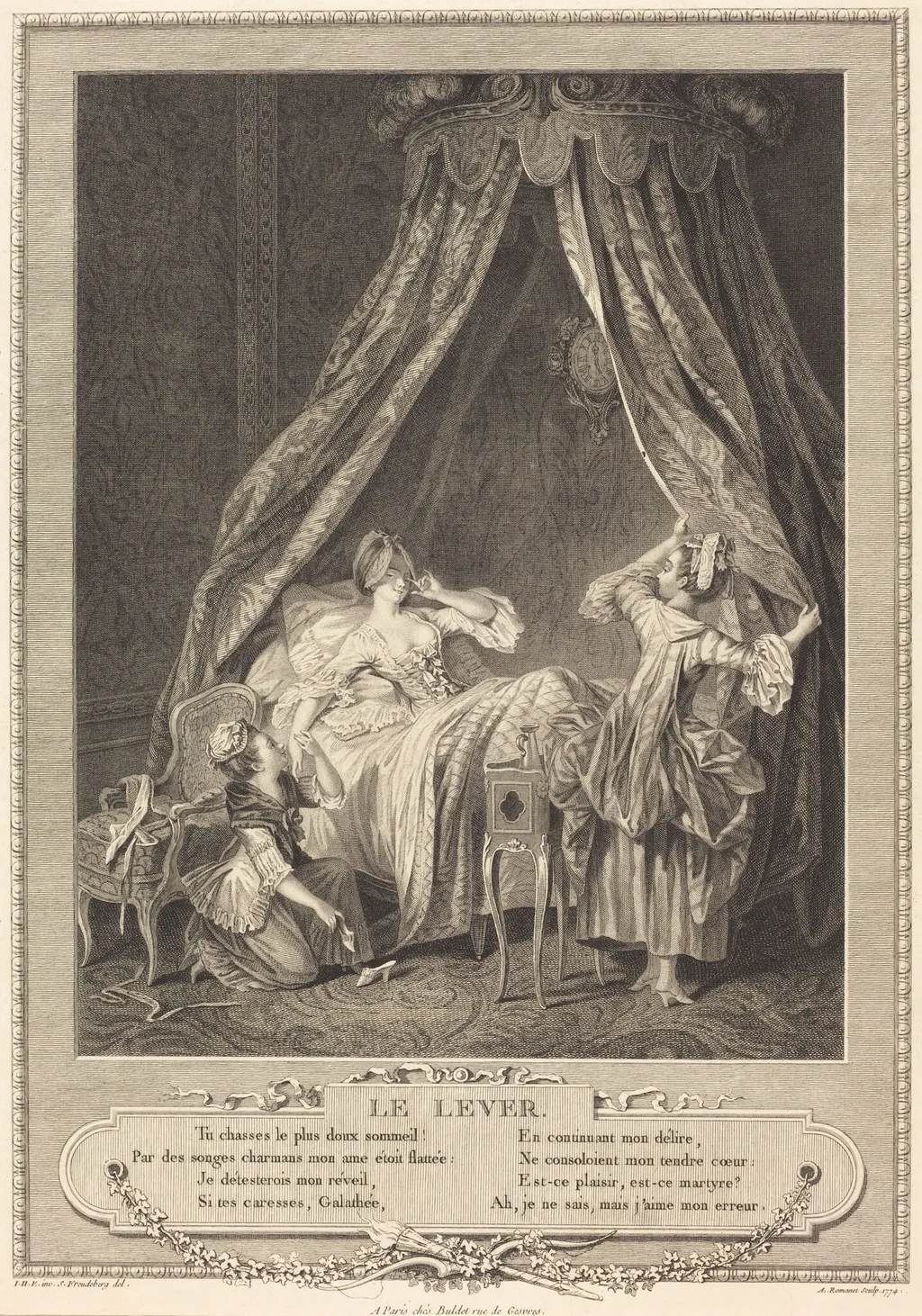
Le lever is an ink print by the Romanticist artist Antoine Louis Romanet. It dates from 1774 and is held in the collection of the National Gallery of Art.
About this work
Overview
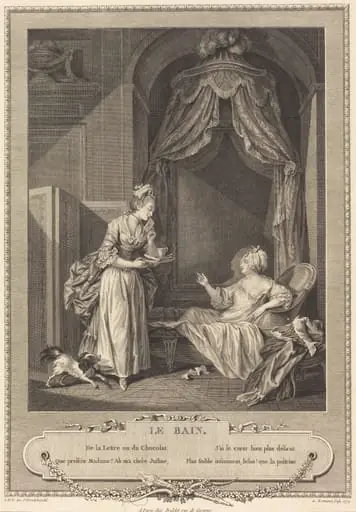
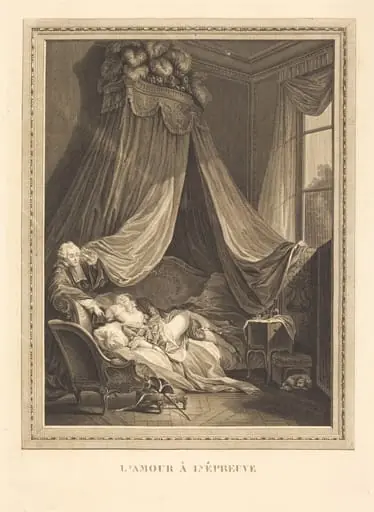
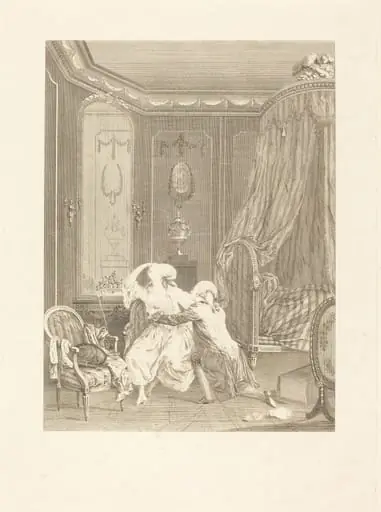
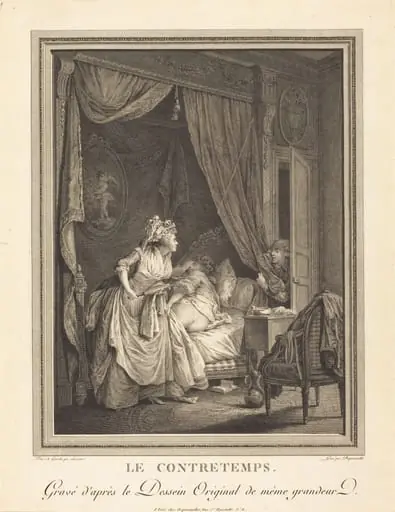
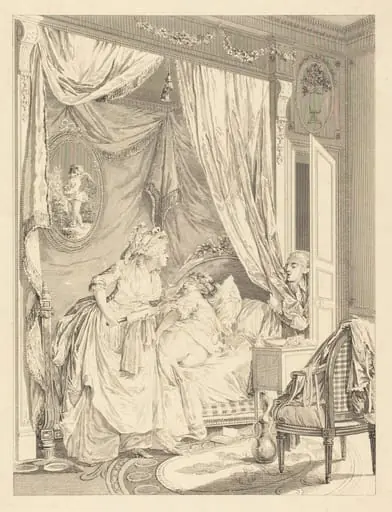
It depicts a private morning ritual in an opulent interior, capturing a woman being assisted by a maid as she rises from bed.
Le lever is an 1774 print by Antoine Louis Romanet, combining etching, engraving, and aquatint techniques. It depicts a private morning ritual in an opulent interior, capturing a woman being assisted by a maid as she rises from bed. A man holds back a heavy curtain, allowing light to spill across the scene. The composition emphasizes stillness and intimacy rather than haste, despite the title’s reference to the act of rising.
Subject & Meaning
The scene portrays the aristocratic ritual of levée, a formal morning awakening often attended by servants. Yet Romanet softens its ceremonial nature, focusing on quiet interaction between figures. The woman’s half-dressed state and the tender gesture of the maid suggest vulnerability and closeness. The presence of the man, passive and observant, adds a layer of domestic hierarchy, subtly reinforcing social roles without overt drama.
Technique & Style
Romanet employed fine etched lines and delicate aquatint to render textures: the sheen of silk bedding, the grain of carved wood, and the soft folds of fabric. Drypoint added subtle tonal richness, particularly in shadowed areas. The light enters diagonally, enhancing the tactile quality of surfaces and creating a hazy, luminous atmosphere. The precision of the lines avoids harshness, contributing to the scene’s gentle, contemplative mood.
History & Provenance
Created in 1774, Le lever emerged during a period when French printmakers increasingly depicted intimate domestic scenes for private collectors. Romanet, known for his reproductive engravings after painters, here adapted a genre favored by Rococo artists. The print likely circulated among aristocratic circles, valued for its technical finesse and depiction of refined private life, though its early ownership records remain undocumented.
Context
In late 18th-century France, prints like Le lever reflected a growing interest in private, everyday moments among the elite. While courtly rituals were traditionally portrayed with grandeur, Romanet’s version leans toward quietude, aligning with emerging sensibilities that prized emotional subtlety over spectacle. The work echoes similar themes in the paintings of Boucher and Fragonard, though rendered with the restrained elegance characteristic of printmaking.
Legacy
Le lever stands as an example of how printmaking expanded access to intimate genre scenes beyond oil painting. Romanet’s skill in translating painterly effects into etched lines influenced later printmakers exploring domestic themes. Though not widely reproduced today, the work remains a quiet testament to the aesthetic values of pre-Revolutionary French society—where luxury was measured in texture, light, and stillness rather than spectacle.
Artist & collection