Artwork
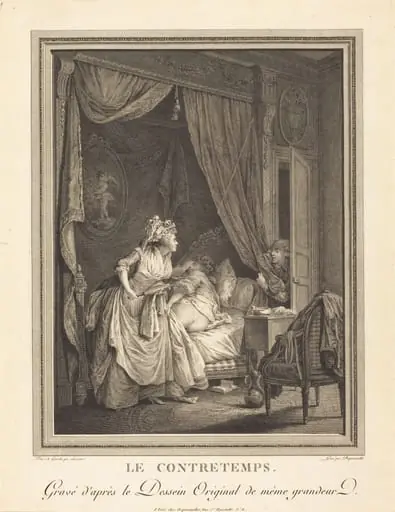
Le contretemps
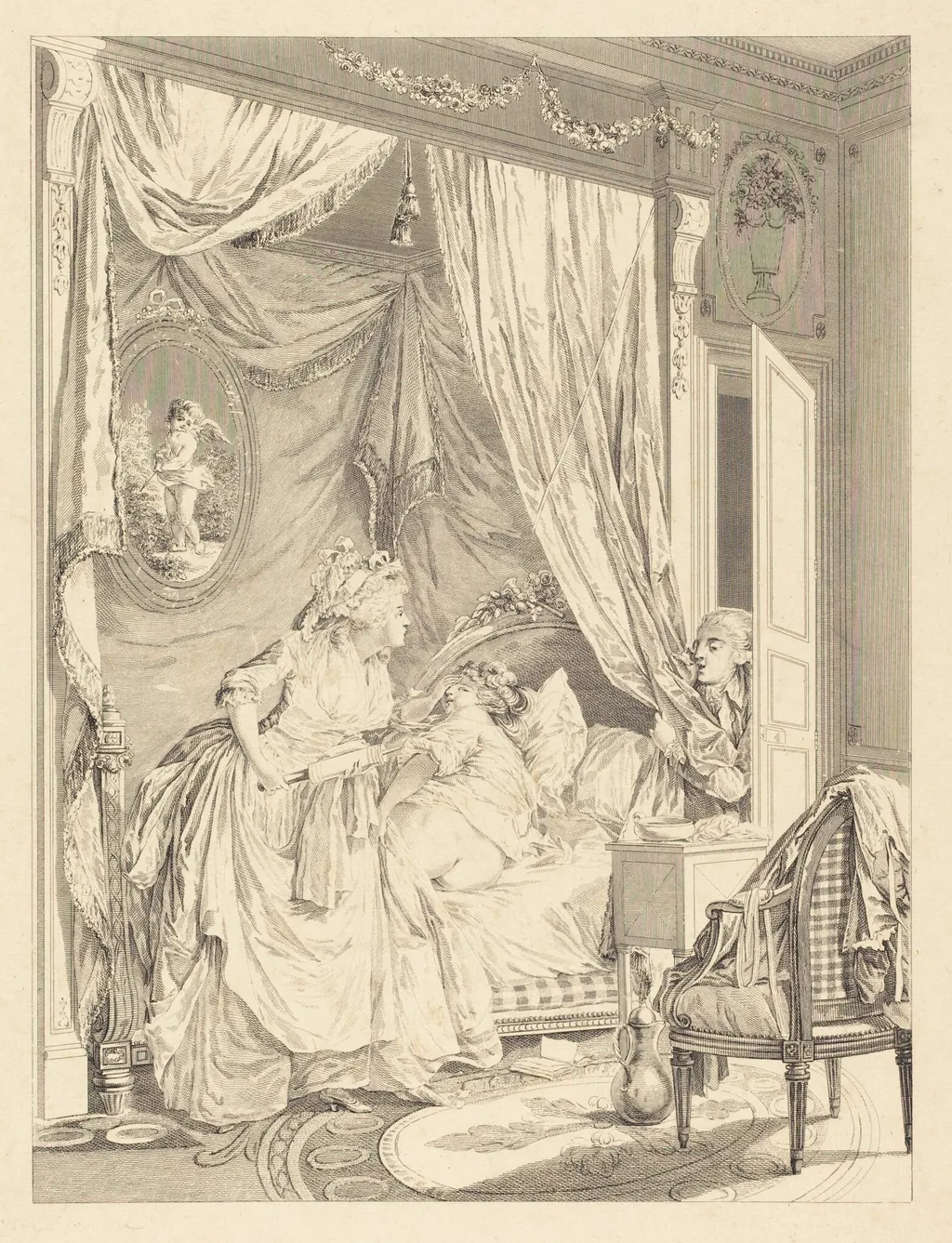
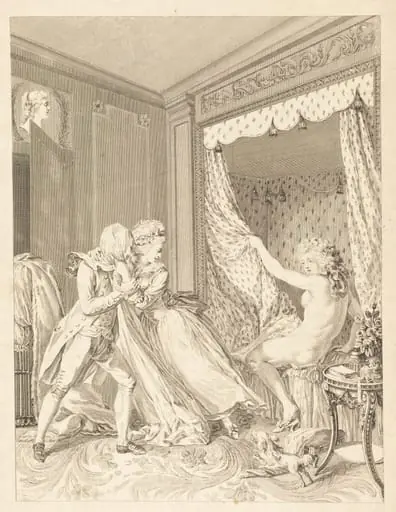
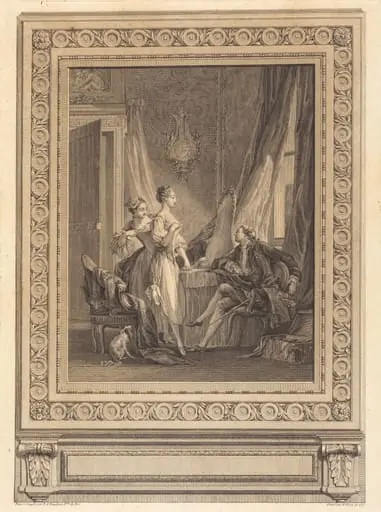
Le contretemps is an ink print by the Romanticist artist Francois-Nicolas-Barthelemy Dequevauviller. It dates from 1786 and is held in the collection of the National Gallery of Art.
About this work
This was made in 1786 as an etching, a printmaking method where lines are scratched into metal.
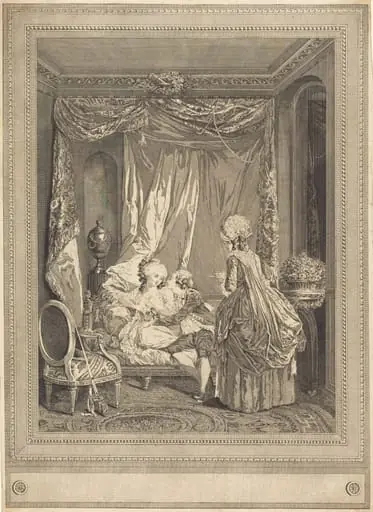
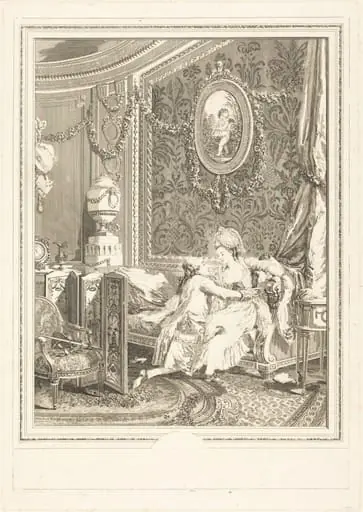
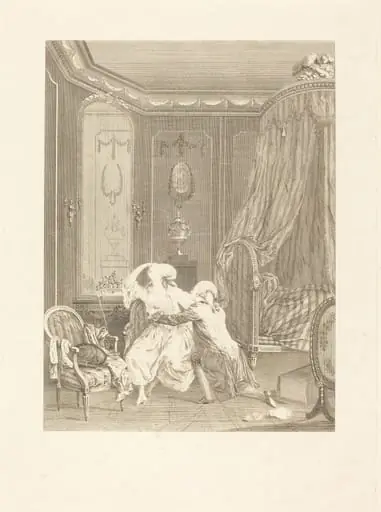
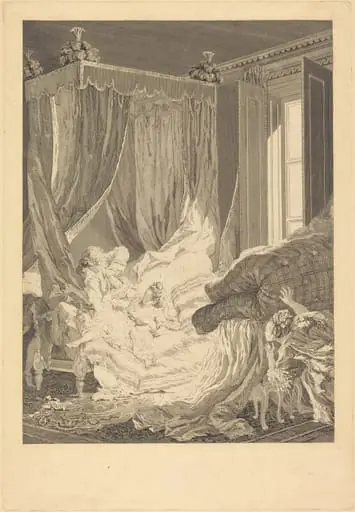
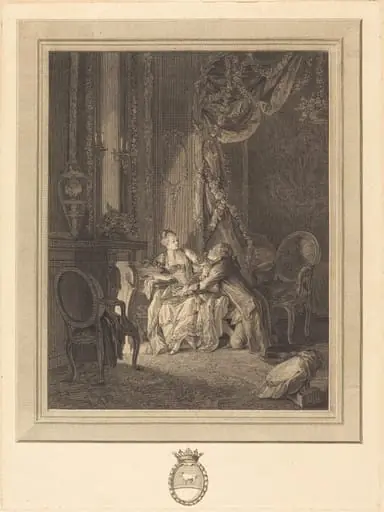
This sketch shows a fancy room with two people in old-fashioned clothes. One is lying on a couch, looking tired, while the other stands nearby, holding a fan. A small statue sits on a pedestal, and a curtain hangs in the background. The walls have detailed patterns, and there’s a chair with a striped cushion.
The artist used shading to make the scene feel dramatic, focusing on the woman’s slumped pose. This was made in 1786 as an etching, a printmaking method where lines are scratched into metal.
Next, check out etching to see how this technique works.
Overview
Le contretemps, an etching produced in 1786 by the French printmaker François‑Nicolas‑Barthelemy Dequevauviller, depicts an interior scene rendered in fine line work. The print belongs to the genre of 18th‑century French domestic tableau, presenting a carefully arranged composition that invites close inspection of its figures and decorative surroundings.
Subject & Meaning
The image shows a richly appointed room where a woman reclines on a settee, her posture slumped and weary, while a second figure, dressed in contemporary attire, stands nearby holding a fan. A small statue rests on a pedestal, and a curtain drapes the background, suggesting a moment of private fatigue or interruption within an otherwise elegant setting.
Technique & Style
Created through the etching process, Dequevauviller incised lines into a copper plate, allowing for delicate shading and tonal variation. The artist employs cross‑hatching to model the folds of clothing and the patterned walls, producing a dramatic contrast that emphasizes the woman's languid pose and the texture of the surrounding décor.
History & Provenance
Le contretemps was issued in the late eighteenth century, a period when French printmakers frequently produced genre scenes for the burgeoning market of collectors and connoisseurs. While specific ownership records are scarce, the work is catalogued among Dequevauviller’s known prints and appears in several nineteenth‑century collections of French etchings.
Artist & collection

Artist
Francois-Nicolas-Barthelemy Dequevauviller
Francois-Nicolas-Barthelemy Dequevauviller (1786–1786) was an artist.