Artwork
Untitled
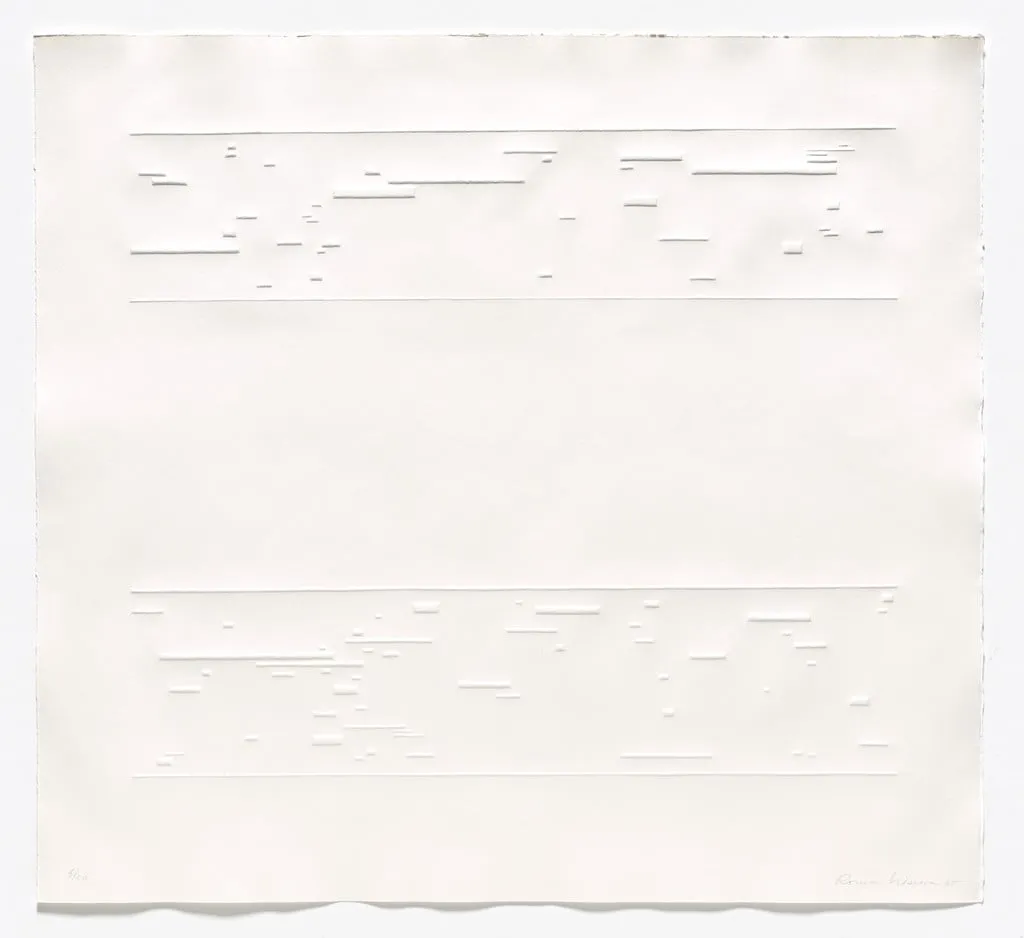
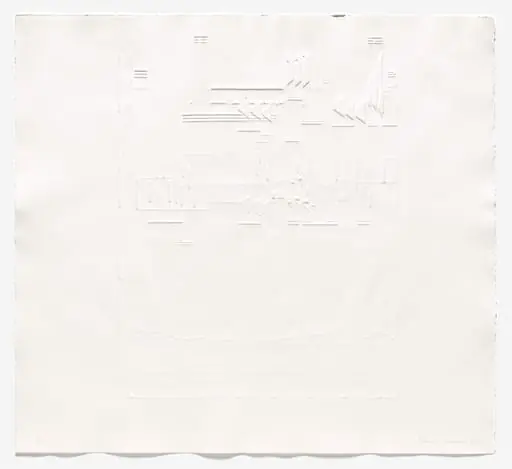
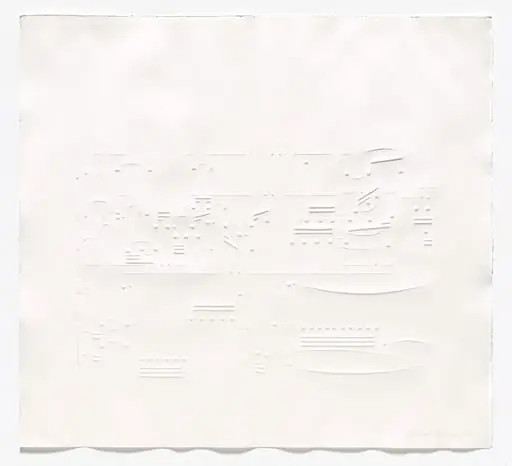
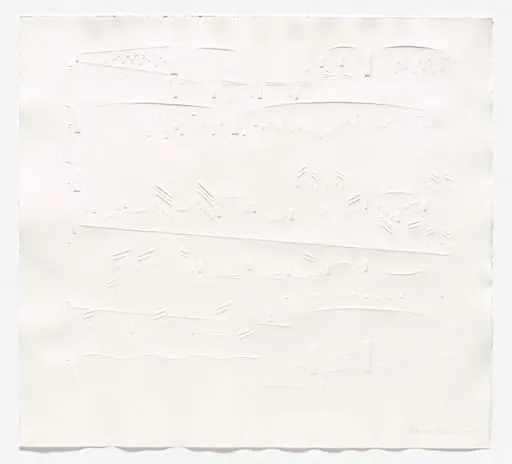
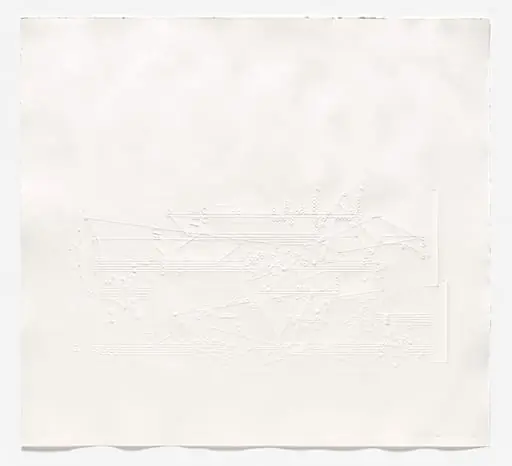
Untitled is a print by Earle Brown Romas Viesulas. It dates from 1965 and is held in the collection of the Museum of Modern Art.
About this work
Overview
The work is part of a limited portfolio that omits ink or pigment entirely, relying instead on subtle physical impressions to convey form.
Untitled is one of twelve blind embossings created by Earle Brown and Romas Viesulas in 1965. The work is part of a limited portfolio that omits ink or pigment entirely, relying instead on subtle physical impressions to convey form. Each piece is printed on white paper, with only faint, raised lines visible upon close inspection. The absence of color and bold mark-making invites quiet contemplation rather than immediate visual impact.
Subject & Meaning
The work resists literal representation, offering no figures, symbols, or narrative. Instead, its subject is the trace—the minimal residue of gesture. The scattered, faint lines suggest the memory of movement or thought, as if the paper retains the ghost of a hand’s passage. This abstraction aligns with experimental approaches of the era that prioritized process over image, emphasizing absence as a form of presence.
Technique & Style
Created through blind embossing, the lines are pressed into the paper without ink, leaving only tactile impressions. The technique requires precise pressure and timing, resulting in delicate, barely-there contours that shift with light and viewing angle. The style is reductive, favoring subtlety over contrast, and aligns with post-war printmaking experiments that explored materiality and perception beyond traditional graphic means.
History & Provenance
The portfolio was produced in 1965 as a collaborative effort between composer Earle Brown and artist Romas Viesulas. It was acquired by The Museum of Modern Art shortly after its creation and remains part of its permanent collection. The work reflects a moment when artists and musicians intersected in explorations of non-traditional expression, often outside commercial galleries or mainstream audiences.
Context
Emerging in the mid-1960s, this work responds to broader avant-garde interests in indeterminacy and minimalism. It shares conceptual ground with John Cage’s silent compositions and Robert Rauschenberg’s erasures, where the void becomes an active element. The portfolio’s focus on tactile sensation over visual clarity reflects a shift in artistic priorities toward sensory and phenomenological experience.
Legacy
Though not widely exhibited, the portfolio contributes to the history of experimental printmaking and intermedia collaboration. Its quiet presence challenges conventional notions of what constitutes a printed image, influencing later artists who explore impermanence, materiality, and the limits of perception. It remains a quiet reference point in discussions of non-visual art practices.
Artist & collection