Artwork
The Genius of Salvator Rosa
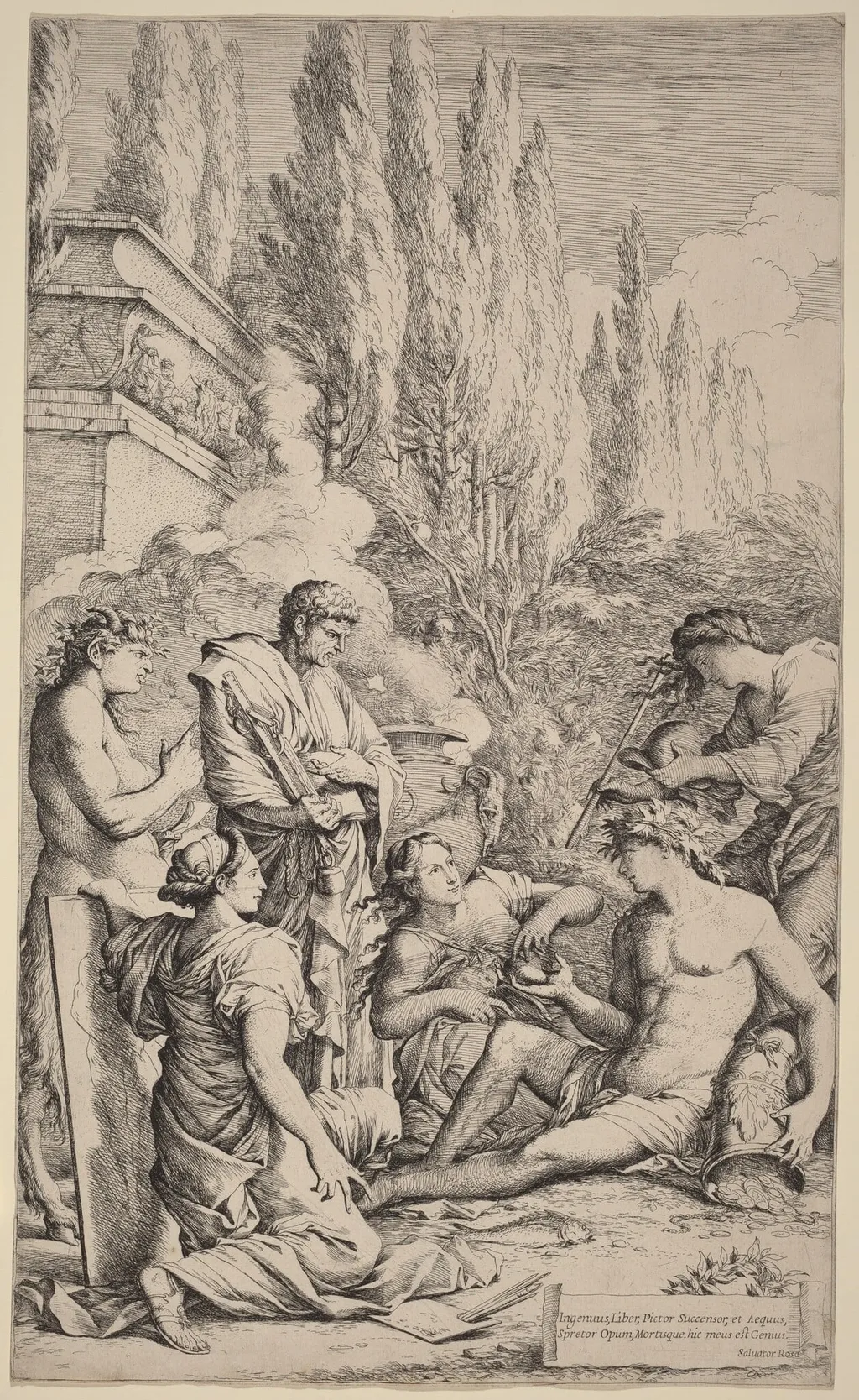
The Genius of Salvator Rosa is an ink print by the Baroque artist Salvator Rosa. It dates from 1644 and is held in the collection of the National Gallery of Art.
About this work
Overview
Created in 1644, *The Genius of Salvator Rosa* is an etching by the Italian Baroque artist Salvador Rosa. Executed in black and white, the print presents a compact group of five figures arranged amid a rugged, rocky landscape, their forms rendered with sharp outlines and dense cross‑hatching that emphasize texture and depth.
Subject & Meaning
The composition gathers several individuals—some seated, others standing—within a dramatic natural setting. One figure cradles a small child, while the surrounding trees and shrubs suggest a wild, untamed environment, a motif Rosa frequently explored in his larger paintings.
Technique & Style
Rosa employed the etching process, incising a metal plate with acid to produce fine lines. This allowed him to build layers of shadow through cross‑hatching, creating a nuanced tonal range that conveys the rugged terrain and the figures’ varied postures.
History & Provenance
Rosa, active in Naples, Rome, and Florence, was celebrated in his lifetime not only as a painter but also as a poet, satirist, actor, musician, and printmaker. The etching reflects his multidisciplinary reputation and his skill in translating dramatic landscape themes into the print medium.
Context
The work exemplifies Rosa’s fascination with dramatic, natural scenery, a hallmark of his Baroque oeuvre. Its influence extended beyond his own circle, shaping artistic approaches to landscape and narrative printmaking from the 17th century through the early 19th century.
Artist & collection
Artist
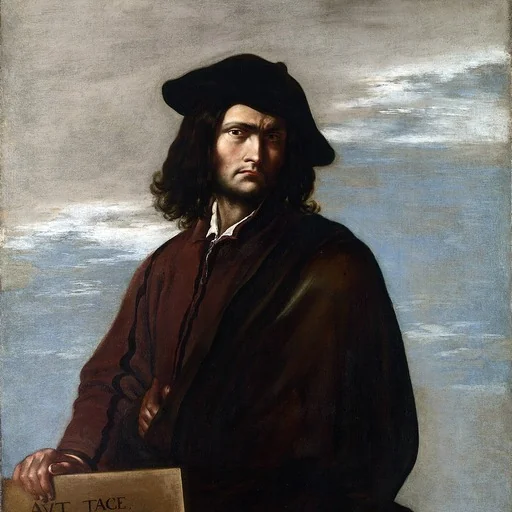
Salvator Rosa (1615 – 15 March 1673) is best known today as an Italian Baroque painter, whose romanticised landscapes and history paintings, often set in dark and untamed nature, exerted considerable influence from the 17th century into…

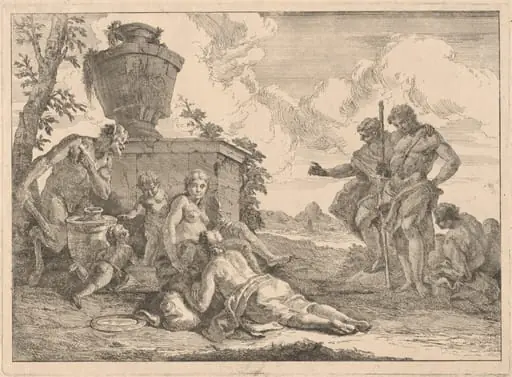 A Satyr with a Staff and Seven Other Figures
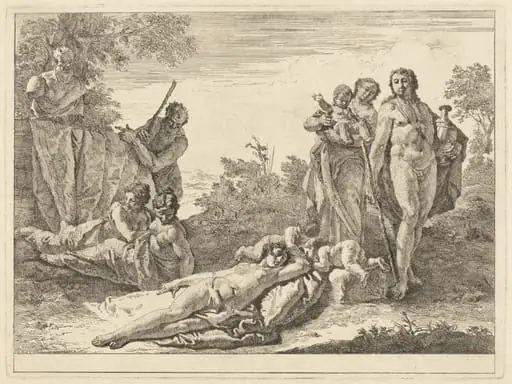 Nine Figures around a Herm of Pan
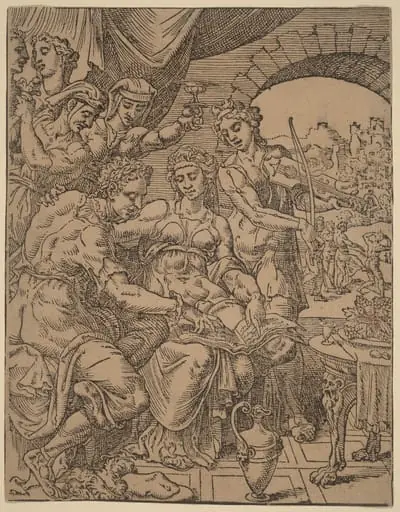 The Prodigal Son Squandering His Inheritance on Harlots
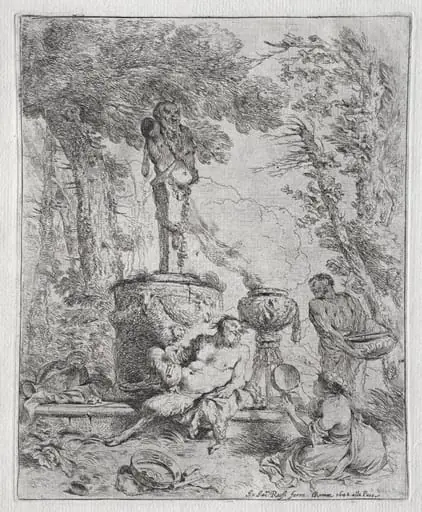 Fete of Pan
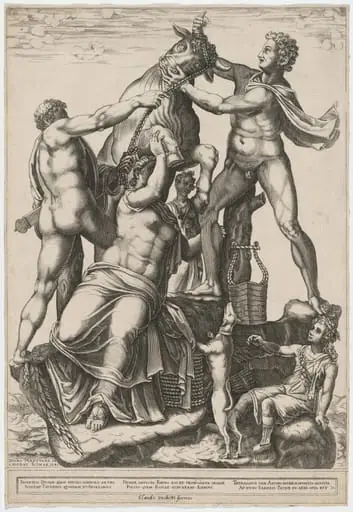 Amphion and Zethus Tying Dirce to a Wild Bull
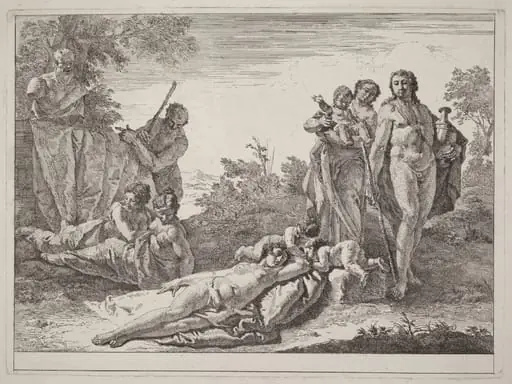 Apollo and Nymphs in a Landscape with a Bust of Pan
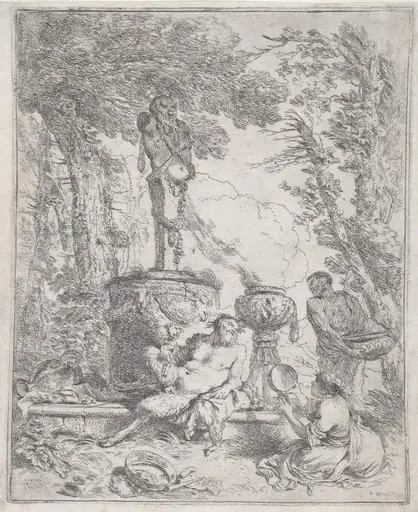 Pan Reclining before a Herm
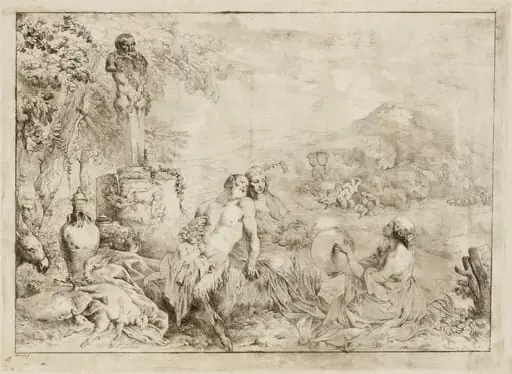 Landscape with a Satyr Family and Classical Sculpture
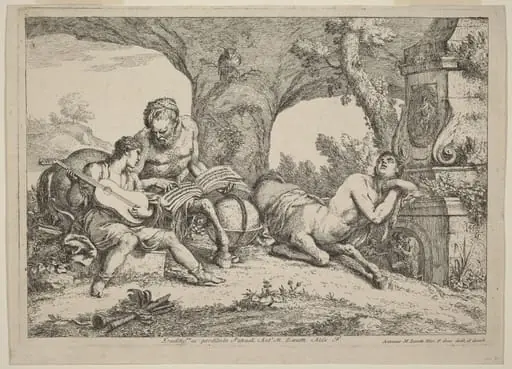 Chiron Teaching Music to Achilles
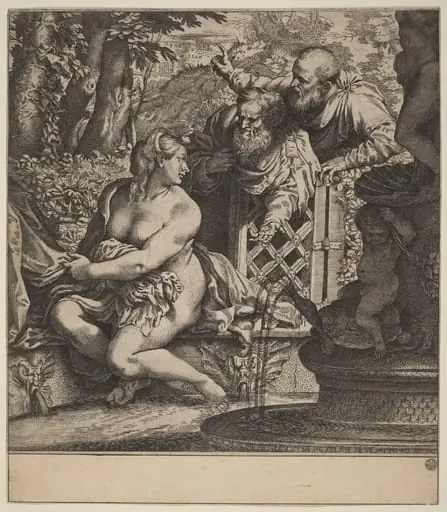 Susanna and the Elders
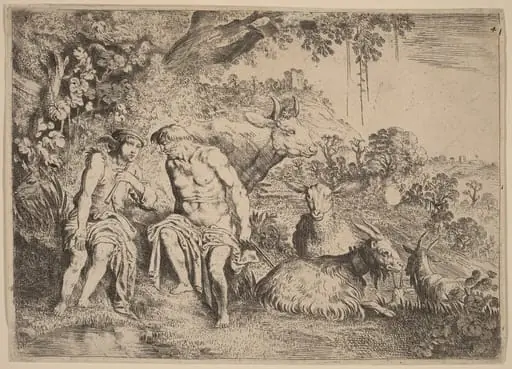 Mercury Lulling Argus to Sleep
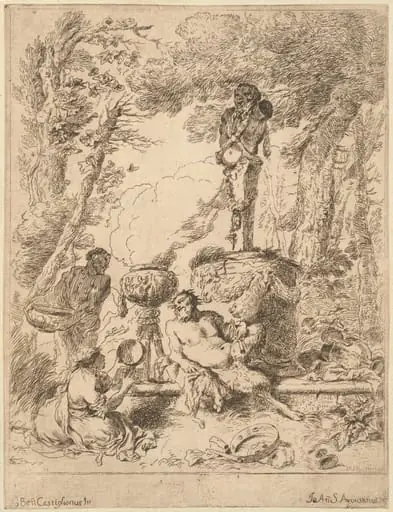 Bacchanal by a Herm