Artwork
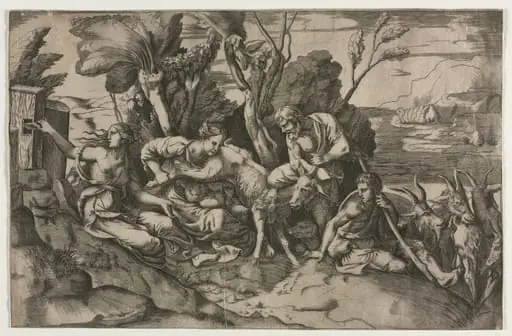
Mercury Lulling Argus to Sleep
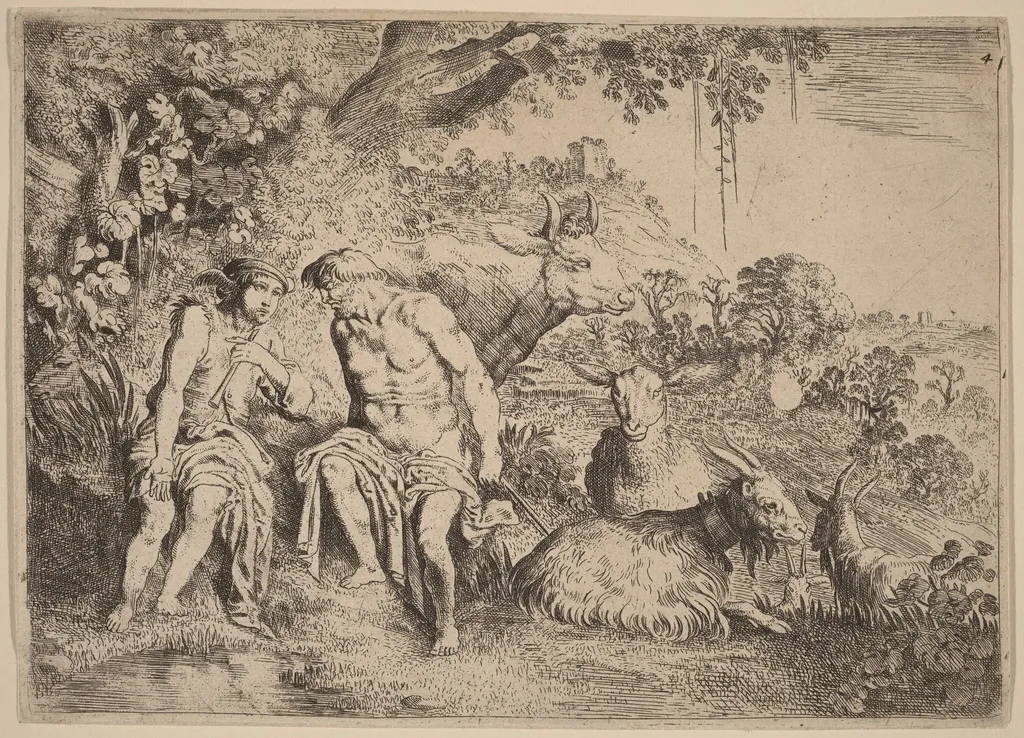
Mercury Lulling Argus to Sleep is an ink print by the Renaissance artist Moyses van Uyttenbroeck. It dates from 1619 and is held in the collection of the National Gallery of Art.
About this work
Overview
Moyses van Uyttenbroeck’s 1619 etching, titled Mercury Lulling Argus to Sleep, presents a mythological tableau in which the messenger god Mercury gently touches the head of the many‑eyed watchman Argus with a long staff, inducing drowsiness. In the background, a shepherd and a few cattle observe the scene, adding a pastoral dimension to the narrative.
Subject & Meaning
The composition visualizes a episode from Greek mythology: Mercury, acting on Jupiter’s orders, uses his music and charm to lull the vigilant Argus, whose many eyes normally prevent any intrusion. By rendering Argus in a sleepy state, the print underscores themes of deception, the power of persuasion, and the triumph of divine will over mortal vigilance.
Technique & Style
Created through traditional etching, van Uyttenbroeck incised fine lines into a copper plate, producing delicate tonal gradations and intricate detailing of figures and landscape. The artist’s handling of line conveys the softness of Mercury’s touch and the texture of the surrounding foliage, while the overall composition balances narrative clarity with ornamental elegance typical of early‑17th‑century Northern European printmaking.
History & Provenance
The work dates to 1619, situating it within van Uyttenbroeck’s mature period when he frequently engaged classical subjects. Though specific ownership records are scarce, the print has circulated among collections of Baroque prints and appears in catalogues of Dutch etchers, reflecting its continued scholarly interest as an example of mythological print art from the period.
Artist & collection


 Mercury Silencing Battus
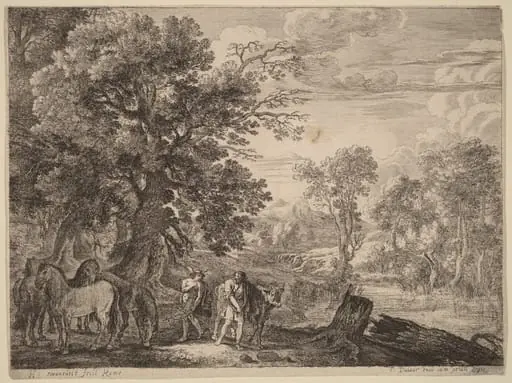 Mercury Silencing Battus
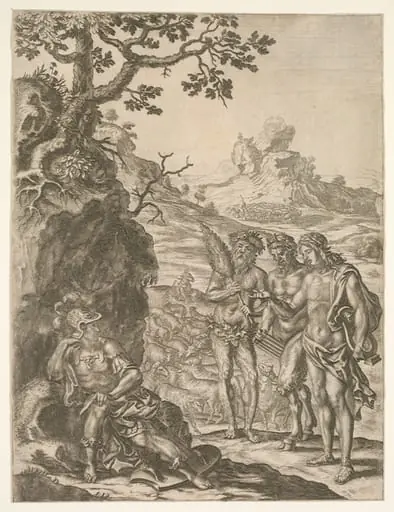 Aeneid
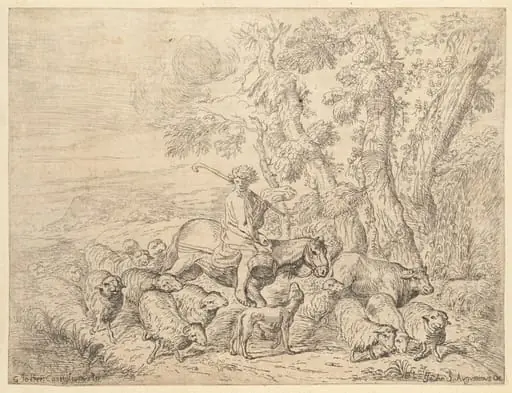 Shepherd on Horseback
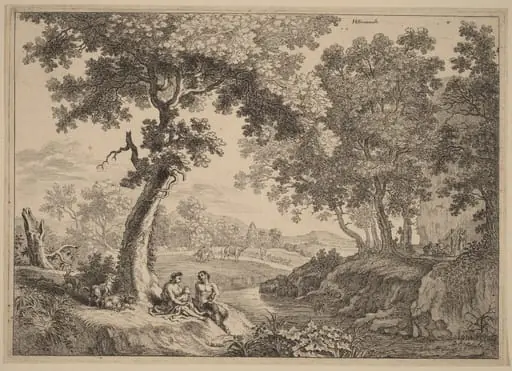 Satyr Family Seated under a Tree
 Landscape with Shepherds
 An Elderly Shepherd Leading the Flock
 A Pastoral Journey with a Mother and Child on Horesback and an Elderly Shepherd Seated
 Holy Family
 Jupiter Suckled by the Goat Amalthea