Artwork
Untitled
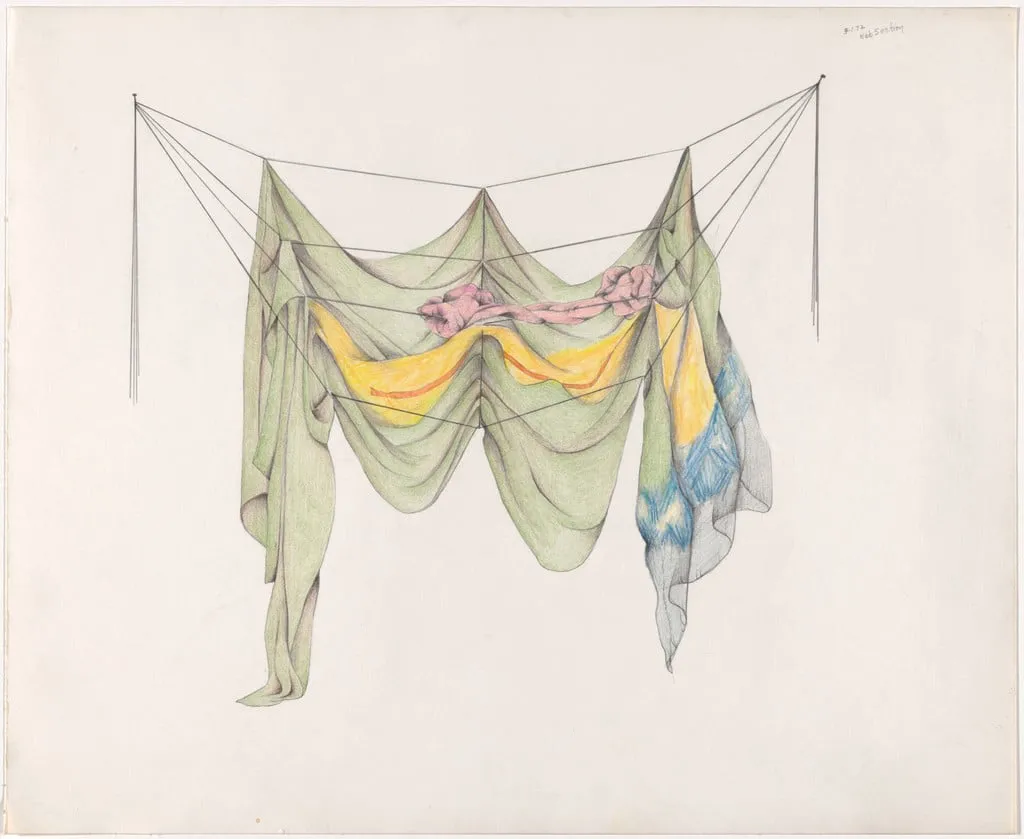
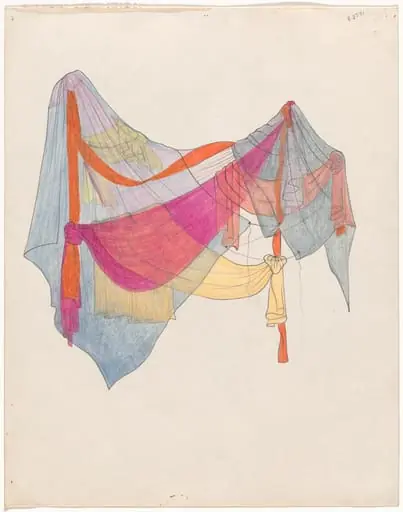
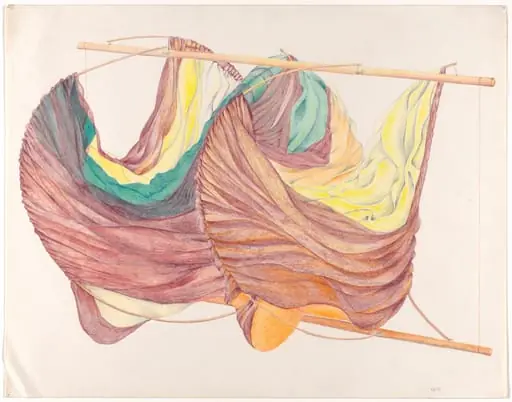
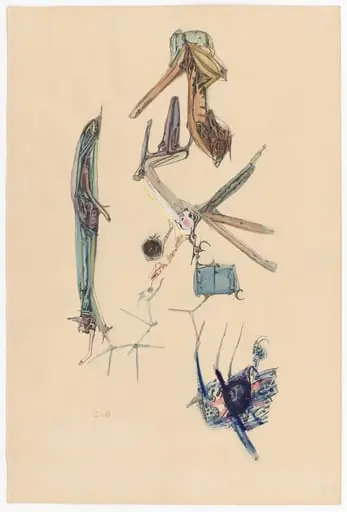
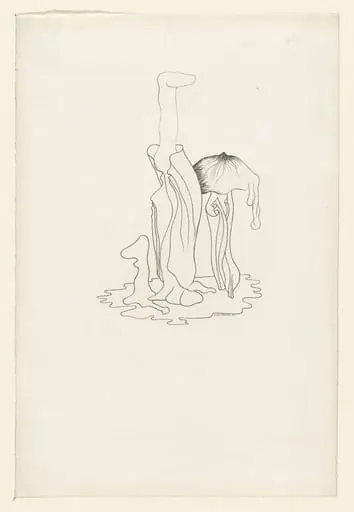
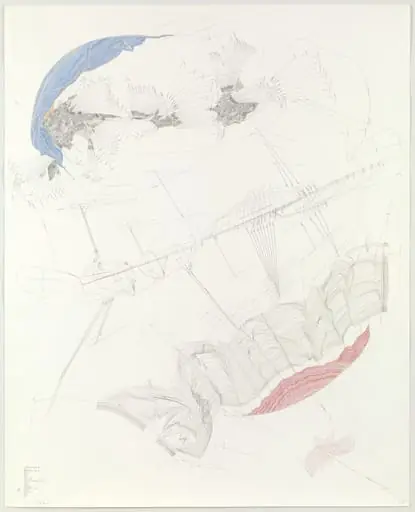
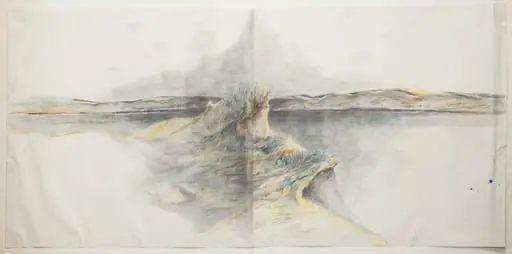
Untitled is a graphite drawing by Rosemary Mayer. It dates from 1971 and is held in the collection of the Museum of Modern Art.
About this work
Overview
It belongs to a body of work produced during a formative period for feminist art in the United States.
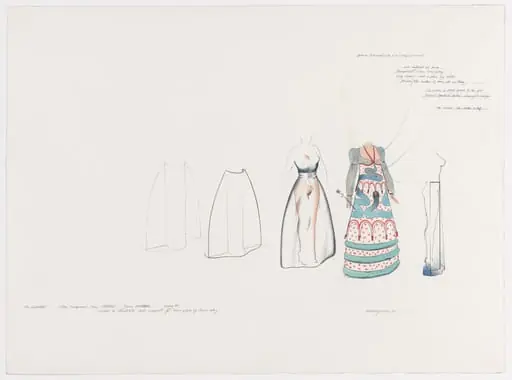
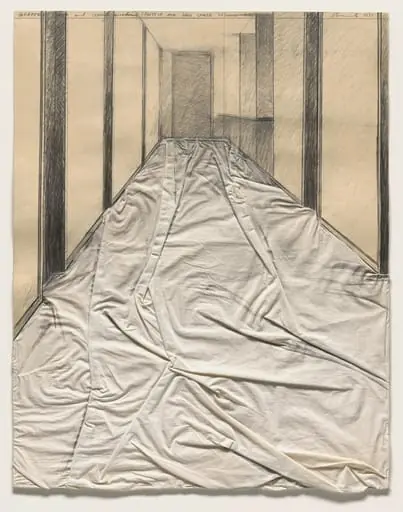
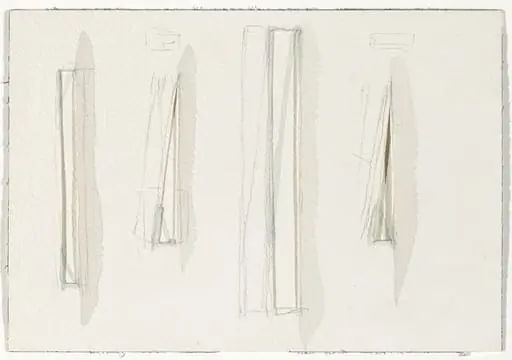
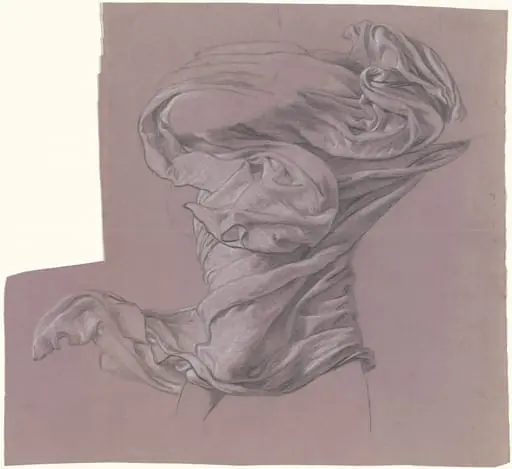
Created in 1971, this drawing by Rosemary Mayer is executed in colored pencil and graphite on paper. It belongs to a body of work produced during a formative period for feminist art in the United States. Mayer, a co-founder of A.I.R. Gallery, used modest materials to explore everyday objects and spatial relationships, often avoiding overt political statements while still engaging with the cultural conditions of her time.
Subject & Meaning
The drawing depicts a hammock suspended between two vertical supports, its fabric loosely draped with soft, irregular folds. A small pink form rests at its center, suggesting a bundled item or human presence without depicting it directly. The absence of a figure invites contemplation of rest, absence, and domesticity—themes quietly resonant with feminist inquiries into private life and labor.
Technique & Style
Mayer employed colored pencil sparingly, limiting her palette to muted greens, yellows, and a hint of blue, with the rest rendered in graphite. The frame and supports are drawn with fine, controlled lines, while the hammock’s fabric appears loosely sketched, its texture suggested through uneven strokes. This contrast between precision and spontaneity creates a sense of fleeting observation, as if the scene were noted in passing.
History & Provenance
The work dates from 1971, shortly after Mayer helped establish A.I.R. Gallery in New York, the first artist-run cooperative for women in the U.S. While its exhibition history is not documented here, it aligns with her early practice of using drawing to investigate physical and emotional spaces. The piece reflects her commitment to quiet, material-based inquiry during a time when women artists were redefining artistic legitimacy outside institutional frameworks.
Context
In the early 1970s, feminist artists in the U.S. turned to everyday subjects and non-traditional media to challenge male-dominated art narratives. Mayer’s focus on a humble hammock—neither monumental nor symbolic—reflects this shift. Her work avoided grand declarations, instead offering subtle meditations on containment, rest, and the overlooked details of lived experience, aligning with broader conceptual and feminist strategies of the era.
Legacy
Though not widely exhibited, this drawing exemplifies Mayer’s enduring interest in transient forms and quiet presence. Her use of drawing as a primary medium, rather than a preparatory step, contributed to a broader revaluation of ephemeral and intimate art practices. Later artists have cited her work as an influence for its restraint and sensitivity to material and spatial nuance.
Artist & collection
Artist
Rosemary Mayer (1943–2014) was an American visual artist who was closely associated with the feminist art movement and the conceptual art movement of the 1970s.