Artwork
Untitled
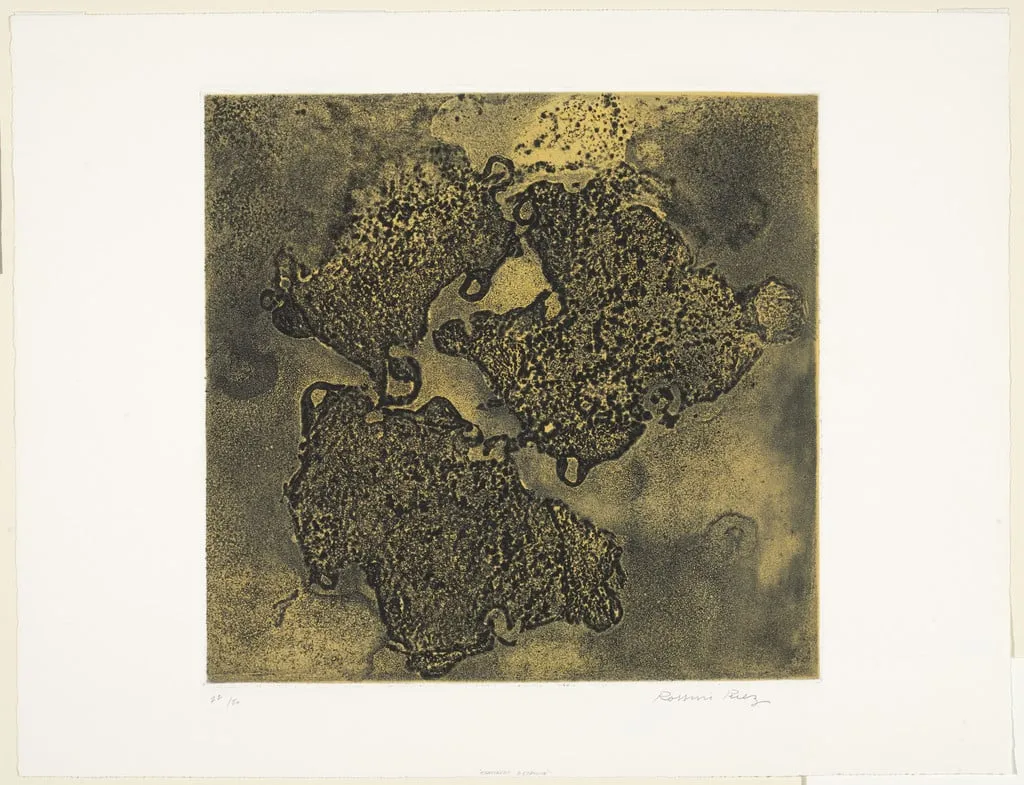
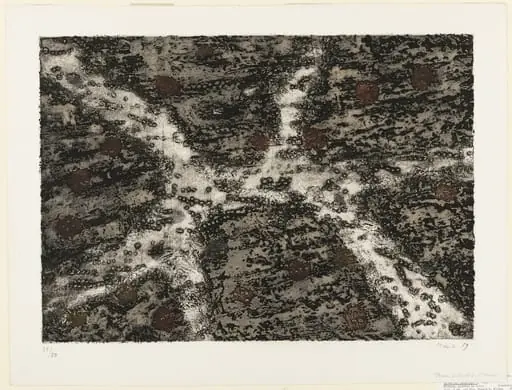
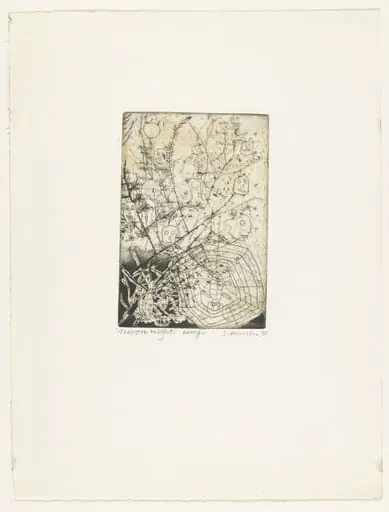
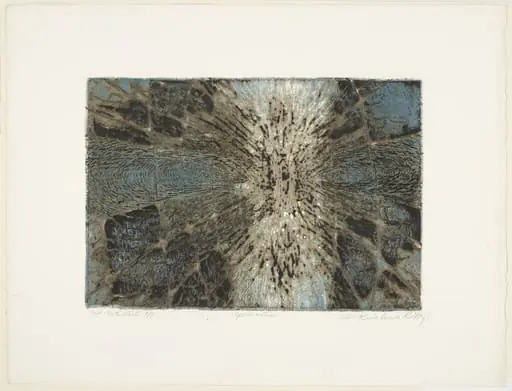
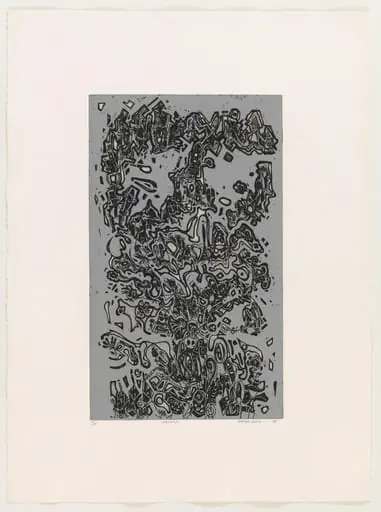
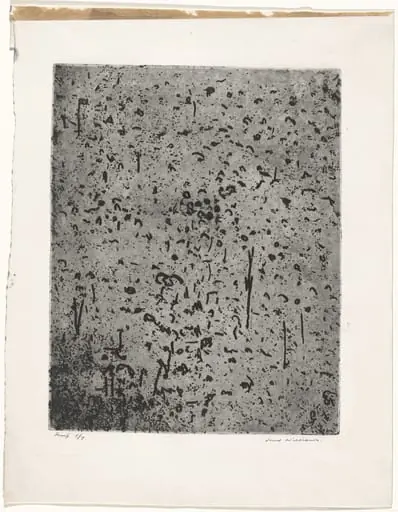
Untitled is an ink print by Rossini Perez. It dates from 1965 and is held in the collection of the Museum of Modern Art.
About this work
Overview
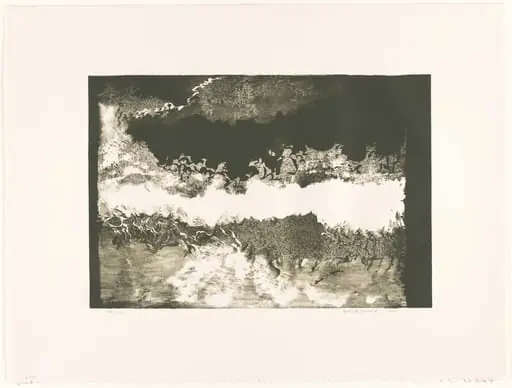
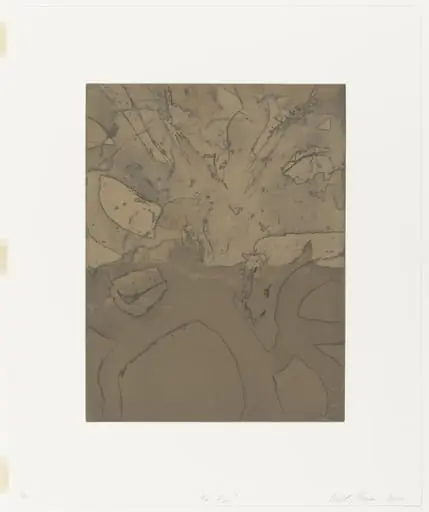
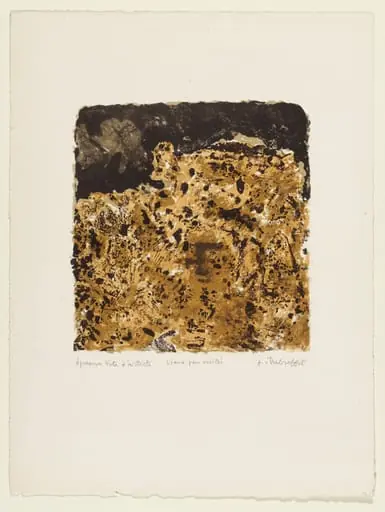
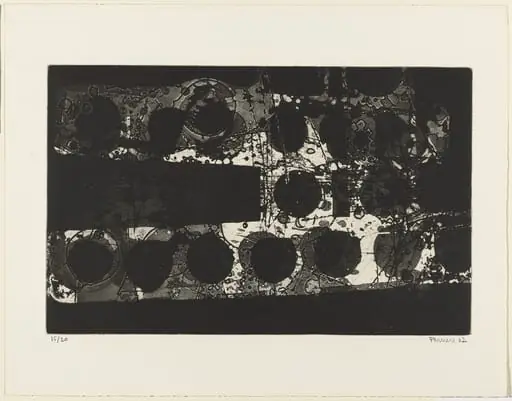
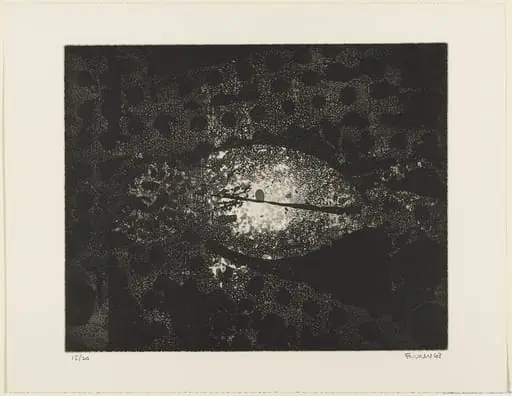
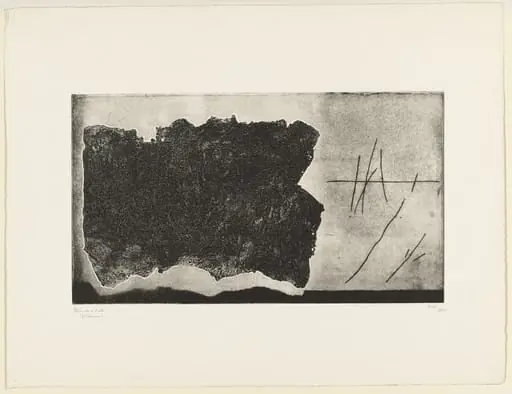
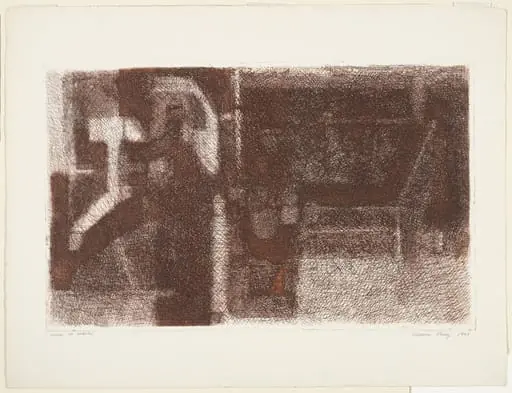
Created in 1965, this aquatint print by Rossini Perez is part of The Museum of Modern Art’s collection. It presents no recognizable figures or scenes, instead offering a dense field of abstract, organic marks. The work relies entirely on tonal variation and texture to convey presence, with no titles, dates, or inscriptions beyond the artist’s signature in one corner.
Subject & Meaning
The image resists literal interpretation, avoiding symbols or narrative cues. Its forms suggest atmospheric phenomena—smoke, shadow, or erosion—but remain deliberately ambiguous. The absence of context invites viewers to engage with the work as an expression of material process rather than a representation of external reality.
Technique & Style
Executed in aquatint, the print uses acid-resistant resin to create gradations of tone through etched dots and lines. The surface is heavily textured, with irregular, layered marks that build depth through controlled randomness. The rough, uneven edges and dense black areas reflect the medium’s capacity for atmospheric effects, emphasizing gesture over precision.
History & Provenance
The work entered The Museum of Modern Art’s collection shortly after its creation. No record of prior ownership or exhibition history is publicly documented. Its acquisition suggests institutional interest in postwar abstract printmaking, though Perez’s broader career remains less documented in mainstream art historical sources.
Context
Made during a period when many artists explored abstraction and non-representational forms, this print aligns with broader trends in mid-century printmaking that prioritized materiality and process. It reflects influences from European and American avant-garde practices, particularly those embracing spontaneity and the physicality of the print medium.
Legacy
While not widely reproduced or cited in major surveys, the work contributes to the understudied body of abstract prints from the 1960s. Its quiet presence in a major collection underscores the role of lesser-known artists in expanding the possibilities of printmaking beyond traditional imagery toward pure visual experience.
Artist & collection